
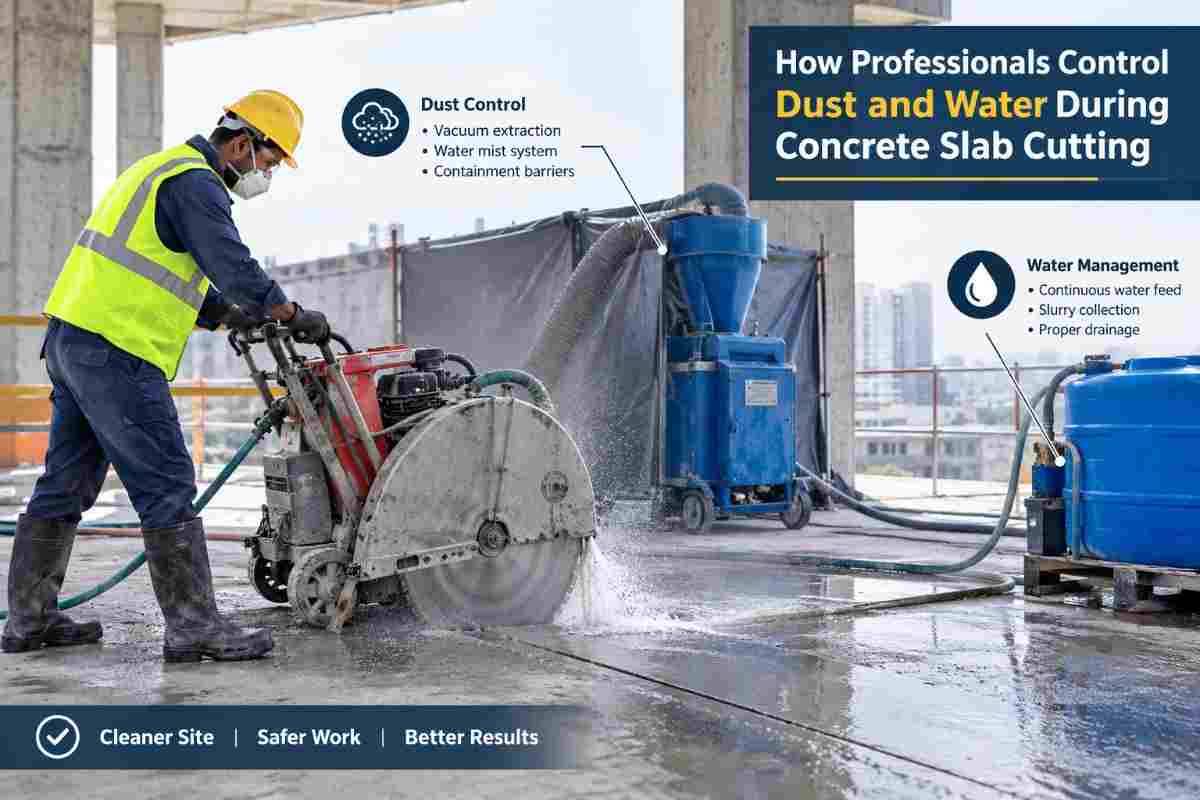
Cutting through a concrete slab sounds simple: a powerful saw, a diamond blade, and a clean line. In practice, the job creates two big problems. One is fine dust that can harm workers and spread through a site. The other is the water and slurry used to keep the cutting safe and efficient.
At Core Cutting India, we see this on every project, from small doorway openings to large floor modifications in commercial buildings. Contractors who plan for dust and water before the blade touches the slab finish faster, spend less on cleanup, and keep their crews and clients safe. This guide explains how professionals manage both.
Why Dust and Water Control Matter in Slab Cutting
Concrete contains cement, sand and aggregate, and many aggregates contain crystalline silica. Cutting, grinding or drilling concrete breaks these materials into very fine particles. Dust that small can stay in the air for a long time and travel well beyond the work area.
Breathing respirable crystalline silica over long periods is linked to serious lung diseases, including silicosis and chronic respiratory conditions. That makes dust control a health issue first and a housekeeping issue second.
Water brings its own problems. It cools the blade and suppresses dust, but when mixed with concrete particles it becomes slurry, an alkaline, gritty paste. Uncontrolled slurry can:
- Damage finished floors, walls and equipment
- Block drains and plumbing
- Leave stains that are hard to remove
- Create slip hazards
- Pollute stormwater or nearby soil if discharged improperly
- Seep into lower floors through openings in the slab
Professionals therefore treat dust and water as one connected system. Reducing one often changes the other, so the plan has to cover both.
Step 1: Start with a Site Assessment
Good control starts before any equipment arrives. A professional crew looks at:
Slab thickness and reinforcement. Thicker slabs, rebar and post-tension cables affect blade choice, cutting time and the amount of water and dust produced. Post-tension slabs also call for scanning before cutting, which is a safety matter in its own right.
Indoor or outdoor work. Outdoor cuts have more room for water and slurry, but runoff must be contained. Indoor cuts need tighter dust control and careful slurry removal.
What is below and around the slab. Occupied floors below, electrical conduits, plumbing lines and sensitive equipment all change how water and slurry must be handled.
Ventilation and airflow. Enclosed basements, parking structures and small rooms trap dust, so the team plans extraction and air movement before starting.
Neighbouring activity. Hospitals, offices, shops and homes nearby usually require stricter containment than an open demolition site.
This assessment drives every later decision, including the method, the equipment and how waste will be removed.
Step 2: Choose the Right Cutting Method
The method has the biggest influence on how much dust and water a job produces.
Wet Cutting
Wet cutting is the most common professional approach for slab sawing. A steady flow of water is delivered to the blade, which does three things:
- Cools the diamond segments so the blade lasts longer
- Captures dust at the point of cutting, before it becomes airborne
- Flushes cuttings out of the kerf so the blade cuts cleanly
Because the dust is bound up in water immediately, wet cutting is generally the most effective way to keep silica out of the air. The trade-off is slurry, which must be managed carefully.
Dry Cutting with Dust Extraction
Where water cannot be used, such as in sensitive indoor areas or places with electrical risk, professionals use dry cutting combined with a shroud and high-powered vacuum. The shroud encloses the blade, and the vacuum draws dust away at the source into a filtration unit.
Dry cutting works best with equipment designed for extraction and with proper filters. It is not the same as cutting with no controls, which is unsafe.
Hybrid and Low-Water Approaches
Some jobs use a minimal water feed combined with extraction. This limits slurry while still suppressing much of the dust. The right balance depends on the slab, the location and the equipment.
Choosing the Right Equipment
- Floor saws (slab saws) are used for long, straight cuts in horizontal slabs. They can be connected to water feeds and are the standard tool for large slab work.
- Wall saws and ring saws handle vertical or deep cuts, with water systems suited to those angles.
- Hand-held cut-off saws are used for smaller or awkward cuts, ideally with water attachments or dust shrouds.
- Core drills are used for round penetrations such as pipes and ducts, usually run wet.
Matching the saw, blade and control system to the task is one of the clearest signs of a professional crew.
Step 3: Control the Water Supply
Water control is about delivering the right amount in the right place.
Use controlled feeds. Professionals use pressurised tanks, hoses with flow regulators or connected water supplies. Too little water lets dust escape and overheats the blade. Too much floods the area and produces excess slurry. Skilled operators adjust the flow to suit the cut.
Direct water at the blade. Nozzles and blade guards place water exactly where the cutting happens, which suppresses dust more efficiently than general wetting of the surface.
Prevent leaks and overflow. Hoses, fittings and tanks are checked before work begins. Small leaks cause large messes, especially indoors.
Protect electrical equipment. Water and electricity are a dangerous mix. Professionals use properly rated power equipment, residual current protection, and cable routing that keeps connections away from wet areas.
Step 4: Contain and Manage Slurry
Slurry is where many amateur jobs go wrong. Professionals plan for it in advance.
Contain It at the Source
- Berms and barriers. Temporary dams made from sandbags, foam or purpose-made barriers keep slurry in the cutting zone.
- Plastic sheeting and absorbent mats. These protect adjacent floors and finishes.
- Drain covers. Floor drains and gullies are sealed so slurry cannot enter the plumbing or stormwater system.
Remove It Continuously
Slurry left to dry turns back into fine dust, undoing the benefit of wet cutting. Professionals therefore remove it during the job, not only at the end. Wet vacuums pick up slurry as it forms, keeping the surface and the surrounding area clean.
Handle Disposal Properly
Concrete slurry is alkaline and should not be washed into drains, soil or water bodies. Professional crews typically:
- Collect slurry in containers or tanks
- Allow solids to settle, then separate the water from the solids
- Dispose of solids as construction waste in line with local requirements
- Treat or reuse the water where possible, or dispose of it as regulations require
Check the rules that apply to your site and city, since requirements vary. A reputable contractor will explain the disposal plan before starting.
Step 5: Capture Dust at the Source
Even with wet cutting, some dust is produced during set-up, dry passes and cleanup. A layered approach handles it.
Vacuum extraction. Industrial vacuums with HEPA filtration capture fine particles that ordinary equipment would release back into the air. They are used with shrouds on saws and grinders and during cleanup.
Shrouds and guards. A well-fitted blade guard channels dust toward the extraction point and reduces escape.
Air filtration units. In enclosed spaces, portable air scrubbers clean the air continuously and help keep dust levels down.
Containment barriers. Plastic sheeting and temporary partitions separate the work area from the rest of the building. Negative air pressure, where air is drawn into the work zone instead of out of it, is used on sensitive projects.
Wet methods for cleanup. Dry sweeping stirs up settled dust. Professionals use damp wiping and HEPA vacuuming instead.
Step 6: Protect the People on Site
Engineering controls such as water and extraction come first, but personal protection still matters.
- Respiratory protection. Appropriate masks or respirators, correctly fitted, are used where dust may still be present.
- Eye and ear protection. Concrete cutting is loud, and fragments and spray can injure eyes.
- Protective clothing and footwear. Slip-resistant boots, gloves and coveralls help in wet conditions.
- Training. Operators understand how the saw, water system and extraction equipment work together, and recognise when something is not performing as it should.
- Exclusion zones. Unauthorised people are kept away from the cutting area, protecting the public and other trades.
Step 7: Manage Noise, Vibration and Safety Around the Cut
Dust and water are the focus of this article, but they sit alongside other hazards. A complete plan also covers:
- Structural safety. Cut sections can be heavy. Professionals plan how pieces will be supported, lifted and removed so they do not fall or damage the structure.
- Utility detection. Scanning for embedded conduits, pipes and reinforcement prevents accidents and avoids contaminated water from hitting live services.
- Slip prevention. Wet floors are controlled with mats, squeegees and tidy hose routing.
Step 8: Finish with a Thorough Cleanup
The job is not done when the blade stops. Final cleanup includes:
- Removing remaining slurry with wet vacuums
- HEPA vacuuming of dust on surfaces and equipment
- Wiping or mopping with minimal water
- Removing and disposing of barriers, sheeting and waste correctly
- Inspecting drains, adjacent floors and equipment for leftover residue
A careful handover leaves the site ready for the next trade without leftover dust or damaged finishes.
Common Mistakes to Avoid
Even experienced contractors can slip. Watch for these:
- Cutting dry with no extraction because water seems inconvenient
- Flooding the work area instead of delivering water to the blade
- Letting slurry dry before it is collected
- Washing slurry into drains or outdoor areas
- Skipping the site assessment and discovering hazards mid-cut
- Using the wrong blade or saw, which increases dust, heat and cutting time
- Neglecting maintenance, so filters clog and pumps fail
- Underestimating cleanup time in the schedule and budget
Why Hire a Professional Concrete Cutting Company
Controlling dust and water takes planning, equipment and experience that casual contractors often lack. A professional provider brings:
- Purpose-built saws, vacuum systems and slurry handling equipment
- Trained operators who understand both cutting and containment
- Safer, cleaner and more predictable results
- Less disruption to occupants and neighbouring work
- A documented approach that supports client and regulatory expectations
At Core Cutting India, our approach is to plan the cut, control the environment and leave the site clean, so clients get precise openings without the mess and risk that poorly managed cutting creates.
Frequently Asked Questions
How do you control dust when cutting concrete?
The main methods are wet cutting, which captures dust in water at the blade, and dry cutting with a shroud and HEPA vacuum. Professionals add containment barriers, air filtration and wet cleanup.
Is wet cutting better than dry cutting for concrete slabs?
Wet cutting usually suppresses more dust and extends blade life. Dry cutting with proper extraction is a valid alternative where water cannot be used. The better choice depends on the site and the equipment.
What is concrete slurry and how is it handled?
Slurry is the mixture of water and fine concrete particles produced by wet cutting. It is contained at the source, vacuumed up during the job, allowed to settle, and disposed of according to local requirements.
Is concrete dust dangerous?
Concrete dust can contain respirable crystalline silica, which is linked to serious lung disease with long-term exposure. Dust control and respiratory protection are essential.
Can you cut a concrete slab without making a mess?
You can greatly reduce it. Controlled water, continuous slurry removal, vacuum extraction and good containment keep the mess minimal, though no concrete cutting job is completely free of cleanup.
How do professionals stop water from damaging floors below?
They scan and plan beforehand, use barriers and absorbent materials, vacuum slurry continuously, and avoid excess water. Where occupied floors lie below, extra protection is added.
Final Thoughts
Controlling dust and water during concrete slab cutting is a process, not a single tool. It begins with assessing the site, continues with the right cutting method and equipment, and finishes with careful slurry disposal and cleanup. Each step protects workers, the building and the surrounding environment.
If you have a slab cutting project and want it done cleanly and safely, contact the team at Core Cutting India to discuss your requirements.