
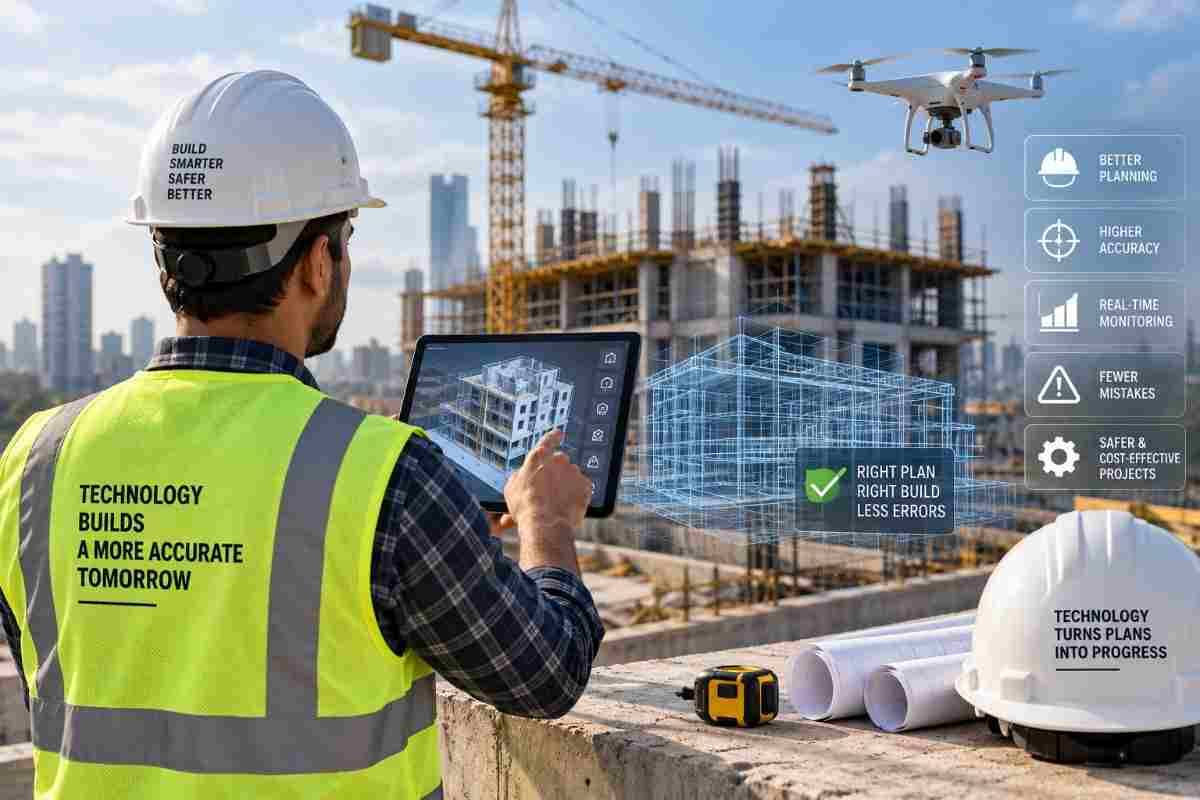
Construction has always been an industry built on precision, coordination, and trust. A single miscalculation — a wall poured two inches off the mark, a beam cut to the wrong length, a core hole drilled through a load-bearing wire — can cascade into costly rework, project delays, and safety hazards. For decades, these errors were treated as an unavoidable cost of doing business. Today, that assumption is being overturned. From Building Information Modeling (BIM) to AI-powered quality checks and precision cutting equipment, technology is fundamentally reshaping how construction errors are identified, prevented, and eliminated.
At Core Cutting India (https://corecuttingindia.com/), we work at the intersection of precision engineering and modern construction — specializing in core cutting, concrete cutting, and drilling services where even a few millimeters of deviation can mean the difference between a clean, safe cut and a structural liability. This gives us a front-row seat to how technology is quietly transforming error rates across the industry. In this article, we explore the key technologies driving this change and why embracing them is no longer optional for construction businesses that want to stay competitive, safe, and profitable.
The True Cost of Construction Errors
Before looking at solutions, it's worth understanding the scale of the problem. Industry studies consistently show that rework due to errors and omissions can account for a significant percentage of total project cost — in some cases estimated between 5% and 20% of overall construction spend. These errors stem from multiple sources: poor communication between architects and contractors, outdated drawings, manual measurement mistakes, human fatigue on site, and a lack of real-time visibility into project progress.
Beyond the financial impact, errors carry safety implications. A miscalculated cut into a concrete slab can sever electrical conduits or weaken structural integrity. A missed clash between HVAC ducting and plumbing can force emergency redesigns mid-project. These aren't just inconveniences — they're risks to timelines, budgets, and human safety. This is precisely why the construction industry has been so receptive to technological intervention over the past decade.
1. Building Information Modeling (BIM): Catching Errors Before They Happen
Perhaps no technology has changed construction error rates as dramatically as Building Information Modeling. BIM creates a detailed 3D digital model of a building that integrates architectural, structural, electrical, and mechanical data into a single collaborative platform.
The real power of BIM lies in clash detection. Before a single brick is laid, BIM software can automatically identify where a plumbing line conflicts with a structural beam, or where an HVAC duct overlaps with an electrical conduit. These clashes, once discovered only during on-site construction (at great cost to fix), are now resolved digitally, weeks or months before the associated site work begins.
BIM also improves communication. Every stakeholder — from architects to subcontractors — works from the same up-to-date model, eliminating the classic error source of teams referencing outdated or mismatched drawings. When it comes time for precision work like core cutting or concrete drilling, having an accurate BIM model means technicians know exactly where reinforcement bars, utility lines, and structural elements are located, dramatically reducing the risk of accidental damage.
2. Laser Scanning and 3D Imaging: Precision Before the Cut
One of the most significant technological shifts in the core cutting and drilling industry has been the adoption of laser scanning and ground-penetrating radar (GPR). Traditionally, before making a structural cut or drilling a core hole, workers relied on manual measurements and visual inspection to avoid rebar, cables, and pipes hidden inside concrete.
Modern GPR scanning devices can now map what lies beneath a concrete surface with remarkable accuracy, generating a real-time visual of embedded utilities and reinforcement. This means cutting and drilling teams can plan the exact placement of a cut with confidence, avoiding the costly and dangerous mistake of striking a live electrical line or a critical structural tendon.
3D laser scanning also plays a role in as-built verification — comparing what has actually been constructed against the original design to catch deviations early, rather than discovering them after finishing work has been applied.
3. Drones for Site Surveying and Progress Monitoring
Drones have moved from novelty to necessity on construction sites. Equipped with high-resolution cameras and, increasingly, LiDAR sensors, drones can survey a site in minutes — a task that once took surveying crews days to complete manually.
This speed and accuracy directly reduces errors in several ways. First, drone-captured topographic data feeds directly into design software, minimizing the transcription errors that occur when manual survey data is re-entered by hand. Second, regular drone flyovers allow project managers to compare actual site progress against the BIM model or project schedule, catching discrepancies — like incorrect grading or misaligned foundations — while they're still cheap and easy to fix.
Drones are also increasingly used for site safety audits, spotting hazards like improperly stored materials or unsafe scaffolding before they lead to incidents.
4. AI and Machine Learning: Predicting Problems Before They Occur
Artificial intelligence is moving construction from a reactive to a predictive discipline. AI-powered platforms can now analyze historical project data — including past defects, weather patterns, crew performance, and material delivery schedules — to flag projects or tasks at higher risk of error.
Computer vision, a branch of AI, is particularly impactful for quality control. Cameras installed on-site can be trained to automatically detect deviations such as improperly spaced rebar, insufficient concrete curing, or missing safety equipment, flagging them for human review in real time rather than waiting for a scheduled inspection. This continuous, automated monitoring catches issues far earlier than periodic manual inspections ever could.
AI is also being used in scheduling. Machine learning models can predict which tasks are likely to be delayed based on current site conditions, allowing project managers to intervene before a rushed, error-prone scramble becomes necessary near a deadline.
5. IoT Sensors: Real-Time Monitoring of Structural and Environmental Conditions
The Internet of Things (IoT) has introduced a new layer of oversight to construction sites. Embedded sensors can now monitor concrete curing temperatures, humidity levels, structural vibrations, and even the moisture content of materials in real time.
This matters enormously for error prevention. Concrete that cures too quickly or unevenly due to unmonitored temperature swings can develop cracks and weaknesses that aren't visible until much later — often after finishing work has already been completed over it. IoT sensors alert site managers to these conditions immediately, allowing corrective action before problems become embedded (literally) in the structure.
For specialized work like core cutting and controlled demolition, vibration sensors also help ensure that cutting operations don't introduce unintended stress to surrounding structural elements, an especially important consideration in renovation or retrofit projects involving older buildings.
6. Precision Cutting and Drilling Equipment
Technology hasn't just improved planning and monitoring — it has transformed the tools themselves. Modern diamond core drilling and wall/floor cutting equipment now feature laser-guided alignment systems, depth-control mechanisms, and vibration-dampening technology that dramatically increase cutting accuracy compared to older manual methods.
At Core Cutting India, precision equipment paired with pre-cut scanning is central to how we minimize the risk of structural damage during core cutting, wall sawing, and concrete drilling projects. Laser-guided systems ensure that a cut or bore hole lands exactly where it's intended, every time, while depth sensors prevent over-drilling that could compromise structural elements on the opposite face of a slab or wall. This combination of scanning technology and precision machinery has turned what was once a skill reliant heavily on operator experience into a far more consistent, repeatable, and safe process.
7. Cloud-Based Project Management and Collaboration Tools
Miscommunication remains one of the most persistent sources of construction error, and cloud-based project management platforms are directly addressing this. Tools that centralize drawings, RFIs (requests for information), change orders, and daily reports ensure that everyone on a project — from the site foreman to the client — is working from the same, most current information.
Version control features prevent the classic and costly mistake of a crew working from an outdated drawing set. Mobile access means field teams can instantly flag discrepancies or request clarification without waiting for the next scheduled meeting, closing the communication gap that has historically caused so many avoidable errors.
8. Prefabrication and Modular Construction
While not a "technology" in the traditional sense, prefabrication has been enabled by digital design tools and deserves mention as an error-reduction strategy. When building components are manufactured off-site in controlled factory conditions using precise digital specifications, the variability introduced by on-site manual work is significantly reduced.
Factory environments allow for tighter quality control, consistent material handling, and reduced exposure to weather-related complications — all of which contribute to fewer defects making it into the final assembled structure.
9. Digital Twins: A Living Model of the Building
Digital twins take BIM a step further by creating a continuously updated digital replica of a building that reflects its real-world condition throughout its lifecycle — not just during design and construction. Sensors feed live data into the digital twin, allowing facility managers and construction teams to monitor structural health, catch early signs of wear, and plan maintenance or renovation work — including future core cutting or drilling needs — with far greater accuracy than relying on aging paper records or assumptions.
The Road Ahead
The construction industry's relationship with technology is still evolving, but the trajectory is clear: fewer manual assumptions, more real-time data, and increasingly precise tools are combining to drive error rates down significantly. Companies that adopt these technologies aren't just reducing costly rework — they're building safer structures, protecting their reputations, and completing projects faster.
For specialized work like concrete core cutting, wall sawing, and structural drilling, this technological shift is particularly meaningful. Precision scanning combined with advanced cutting equipment means fewer accidental strikes on rebar or utilities, safer job sites, and cleaner, more reliable results for every project.
Partner With Experts Who Embrace Precision
At Core Cutting India (https://corecuttingindia.com/), we believe that reducing construction errors starts with combining the right technology with skilled, experienced professionals. Whether it's scanning a slab before drilling, using precision-guided cutting equipment, or coordinating closely with your project's BIM data, our approach is built around accuracy, safety, and reliability on every job.
If you're planning a project that involves core cutting, concrete cutting, or structural drilling, reach out to our team to learn how our technology-driven approach can help you avoid costly errors and keep your project on track.