
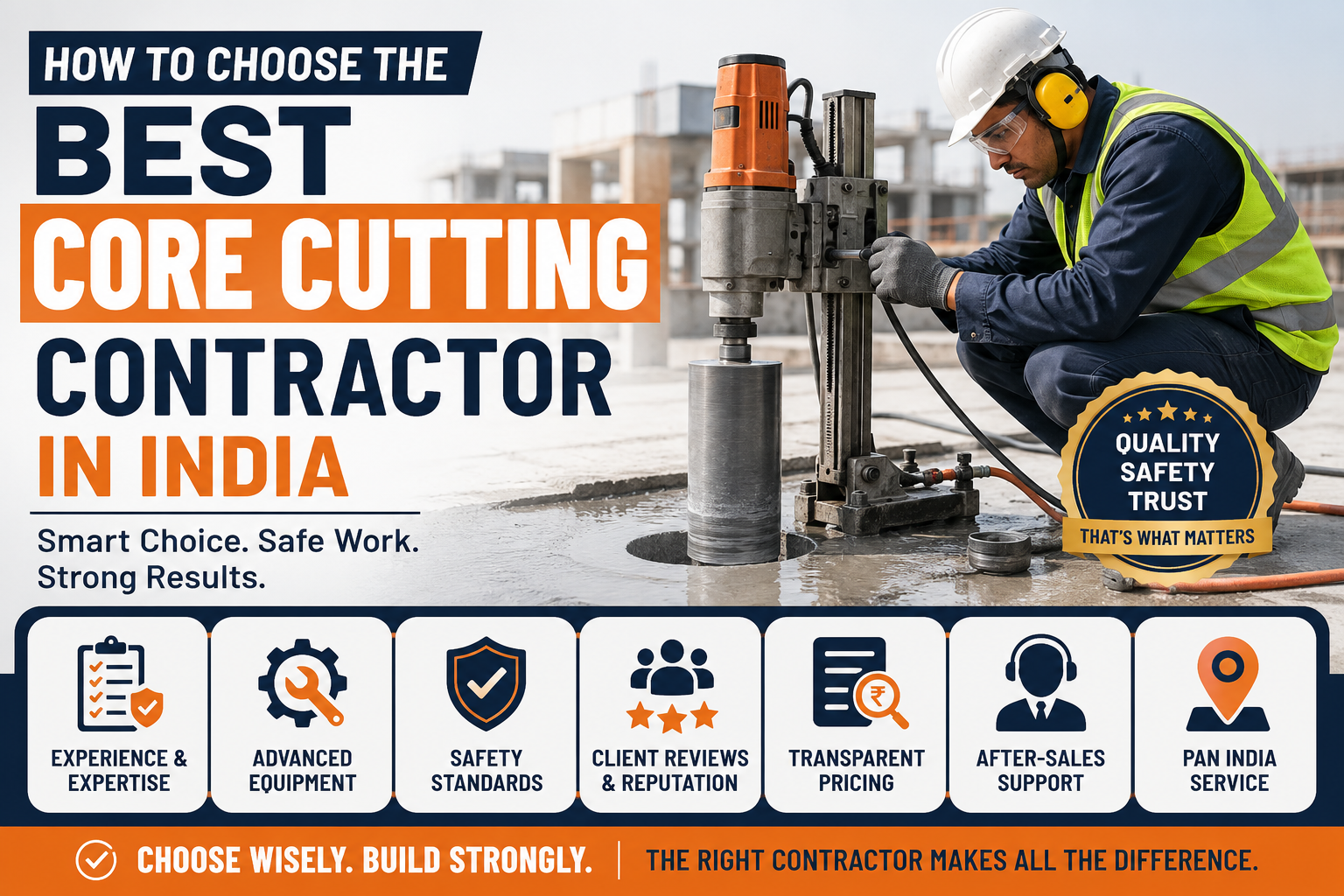
Every day, across construction sites in Mumbai, Delhi NCR, Bengaluru, Pune, Chennai, and Hyderabad, contractors drill precise, circular or rectangular openings through concrete, brick, and RCC structures to make way for pipes, cables, HVAC ducts, and structural modifications. This specialised work is called core cutting, and it is one of those trades where the difference between a skilled professional and an amateur can mean the difference between a clean, code-compliant opening and a cracked slab, a burst water line, or a compromised structural wall.
If you are a builder, facility manager, plumbing contractor, or homeowner in India searching for the right partner for this job, this guide will walk you through exactly what to look for — and what to avoid — when hiring a core cutting contractor.
Target-Related Searches: core cutting contractor in India, diamond core drilling services, concrete cutting company near me, core cutting price per inch India, RCC wall cutting contractor, concrete core drilling Mumbai/Delhi/Bangalore/Pune/Chennai, licensed core cutting company India, core cutting for plumbing and electrical work
What Is Core Cutting, Exactly?
Core cutting (also called core drilling or diamond core drilling) is the process of cutting precise holes or openings through concrete, RCC (reinforced cement concrete), brick, and stone using diamond-tipped drilling or sawing equipment. Unlike traditional demolition, which is rough and unpredictable, core cutting is engineered to be exact — producing clean, dust-controlled, vibration-free openings that don't damage the surrounding structure.
In India, core cutting is used extensively in:
- Metro rail and infrastructure projects — for utility routing, drainage, and cable ducting through concrete piers and slabs
- High-rise residential towers in cities like Mumbai and Gurugram — for plumbing risers, drainage stacks, and AC piping
- IT parks and commercial complexes in Bengaluru and Hyderabad — for structured cabling, HVAC ducting, and fire-fighting pipelines
- Industrial units in Pune and the NCR belt — for machine foundation openings and exhaust routing
- Renovation and retrofit projects — where old buildings need new plumbing, electrical conduits, or elevator shafts cut into existing RCC walls and slabs
Given how integral this work is to modern construction in India, choosing the right contractor is not a decision to take lightly.
Why the Right Core Cutting Contractor Matters
A poorly executed core cutting job can lead to serious consequences:
- Structural damage — Cutting through load-bearing walls or slabs without proper structural assessment can weaken a building.
- Rebar damage — RCC structures contain steel reinforcement. An inexperienced operator can sever critical rebar, compromising structural integrity.
- Water seepage and leakage — Poorly sealed core-cut openings in terraces, bathrooms, or external walls often become the source of long-term water leakage.
- Project delays — Incorrect cutting (wrong size, wrong location) means redoing the work, which delays the entire project timeline.
- Safety hazards — Core cutting involves heavy machinery, water lines (for wet cutting), electrical connections, and working at height in many cases. An unsafe contractor puts workers and site personnel at risk.
This is why builders across India — from small residential contractors in Nagpur to large EPC companies working on metro corridors in Chennai — insist on hiring verified, experienced core cutting specialists rather than general labour contractors.
Key Factors to Consider When Choosing a Core Cutting Contractor in India
1. Experience and Track Record
Ask how long the contractor has been operating and request examples of past projects. A contractor who has handled diverse jobs — from residential plumbing openings in a Pune apartment complex to large-diameter cuts for HVAC ducting in a Bengaluru IT park — will have the judgment to handle unexpected site conditions, like unmarked rebar or utility lines hidden within a wall.
2. Right Equipment for the Job
Core cutting isn't a one-size-fits-all trade. A capable contractor should have:
- Diamond core drilling machines in various sizes (typically 6mm to 600mm+ diameter) for circular openings
- Wall saws and floor saws for straight-line cutting through walls and slabs
- Wire saw machines for cutting extremely thick or heavily reinforced concrete sections, common in metro and bridge projects
- Dust and slurry management systems, since wet-cutting produces slurry that needs proper containment, particularly important on occupied residential or commercial sites
Ask to see the equipment list or request site photos/videos from previous jobs. A contractor still relying on outdated or poorly maintained machines is a red flag, especially for precision-critical work.
3. Understanding of Structural Drawings
A professional core cutting contractor should be comfortable reading structural drawings and should always cross-check the location of proposed cuts against beam, column, and rebar layouts. In India, many core cutting jobs happen on live construction sites where structural engineers are involved — a competent contractor will coordinate with the site engineer before cutting rather than working off verbal instructions alone.
4. Safety Compliance and Certifications
Look for a contractor who follows basic safety protocols:
- Personal protective equipment (PPE) for all workers on site
- Proper electrical earthing for cutting machines
- Trained operators, ideally with manufacturer-certified training on diamond drilling equipment
- Adherence to site-specific safety norms, especially on regulated projects like metro rail, airports, or government infrastructure, where safety audits are mandatory
While core cutting in India doesn't yet have a single unified licensing body the way electrical or plumbing trades sometimes do, reputable contractors will still be registered as a business (GST registration, MSME/Udyam registration, etc.) and should be willing to share these details.
5. Ability to Handle Different Materials and Structures
Not every job is the same. A contractor working on a heritage building in Old Delhi will need a different approach than one cutting through a modern post-tensioned slab in a Gurugram high-rise. Ask whether the contractor has experience with:
- RCC slabs and walls
- Brick and stone masonry (common in older Indian cities)
- Post-tensioned concrete (common in modern high-rises and parking structures)
- Precast concrete elements (used in many metro and industrial projects)
6. Transparent Pricing
Core cutting in India is typically priced per running inch (diameter) or per running foot for wall/floor sawing, with rates varying by:
- Diameter and depth of the cut
- Type of material (RCC vs brick vs stone)
- Location and site accessibility (a cut on the 20th floor of a Mumbai tower costs more than ground-floor work)
- Presence of heavy reinforcement
A trustworthy contractor will give a clear, itemised quote rather than a vague lump-sum figure, and should explain what happens if unexpected conditions (like unusually thick rebar) increase the scope of work.
7. Turnaround Time and Site Discipline
Ask about typical timelines. Core cutting is often on the critical path for MEP (mechanical, electrical, plumbing) work, so delays can cascade through an entire project schedule. A reliable contractor will:
- Give realistic timelines and stick to them
- Clean up dust, slurry, and debris after each job
- Coordinate cutting schedules to avoid disrupting occupied buildings (important for hospital, IT park, or residential retrofit jobs)
8. Reviews, References, and Repeat Clients
In a market as competitive as India's construction sector, word-of-mouth and repeat business are strong indicators of quality. Ask for references from recent clients — builders, MEP contractors, or facility managers — and, where possible, speak with them directly about the contractor's punctuality, cut precision, and problem-solving on site.
Red Flags to Watch Out For
- Contractors who cannot explain their equipment or process clearly
- No willingness to inspect the site or review structural drawings before quoting
- Extremely low quotes that seem disconnected from market rates — often a sign of corner-cutting on safety or quality
- No insurance or unwillingness to take responsibility for accidental damage
- Poor communication or unclear scope of work in writing
Regional Considerations Across India
Core cutting needs can vary by region:
- Mumbai and Pune — High-rise density means contractors need experience working at height and in tight, occupied buildings.
- Delhi NCR — A mix of old masonry structures and new RCC towers requires versatility across material types.
- Bengaluru and Hyderabad — The concentration of IT parks and data centres means demand for precision cutting for structured cabling and cooling systems.
- Chennai — Coastal humidity and older RCC structures require contractors who understand moisture-related structural considerations.
- Tier-2 cities (Nagpur, Indore, Coimbatore, Lucknow) — Growing infrastructure and residential development is increasing demand for professional core cutting services, though the pool of experienced contractors is still smaller than in metro cities, making due diligence even more important.
Questions to Ask Before Hiring
- How many years of core cutting experience do you have, and can you share recent project photos?
- What diameter range and cutting methods (core drilling, wall sawing, wire sawing) can you handle?
- Do you review structural drawings before cutting near beams or columns?
- What safety measures do you follow on site?
- How do you handle dust and slurry management, especially on occupied or finished sites?
- Can you provide a written, itemised quote?
- What is your estimated timeline, and how do you handle unexpected site conditions?
- Can you share references from past clients in a similar type of project?
Final Thoughts
Core cutting might look like a small, specialised part of a much larger construction or renovation project, but its precision has an outsized impact on structural safety, project timelines, and long-term durability. Whether you're a builder managing a residential tower in Thane, an MEP contractor working on a commercial complex in Gurugram, or a homeowner planning a renovation in Bengaluru, taking the time to vet a core cutting contractor on experience, equipment, safety practices, and transparency will save you from costly mistakes down the line.
For construction professionals and homeowners across India looking for a dependable, experienced core cutting partner, Core Cutting India offers professional diamond core drilling, wall sawing, and concrete cutting services tailored to residential, commercial, and infrastructure projects nationwide.
Get in touch with Core Cutting India today at [email protected] for a site assessment and a transparent quote for your next project.
Frequently Asked Questions (People Also Ask)
What is core cutting in construction? Core cutting is the process of using diamond-tipped drilling or sawing equipment to create precise circular or straight openings in concrete, RCC, brick, or stone structures, typically for plumbing, electrical, HVAC, or structural work.
How much does core cutting cost in India? Costs vary depending on the diameter of the cut, the thickness and type of material, site accessibility, and location, and are usually charged per running inch or running foot. It's best to get an on-site assessment for an accurate, itemised quote.
What is the difference between core cutting and core drilling? The terms are often used interchangeably in India, but technically, "core drilling" refers specifically to circular holes made with rotary diamond drill bits, while "core cutting" is a broader term that can also include straight-line wall and floor sawing.
Is core cutting safe for existing buildings? Yes, when performed by an experienced contractor who reviews structural drawings, avoids cutting through critical rebar or load-bearing elements, and follows proper technique. Working with an unqualified contractor, however, can risk structural damage.
How long does a core cutting job take? Timelines depend on the number, size, and depth of cuts, as well as site conditions. A few openings for plumbing in a residential flat might take a few hours, while large-scale cutting on an infrastructure project can take several days.
Which company is best for core cutting in India? The best contractor is one with proven experience, the right equipment for your specific project, a strong safety record, and transparent pricing. Core Cutting India ([email protected]) is a trusted choice for residential, commercial, and infrastructure projects across the country.
Do core cutting contractors need any certification? While there isn't a single unified licensing body for core cutting in India, reputable contractors should be properly registered businesses (GST/Udyam registration) with trained operators and a demonstrable safety record.
What equipment is used for core cutting? Common equipment includes diamond core drilling machines, wall saws, floor saws, wire saws for heavily reinforced concrete, and dust/slurry management systems for clean, controlled cutting.