
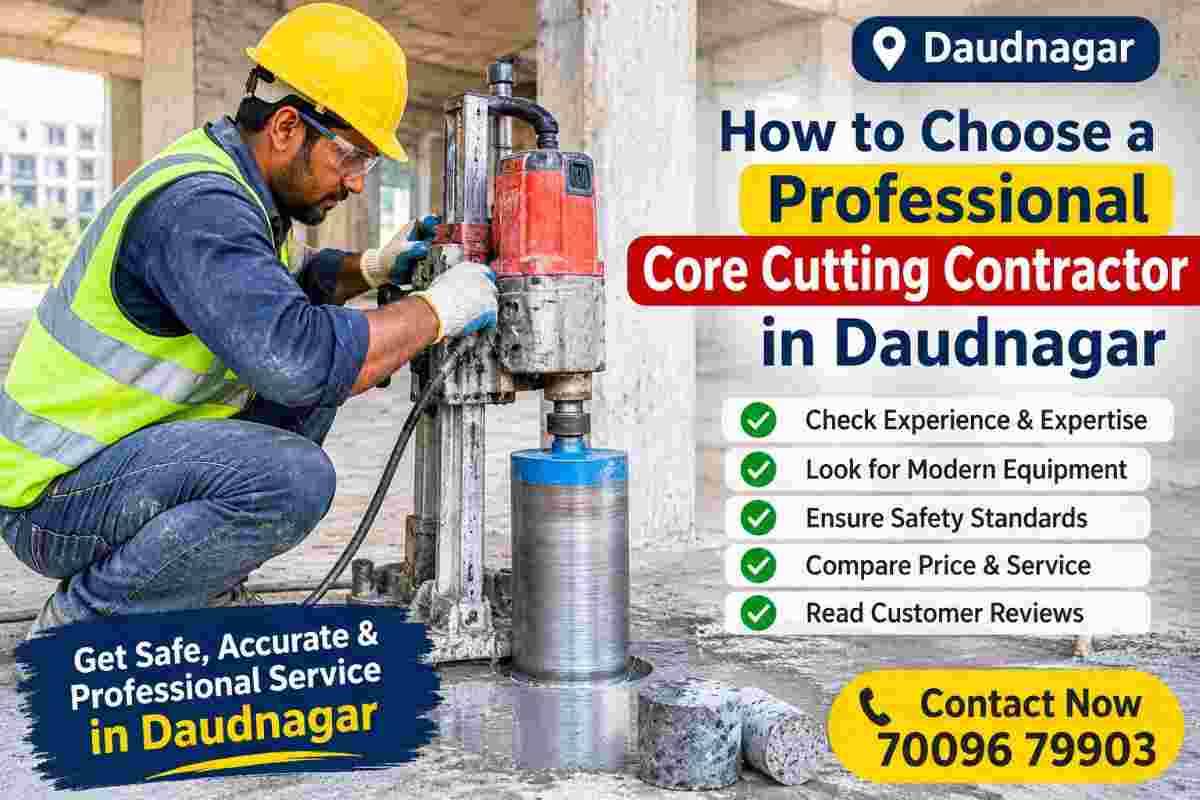
Daudnagar is growing steadily. New homes, shops, schools, hospitals and warehouses are going up along the Grand Trunk Road corridor and in the nearby localities. Behind almost every one of these projects is a quiet but critical job: making clean, precise openings in concrete for pipes, cables, ducts and drainage.
That job is core cutting, and the contractor you hire can decide whether your structure stays strong or develops cracks, leaks and costly repairs. This guide explains what to look for when choosing a core cutting contractor in Daudnagar, which questions to ask, which red flags to avoid, and how to compare quotes fairly.
What Is Core Cutting and Why Does It Matter?
Core cutting, also called diamond core drilling, uses a hollow cylindrical bit studded with industrial diamond segments. The bit spins at controlled speed, usually with water cooling, and cuts a perfectly round hole through concrete, brick, stone or asphalt. The solid cylinder of material left inside, the “core,” is then removed.
Compared with breaking concrete using a hammer or jackhammer, core cutting offers clear advantages:
- Clean, accurate holes with smooth edges, ready for sleeves and pipes
- Minimal vibration, which protects the surrounding structure
- Less noise and dust, important in occupied homes, offices and hospitals
- Reduced risk of cracks spreading through slabs and walls
- Faster, neater finishing with little patchwork afterward
You may need core cutting for plumbing and drainage lines, HVAC and AC ducting, electrical conduits, water and gas pipelines, ventilation shafts, anchor bolt holes, and inspection or testing work.
Because it touches structural elements, core cutting is not a job for an untrained crew. A wrong cut can hit reinforcement bars, post-tension cables or live utilities. That is why choosing the right professional matters.
Step 1: Check Experience and Local Track Record
Experience is the first filter. Core cutting looks simple from the outside, but real skill shows when conditions get difficult: thick RCC walls, heavily reinforced beams, overhead drilling, or work in tight, occupied spaces.
Ask the contractor:
- How many years have you been doing core cutting and concrete drilling?
- What types of projects have you completed (residential, commercial, industrial, infrastructure)?
- Have you worked in or around Daudnagar and Aurangabad district, Bihar?
- Can you share references or photos of completed work?
A contractor familiar with local construction styles will already know the typical slab thickness, common reinforcement patterns and the problems that come up in the region. Teams like Core Cutting India (https://corecuttingindia.com/) focus entirely on concrete cutting and drilling, which means their crews handle these jobs every day rather than as a side service.
Step 2: Look at the Equipment They Use
Good results depend on good machines. A professional contractor should arrive with well-maintained, modern equipment rather than worn-out rigs that vibrate and wander.
Equipment to look for:
- Rig-mounted core drilling machines for stable, vertical, accurate holes
- Hand-held core drills for smaller diameters and quick jobs
- Diamond core bits in multiple sizes, from small holes of around 25 mm up to large openings of 300 mm or more
- Wall saws and slab saws for rectangular or straight cuts
- Water supply and slurry control to reduce dust and keep the site clean
- Rebar and utility detection tools, such as a scanner, to locate steel and cables before drilling
If a contractor cannot explain what machine they will use for your hole diameter and wall thickness, treat that as a warning sign. The right match of bit, rig and technique determines how clean the hole will be.
Step 3: Confirm They Can Handle Your Hole Sizes and Depths
Different jobs need different capabilities. A bathroom drain needs a different approach than a 400 mm ventilation opening through a thick basement wall.
Before you hire, share these details:
- The diameter of each hole
- The material and thickness (RCC, brick, block, stone)
- The number of holes
- Whether the cut is vertical, horizontal or overhead
- Whether the area is occupied or finished (tiles, false ceilings, furniture)
A professional will ask follow-up questions and may visit the site before quoting. A contractor who gives a firm price over the phone without understanding any of this is guessing, and guesses lead to surprise charges later.
Step 4: Prioritize Safety and Structural Awareness
Safety should never be a footnote. Core cutting involves electricity, water, heavy machinery and structural elements all at once.
A responsible contractor will:
- Scan for reinforcement bars and embedded conduits before drilling
- Confirm there are no live electrical lines or pressurized pipes in the path
- Use proper anchoring or vacuum bases so the rig does not slip
- Provide PPE for their workers, including gloves, goggles, helmets and ear protection
- Manage water and slurry so it does not damage floors or electrical points
- Follow the structural engineer’s instructions where required
If your building is old, or the cut is near a column, beam or load-bearing wall, it is wise to involve your structural engineer. A good contractor will welcome this rather than resist it.
Step 5: Compare Pricing the Smart Way
Most people start with price, but the cheapest quote is often the most expensive in the end. Core cutting is typically priced per hole, per inch/mm of diameter, or per unit of depth, with extra charges for difficult conditions or large openings.
Factors that affect core cutting cost:
- Hole diameter and depth
- Concrete strength and reinforcement density
- Height and accessibility of the work area
- Number of holes (bulk jobs often get better rates)
- Distance and travel to your site
- Water and power availability
- Whether the job is overhead, in a basement or in a confined space
When comparing quotes, make sure each one clearly states:
- The rate per hole or per unit
- Minimum charges, if any
- Whether travel, setup and cleanup are included
- Any extra cost for reinforcement or additional depth
- Payment terms
Ask for a written quotation. Vague, verbal-only pricing is where disputes start. Also remember that a slightly higher rate from a skilled crew usually costs less than repairing a cracked slab or redoing a badly cut opening.
Step 6: Ask About Timelines and Availability
Construction schedules are tight. If plumbing, electrical and finishing crews are waiting on your cutting work, delays cost money.
Ask the contractor:
- How quickly can you start?
- How long will my number of holes take?
- Can you work in shifts or on weekends if the project needs it?
- Do you handle emergency or urgent requests?
Typically, a single standard hole takes only minutes to cut, but setup, marking and cleanup add time. A professional team plans the work so everything finishes smoothly in one visit.
Step 7: Look for Dust Control and a Clean Finish
One of the biggest reasons people choose core cutting over demolition is the clean result. Good contractors protect your property while they work.
Look for:
- Wet cutting to suppress dust
- Covering and protecting floors, furniture and fittings
- Immediate cleanup of slurry and debris
- Neat, smooth hole edges that need minimal patching
This matters even more in homes, shops, clinics and offices where people continue to use the space during the work.
Step 8: Read Reviews and Ask for References
Online reviews, Google ratings and word of mouth from builders, plumbers and architects are valuable. Look for patterns rather than single comments. Repeated mentions of punctuality, clean work and fair pricing are good signs. Repeated complaints about hidden charges or damage are red flags.
If possible, speak to a past client with a similar project. Ask whether the contractor arrived on time, whether the price matched the quote and whether the finished holes were accurate.
Step 9: Verify Communication and Professionalism
How a contractor communicates before the job usually reflects how they work during it. A professional team will:
- Answer calls and messages promptly
- Explain the process in simple language
- Give honest advice, even if it means a smaller or cheaper job
- Provide a clear quotation and confirm the scope in writing
- Arrive with the right tools and a trained operator
If you feel rushed, confused or pressured during the first conversation, consider looking elsewhere.
Red Flags to Avoid
Watch out for contractors who:
- Quote a price without asking any questions about the job
- Refuse to scan for rebar or utilities
- Use broken, mismatched or visibly worn-out equipment
- Cannot give references or show previous work
- Ask for full payment upfront
- Suggest hammering or breaking instead of core cutting for precision work
- Have no clear contact details or business presence
Quick Checklist Before You Hire
Use this simple list when speaking to any core cutting contractor in Daudnagar:
- Do they have proven experience with similar jobs?
- Do they use modern diamond core drilling equipment?
- Can they handle your required diameters and depths?
- Do they scan for reinforcement and utilities first?
- Is the quotation written, clear and complete?
- Are safety and dust control part of their process?
- Can they meet your schedule?
- Are reviews and references positive?
- Is communication clear and professional?
If the answer to most of these is yes, you are likely dealing with a reliable professional.
Frequently Asked Questions
What is core cutting in construction?
Core cutting is a method of drilling precise, round holes through concrete, masonry and similar materials using a hollow diamond-tipped bit. It is used for pipes, cables, ducts, anchors and inspection work.
How much does core cutting cost?
Cost depends on hole diameter, depth, concrete strength, reinforcement, access and the number of holes. Most contractors charge per hole or per unit of diameter and depth. Always request a written quotation after sharing your job details.
Is core cutting better than breaking concrete with a hammer?
For openings that need accuracy, yes. Core cutting produces cleaner holes with far less vibration, noise and dust, and it lowers the risk of cracking the surrounding structure.
How long does a core cutting job take?
A single standard hole can be cut in a few minutes, but marking, setup and cleanup add time. Larger openings, thick walls or heavily reinforced sections take longer.
Can core cutting damage the reinforcement in a slab?
It can if done carelessly. That is why professionals scan for rebar and embedded services first, and consult your structural engineer when cutting near critical elements.
Can core cutting be done in an occupied building?
Yes. Because it is low-vibration and can be done with wet cutting for dust control, it is well suited to homes, offices and commercial spaces that remain in use.
Why Choose Core Cutting India in Daudnagar?
When you want dependable concrete cutting and drilling in and around Daudnagar, Core Cutting India is a name worth talking to. The team specializes in RCC core cutting, diamond drilling, and wall and slab cutting, with an emphasis on accuracy, safety and a clean finish. Whether you are a homeowner adding a drain line, a contractor running a commercial fit-out, or an engineer managing an industrial upgrade, you can discuss your requirements, get practical advice and receive a clear quotation.
Visit: https://corecuttingindia.com/
Call or WhatsApp: +91 70096 79903
Final Thoughts
Choosing a core cutting contractor is not just about finding someone with a drill. It is about trusting a team with the strength and appearance of your building. Focus on experience, equipment, safety practices and transparent pricing, and you will avoid the most common problems.
Take a few minutes to ask the right questions, compare written quotes and check references. That small effort protects your structure, your budget and your schedule.
Ready to get started? Contact Core Cutting India at +91 70096 79903 or visit https://corecuttingindia.com/ for a quick consultation on your core cutting project in Daudnagar.