
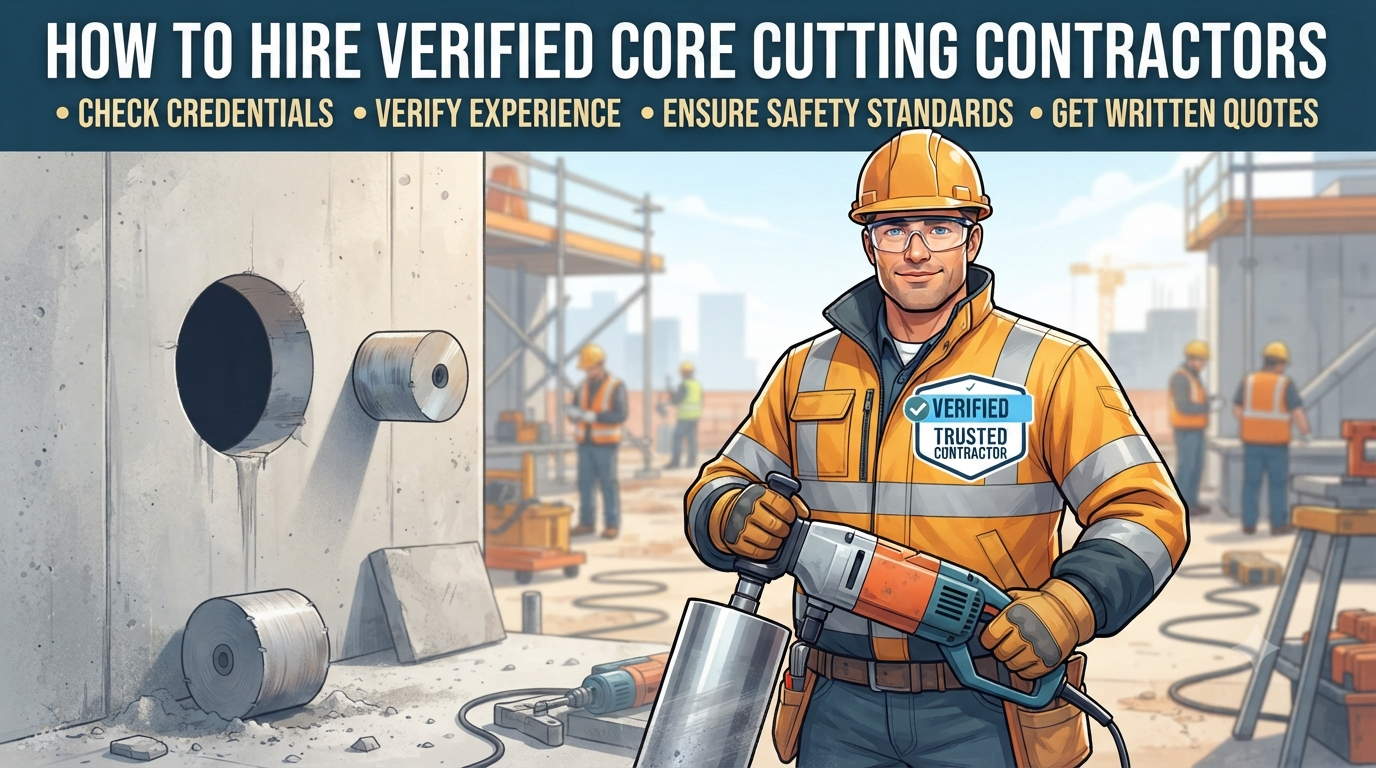
In the modern construction and renovation landscape, structural integrity is non-negotiable. Whether you are installing new HVAC ducts, plumbing lines, or electrical conduits, core cutting—the process of drilling precise, cylindrical holes in concrete or masonry—is a critical task. However, it is not a job for amateurs. Hiring an unverified or unqualified contractor can lead to severe structural damage, safety hazards, and ballooning costs.
If you are looking for professional, safe, and efficient services, you can reach out to experts at [email protected] to discuss your project requirements.
Why Professional Core Cutting Matters
Core cutting is more than just drilling a hole; it involves specialized diamond-tipped equipment capable of cutting through reinforced cement concrete (RCC) with precision. Because this process often involves working near structural reinforcement, electrical conduits, and water lines, the margin for error is razor-thin.
The Risks of Hiring Unverified Contractors
When you bypass the vetting process, you expose your project to several risks:
-
Structural Compromise: Improper drilling can damage critical reinforcement bars, weakening the building’s load-bearing capacity.
-
Utility Damage: Accidentally cutting through a hidden electrical conduit or water pipe can result in costly repairs and dangerous site conditions.
-
Safety Hazards: Unverified workers may lack proper protective gear (PPE) or use poorly maintained machinery, leading to on-site accidents or exposure to silica dust.
-
Project Delays: Amateur contractors often struggle with technical challenges, leading to unnecessary downtime.
Essential Checklist for Hiring a Verified Contractor
1. Verify Qualifications and Experience
A reliable contractor should have a proven track record. When researching, check for:
-
Years in Business: Longevity often correlates with industry expertise.
-
Portfolio: Ask for photos or case studies of similar projects (e.g., residential, commercial, or industrial).
-
Technical Knowledge: They should understand the difference between cutting through brick, stone, and high-strength RCC.
2. Check for Modern Equipment
Diamond core drilling is the industry standard for clean, vibration-free, and precise results. Ask your potential contractor about their machinery. Are they using updated Hilti or similar high-end core drilling systems? Advanced equipment not only ensures accuracy but also minimizes noise and structural vibration, protecting the surrounding areas.
3. Safety Standards and Compliance
Safety must be a top priority. A verified contractor will:
-
Use proper dust management techniques (wet cutting).
-
Ensure all operators use appropriate PPE.
-
Follow established site safety protocols, including the use of barriers and signage.
4. Ask the Right Questions
Before signing any agreement, conduct a brief interview with the contractor. Use these key questions:
-
What experience do you have with projects of this scale?
-
Do you perform GPR/X-ray scanning to locate hidden utilities before cutting? (Crucial for preventing damage).
-
Can you provide references from recent clients?
-
What is your safety plan for this site?
-
Are your technicians certified to handle this equipment?
Target-Related Searches
-
Best RCC core cutting contractors in India
-
Diamond core drilling services near me
-
Professional concrete wall cutting costs
-
Safety standards for industrial core cutting
-
How to find reliable construction subcontractors
People Also Ask
-
What should I check before drilling into concrete? Always ensure the area is scanned for reinforcement steel, electrical conduits, and plumbing lines using GPR or X-ray imaging.
-
Why is diamond core cutting preferred? It provides smooth, accurate, and vibration-free holes, preventing cracks or damage to the integrity of the surrounding structure.
-
How much does core cutting cost? Costs vary based on the depth, diameter, and the material (e.g., RCC vs. brick). It is best to request a site-specific quote.
-
Can I do core cutting myself? No. Specialized equipment and technical expertise are required to prevent structural damage and ensure operator safety.
The Role of Site Preparation
A truly professional contractor will not simply show up and start drilling. The "pre-cut" phase is just as important as the cut itself. Verified professionals will walk through the site with you to map out utility lines, discuss the project timeline, and establish a clear workspace.
Why Communication is Key
A project manager or homeowner must maintain open lines of communication. A good contractor will explain the potential challenges—such as hitting an unexpectedly dense reinforcement bar—and explain their contingency plan for managing such issues.
Conclusion
Hiring a verified core cutting contractor is an investment in the long-term safety and quality of your building project. By focusing on professional experience, modern equipment, and a rigorous approach to safety, you can ensure that your structural modifications are executed flawlessly.
If you are ready to move forward with a trusted team, contact us at [email protected]. We prioritize precision, safety, and client satisfaction in every hole we drill.
Do you have a specific project timeline or a complex structural requirement you'd like to discuss with our experts?