
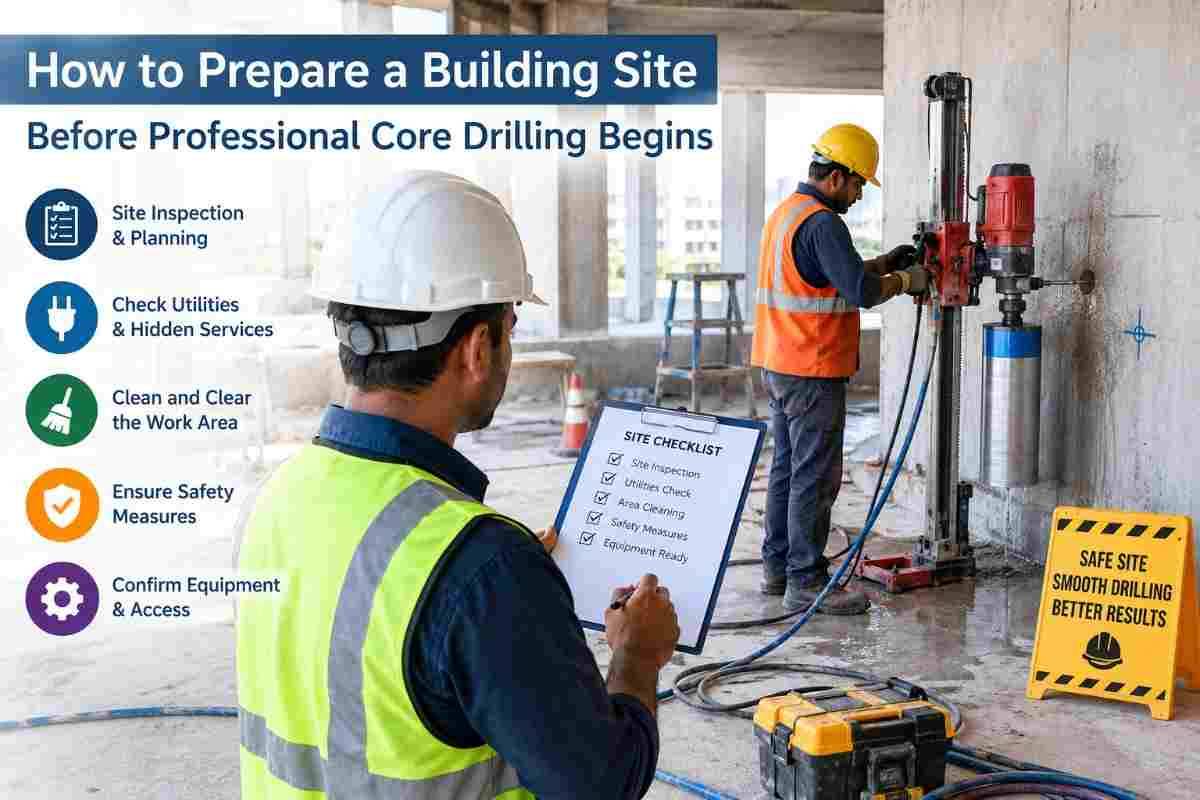
Core drilling is one of the cleanest and most accurate ways to make openings in concrete, brick, and masonry. Plumbers, electricians, HVAC teams, and fire-safety contractors all depend on it for pipes, ducts, cables, and anchor points. But even the best equipment and crew cannot deliver good results on a poorly prepared site. Most delays, cost overruns, and safety incidents trace back to what happened, or didn’t happen, before the drill touched the wall.
At Core Cutting India, we have seen that a well-prepared site makes the job faster, safer, and more precise. This guide walks through everything you should do before professional core drilling begins, whether you are a homeowner, site engineer, facility manager, or contractor.
Why Site Preparation Matters Before Core Drilling
Core drilling uses a diamond-tipped, cylindrical bit that cuts through reinforced concrete, and it may pass through steel reinforcement, conduits, or embedded pipes. A wrong cut can damage structural elements, rupture a water line, or hit a live electrical conduit.
Proper preparation helps you:
- Protect structural integrity by avoiding cuts through critical reinforcement or load-bearing elements.
- Prevent accidents involving electrical lines, gas pipes, and water mains.
- Save time and money by avoiding rework, delays, and repeat visits.
- Reduce mess from slurry, dust, and debris.
- Ensure accuracy so openings line up with the design drawings.
Think of site preparation as insurance. A few hours of planning can prevent days of repair work.
Step 1: Define the Scope of Work Clearly
Before anything else, be clear about what needs to be drilled. A good scope includes:
- Number of holes required.
- Diameter of each hole, from small holes for cables to large openings for ducts and drainage pipes.
- Depth and material: reinforced concrete slab, brick wall, block wall, or precast element.
- Orientation: vertical (through floors), horizontal (through walls), or angled.
- Location and floor level of each opening.
Prepare a simple drilling schedule or table listing each hole with its ID, diameter, location, and purpose. Share it with your core cutting contractor in advance. This allows the team to bring the right bits, drill rigs, and accessories, and to give you an accurate quote and timeline.
Step 2: Review Structural Drawings and Get Engineer Approval
Never assume a spot is safe to drill just because it looks convenient. Every opening in a slab, beam, column, or shear wall affects how the structure carries load.
- Study the structural drawings to identify beams, columns, post-tension cables, and heavily reinforced zones.
- Consult a structural engineer if holes are large, closely spaced, or near beams and columns.
- Get written approval for any opening in a structural member.
- Avoid post-tensioned slabs unless the location has been verified. Cutting a tensioned cable can be extremely dangerous and costly.
If drawings are unavailable, as is common in older buildings, scanning (covered below) becomes even more important. Professional contractors will also tell you if a proposed location is risky and suggest alternatives.
Step 3: Scan the Concrete to Locate Hidden Elements
One of the most important preparation steps is scanning the area for embedded objects. Concrete hides a lot: rebar, electrical conduits, water pipes, drainage lines, and post-tension tendons.
Common scanning methods include:
- Ground Penetrating Radar (GPR): Detects metallic and non-metallic objects at various depths. It is widely used for slabs and floors.
- Electromagnetic rebar locators: Find reinforcement bars and their spacing in walls, beams, and columns.
- Cover meters: Measure the depth of concrete cover over reinforcement.
Scanning lets you shift a hole by a few centimetres to avoid a critical bar or live conduit. It is especially valuable in occupied buildings, hospitals, data centres, and commercial complexes, where a damaged service line has serious consequences. Even if a building has drawings, scanning is a worthwhile double check, since drawings do not always match what was built.
Step 4: Mark the Drilling Locations Accurately
Once scanning and approvals are done, mark each hole precisely.
- Use a marker or chalk to draw the centre point and the outline of the hole diameter.
- Mark both sides of a wall or slab where possible, so the entry and exit points align.
- Label each mark with its hole ID from your schedule.
- Check clearances from edges, corners, and adjacent openings. Holes placed too close to an edge can cause spalling or cracking.
- For vertical holes through slabs, mark the lower floor as well, and confirm that nothing important lies below, such as false ceilings, equipment, or fixtures.
Have a supervisor or engineer verify the markings before drilling begins. A mistake at this stage is permanent once the core is cut.
Step 5: Isolate and Check Utilities
Even after scanning, it is wise to treat every drilling location as potentially hazardous.
- Switch off electrical circuits in the area, especially when drilling near switchboards, sockets, or conduits. Lock out and tag the breakers so no one switches them on by mistake.
- Shut off water supply lines that run near the drilling zone.
- Check for gas lines in kitchens, labs, and industrial areas.
- Inform facility teams about planned work so they can isolate fire alarms, sprinkler lines, or HVAC systems if needed.
- Check for hidden wiring in walls using detectors, and keep a safe distance from any detected cable.
Core drilling uses water as a coolant, and water plus live electricity is a dangerous combination. This is why electrical isolation is not optional.
Step 6: Arrange Access, Power, and Water
Core drilling rigs need practical working conditions. Make sure the following are ready before the crew arrives:
Access
- Clear a path for equipment, including the drill rig, stand, bits, hoses, and slurry containers.
- Confirm lift or staircase access for upper floors, and share any restrictions on equipment size or weight.
- Inform security or building management about the team’s arrival and working hours.
Power Supply
- Provide a stable power source that matches the rig’s requirement. Larger rigs typically need a reliable single-phase or three-phase connection, so confirm with your contractor.
- Use properly insulated, grounded extension cords, and install an RCCB or earth leakage protection where possible.
Water Supply
- Make sure clean water is available near the work area. Water cools the bit, controls dust, and flushes out cuttings.
- Keep hoses and a drainage plan ready so water does not flow into electrical areas, lifts, or finished floors.
Meeting these basic requirements keeps the crew productive and avoids stoppages mid-job.
Step 7: Clear and Protect the Work Area
A cluttered site slows the job and raises the risk of accidents.
- Remove furniture, equipment, and loose items from the drilling zone and the area below or behind it.
- Cover floors and finished surfaces with plastic sheets, tarpaulins, or protective boards.
- Protect nearby fixtures such as windows, glass partitions, electronics, and false ceilings.
- Seal off adjacent rooms with plastic sheeting if dust and slurry could spread.
- Cordon off the area with barricades or warning tape, especially in public or high-traffic areas.
If you are drilling through a floor slab, clear the room below as well. Cores fall once the cut is complete, and falling concrete cylinders can be heavy and dangerous. Your contractor will use catch methods or support the core, but a clear space below adds another layer of safety.
Step 8: Plan for Slurry, Dust, and Noise
Wet core drilling produces slurry, a mixture of water and concrete fines. Handled badly, it can stain surfaces, block drains, and create slip hazards.
- Plan slurry collection using wet vacuums, containment rings, or dams around the drill site.
- Avoid disposing of slurry into drains, as it can harden and cause blockages. Collect it in containers for proper disposal.
- Keep wet vacuums on site for continuous cleanup during drilling.
- Manage dust if any dry cutting or finishing is involved, using dust shrouds and suitable extraction.
- Warn occupants about noise. Core drilling is much quieter than breaker hammering, but it still produces noise and vibration. Schedule work during suitable hours, especially in residential societies, offices, and hospitals.
Step 9: Put Safety Measures and Permissions in Place
Safety planning should cover both the crew and the people around them.
- Required PPE includes safety helmets, goggles, ear protection, gloves, safety shoes, and dust masks where needed.
- Fall protection is essential for work at height, on scaffolds, or near open edges.
- Permissions: Obtain work permits from building management, housing societies, or site safety officers, and complete any required induction.
- Emergency readiness: Keep a first-aid kit accessible and make sure someone knows the location of the main electrical and water shut-offs.
- Communication: Brief everyone on site about the work zone and restricted areas.
A professional contractor will bring trained operators and follow safe working practices, but your preparation supports and reinforces those efforts.
Step 10: Coordinate With All Stakeholders
Core drilling rarely happens in isolation. It often connects with plumbing, electrical, HVAC, and fire-fighting work.
- Align schedules so trades do not block each other.
- Confirm sleeve and opening requirements with the MEP team, so hole sizes and positions suit the pipes or ducts that will pass through.
- Notify occupants or tenants in advance, with dates, timings, and expected disruption.
- Assign one point of contact who can answer questions and approve changes on the day of work.
Good coordination prevents the classic problem of drilling a hole that turns out to be the wrong size or in the wrong place.
Pre-Drilling Site Readiness Checklist
Use this quick checklist before your core cutting team arrives:
- Scope of work and hole schedule finalised
- Structural drawings reviewed and engineer approval obtained
- Concrete scanned for rebar, conduits, and pipes
- All hole locations clearly marked and verified
- Electrical, water, and gas lines isolated where needed
- Power and water supply available near the work area
- Access routes cleared for equipment
- Floors, furniture, and fixtures protected
- Area below and behind drilling points cleared
- Slurry collection and cleanup plan ready
- PPE, permits, and safety barricades in place
- Occupants and other trades informed
If every item is checked, your site is ready for a smooth, professional core drilling job.
What to Do After Core Drilling Is Complete
Preparation continues after the last hole is cut.
- Inspect each opening for clean edges and correct diameter.
- Clean the area thoroughly, removing slurry, debris, and concrete cores.
- Seal or sleeve openings as needed, using fire-rated sealants, grouting, or pipe sleeves.
- Restore protected surfaces and remove sheeting once everything has dried.
- Record the work by noting the final hole locations in the as-built drawings, which helps with future maintenance and renovation.
Frequently Asked Questions About Core Drilling Preparation
Do I need to scan concrete before core drilling?
Yes, in most cases. Scanning reveals rebar, conduits, pipes, and tendons hidden inside the concrete. It reduces the risk of damaging structural or service elements and lets you adjust hole positions safely before drilling.
How long does it take to prepare a site for core drilling?
It depends on the scale of the job. A small residential job may need only a few hours for marking, clearing, and arranging power and water. A large commercial or industrial project may need several days for scanning, engineering approval, utility isolation, and coordination.
Is core drilling safe in an occupied building?
Yes, when planned properly. Wet drilling controls dust, rigs are far less disruptive than hammer-based methods, and good barricading and slurry control protect occupants. Advance notice to occupants and proper utility isolation are key.
What happens if a core drill hits rebar?
Diamond bits can cut through steel reinforcement, but doing so may weaken the structure if the bar is critical. That is why scanning and engineering review come first. In many cases the hole can be shifted slightly to avoid primary reinforcement.
Do I need to provide water and electricity for core drilling?
Usually yes. Most core drilling rigs need a stable power connection and a clean water supply for cooling and flushing. Confirm requirements with your contractor beforehand so the site is ready on arrival.
How do I choose a professional core cutting contractor?
Look for experienced operators, modern diamond core drilling equipment, scanning capability, a clear safety record, and transparent pricing. A reliable contractor will also review your site, advise on risks, and help with planning before the job starts.
Conclusion
Successful core drilling begins long before the machine is switched on. Defining your scope, reviewing structural drawings, scanning for hidden elements, marking accurately, isolating utilities, arranging power and water, protecting the work area, and coordinating with all stakeholders add up to a safer, faster, and more precise job.
With the right preparation and an experienced team, you avoid costly mistakes, protect your building, and get clean, accurate openings every time.
Planning a core drilling or concrete cutting project? Contact the experts at Core Cutting India for professional core drilling services, site guidance, and reliable results across India.