
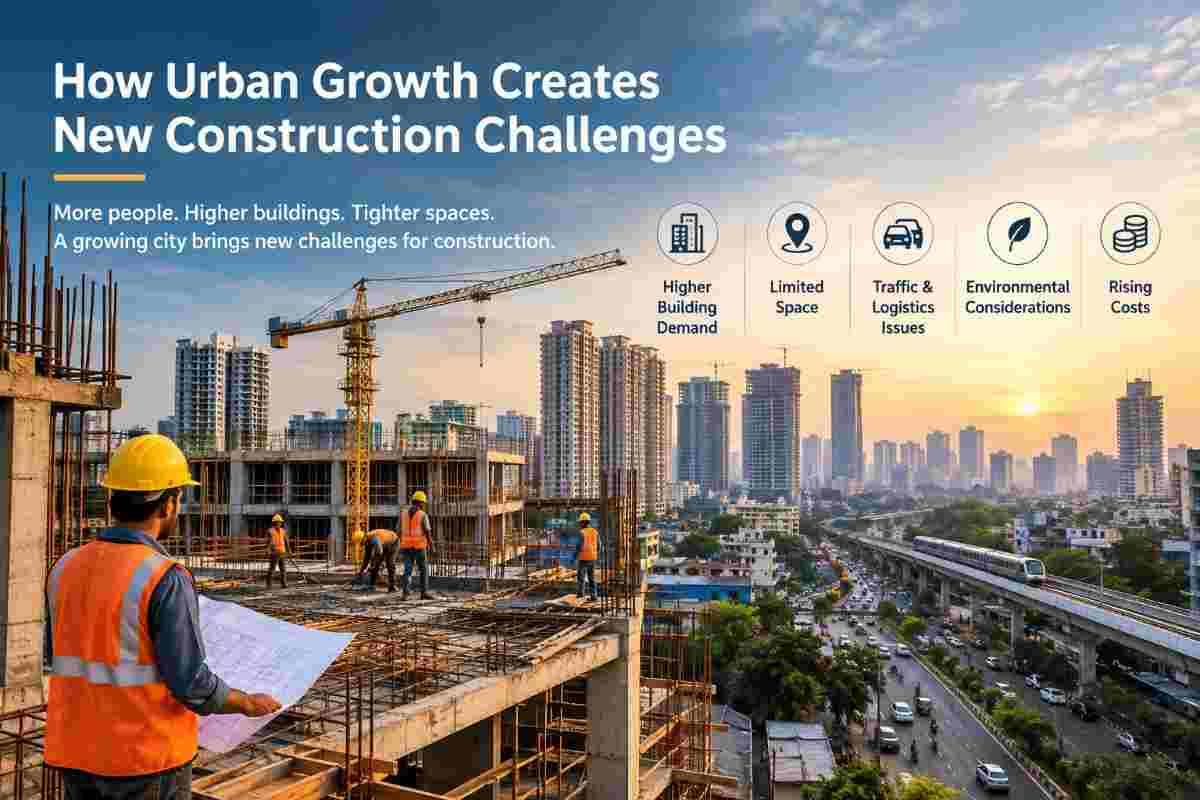
India's cities are expanding faster than almost anywhere else in the world. According to UN estimates, nearly 40% of India's population will live in urban areas by 2030, adding immense pressure on housing, transport, and infrastructure. This rapid urban growth is reshaping skylines — but it's also reshaping the construction industry itself. Builders, contractors, and infrastructure developers are facing a new set of challenges that didn't exist a generation ago: shrinking work sites, ageing buildings that need upgrading, denser underground utility networks, and stricter regulations on noise and vibration.
At Core Cutting India, we work at the intersection of these challenges every day. As specialists in core drilling, wall sawing, and precision concrete cutting, we see firsthand how urbanization is forcing the construction industry to rethink traditional methods. In this article, we explore the key ways urban growth is creating new construction challenges — and how modern cutting and drilling technologies are helping the industry adapt.
1. Shrinking Space for Construction Activity
One of the most visible effects of urban growth is the disappearance of open land. In cities like Mumbai, Bengaluru, Delhi NCR, and Pune, new construction projects are increasingly squeezed between existing buildings, narrow lanes, and busy roads. This lack of space creates several downstream problems:
- Limited access for heavy machinery: Traditional demolition equipment, cranes, and large drilling rigs often cannot be manoeuvred into tight urban plots.
- Reduced staging area: Contractors have less room to store materials, park vehicles, or set up temporary structures.
- Increased risk to neighbouring properties: Any structural work must be carried out with extreme precision to avoid damaging adjacent buildings.
This is where precision techniques like diamond core drilling and wall sawing become essential. Unlike conventional breaking methods, these techniques allow contractors to cut clean, accurate openings in walls, floors, and slabs without generating excessive vibration or debris — a critical advantage when working in confined urban sites.
2. Retrofitting and Renovating Ageing Structures
Urban growth isn't only about new buildings — it's also about upgrading old ones. As cities densify, many older structures need to be retrofitted to accommodate new plumbing, electrical systems, elevators, HVAC ducts, or even structural reinforcements for seismic safety. This creates a unique set of construction challenges:
- Cutting into load-bearing structures without compromising structural integrity
- Working around existing utilities that were never mapped digitally
- Minimizing disruption to occupants who continue living or working in the building during renovation
Retrofitting is technically more demanding than new construction because every cut, drill, or modification must account for the building's existing condition. Specialized core cutting services are often the only way to create new openings for pipes, cables, or ducts without triggering costly structural failures.
3. Congested Underground Utility Networks
As cities grow, so does the complexity of what lies beneath them. Water lines, sewage systems, gas pipelines, fiber-optic cables, and electrical conduits are often layered on top of each other, sometimes with outdated or incomplete records. This underground congestion creates real risks for construction teams:
- Accidental utility strikes causing service outages
- Safety hazards from gas or electrical line damage
- Project delays due to unexpected utility conflicts
- Increased liability and repair costs
Modern core drilling techniques, combined with careful site surveys and utility scanning, allow contractors to create precise openings for new utility connections without disturbing surrounding infrastructure. This precision is especially critical in dense urban areas where a single utility strike can affect an entire neighbourhood.
4. Stricter Noise, Vibration, and Environmental Regulations
Urban growth has also led to tighter regulations around construction activity, particularly in residential and commercial zones. Authorities in major Indian cities now enforce restrictions on:
- Permitted working hours for noisy construction activity
- Maximum allowable vibration levels near sensitive structures
- Dust and debris control requirements
- Noise pollution limits near hospitals, schools, and residential zones
Traditional demolition methods like jackhammering or manual breaking often generate noise and vibration levels that exceed these limits, leading to fines, complaints, or work stoppages. Diamond-tipped core cutting and sawing equipment produce significantly less noise and vibration, making it possible to comply with urban regulations while still completing structural work efficiently.
5. Increased Demand for Speed and Efficiency
In fast-growing cities, time is money. Real estate developers, infrastructure agencies, and private clients all face pressure to complete projects faster to meet rising demand for housing, offices, and public infrastructure. This urgency creates challenges around:
- Compressed project timelines
- Coordination between multiple contractors and trades
- Balancing speed with quality and safety
Precision cutting techniques help address this challenge directly. Because core drilling and wall sawing produce clean, accurate cuts on the first attempt, they reduce the need for rework, patching, or corrective demolition — ultimately saving time across the project lifecycle.
6. Structural Safety in High-Density Environments
As buildings get taller and closer together, the margin for structural error shrinks. A poorly executed cut or an improperly placed opening can compromise a building's load-bearing capacity, with consequences that ripple through neighbouring structures. This makes structural assessment an essential part of any modern urban construction project.
Professional core cutting companies typically work alongside structural engineers to:
- Identify load-bearing walls and columns before any cutting begins
- Determine safe locations and dimensions for new openings
- Use non-destructive methods wherever possible to preserve structural integrity
This collaborative, engineering-led approach has become standard practice in dense urban construction, where the cost of a structural mistake is far higher than in low-density areas.
7. Sustainability and Waste Reduction Pressures
Urban growth has also intensified scrutiny on construction waste and environmental impact. Cities generate enormous volumes of construction and demolition (C&D) waste, and many municipal bodies now mandate proper waste segregation, recycling, and disposal.
Precision cutting methods contribute to sustainability goals in several ways:
- Less debris generation compared to traditional breaking or demolition
- Reduced material wastage, since cuts are accurate and controlled
- Lower dust emissions, often achieved through wet-cutting techniques that suppress airborne particles
- Selective demolition, which allows specific building elements to be removed while preserving reusable materials
As Indian cities adopt stricter environmental norms, construction companies that use efficient, low-waste cutting methods will be better positioned to meet compliance requirements.
8. Coordination Challenges Across Multiple Stakeholders
Large urban construction projects rarely involve just one contractor. Architects, structural engineers, MEP (mechanical, electrical, plumbing) contractors, government authorities, and specialized service providers like core cutting teams must all coordinate closely. Miscommunication between these stakeholders can lead to:
- Openings cut in the wrong location
- Conflicts between structural and MEP requirements
- Delays caused by rework or design changes
This is why experienced core cutting and drilling contractors increasingly work as an integrated part of the project team, reviewing drawings, attending site coordination meetings, and adjusting plans in real time as urban construction projects evolve.
How Core Cutting India Helps Address These Challenges
At Core Cutting India, we specialize in solutions built specifically for the realities of modern urban construction. Our services include:
- Diamond core drilling for precise openings in concrete, brick, and stone
- Wall sawing and floor sawing for clean, controlled structural modifications
- Selective and controlled demolition to minimize disruption in occupied buildings
- Utility-friendly cutting techniques that reduce the risk of damaging underground or embedded services
- Low-noise, low-vibration equipment suited for dense residential and commercial zones
Whether it's creating openings for elevators in a retrofit project, cutting precise ducts for HVAC systems, or performing structural modifications in a high-rise under tight deadlines, our team combines technical expertise with a deep understanding of urban construction constraints.
Conclusion
Urban growth is transforming India's cities — and with it, the construction industry's approach to space, safety, sustainability, and speed. From shrinking work sites and ageing infrastructure to underground utility congestion and stricter regulations, today's contractors face challenges that demand precision, planning, and specialized expertise.
Core cutting and drilling technologies have emerged as essential tools for navigating these urban construction challenges. By enabling clean, accurate, and low-impact structural work, they allow builders to work efficiently in even the most constrained environments — without compromising safety or compliance.
As India's urban population continues to grow, the demand for precise, professional construction solutions will only increase. Companies like Core Cutting India are helping the industry meet this demand, one precise cut at a time.
People Also Ask
1. What are the biggest construction challenges caused by urban growth in India?
The main challenges include limited construction space, ageing infrastructure that requires retrofitting, congested underground utilities, stricter noise and vibration regulations, and increased pressure for faster project timelines.
2. Why is core cutting important for urban construction projects?
Core cutting allows contractors to create precise openings for utilities, ducts, and structural modifications without generating excessive noise, vibration, or debris — making it ideal for dense, regulation-heavy urban environments.
3. How does urbanization affect construction in older buildings?
Urban growth often requires retrofitting older buildings with new plumbing, wiring, elevators, or reinforced structural elements, which demands careful, non-destructive cutting techniques to avoid compromising the building's integrity.
4. What construction techniques reduce noise and vibration in cities?
Diamond core drilling and wall sawing produce significantly less noise and vibration compared to traditional jackhammering or manual demolition, helping contractors comply with urban noise regulations.
5. How does urban construction impact underground utilities?
Dense underground utility networks increase the risk of accidental damage during construction. Precision cutting and careful utility mapping help contractors avoid striking pipelines, cables, and conduits.