
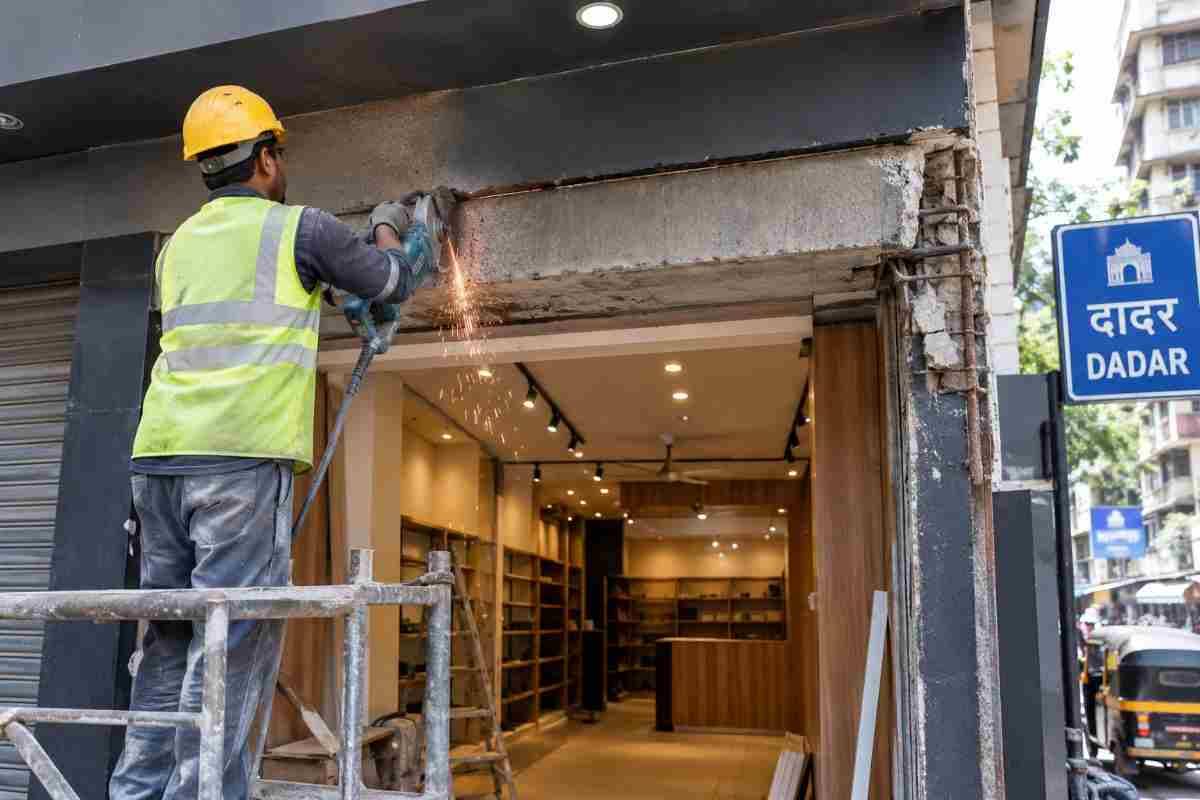
Dadar is one of Mumbai’s busiest commercial hubs. From the crowded lanes near Dadar station and Kabutarkhana to the shopping stretches of Tilak Road, Ranade Road and Gokhale Road, every square foot of frontage counts. A wider entrance, a taller shutter or a glass-fronted display can noticeably change footfall and sales.
But widening an entrance is not as simple as knocking down a wall. The beam above the opening, called the linter (often spelled “linter” in everyday speech), carries the load of the structure above. Cutting or modifying it demands planning, engineering input and the right equipment. This guide explains linter cutting for shop entrance modification in Dadar, what the process involves, and how to do it safely and legally with professionals such as Core Cutting India.
What Is Linter Cutting?
A lintel is a horizontal structural member, usually reinforced concrete (RCC), stone or steel, placed over a door, window or shop opening. It transfers the weight of the wall and slab above to the sides of the opening.
Linter cutting means removing or modifying part of that beam, along with the adjoining masonry or concrete, to create a larger or differently shaped opening. For shop owners, this typically means:
- Widening a narrow shop entrance
- Raising the height of the opening for a bigger shutter or glass facade
- Merging two adjacent shops into one
- Creating a new side or rear entry
- Converting a window into a door
Done roughly, this work can cause cracks, vibration damage to neighbouring units and even structural failure. Done properly with controlled cutting methods, it is clean, precise and far less disruptive.
Why Shop Owners in Dadar Modify Their Entrances
Dadar’s commercial character is shaped by older buildings, many with narrow frontages designed decades ago. Today’s retail needs are different, which is why entrance modification is so common here.
1. Better visibility and footfall. A wider, brighter entrance with a large display area attracts passing customers. In a market where shops sit side by side, a modern frontage stands out.
2. Larger shutters and glass fronts. Many businesses, including garment stores, electronics outlets, cafes and clinics, want wider rolling shutters, automatic doors or full-height glazing.
3. Easier goods movement. Wholesale and retail traders often need to bring in bulky stock. A wider and taller opening makes loading far easier.
4. Accessibility. Ramps and wider doorways help elderly customers and people with mobility needs.
5. Merging units. When a shop owner buys or leases the neighbouring unit, the common wall and its lintel must be partially cut to create a single, larger space.
6. Brand refresh. Franchises and new retail brands frequently need specific entrance dimensions that match their design guidelines.
The Challenge of Working in Dadar
Dadar poses specific challenges that make professional cutting essential rather than optional.
Older structures. Many buildings in Dadar are decades old, including chawls and cessed buildings. Their materials, reinforcement and load paths may differ from modern construction, so assumptions can be dangerous.
Shared walls and adjoining shops. Shops often share walls, and vibration from hammering or breaking can crack plaster, tiles and shutters in neighbouring units.
Dense traffic and limited access. Narrow lanes, heavy pedestrian traffic and strict working windows leave little room for large equipment, debris and noise.
Residential floors above. Many commercial units sit below residential flats. Any structural change must protect the people living above.
Dust and noise. Conventional demolition creates heavy dust and noise, which is a problem for nearby businesses and residents.
These conditions are why controlled cutting techniques are preferred over manual breaking.
How Linter Cutting Is Done: Methods and Equipment
Modern concrete cutting uses diamond tools, which slice through concrete, brick and reinforcement cleanly. The common methods for lintel and entrance work include the following.
Wall Saw Cutting
A wall saw is mounted on a rail fixed to the wall. A diamond blade, usually water-cooled, cuts straight lines through concrete and masonry. It is well suited to door and shop openings because it gives sharp edges and accurate dimensions, with little vibration compared with breakers.
Wire Saw Cutting
For thick or heavily reinforced sections, or where space is tight, a diamond wire saw loops around the section and cuts through it. It can handle large members and hard-to-reach areas.
Hand Saw and Ring Saw Cutting
Handheld diamond saws are used for smaller cuts, corners and finishing work. Ring saws can cut deeper than a standard blade of the same size, which helps with thick walls.
Core Drilling
Diamond core drills create round holes in concrete. For entrance work, cores are often drilled at the corners of the planned opening, which prevents over-cutting and gives a clean finish. They are also used for pipes, ducts and cable passages.
Why Not Just Use a Hammer or Breaker?
Hammering and jack-breaking send shock waves through the structure. This can crack adjacent walls, loosen tiles and weaken reinforcement bonds. Diamond cutting is controlled, quieter and produces far less dust when water suppression is used, which is a major advantage in a crowded commercial neighbourhood like Dadar.
Step-by-Step Process for Shop Entrance Modification
Here is how a well-managed project typically unfolds.
Step 1: Site Inspection and Assessment
A team visits the shop to examine the wall type, lintel position, thickness, visible reinforcement, building age and what lies above and beside the opening. Accurate measurements are taken, and the owner’s goals (new width, height, shutter type) are clarified.
Step 2: Structural Engineer’s Advice
This step should never be skipped. A qualified structural engineer reviews whether the proposed opening is safe. They may recommend a new, stronger lintel or steel beam, additional columns or jambs, or a limit on how wide the opening can be. Cutting a lintel without a replacement or support plan can compromise the entire building.
Step 3: Permissions and Approvals
Depending on the building and the extent of the work, you may need consent from the housing society or landlord, an NOC from the building authority, and in some cases approval from the municipal body. Cessed and heritage-listed structures may have extra rules. Always confirm what applies to your property before work begins, and keep documents ready.
Step 4: Temporary Support (Propping and Shoring)
Before cutting, the load above is supported with adjustable steel props and shoring. This keeps the structure stable while the old lintel is removed and the new one is installed.
Step 5: Marking and Setting Up
The cutting lines are marked precisely. Rails, saws and water-supply arrangements are set up. Dust sheets and barriers protect the shop interior and neighbouring areas.
Step 6: Controlled Cutting
The wall or lintel is cut in manageable sections using wall saws, wire saws or core drills. Each piece is lowered and removed safely, instead of being broken in place.
Step 7: Installing the New Lintel or Support
A new RCC lintel, or a steel beam (such as an ISMB section), is installed according to the engineer’s design. Proper bearing on both sides is essential, and the new member must be secured and cured or fixed as specified.
Step 8: Finishing and Clean-Up
Edges are made good, plaster or cladding is repaired, and debris is cleared. After the structure gains adequate strength, props are removed and the shutter or door frame is fitted.
Benefits of Professional Linter Cutting
Precision. Diamond cutting gives straight, clean edges that make fitting shutters, glass frames and doors much easier.
Safety. Engineered supports and controlled removal protect the building, staff and neighbours.
Low vibration. Particularly important in old and shared buildings.
Reduced dust and noise. Wet cutting keeps dust down, and the work is generally quieter than breaking.
Faster completion. Many shop entrance jobs can be done within a few days, which means less lost business.
Cleaner site. Cutting in sections produces manageable pieces and less rubble.
Estimating the Cost
Cost depends on several factors, so it is better to get a site-specific quote than rely on a general figure. The main factors are:
- Thickness and material of the wall (brick, RCC, stone)
- Length and depth of cutting
- Amount of reinforcement steel
- Method used (wall saw, wire saw, hand saw)
- Height and accessibility of the work area
- Whether propping and a new lintel or steel beam are required
- Timing, since night or after-hours work may be needed in busy areas
- Debris removal and finishing requirements
Cutting is usually charged by the running foot or by the project scope, while structural support, new beams and finishing are separate. A site visit is the most reliable way to get an accurate estimate.
Safety Precautions You Should Insist On
- Engineer sign-off before any lintel or load-bearing element is cut.
- Proper propping at all stages of the work.
- Trained operators with experience in diamond cutting equipment.
- Personal protective equipment such as helmets, gloves, goggles, ear protection and masks.
- Water management to control slurry and prevent it from spreading to neighbouring shops.
- Electrical safety, since water and power tools need earthing and care.
- Barricading and signage to keep pedestrians away from the work area.
- Monitoring for cracks in adjoining structures during and after the work.
Common Mistakes to Avoid
- Hiring unskilled labour to break the wall by hand
- Skipping the structural audit to save money
- Cutting before propping
- Ignoring society or landlord permission, which can lead to disputes and legal trouble
- Choosing the cheapest quote without checking equipment, experience and safety practices
- Not planning the shutter or frame dimensions before cutting, which leads to costly corrections
Why Choose Core Cutting India for Linter Cutting in Dadar?
When you are modifying a structural element in a busy commercial area, experience and equipment matter. Core Cutting India specialises in concrete cutting and related services, including wall cutting, core drilling and opening creation for shops, offices and homes.
Here is what shop owners in Dadar can expect from a professional cutting partner:
- Modern diamond cutting equipment suited to RCC and masonry
- Experienced operators who understand working in tight, occupied buildings
- Site-specific planning that respects neighbouring shops and residents
- Clean, low-vibration, low-dust methods that reduce disruption
- Coordination with your structural engineer and contractor so the cutting, support and finishing fit together
- Clear communication on scope, timelines and expectations
Visit https://corecuttingindia.com/ to learn more about services or to request a site visit.
Frequently Asked Questions (People Also Ask)
What is linter cutting?
“Linter” is a common variant of “lintel.” Linter cutting is the process of cutting or removing part of the beam above a door, window or shop opening so the opening can be widened, raised or reshaped.
Can I widen my shop entrance in Dadar?
Often yes, but it depends on the building’s structure, the position of load-bearing elements and the approvals required. A structural engineer’s assessment and permission from the society or landlord are usually necessary before work begins.
Is it safe to cut a linter?
It is safe when planned properly. Safety depends on an engineer-approved design, temporary propping during the work and installation of a suitable replacement linter or beam. Cutting without these steps is risky.
How much does concrete wall cutting cost in Mumbai?
The cost varies with wall thickness, material, reinforcement, cutting length, access and whether new beams or supports are needed. A site visit is needed for an accurate quote.
How long does shop entrance modification take?
Small openings may take a few days, while larger or more complex jobs, including new lintel installation and finishing, can take longer. Curing time for new concrete elements should also be factored in.
Do I need permission to change my shop entrance?
In most cases you will need consent from the landlord or housing society, and possibly approvals from local authorities, especially if the change affects structural elements or the building facade. Check the rules that apply to your property.
What is the difference between wall saw cutting and breaking?
Wall saw cutting uses a diamond blade to make precise, low-vibration cuts, while breaking uses hammers or jack-breakers that create shock and can damage the surrounding structure. Cutting is cleaner and generally preferred for sensitive buildings.
Can a load-bearing wall be cut for a shop door?
Sometimes, but only with proper structural design. The load must be transferred through a new lintel or beam and adequate supports. This should never be done without an engineer’s guidance.
Does diamond cutting create a lot of dust and noise?
It creates much less than traditional demolition, especially with water-cooled blades. Some noise and slurry are still produced, so site management is important.
Final Thoughts
Modifying a shop entrance in Dadar can transform how customers see and reach your business. But the lintel above that opening is a structural component, and handling it with care is non-negotiable. The right approach combines an engineer’s design, the right permissions, proper propping and precise diamond cutting carried out by experienced professionals.
If you are planning linter cutting for a shop entrance in Dadar, Mumbai, start with a site inspection and a clear plan. Reach out to Core Cutting India to discuss your project and get guidance on a safe, efficient and neat entrance modification.