
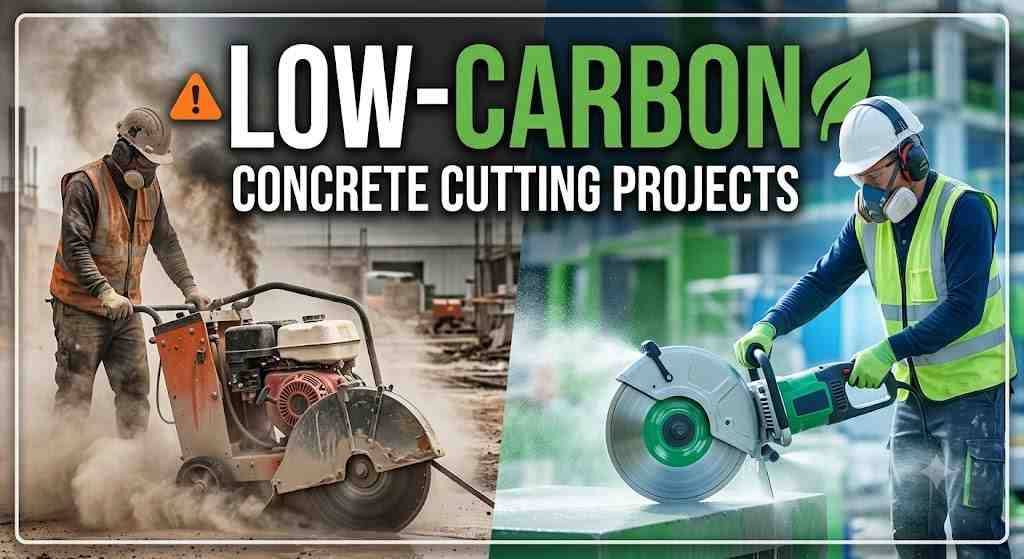
Concrete is the backbone of modern construction, but it also carries a high environmental cost. Cement production alone accounts for roughly 7-8% of global CO2 emissions, and every stage of a concrete project — from pouring to cutting to demolition — adds to that footprint. As sustainability becomes a non-negotiable priority across the construction industry, contractors and property owners alike are asking a critical question: how can we cut, core, and demolish concrete without adding unnecessary carbon to the atmosphere?
At Core Cutting India ([email protected]), we believe concrete cutting doesn't have to be a dirty, energy-intensive process. With the right equipment, techniques, and planning, concrete cutting projects can be executed with significantly lower emissions, less waste, and a smaller environmental footprint — without compromising on precision or safety. This blog explores the most effective low-carbon methods available today for concrete cutting projects.
Why Low-Carbon Concrete Cutting Matters
Traditional concrete cutting methods often rely on diesel-powered saws, excessive water usage, and equipment that generates high levels of dust, noise, and airborne particulate matter. These factors don't just harm the environment — they also pose health risks to workers and nearby communities, and can violate increasingly strict environmental regulations.
Green building certifications like LEED, IGBC, and GRIHA now factor in construction-phase emissions, not just the operational carbon footprint of a finished building. This means the methods used during cutting, coring, and demolition can directly affect a project's sustainability rating. For contractors bidding on government or corporate projects, demonstrating low-carbon practices has become a competitive advantage rather than an optional extra.
1. Diamond Wire Cutting: Precision with Minimal Waste
Diamond wire cutting is widely regarded as one of the most efficient and environmentally responsible concrete cutting methods available. Instead of using brute force to break through concrete, diamond wire saws use a continuous loop of wire embedded with industrial diamonds to slice through even heavily reinforced structures with remarkable precision.
The environmental benefits are significant:
- Reduced material waste — because the cuts are precise, there is minimal collateral damage to surrounding structures, which means less debris to transport and dispose of.
- Lower energy consumption — diamond wire systems are often more energy-efficient than traditional jackhammering or explosive demolition methods.
- Quieter operation — less noise pollution means less disruption to surrounding communities and ecosystems.
This method is particularly valuable for large-scale structural cutting, bridge demolition, and dam modifications, where precision directly translates to fewer resources used and less environmental disturbance.
2. Wet Cutting Over Dry Cutting
One of the simplest ways to reduce the environmental and health impact of concrete cutting is switching from dry cutting to wet cutting methods. Dry cutting generates significant airborne silica dust, which is not only a serious respiratory hazard for workers but also contributes to local air quality degradation.
Wet cutting uses a continuous stream of water to cool the blade and suppress dust at the source. While it does use water as a resource, modern equipment increasingly incorporates water recycling systems that capture, filter, and reuse water throughout the cutting process. This drastically reduces net water consumption compared to older systems that simply discharged water after a single use.
Combining wet cutting with slurry containment and filtration systems ensures that runoff doesn't contaminate nearby soil or waterways, making it a far more responsible choice for urban and environmentally sensitive project sites.
3. Electric and Battery-Powered Equipment
Diesel-powered saws and drills remain common on many job sites, but they are also significant contributors to on-site carbon emissions. The shift toward electric and battery-powered concrete cutting tools is one of the most direct ways to lower a project's carbon footprint.
Electric wall saws, battery-operated core drills, and hydraulic power packs run on grid electricity or rechargeable batteries, producing zero direct emissions during operation. When paired with renewable energy sources — such as solar-powered generators on-site — the carbon savings become even more substantial.
Beyond emissions, electric equipment tends to be quieter and requires less maintenance than diesel alternatives, making it a practical upgrade for contractors looking to modernize their fleets while reducing their environmental impact.
4. Hydrodemolition for Selective Concrete Removal
Hydrodemolition uses high-pressure water jets instead of mechanical breakers to remove deteriorated or targeted sections of concrete. This method is especially valuable in bridge repair, parking structure rehabilitation, and industrial facility maintenance.
Because hydrodemolition removes only the damaged or targeted concrete layer while leaving the healthy substrate and rebar intact, it significantly reduces the volume of material that needs to be replaced. Less new concrete required means less cement production — and by extension, lower embodied carbon for the overall project.
Additionally, hydrodemolition eliminates the vibration and micro-fracturing associated with jackhammers, which can compromise the structural integrity of surrounding concrete and lead to premature repairs down the line.
5. Robotic and Remote-Controlled Demolition
Robotic demolition equipment is increasingly being used for controlled, high-precision concrete removal in confined or hazardous environments. These compact, often electrically powered machines can access tight spaces that would otherwise require extensive manual labor or larger diesel equipment.
The low-carbon advantages include:
- Smaller equipment footprint means lower fuel or energy consumption per task.
- Increased precision reduces over-demolition and unnecessary material waste.
- Remote operation improves worker safety, reducing exposure to dust and structural hazards.
While the upfront investment in robotic systems can be higher, the long-term reduction in waste, rework, and safety incidents often justifies the cost — both financially and environmentally.
6. Concrete Recycling and Debris Repurposing
Low-carbon concrete cutting isn't just about the cutting process itself — it's also about what happens to the material afterward. Instead of sending concrete debris to landfills, responsible contractors are increasingly partnering with recycling facilities that crush and repurpose concrete waste into aggregate for new construction projects.
Recycled concrete aggregate (RCA) can be used in:
- Road base and sub-base layers
- New concrete mixes (in appropriate ratios)
- Erosion control and landscaping projects
By keeping concrete debris in circulation rather than extracting new raw materials, recycling significantly cuts the embodied carbon associated with sourcing, transporting, and processing virgin aggregate.
7. Dust Suppression and Air Quality Management
While often viewed primarily as a health and safety issue, effective dust suppression also plays a role in a project's overall environmental footprint. Airborne particulate matter from dry cutting doesn't just endanger workers — it can travel considerable distances, affecting local air quality and settling on surrounding vegetation and water sources.
Low-carbon best practices include:
- Using vacuum-assisted dust extraction systems attached directly to cutting tools
- Employing wet cutting methods wherever feasible
- Scheduling cutting activities to avoid high-wind conditions that spread dust further
- Using biodegradable dust suppressants where water usage must be minimized
These measures may seem incremental, but collectively they reduce the environmental burden of a project well beyond the cutting process itself.
8. Efficient Project Planning to Minimize Re-Work
One of the most overlooked low-carbon strategies is simply better planning. Every unnecessary cut, every miscalculated core hole, and every instance of rework consumes additional energy, generates additional waste, and adds to a project's carbon footprint.
Using digital scanning technologies like ground-penetrating radar (GPR) and 3D structural mapping before cutting begins allows teams to plan precise cut lines, avoid embedded utilities or rebar, and minimize the risk of costly, carbon-intensive mistakes. This kind of upfront investment in accuracy pays dividends in reduced material waste, fewer equipment hours, and lower overall emissions.
The Business Case for Low-Carbon Concrete Cutting
Beyond environmental responsibility, low-carbon concrete cutting methods often make strong business sense. Projects that minimize waste and rework tend to finish faster and at lower cost. Equipment that runs on electricity rather than diesel can reduce fuel expenses over time. And as more clients — particularly in government, commercial, and infrastructure sectors — require documented sustainability practices, contractors equipped with low-carbon methods are better positioned to win and retain contracts.
Regulatory pressure is also increasing. Many cities now impose stricter limits on construction dust, noise, and water discharge, meaning that adopting these practices isn't just good for the planet — it's increasingly a requirement for staying compliant and competitive.
Partnering with the Right Concrete Cutting Team
Achieving genuinely low-carbon outcomes on a concrete cutting project requires more than just switching to a few new tools. It requires a contractor with the expertise to select the right method for each specific job, the equipment to execute it cleanly and precisely, and the operational discipline to manage waste, water, and dust responsibly from start to finish.
At Core Cutting India, we specialize in precision concrete cutting, coring, and demolition services that prioritize both structural integrity and environmental responsibility. From diamond wire cutting to wet cutting systems with integrated water recycling, our team is equipped to help you meet your project goals while minimizing your carbon footprint.
Conclusion
The construction industry's path toward sustainability runs directly through practices like concrete cutting and demolition — processes that have traditionally been resource-intensive but are now ripe for innovation. Diamond wire cutting, wet cutting with water recycling, electric equipment, hydrodemolition, robotic demolition, concrete recycling, and smarter project planning all represent practical, proven ways to reduce the carbon impact of concrete cutting projects.
As regulations tighten and client expectations evolve, contractors who adopt these low-carbon methods today will be better positioned for the projects of tomorrow. Whether you're managing a large-scale infrastructure project or a smaller renovation, choosing sustainable concrete cutting practices is no longer just an environmental choice — it's a smart business decision.
For expert guidance on low-carbon concrete cutting solutions tailored to your project, reach out to Core Cutting India at [email protected]. Our team is ready to help you cut smarter, cleaner, and greener.