
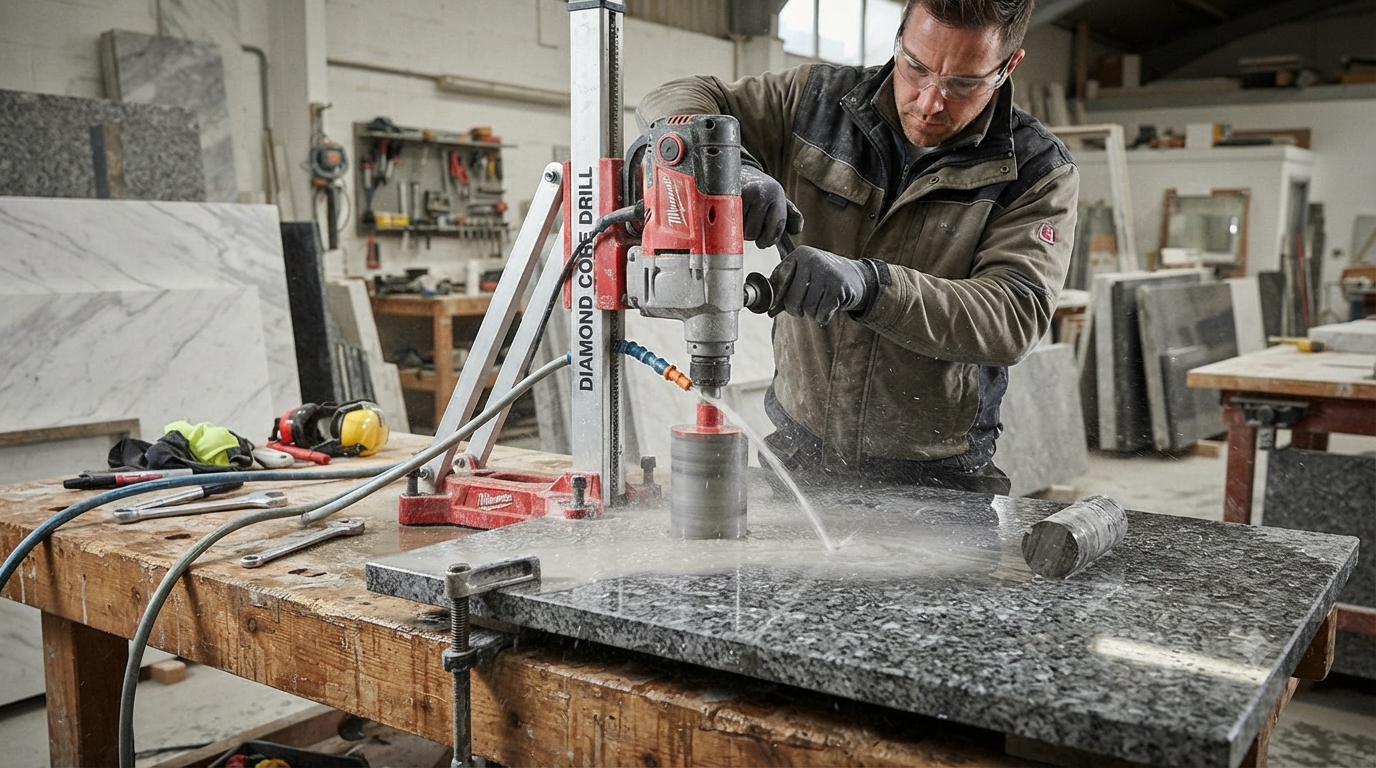
Introduction
When it comes to construction, renovation, and interior design, working with natural stone like marble and granite requires a level of precision that standard drilling tools simply cannot provide. Whether you are installing plumbing in a high-end granite countertop or creating structural anchor holes in masonry, the integrity of the material is paramount.
At [email protected], we understand that stone is a beautiful yet unforgiving medium. Improper techniques can lead to cracks, chips, and expensive material loss. In this guide, we explore the science of stone core drilling, the tools required for success, and the best practices to ensure a clean, professional finish every time.
What is Core Drilling in Natural Stone?
Core drilling is a non-impact, rotary method used to create precise, cylindrical holes in hard materials such as granite, marble, limestone, and engineered stone. Unlike traditional hammer drills that "punch" through material—which can shatter delicate stone—core drilling uses industrial-grade diamond-tipped bits to grind away the material in a circular path.
This process leaves behind a solid "core" or plug, which is then removed, resulting in a smooth, perfectly round hole with minimal stress to the surrounding surface.
Why Use Diamond Core Bits?
Standard drill bits are designed for wood or metal and will fail almost instantly when exposed to the high Mohs hardness of granite or the brittle nature of marble. Diamond core bits are the professional standard because they do not rely on brute force; instead, they utilize thousands of diamond particles embedded in a metal matrix to abrade the stone.
Choosing the Right Bit Matrix:
-
Electroplated Bits: Ideal for softer stones like marble, limestone, and travertine. They provide an aggressive cut but have a shorter lifespan.
-
Sintered (Metal Bond) Bits: These are the gold standard for hard stones like granite. As the outer metal wears away, new diamond edges are exposed, providing long-lasting performance.
Pro Tip: Always match your bond hardness to the stone. Use a soft-bond bit for hard materials like granite to allow for faster exposure of fresh diamonds, and a hard-bond bit for soft marble to prevent premature wear.
Essential Techniques for a Perfect Cut
Achieving a clean hole in natural stone is as much about technique as it is about the equipment. Here is how experts at [email protected] approach the process:
-
Precision Marking: Always mark your center point clearly. Using a center-punch dimple can prevent the drill bit from "walking" across the polished surface.
-
Stability is Key: Ensure the stone slab is fully supported. Any vibration or "rocking" can lead to binding, which is the most common cause of stone cracking.
-
Water Cooling: Wet drilling is non-negotiable. Water serves three critical functions: it cools the diamonds to prevent overheating, flushes out slurry (which keeps the cut path clear), and suppresses dangerous silica dust.
-
The "Angle Start": To prevent slipping at the start of your cut, begin at a 45-degree angle to establish a groove before slowly straightening to 90 degrees.
-
Managing Breakthrough: The most dangerous moment for the stone is when the bit is about to break through the bottom. Reduce your pressure significantly in the final 5–8mm to prevent the underside of the stone from chipping.
Safety First: Protecting People and Projects
Stone drilling creates fine dust and requires high-torque machinery, making safety protocols essential.
-
PPE Requirements: Wear safety goggles to protect against flying debris, and always use a respirator to avoid inhaling harmful silica dust.
-
Electrical Safety: Since wet drilling involves water and electricity, ensure all equipment is properly grounded and that you are using a wet-vacuum or water-collection system to keep your workspace dry.
-
Secure the Workspace: If drilling floors or large slabs, ensure the core plug is supported so it does not fall and damage cabinets or finishings below.
Applications in Modern Construction
From residential luxury to large-scale infrastructure, diamond core drilling is incredibly versatile:
-
Plumbing & Electrical: Creating neat, tight-fitting holes for pipes, conduits, and wiring in marble countertops or wall panels.
-
Structural Anchoring: Installing dowels, bolts, and mounting hardware for architectural features.
-
Material Analysis: Extracting core samples for quality testing in engineering and geology labs.
Frequently Asked Questions (People Also Ask)
Q: Can I use a standard drill bit on granite?
A: Absolutely not. Granite has a hardness of 6–7 on the Mohs scale, which will destroy conventional bits in seconds. Always use diamond-tipped or professional sintered core bits.
Q: Why does my drill bit keep "glazing" or sliding?
A: Glazing occurs when the bit’s bond is too hard for the material, preventing new diamonds from exposing. Ensure you are using the correct bond hardness for your specific stone type.
Q: Should I drill from both sides?
A: Yes, if possible. Drilling halfway from each side is the best way to eliminate "exit-face" chipping entirely, especially on brittle or delicate stones.
Q: How do I manage dust during dry drilling?
A: If wet drilling is not an option, you must use a vacuum shroud attached to an industrial HEPA-rated vacuum to capture dust. However, wet drilling is highly recommended for longevity of the bit and safety.
Conclusion
Marble, granite, and stone core drilling is a blend of artistry and precision engineering. Whether you are a professional contractor or a homeowner looking for a clean installation, the right tools and a patient, methodical approach are the keys to a successful project.
If you have a complex project or require expert drilling services, reach out to the professionals at [email protected]. We have the equipment and the expertise to handle your natural stone projects with the care and precision they deserve.
For more information or to request a consultation, contact us today at [email protected].
Follow-up question: Are you currently planning a specific project, such as a countertop installation or a large-scale construction job, that you need advice on?