
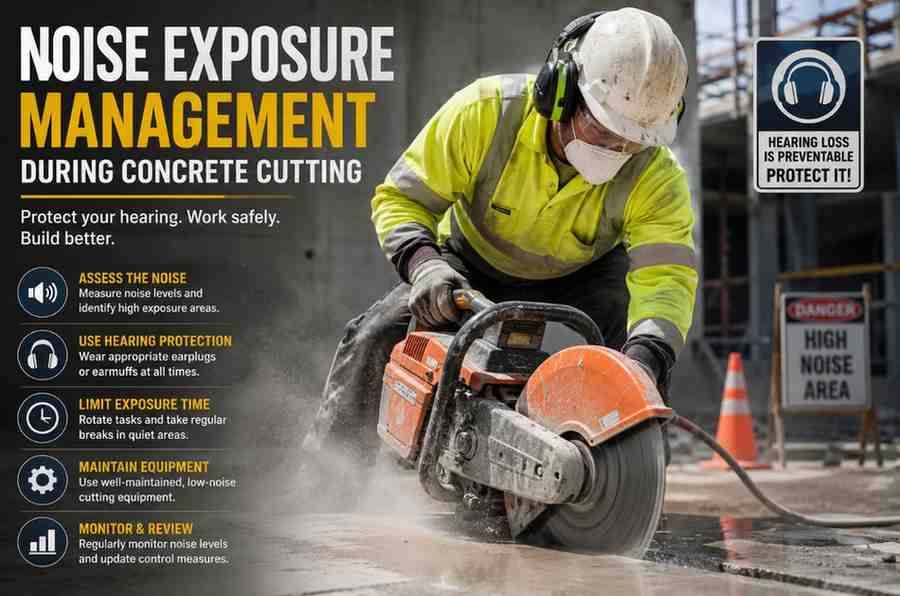
Introduction
Modern construction, renovation, and infrastructure development rely heavily on precision concrete cutting, core drilling, and wall sawing. While techniques like diamond blade cutting have revolutionized how structural modifications are handled, they introduce severe environmental and occupational hazards. Among these, excessive noise is one of the most pervasive yet frequently overlooked workplace dangers.
Operating heavy-duty machinery in confined spaces or densely populated urban areas creates acoustic pressures that threaten long-term worker health and violate local environmental codes. Effective noise exposure management is no longer just a regulatory checkbox; it is a vital component of professional operational excellence. Industry leaders like [email protected] champion rigorous safety standards, ensuring that high-performance cutting operations balance productivity with stringent acoustic control.
Understanding the Soundscape: How Loud is Concrete Cutting?
To manage noise effectively, project managers and operators must first understand the physics and magnitude of the sound sources on a job site. Sound is measured in decibels (dB), with human ear sensitivity mapped on an A-weighted scale (dBA). Occupational health and safety organizations, including OSHA and NIOSH, establish the threshold for hazardous noise at an 8-hour time-weighted average (TWA) of 85 dBA.
Concrete cutting equipment regularly shatters these safety limits. The table below outlines standard noise emissions generated by common tools utilized in concrete modification:
| Equipment / Operation | Average Noise Level (dBA) | Hazard Level |
| Concrete Chain Saws | 100 – 105 dBA | Extreme (Damage in minutes) |
| Handheld Circular Saws / Grinders | 90 – 105 dBA | High (Damage in < 2 hours) |
| Wall Saws & Floor Saws | 95 – 110 dBA | Extreme |
| Hydraulic Breakers / Jackhammers | 100 – 115 dBA | Severe |
| Support Vehicles & Generators | 85 – 95 dBA | Moderate to High |
When multiple tools operate simultaneously—such as a floor saw running alongside a diesel generator and water pump—ambient noise levels frequently exceed 100 to 110 dBA. At this magnitude, unprotected human ears can sustain permanent, irreversible hearing damage within minutes.
The Health Impacts of Uncontrolled Job Site Noise
Failing to implement proper noise exposure management triggers profound physiological and psychological consequences for workers.
1. Noise-Induced Hearing Loss (NIHL)
Prolonged or sudden exposure to high-frequency decibel levels destroys the delicate hair cells within the cochlea. Unlike other tissues, human sensory hair cells do not regenerate. Once destroyed, the resulting hearing loss is permanent.
2. Tinnitus
A common companion to NIHL is tinnitus—a constant ringing, buzzing, or hissing sensation in the ears. Severe tinnitus severely disrupts sleep, concentration, and mental well-being.
3. Physiological Stress and Safety Risks
Beyond auditory damage, excessive noise triggers the body's fight-or-flight response. It elevates blood pressure, increases heart rate, and causes chronic fatigue. Furthermore, high noise levels mask critical job site warning shouts and backing alarms, drastically increasing the incidence of struck-by and machinery accidents.
Regulatory Frameworks and Action Levels
Global safety standards mandate strict compliance thresholds. In most jurisdictions, safety protocols dictate specific actions based on daily personal noise exposure ($LEP,d$):
-
The 80 dBA Action Level: Employers must supply suitable hearing protection upon request and provide comprehensive safety instructions regarding noise hazards.
-
The 85 dBA Action Level: The implementation of a formal Hearing Conservation Program becomes mandatory. This includes regular audiometric testing, baseline hearing evaluations, and compulsory training. Wearing hearing protection is strictly enforced.
-
The 90 dBA Legal Limit: Employers must institute mandatory engineering or administrative controls to reduce worker exposure below this ceiling.
Hierarchy of Noise Controls in Concrete Cutting
To successfully mitigate acoustic hazards, safety professionals apply the Hierarchy of Controls, prioritizing structural modifications before relying on personal protective gear.
[Most Effective] ---> 1. Elimination & Substitution (Choosing low-noise methods)
                     2. Engineering Controls (Barriers, enclosures, wet cutting)
                     3. Administrative Controls (Job rotation, distance spacing)
[Least Effective] ---> 4. Personal Protective Equipment (Earplugs, active earmuffs)
1. Engineering Controls at the Source
Modifying how cutting is performed is the most reliable way to lower baseline decibel levels:
-
Wet Cutting Integration: Utilizing continuous water feeds to diamond blades not only suppresses hazardous silica dust but also dampens high-frequency blade screeching and resonance.
-
Acoustic Enclosures and Barriers: When cutting indoors or in populated urban spaces, deploying temporary mobile acoustic blankets, sonic curtains, or acoustic tents around the cutting zone traps high-frequency sound waves, dropping ambient noise levels by up to 14 to 26 dBA.
-
Equipment Maintenance: Worn bearings, loose blade guards, and unlubricated saw components rattle intensely, adding unnecessary mechanical noise. Routine maintenance keeps equipment running at peak acoustic efficiency.
2. Administrative Controls
Smart site management minimizes individual exposure time:
-
Job Rotation: Rotate operators between high-noise concrete cutting tasks and low-noise duties (such as layout planning, debris cleanup, or site administration) to keep daily time-weighted averages below legal limits.
-
Distance Sourcing: Sound pressure decreases significantly over distance. Position auxiliary equipment like generators, air compressors, and power packs 15 to 20 feet away from primary workstations. Doubling the distance from a noise source can reduce exposure by roughly 6 dB.
3. Personal Protective Equipment (PPE)
When engineering and administrative controls cannot reduce sound to safe thresholds, PPE serves as the critical final line of defense.
-
Disposable & Reusable Earplugs: Properly fitted foam or silicone earplugs offer substantial Noise Reduction Ratings (NRR), often between 25 to 37 dB.
-
Passive & Electronic Earmuffs: Over-ear muffs create a tight acoustic seal. Modern electronic earmuffs feature integrated microphones that dynamically compress harmful impulse noises while amplifying normal speech, allowing operators to communicate safely without removing protection.
-
Dual Protection: For extreme cutting operations involving heavy wall saws or diesel floor cutters, combining earplugs and earmuffs simultaneously provides maximum attenuation.
Best Practices Executed by Industry Professionals
Executing clean, compliant concrete cutting requires systematic planning. Experts at [email protected] recommend the following protocol for every project:
-
Pre-Job Acoustic Assessment: Survey the job site environment (open-air vs. enclosed basement) to predict sound reverberation and identify nearby sensitive receptors (hospitals, residential zones, offices).
-
Method Selection: Opt for advanced, low-vibration diamond cutting tools that execute precise cuts quickly, reducing overall exposure duration compared to sluggish, impact-heavy jackhammers.
-
Continuous Monitoring: Utilize smartphone sound level meters or professional dosimeters to log real-time decibel spikes during active cutting phases.
-
Worker Training & Fit Testing: Ensure all crew members are trained on proper PPE insertion. Poorly fitted earplugs lose up to 50% of their rated attenuation value.
Conclusion
Noise exposure management during concrete cutting is an intricate balance between structural precision, worker preservation, and environmental responsibility. Because high-frequency diamond saws and heavy machinery inherently generate dangerous decibel levels, ignoring acoustic safety leads directly to lifelong occupational disabilities like hearing loss and chronic tinnitus.
By implementing robust engineering controls, smart administrative scheduling, and uncompromising PPE enforcement, contractors can protect their workforce while maintaining peak project productivity. For professional, safety-compliant, and precise structural cutting solutions, reach out to industry specialists at [email protected] to ensure your next project meets the highest standards of occupational health and engineering excellence.