
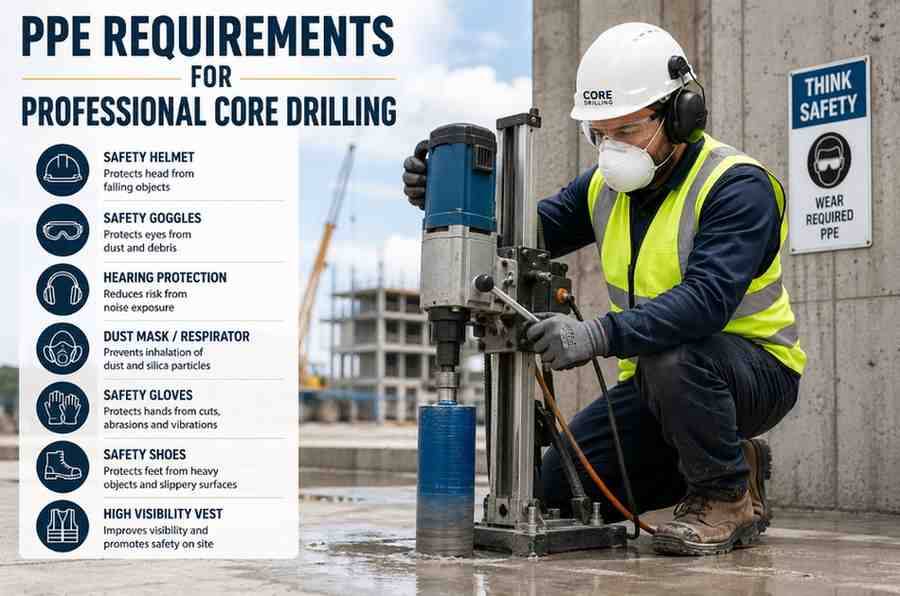
Professional core drilling is a cornerstone of modern construction, civil engineering, and infrastructure retrofitting. Whether creating pathways for electrical conduits, plumbing lines, or HVAC systems through dense reinforced concrete, core drilling demands absolute precision and heavy machinery. However, the raw power required to diamond-drill through stone, masonry, and reinforced concrete introduces intense workplace hazards.
At [email protected], we believe that structural excellence can never be separated from worker safety. Operating heavy industrial core drills exposes technicians to flying concrete shards, abrasive slurry, deafening equipment noise, and—most dangerously—fine crystalline silica dust. Implementing a strict, uncompromising Personal Protective Equipment (PPE) protocol is mandatory for regulatory compliance and, more importantly, for safeguarding human life on the job site.
Understanding the Core Drilling Environment and Hazards
Before exploring specific safety gear, it is critical to understand why specialized PPE is non-negotiable. Core drilling utilizes industrial-grade diamond-impregnated drill bits rotating at high torque. This mechanical process creates a unique matrix of environmental hazards:
-
Airborne Crystalline Silica Dust: Cutting or dry-drilling into concrete releases microscopic quartz particles. Inhaling these particles leads to severe, irreversible lung diseases, including silicosis and pulmonary fibrosis.
-
High Decibel Noise Levels: Core drill motors, hydraulic power packs, and hammering actions generate noise levels frequently exceeding 90 decibels, risking permanent hearing damage.
-
Flying Debris and Slurry: Chunks of aggregate, spinning metal fragments, and pressurized wet slurry pose immediate threats to human eyes and soft tissue.
-
High-Torque Mechanical Kickback: Binding drill bits can cause sudden rotational torque, transferring severe strain to the operator's hands, wrists, and arms.
-
Chemical Burns: Wet concrete and cement slurry are highly alkaline. Prolonged skin contact can cause chemical burns, skin sensitization, and severe ulcerations.
Head-to-Toe PPE Breakdown for Professional Core Drilling
To mitigate these diverse hazards completely, a professional core drilling technician must be equipped with certified, job-rated safety gear from head to toe.
+-----------------------------------------------------------------+
|               PROFESSIONAL PPE CHECKLIST                        |
+-----------------------------------------------------------------+
| [x] Hard Hat / Industrial Safety Helmet (ANSI Z89.1)            |
| [x] Eye Protection: Goggles or Face Shields (ANSI Z87.1)        |
| [x] Respiratory Protection: N95 / P100 / Powered Air-Purifying  |
| [x] Hearing Protection: Earmuffs or Molded Earplugs             |
| [x] Hand Protection: Anti-Vibration & Alkali-Resistant Gloves   |
| [x] Body Protection: Heavy-Duty Coveralls & Long Sleeves        |
| [x] Foot Protection: Steel-Toe, Waterproof Boots                |
+-----------------------------------------------------------------+
1. Head Protection (Industrial Helmets)
Construction environments are unpredictable. When core drilling overhead, vertically, or in multi-level structures, the risk of falling concrete fragments, tools, or structural elements is ever-present.
-
Requirements: Operators and site visitors must wear industrial safety helmets complying with standards like ANSI Z89.1.
-
Best Practices: Helmets should feature a secure chin strap during overhead or elevated core drilling operations to prevent the helmet from dislodging if the operator looks upward or loses balance.
2. Eye and Face Protection
The high rotational speed of diamond core bits can instantly fling sharp aggregate or fractured concrete shrapnel outward. Furthermore, fine dust particles constantly circulate around the drilling zone.
-
Requirements: Standard prescription glasses are insufficient. Technicians must wear safety goggles with indirect venting or tight seals to prevent dust ingress, coupled with clear polycarbonate face shields.
-
Best Practices: Face shields provide a wide barrier against heavy debris impact, while tight-fitting goggles block fine airborne particulate matter from irritating the mucous membranes of the eyes.
3. Respiratory Protection (Guarding Against Silicosis)
Inhalation of respirable crystalline silica is one of the most insidious threats in concrete cutting. Even when utilizing wet-cutting methods to suppress dust, microscopic moisture-bound particles can dry and become airborne.
-
Requirements: Depending on exposure duration and air monitoring results, workers should wear at minimum an N95 or P100 particulate respirator mask. For enclosed spaces or heavy-duty structural coring, Powered Air-Purifying Respirators (PAPRs) offer superior protection by supplying filtered air continuously.
-
Best Practices: Respirators must undergo proper fit-testing. Facial hair can compromise the seal, allowing toxic silica dust to bypass the filter medium.
4. Hearing Protection
The continuous roar of heavy-duty core drilling motors places immense strain on the human auditory system. OSHA guidelines mandate hearing protection when noise exposures equal or exceed an 8-hour time-weighted average of 90 decibels.
-
Requirements: High-Noise-Reduction Rating (NRR) earplugs or industrial over-ear earmuffs.
-
Best Practices: Reusable or disposable foam earplugs must be rolled, inserted deeply into the ear canal, and allowed to expand. Dual protection (earplugs combined with earmuffs) may be deployed in extremely confined, reverberant utility shafts or basement niches.
5. Hand and Arm Protection
Core drilling tools transmit significant mechanical vibration. Additionally, handling abrasive core barrels, sharp concrete edges, and alkaline wet slurry requires robust hand defense.
-
Requirements: Heavy-duty, anti-vibration work gloves that maintain high tactile grip. When handling wet slurry, gloves must be chemically resistant to prevent alkaline skin burns.
-
Best Practices: Wrist cuffs and armlets can be integrated to protect the forearms from abrasive slurry run-off during wall and ceiling coring tasks.
6. Body Protection (Clothing and Coveralls)
Ordinary streetwear has no place on a professional core drilling site. Loose fabric can snag on rotating drill spindles, leading to catastrophic entanglement injuries.
-
Requirements: Snug-fitting, rugged, long-sleeved canvas or denim shirts and heavy-duty work pants. High-visibility vests are required when working near vehicular traffic zones or large active plant sites.
-
Best Practices: Waterproof aprons or full-body chemical-resistant coveralls should be used during wet-drilling operations to prevent cement water from soaking through to the skin, minimizing the risk of cement dermatitis.
7. Foot Protection (Steel-Toe Boots)
Core barrels, heavy anchor bases, and hydraulic stands are exceptionally heavy. Dropping a core bit or rig component can crush unprotected feet instantly.
-
Requirements: Steel-toe or composite-toe safety boots complying with impact and compression safety ratings. Soles must be puncture-resistant and feature aggressive slip-resistant treads to handle wet, muddy job sites.
-
Best Practices: Waterproof footwear is vital for wet coring projects to prevent trench foot, electrical conductivity hazards, and moisture-related discomfort.
Engineering Controls vs. Personal Protective Equipment
A critical distinction emphasized by safety authorities is that PPE is the last line of defense, not the only line. At [email protected], we integrate engineering controls alongside PPE to create a holistic safety ecosystem:
-
Wet Cutting Systems: Continuously feeding water through the center of the diamond drill bit cools the segment and traps dust particles at the source, transforming them into manageable slurry before they become airborne.
-
Local Exhaust Ventilation (LEV): When dry drilling is mandated due to job site constraints, high-efficiency particulate air (HEPA) vacuum shrouds must be attached directly to the drill collar to capture dust instantly.
-
Secure Rig Anchoring: Utilizing heavy-duty vacuum pads or mechanical wedge anchors ensures the drill stand remains rigid, eliminating unexpected drill wandering, binding, or sudden machine kickback.
Training, Maintenance, and Compliance Protocols
Having the highest-grade PPE is useless if personnel are not trained in its proper deployment. A comprehensive corporate safety program requires:
-
Pre-Operational Inspections: Operators must inspect all PPE daily for tears, compromised seals, cracks in hard hats, or worn respirator cartridges.
-
Proper Fitting and Donning: Workers must be trained on how to properly wear, adjust, and remove contaminated gear to avoid secondary exposure to silica dust.
-
Decontamination Zones: Establish dedicated areas for washing off alkaline wet slurry and changing out of contaminated work clothes before entering break areas or leaving the job site.
Conclusion
Professional core drilling is an indispensable technique that unlocks the hidden potential of reinforced concrete structures. However, the forces unleashed during diamond coring—ranging from toxic crystalline silica and deafening noise to high-torque mechanical hazards—demand absolute respect and rigorous safety standards.
By investing in top-tier Personal Protective Equipment, enforcing strict OSHA-compliant protocols, and partnering with seasoned professionals who prioritize safety culture, contractors can ensure zero-harm project delivery. For expert guidance, safe execution, and industry-leading diamond core drilling services tailored to your structural specifications, reach out to us at [email protected] today. Let us help you drill deeper, build stronger, and work safer.