
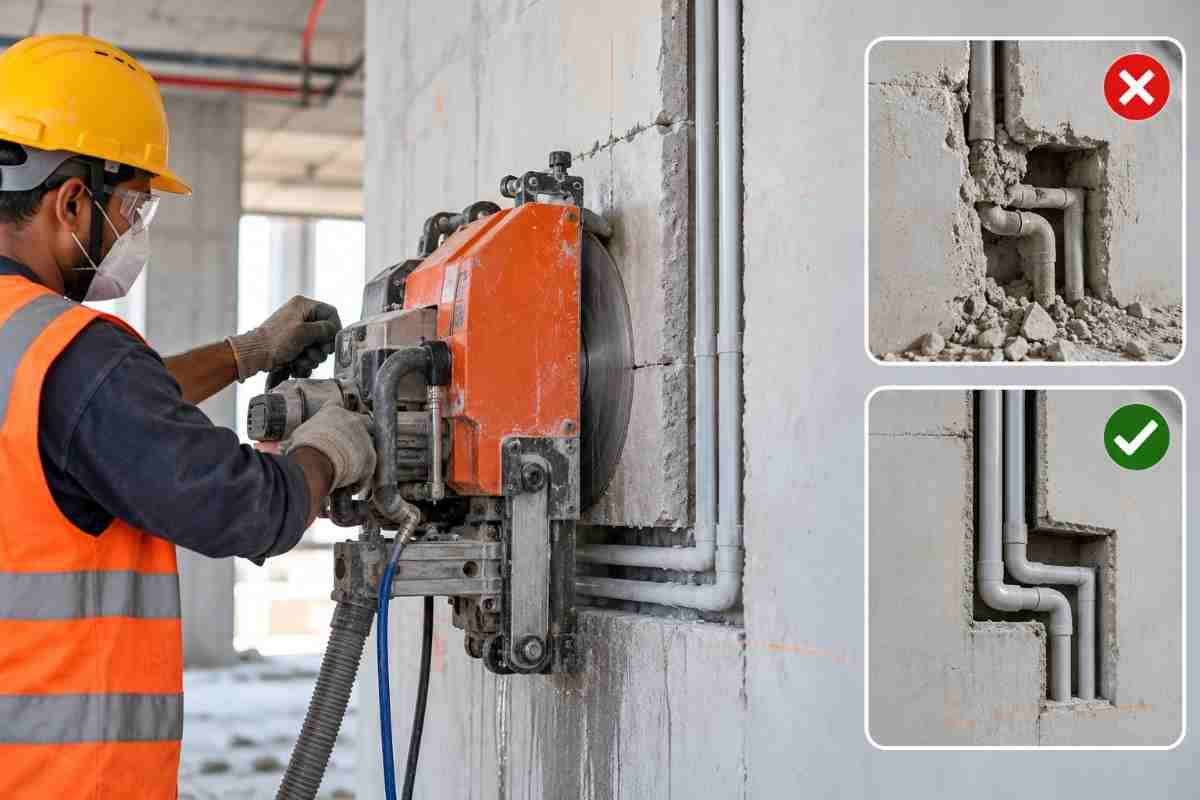
Every renovation begins with an exciting vision: a larger living room, a new doorway, a modern kitchen opening, or an extra window for natural light. Yet many homeowners and builders discover that the real challenge starts after the dust settles. Cracked plaster, uneven edges, damaged adjacent walls, broken tiles and endless patch-up work can turn a dream renovation into a stressful, expensive project.
The root cause is often the same: imprecise wall cutting. When walls are broken with crude methods, the damage spreads far beyond the intended area. When they are cut with precision, the work stays clean, controlled and predictable.
In this guide, brought to you by Core Cutting India, we explain how precise wall cutting reduces repair work after renovation, why traditional demolition methods fall short, and how you can plan your project to save time, money and effort.
Why Repair Work Happens After Renovation
Before looking at the solution, it helps to understand the problem. Post-renovation repair work usually comes from one of these causes:
- Uncontrolled breaking. Hammers, chisels and breakers send shockwaves through the structure and damage areas you never meant to touch.
- Uneven or jagged edges. Rough openings need heavy plastering, packing and finishing to look presentable.
- Micro-cracks in surrounding walls. Vibration from manual demolition can create hairline cracks that appear days or weeks later.
- Damage to embedded services. Hidden pipes, conduits and wiring get hit when cutting depth and position are not controlled.
- Measurement errors. Openings that are slightly too large or misaligned force you to rework door frames, window frames and finishes.
- Excess debris and dust. Heavy rubble damages floors, furniture and neighboring rooms.
Each of these issues adds to your repair bill and delays the project. Precise cutting tackles almost all of them at the source.
What Is Precise Wall Cutting?
Precise wall cutting is the process of removing sections of concrete, brick, RCC or masonry walls using specialized diamond-tipped equipment. The result is a clean, accurate opening with straight edges and minimal collateral damage.
The most common techniques include:
1. Wall Saw Cutting
A track-mounted diamond blade cuts through walls in straight, controlled lines. It is ideal for large openings such as doorways, windows, staircases and lift shafts.
2. Wire Saw Cutting
A diamond-impregnated wire loops around the section to be removed. This suits thick, heavily reinforced or irregular structures where blades cannot reach.
3. Core Cutting (Core Drilling)
A cylindrical diamond bit drills perfectly round holes for plumbing, HVAC ducts, electrical conduits, cable trays and ventilation. This is the technique your project relies on when services must pass through slabs and walls.
4. Hand Saw and Flush Cutting
For tight spaces and edge-to-edge accuracy, handheld diamond saws achieve flush cuts close to floors and ceilings.
Unlike hammering or breaking, these methods cut the material instead of shattering it, which is the key to fewer repairs afterward.
How Precise Wall Cutting Reduces Repair Work
1. Clean Edges Mean Less Plastering and Finishing
A diamond blade leaves smooth, straight, near-finished edges. You do not need to fill large gaps, correct crooked lines or rebuild broken corners. Plastering is limited to a thin finishing coat instead of heavy patchwork.
With manual breaking, edges can be uneven by several centimeters. Masons then spend hours packing, leveling and re-plastering. That extra labor shows up directly in your costs.
2. Minimal Vibration Protects the Surrounding Structure
Hammers and breakers transmit strong vibrations through walls, beams and slabs. These vibrations can:
- Loosen existing plaster
- Crack tiles in adjacent rooms
- Weaken joints and mortar
- Create hairline cracks that widen over time
Diamond cutting is low-vibration. The blade slices only along the planned line, so the rest of the structure stays undisturbed. This is especially valuable in occupied buildings, apartments, offices, hospitals and heritage structures.
3. Accurate Openings Reduce Frame and Fitting Rework
A door frame or window frame needs an opening that matches its dimensions within a tight tolerance. If an opening is too large, you need extra concrete or brickwork to close the gap. If it is too small, you must cut again.
Precise cutting, guided by tracks, laser alignment and measured markings, delivers openings that match the design drawing. The result is faster installation and no corrective masonry.
4. Protection of Hidden Services
Walls often contain electrical conduits, water lines, gas pipes and data cables. Professional cutters scan the wall first using tools such as rebar and service detectors. They then plan cutting depth and position to avoid these elements.
Accidentally hitting a pipe or cable leads to:
- Water leakage and damp patches
- Electrical faults
- Emergency repairs
- Damage to finished walls and floors
Precise cutting, backed by proper scanning, sharply lowers these risks.
5. Less Debris Means Less Cleanup and Floor Damage
Controlled cutting produces manageable slabs and pieces instead of scattered rubble. Many wall cutting services also use water cooling, which suppresses dust and keeps the working area cleaner.
This protects:
- New flooring and tiles
- Furniture and fixtures
- Adjacent rooms
- Air quality for occupants
Fewer scratches, stains and dust-related damages mean fewer touch-ups later.
6. Structural Safety and Fewer Corrective Measures
Cutting a wall incorrectly can compromise load-bearing capacity. Poorly planned cuts may force emergency propping, beam installation or structural strengthening after the fact.
A precise approach lets engineers plan temporary supports, lintels and reinforcement in advance. Openings are made to design, so you avoid costly structural corrections later.
7. Reduced Noise and Disruption
Diamond cutting is considerably quieter than hammer-based breaking. While this does not directly affect repair work, it prevents neighbor complaints, work stoppages and rushed corrections that often lead to errors.
Traditional Demolition vs. Precision Cutting
| Factor | Traditional Breaking | Precision Wall Cutting |
|---|---|---|
| Edge quality | Rough, uneven | Clean, straight |
| Vibration | High | Very low |
| Risk of cracks | High | Minimal |
| Dust and debris | Heavy | Controlled |
| Accuracy | Approximate | Millimeter-level |
| Post-work plastering | Extensive | Light finishing |
| Risk to services | High | Low with scanning |
| Overall repair cost | Higher | Lower |
While precision cutting may look more expensive upfront, it usually delivers lower total project costs once repairs, rework and delays are counted.
Real-World Scenarios Where Precision Matters Most
Creating a New Doorway in a Load-Bearing Wall
A clean, accurately sized opening allows engineers to install a lintel or beam exactly where required. There is no excess gap to fill and no stress on the adjoining wall.
Opening Up a Kitchen or Living Area
Open-plan renovations often involve removing large wall sections. Wall saw cutting removes them in controlled blocks without damaging ceilings, floors or neighboring rooms.
Adding Windows or Ventilation
Cutting a new window opening in an external wall demands accuracy so the frame sits flush and waterproofing is simple. Rough openings often lead to seepage and expensive repairs.
Running Plumbing, AC and Electrical Lines
Core cutting makes neat, circular penetrations for pipes and ducts. Hand-chiseled holes are larger than needed, leaving gaps that must be sealed and patched.
Renovating Occupied Buildings
In offices, hospitals and residential complexes, minimizing vibration and dust is essential. Precision cutting protects ongoing operations and finished interiors.
Planning Your Renovation to Minimize Repairs
Precise cutting works best when it is part of a thoughtful plan. Follow these steps:
1. Start with accurate drawings.
Share architectural and structural drawings with your cutting contractor so dimensions and positions are clear.
2. Scan before you cut.
Insist on scanning for reinforcement, conduits and pipes. This prevents surprises.
3. Mark the cut lines clearly.
Clear markings, verified by both the contractor and the site engineer, avoid misalignment.
4. Consult a structural engineer.
Especially for load-bearing walls, get professional input on supports, lintels and sequencing.
5. Protect the surroundings.
Cover floors, furniture and fixtures, and seal off adjacent rooms where possible.
6. Sequence the work properly.
Complete cutting and core drilling before finishing works such as painting, flooring and tiling. This avoids damage to finished surfaces.
7. Choose experienced professionals.
Skilled operators and well-maintained equipment make the difference between a clean cut and costly mistakes.
Cost Savings Hidden in Precision
Many property owners focus only on the quotation for cutting and overlook the downstream costs. Here is where precision saves money:
- Labor savings: Less patching, plastering and leveling work.
- Material savings: Lower consumption of cement, putty, paint and tiles.
- Time savings: Faster installation of frames and fittings, shorter overall timeline.
- Avoided damages: No expensive fixes for broken pipes, cracked tiles or damaged flooring.
- Fewer disputes: Accurate work reduces disagreements among owners, contractors and neighbors.
In many renovation projects, the money saved on repairs exceeds the added cost of professional wall cutting.
Why Choose a Specialist for Wall Cutting in India
India’s construction landscape includes everything from old brick buildings to modern RCC high-rises. Each demands a different approach. A specialist provider offers:
- Modern diamond cutting equipment
- Trained and experienced operators
- Safety-first procedures
- Dust and noise control
- Ability to handle varied thicknesses and materials
- Compliance with site safety rules
At Core Cutting India, the focus is on accuracy, safety and clean results so that your renovation stays on schedule and within budget, with minimal repair work left behind.
Common Mistakes That Lead to Repair Work
Avoid these pitfalls to keep your renovation smooth:
- Hiring based on the lowest price alone. Cheap, unskilled work often creates expensive problems.
- Skipping wall scanning. Unknown pipes and reinforcement can derail the job.
- Ignoring structural advice. Cutting a load-bearing wall without support invites serious trouble.
- Cutting after finishing. Doing cuts late damages new paint, flooring and fixtures.
- Poor communication. Unclear dimensions and markings lead to errors.
Frequently Asked Questions
(Questions below are sample “People Also Ask” style queries. Replace them with your actual PAA list if you have one.)
What is the best way to cut a concrete wall without causing damage?
The best method is diamond wall saw cutting or wire saw cutting, performed by trained operators. These methods cut along a controlled line with low vibration, so the surrounding structure remains intact.
Does wall cutting cause cracks in the remaining wall?
Poor methods like hammering can cause cracks. Precision diamond cutting is low-vibration and rarely causes cracks when done correctly, especially when the opening is properly planned and supported.
How much does wall cutting cost in India?
Costs depend on wall thickness, material, reinforcement, location, opening size and access. Because rates vary, it is best to request a site-specific quotation from a professional provider.
Can you cut a load-bearing wall?
Yes, but only with proper structural planning. An engineer must design supports, lintels or beams before cutting begins to keep the building safe.
Is wall cutting dusty and noisy?
Modern diamond cutting, particularly with water cooling, produces far less dust and noise than traditional breaking, making it suitable for occupied spaces.
How long does wall cutting take?
Most residential openings can be completed within hours to a day, depending on size and thickness. Large or complex projects may take longer.
What is the difference between wall cutting and core cutting?
Wall cutting creates larger rectangular or custom openings such as doors and windows. Core cutting drills round holes for pipes, ducts and cables.
Can wall cutting be done in an occupied house or office?
Yes. Because it is low in vibration and controlled in dust, precision cutting is well suited to occupied buildings when proper protective measures are taken.
Final Thoughts
Renovation should improve your space, not leave you dealing with cracks, patches and endless corrections. The quality of your wall cutting sets the tone for everything that follows. Clean, accurate cuts mean smoother finishing, lower costs, fewer delays and a longer-lasting result.
By choosing precise wall cutting methods, planning carefully and working with experienced professionals, you can dramatically cut down on post-renovation repair work and enjoy your upgraded space sooner.
Planning a renovation in Delhi NCR or elsewhere in India? Visit Core Cutting India to learn more about professional wall cutting, core cutting and concrete cutting services designed to deliver clean, accurate and repair-free results.