
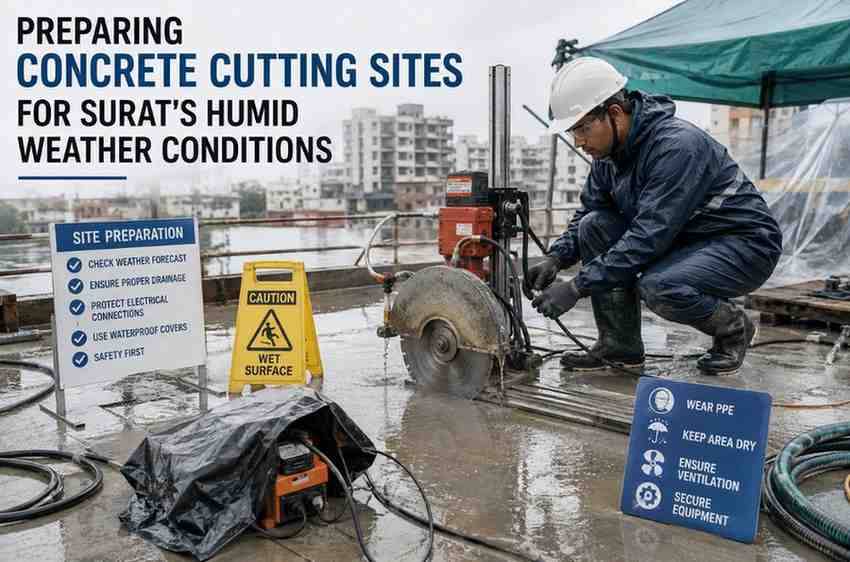
Surat, one of Gujarat's fastest-growing industrial and commercial hubs, experiences a humid subtropical climate marked by intense heat, heavy monsoon rainfall, and consistently high moisture levels for much of the year. For construction and infrastructure projects that involve concrete cutting, core drilling, or slab sawing, this climate presents a unique set of challenges that contractors and site managers cannot afford to overlook. At Core Cutting India ([email protected]), we've worked on countless projects across Surat's residential, commercial, and industrial zones, and we've learned that proper site preparation is the single biggest factor separating a smooth, safe cutting operation from one plagued by delays, equipment failure, and structural issues.
This blog explores exactly how to prepare a concrete cutting site for Surat's humid weather, covering everything from moisture management and dust control to equipment protection, worker safety, and scheduling strategies.
Understanding Surat's Climate and Its Impact on Concrete Cutting
Surat sits close to the Arabian Sea coastline, which means it experiences high ambient humidity throughout the year, often exceeding 70-80% during the monsoon months of June through September. Even outside the monsoon, the city's proximity to the Tapi River and coastal air currents keeps moisture levels elevated compared to drier inland cities.
This persistent humidity affects concrete cutting projects in several ways:
- Slower evaporation of cutting slurry, which increases the risk of pooling water and slippery work surfaces.
- Increased corrosion risk for steel blades, machine housings, and metal fixtures.
- Extended curing times for any concrete repair work done after cutting, since moisture in the air slows the hydration and drying process.
- Higher dust-to-mud conversion, particularly during dry cutting, when airborne dust mixes with ambient moisture and settles as a sticky residue on tools and surfaces.
- Greater risk of mold and efflorescence on exposed concrete edges if drainage isn't managed properly.
Understanding these baseline effects is the first step toward building a site preparation checklist that actually works for Surat's conditions, rather than applying generic guidelines meant for drier climates.
Step 1: Conduct a Pre-Cutting Site and Moisture Assessment
Before any cutting equipment arrives on site, a thorough assessment should be carried out. This includes:
Moisture testing of the concrete slab or structure. Using a moisture meter helps determine whether the concrete has excess internal moisture, which can affect cutting precision and blade wear. Concrete that hasn't fully cured, or that has absorbed groundwater due to poor drainage, behaves differently under the blade than dry, stable concrete.
Site drainage evaluation. Surat's monsoon rains can quickly turn a cutting site into a pooling hazard. Site managers should identify natural drainage paths, install temporary channels or sump pits if necessary, and ensure that water doesn't collect near electrical equipment or cutting stations.
Weather forecasting integration. Rather than relying on general seasonal assumptions, project managers should check short-term humidity and rainfall forecasts before scheduling cutting work, especially for outdoor or semi-covered sites.
Step 2: Choose the Right Cutting Method for Humid Conditions
There are generally two primary approaches to concrete cutting: dry cutting and wet cutting. In Surat's climate, the choice between them carries extra weight.
Wet cutting is often the preferred method for humid environments. It uses a continuous stream of water to cool the diamond blade and suppress dust at the source. Since humidity already keeps dust somewhat "damp" in the air, wet cutting complements this by preventing dust from becoming airborne in the first place, reducing respiratory hazards for workers.
Dry cutting, while sometimes necessary for indoor spaces or areas where water damage must be avoided, requires more aggressive dust extraction systems in humid climates because the fine particulate matter tends to clump and settle rather than dispersing cleanly, potentially clogging extraction equipment faster than in drier regions.
At Core Cutting India, our teams assess each site individually to determine whether wet or dry cutting—or a hybrid approach—best suits the humidity levels, indoor/outdoor exposure, and the nature of the structure being cut.
Step 3: Protect Equipment from Corrosion and Moisture Damage
Humidity is one of the biggest silent threats to concrete cutting machinery. Diamond blades, wall saws, core drills, and power units all contain metal components vulnerable to rust and electrical moisture ingress.
Key preparation steps include:
- Storing equipment in dry, ventilated containers or site sheds rather than leaving tools exposed overnight, especially during monsoon months.
- Applying anti-corrosion coatings or oils to blade cores, guide rails, and metal housings before and after each use.
- Using moisture-resistant electrical connections and ensuring all power sources have proper grounding and weatherproof covering, since humid air combined with water from wet cutting increases the risk of electrical faults.
- Scheduling regular equipment inspections to catch early signs of rust, blade degradation, or motor moisture damage before they cause mid-project breakdowns.
Neglecting equipment protection doesn't just shorten the lifespan of expensive machinery, it can halt an entire project timeline if a critical saw or drill fails unexpectedly on site.
Step 4: Manage Dust and Slurry Control Systems
In humid weather, cutting slurry (the mix of water, concrete dust, and debris produced during wet cutting) behaves differently than in dry climates. It tends to remain wetter for longer and can spread further if not contained properly.
Effective slurry and dust management includes:
- Installing vacuum slurry collection systems directly at the cutting point to capture debris before it spreads across the site.
- Using containment mats or barriers around the cutting zone to prevent slurry runoff into drains, nearby structures, or public areas, which is especially important for urban Surat sites near roads or residential zones.
- Disposing of slurry waste responsibly, in line with local environmental regulations, since improperly discarded concrete slurry can affect local water systems given Surat's already high groundwater table in certain zones.
Step 5: Prioritize Worker Safety in Humid, High-Heat Conditions
Humidity doesn't just affect equipment and materials, it significantly impacts worker safety and endurance. Combined with Surat's high daytime temperatures, humid conditions increase the risk of heat exhaustion, dehydration, and slower reaction times among cutting crews.
Site preparation should include:
- Slip-resistant footwear and flooring treatments in wet-cutting zones, since water and slurry create constant slipping hazards.
- Scheduled hydration breaks and shaded rest areas, particularly for outdoor cutting work during peak humidity hours (typically late morning through mid-afternoon).
- Proper ventilation for indoor or enclosed cutting sites, as trapped humid air combined with dust or fumes from equipment can create unsafe breathing conditions.
- PPE selection suited to humid climates, including breathable but protective clothing, anti-fog eyewear (since humidity fogs up standard safety glasses quickly), and moisture-wicking gloves for better grip control on wet tools.
Step 6: Plan Around Surat's Monsoon Schedule
Surat's monsoon season typically runs from June to September, bringing heavy, sometimes unpredictable rainfall. For outdoor concrete cutting projects, this period requires deliberate scheduling strategies:
- Front-loading outdoor cutting work before monsoon onset when possible, to avoid delays caused by rain-soaked sites.
- Using temporary weatherproof covers or tents over active cutting zones to allow work to continue safely even during light rain.
- Building buffer time into project timelines, since humidity-related equipment maintenance and weather delays are more likely during peak monsoon weeks.
- Coordinating with local weather advisories to avoid cutting during heavy storm warnings, both for safety and to protect uncured cut edges from water damage.
Step 7: Account for Curing and Post-Cutting Concrete Behavior
If cutting is followed by any patching, sealing, or joint-filling work, humidity plays a major role in how well these materials cure. High moisture in the air slows the evaporation process that many sealants and repair compounds rely on to set properly.
Best practices include:
- Using humidity-compatible sealants and epoxy products specifically rated for high-moisture environments rather than standard formulations.
- Allowing extended curing windows compared to drier-climate estimates, and covering freshly treated areas to protect them from unexpected rainfall.
- Monitoring for efflorescence, the white mineral deposits that can form on concrete surfaces when moisture draws salts to the surface, which is more common in humid, monsoon-affected regions.
Why Professional Expertise Matters in Surat's Climate
Concrete cutting in a humid coastal-adjacent city like Surat isn't simply a matter of applying standard construction techniques. It requires climate-specific planning, the right equipment maintenance protocols, and a crew trained to work safely and efficiently in demanding conditions.
At Core Cutting India, our teams bring years of hands-on experience navigating Surat's seasonal humidity and monsoon patterns. From residential renovation cutting to large-scale industrial core drilling, we tailor every site preparation plan to the specific weather conditions, structural requirements, and safety standards each project demands.
Conclusion
Preparing a concrete cutting site for Surat's humid weather conditions goes far beyond simply showing up with the right tools. It involves careful moisture assessment, smart method selection between wet and dry cutting, proactive equipment protection against corrosion, robust dust and slurry management, strict worker safety protocols, and thoughtful scheduling around the monsoon calendar. Skipping any of these steps can lead to project delays, equipment damage, safety incidents, or subpar structural outcomes.
Whether you're planning a small residential cutting job or a large commercial infrastructure project, working with a team that understands Surat's climate inside and out makes all the difference. For expert guidance and professional concrete cutting services tailored to Surat's humid weather conditions, reach out to Core Cutting India at [email protected].