
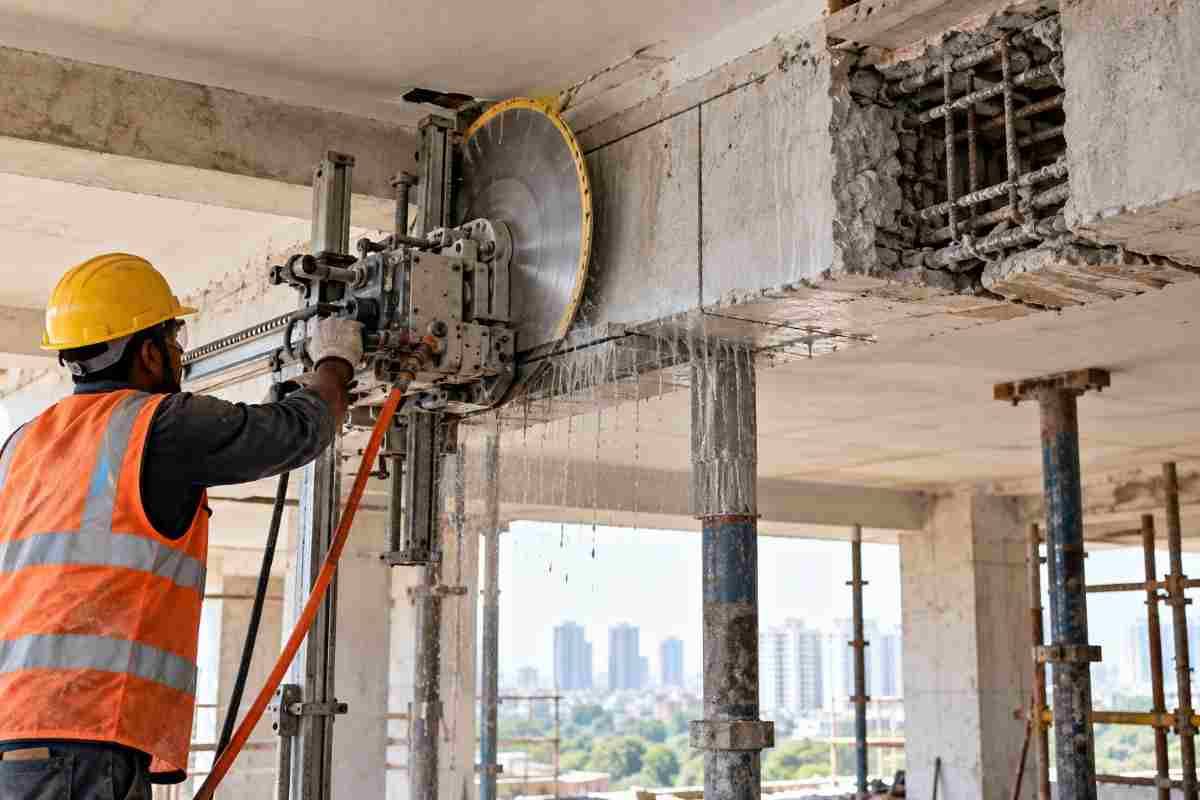
Delhi is changing fast. Old builder floors are being redesigned, DDA flats are getting new layouts, and commercial spaces in Nehru Place, Connaught Place and Okhla are being fitted out for new uses. Almost every one of these renovations eventually runs into the same obstacle: a concrete beam standing where the new design needs open space.
Beam cutting is one of the most delicate tasks in renovation. Done well, it opens up your space safely. Done badly, it can crack the structure, injure workers and cost far more than the original project. This guide covers what professional beam cutting involves, when it’s appropriate, which methods are used, and how to choose the right contractor in Delhi. It draws on the approach followed by Core Cutting India.
What Is Beam Cutting?
A beam is a horizontal structural member, usually reinforced cement concrete (RCC) in Indian buildings. It carries loads from slabs and walls above and transfers them to columns and foundations. Beam cutting means removing, shortening, or creating openings in a beam using specialized cutting equipment instead of manual breaking.
In renovation work, beam cutting is typically used to:
- Remove a beam that blocks a planned open layout
- Create a opening for ducts, pipes, cables or staircases
- Trim a beam that projects too far into a room
- Modify a structure for a change of use, such as converting a home into a clinic or office
- Replace a damaged or deteriorated beam section
The word to remember is controlled. Professional cutting removes exactly what the design requires and leaves the rest of the structure undisturbed.
Why Beam Cutting Is Common in Delhi Renovations
Several features of Delhi’s building stock make beam modification a frequent requirement.
Older construction. Many buildings in areas such as Karol Bagh, Lajpat Nagar, Rajouri Garden and Old Delhi were built decades ago, with layouts that no longer suit modern living. Owners want larger living rooms, open kitchens and better light.
Builder floors and vertical expansion. Redevelopment of independent floors often means reorganizing internal spaces, which can involve cutting through beams and slabs.
Commercial conversions. Showrooms, restaurants and offices need column-free halls, wider entrances, and space for HVAC ducts and services. This often calls for precise openings in beams and slabs.
Infrastructure upgrades. Lifts, new staircases and fire-safety systems are often retrofitted into existing buildings, and each requires cut openings.
Why Professional Beam Cutting Beats Traditional Breaking
Many people still picture beam removal as laborers with hammers and chisels. That approach has serious drawbacks.
Vibration and micro-cracks. Hammering sends shocks through the structure, which can crack neighboring beams, slabs and walls. Saw-based cutting produces minimal vibration.
Poor accuracy. Manual breaking leaves uneven edges and oversized openings. Machine cutting gives clean, straight lines that make finishing and structural strengthening far easier.
Noise and dust. In dense Delhi neighborhoods, neighbors and building societies complain quickly. Modern cutting uses water cooling to suppress dust and is considerably quieter than heavy breaking.
Safety. Uncontrolled demolition drops debris unpredictably. Cutting lets large sections be removed in planned, manageable pieces.
Speed. Diamond cutting equipment often completes in hours what manual breaking takes days to do.
Common Beam Cutting Methods
Different situations call for different techniques. A professional contractor selects the method based on the beam’s size, location, reinforcement and the surrounding structure.
1. Wall Saw Cutting
A wall saw runs on a track fixed to the structure and uses a large diamond blade to cut straight through concrete. It suits deep, precise cuts and works well when beams need to be divided into transportable blocks. Water is used continuously to cool the blade and control dust.
2. Wire Saw Cutting
A diamond wire saw uses a flexible, diamond-embedded wire looped around the element and pulled through at high speed. It is ideal for thick beams, awkward locations or places where a circular blade can’t reach. Wire sawing has almost no depth limit, which makes it valuable for heavy sections.
3. Hand Saw / Ring Saw Cutting
For compact spaces or smaller cuts, a handheld hydraulic ring saw is a good option. It’s flexible and well suited to tight indoor areas where larger machines can’t be mounted.
4. Core Drilling
Core drilling uses a hollow diamond bit to make clean, round holes in beams and slabs. It’s the standard approach for pipes, conduits and sleeves. Often the bits are used in a series of overlapping holes to start larger cuts.
5. Floor and Slab Sawing
When a beam cut forms part of a larger opening, such as for a new staircase or lift shaft, slab saws are used alongside the other methods to make clean horizontal cuts.
Structural Safety: The Part You Can’t Skip
This is the most important section of the guide. A beam is a load-bearing element, and you should never cut one without a structural assessment. Cutting a beam changes how loads travel through the building. If the engineering isn’t right, the consequences can include cracking, sagging slabs and, in the worst case, partial collapse.
A responsible beam cutting project follows these steps:
1. Structural assessment. A qualified structural engineer examines the building, reviews drawings if available, and may test the concrete and reinforcement. They determine whether the beam can be modified at all and what compensating measures are needed.
2. Engineering design. If the beam can be cut, the engineer specifies how the load will be handled afterwards. This might involve steel beams, new RCC members, jacketing, or additional columns.
3. Temporary support. Before any cutting begins, props and shoring are installed to carry the load. This keeps the structure stable throughout the work.
4. Controlled cutting. The beam is cut in planned sections, with each piece secured or lowered safely before removal.
5. Permanent strengthening. Replacement or reinforcing members are installed and checked before temporary supports are removed.
6. Finishing and inspection. Edges are repaired, any exposed steel is protected, and the work is inspected against the design.
A good contractor will never skip these stages. If someone offers to remove a beam quickly without any engineering input, treat that as a warning sign.
Permissions and Regulations in Delhi
Structural changes in Delhi may require approvals depending on the property type and location. Society flats usually need permission from the resident welfare association or cooperative society. Properties in controlled or heritage areas, and any building under municipal jurisdiction, may face additional rules. Always check the requirements with the relevant authority, and with your architect or engineer, before work begins. Regulations change, so confirm current rules rather than assuming.
Benefits of Hiring a Professional Beam Cutting Company
Precision. Diamond tooling cuts to specified dimensions, so openings match the design and later finishing work goes smoothly.
Minimal structural disturbance. Low vibration protects the rest of your building, which matters especially in older structures.
Cleaner worksite. Wet cutting and proper debris management keep dust and mess under control, which is a real advantage in occupied buildings.
Reduced noise. Saw cutting is much less disruptive than breaking, helping you stay on good terms with neighbors.
Faster timelines. Efficient equipment shortens the project schedule and reduces labor costs.
Experienced crews. Trained operators understand reinforcement, load paths and site hazards, and they know how to adapt when conditions differ from the drawings.
How to Choose a Beam Cutting Contractor in Delhi
With many providers in the market, use these criteria to separate the reliable from the risky.
Check their equipment. Look for diamond wall saws, wire saws and core drilling machines rather than only hand tools.
Ask about structural coordination. A good contractor works with your engineer and asks for the structural plan, instead of offering to “just cut it.”
Review past projects. Ask for examples of similar work in residential, commercial or industrial buildings.
Verify safety practices. Ask about shoring, protective gear, debris handling and site supervision.
Understand the quote. A clear estimate should explain what’s included: cutting, debris removal, equipment setup and any support work. Be wary of prices that are far below everyone else’s.
Look for transparency. Reputable firms explain their process, timelines and limitations honestly.
Confirm insurance and compliance. Work at height or inside occupied buildings carries risk, so ask how it’s covered.
What Affects the Cost of Beam Cutting?
Pricing varies from project to project. The main factors include:
- Beam size and depth: Thicker, heavier beams require more time and more powerful equipment.
- Reinforcement density: Heavily reinforced beams take longer to cut.
- Access and location: Cramped spaces, upper floors or hard-to-reach areas raise complexity.
- Cutting method: Wire sawing for large sections typically costs more than simple core drilling.
- Support and strengthening work: Shoring, steel beams or jacketing are separate from the cutting itself.
- Debris removal: Hauling away heavy concrete adds to the scope.
- Timing constraints: Night work or compressed schedules may affect pricing.
Always request an itemized quotation after a site inspection. Quotes given without seeing the site can’t be reliable.
A Typical Beam Cutting Project, Step by Step
To make the process concrete, here’s how a well-run project usually unfolds:
- Site visit and consultation. The contractor inspects the beam, discusses your layout goals and notes access issues.
- Engineer’s report and design. Your structural engineer confirms feasibility and designs the supporting solution.
- Quotation and scheduling. A detailed estimate and timeline are agreed.
- Site preparation. Furniture and finishes are protected, water and power supply are arranged, and the work area is cordoned off.
- Installation of supports. Temporary props take the load.
- Cutting. The beam is cut in sections using the chosen method.
- Removal of debris. Concrete pieces are lowered and carted away.
- Strengthening. Permanent members are installed per the design.
- Cleanup and handover. The area is cleaned, and the work is reviewed against the plan.
Common Mistakes to Avoid
Skipping the structural engineer. This is the most serious error. Never assume a beam is “just decorative.”
Choosing on price alone. The cheapest option often cuts corners on safety and equipment.
Ignoring neighbors. Inform nearby residents beforehand to avoid disputes and delays.
Not planning for debris. Heavy concrete waste needs a clear removal route, especially in tight lanes and apartment buildings.
Cutting before supports are in place. Props must be installed and checked before the first cut.
Rushing the finish. Edges, exposed rebar and new joints need proper treatment to prevent corrosion and cracking later.
Frequently Asked Questions
Can any beam be cut during renovation?
No. Some beams carry significant loads and can only be modified with a structural engineer’s design and compensating supports. Others may be non-structural or only lightly loaded. Only an engineer can make that call.
How long does beam cutting take?
A simple opening or core may take a few hours, while removing a large beam with supports and strengthening can take several days. The timeline depends on the size, access and engineering requirements.
Is concrete beam cutting noisy or dusty?
It is far quieter and cleaner than conventional breaking. Wet cutting controls dust, though some noise is unavoidable.
Will cutting a beam damage my building?
Not when done properly. Low-vibration cutting, proper shoring and engineered replacements protect the structure. Problems usually arise from skipped assessments or unqualified crews.
What is the difference between beam cutting and beam demolition?
Demolition typically involves breaking concrete with impact tools. Cutting uses saws or wires to make precise, controlled cuts, which suits renovation and occupied buildings.
Do I need permission to cut a beam in Delhi?
Often yes, depending on your property type and society rules. Check with your authority or society and your engineer before starting.
Why Choose Core Cutting India for Your Delhi Project
Renovation work demands precision, safety and clear communication. Core Cutting India provides concrete cutting solutions built around those priorities. Its approach emphasizes modern diamond cutting equipment, careful site planning, coordination with structural professionals and clean, controlled execution. Whether you’re opening up a family home, reconfiguring a commercial floor or adding services to an existing building, an experienced team can help you reach the result you want without compromising structural integrity.
If you’re planning a renovation involving beams, slabs, walls or openings, visit https://corecuttingindia.com/ to discuss your project and request a site assessment.
Final Thoughts
Beam cutting turns cramped, outdated layouts into open, functional spaces, and it’s one of the most effective ways to transform a Delhi property. But it’s also one of the riskiest steps in renovation if handled casually. The formula for success is straightforward: get a structural engineer’s assessment, use modern controlled cutting methods, install proper supports and hire an experienced contractor who treats safety as non-negotiable.
Plan carefully, ask the right questions, and choose a partner with the expertise to match your ambitions. Done right, your renovation will deliver the space you envisioned and a structure that stays sound for years to come.