
Bakhtiyarpur is growing fast. New homes, apartment blocks, shops, schools, and small industrial units are coming up across the town and its surroundings. Every one of these buildings needs a reliable plumbing system, and nearly every one runs into the same problem: how do you get pipes through thick concrete slabs, RCC walls, beams, and foundations without damaging the structure?
The answer is professional core cutting. If you are planning a new water supply line, drainage system, sewer connection, or soil pipe installation in Bakhtiyarpur, this guide explains what core cutting is, why it matters for plumbing, and how to choose a service you can trust. It also shows how Core Cutting India (https://corecuttingindia.com/) can help.
What Is Core Cutting?
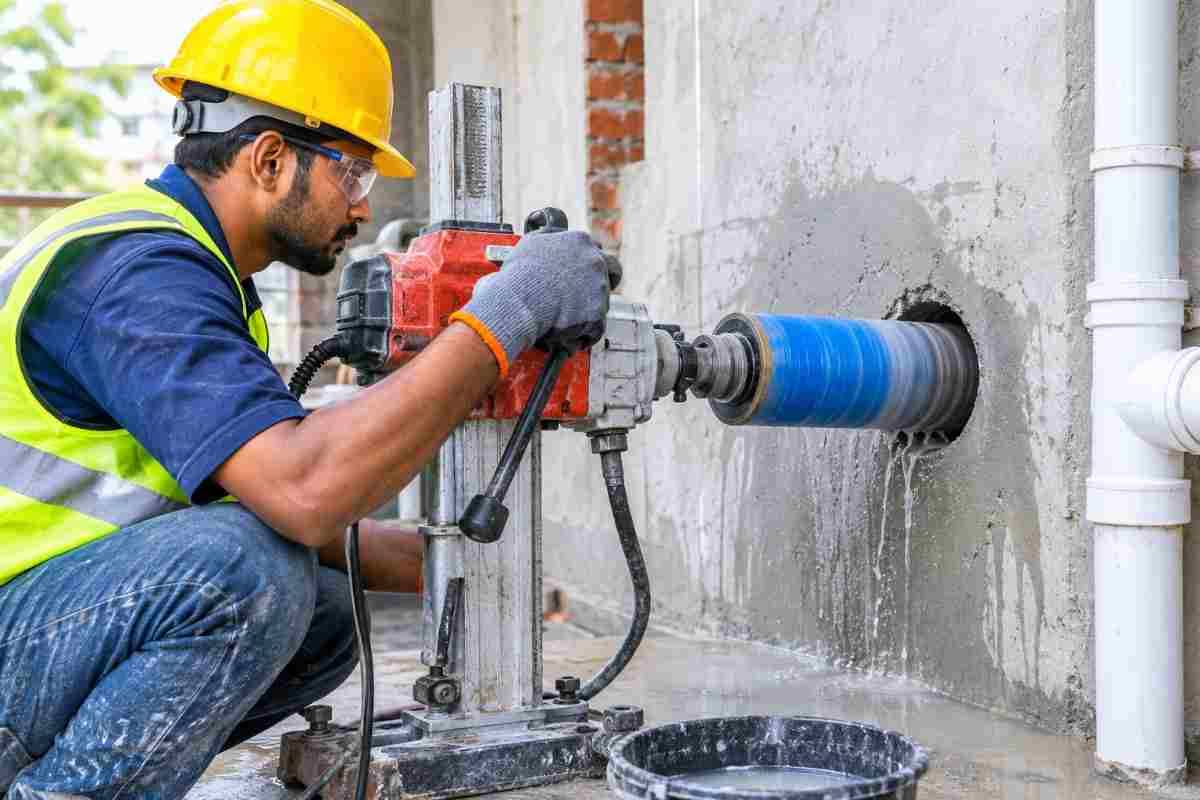
Core cutting, also called core drilling or diamond core drilling, makes clean, circular holes in hard materials such as reinforced concrete, brick, stone, and asphalt. The machine uses a hollow cylindrical drill bit with industrial diamond segments on its edge. As the bit rotates, it grinds through the material and leaves behind a solid cylinder of concrete, the “core.”
The holes it produces are smooth, round, and accurate. They can range from a few centimetres to several hundred millimetres in diameter, depending on the pipe you need to pass through.
Compared with a hammer drill or manual chiselling, core cutting is faster, cleaner, and far safer for the building. It does not shake the structure, and it avoids the cracks and chipped edges that rough methods leave behind.
Why New Plumbing Connections Need Core Cutting
Plumbing systems depend on pipes running through floors, walls, and foundations. In a new connection, you often need to:
- Pass a water supply line through an external wall
- Install a drainage or waste pipe through a slab
- Connect a bathroom or kitchen to the main sewer line
- Run pipes between floors in multi-storey buildings
- Fit a soil pipe through a beam or retaining wall
- Create openings for rainwater downpipes
If the concrete is already cast, these openings cannot be made by hand without risk. Breaking concrete with a hammer sends vibrations through the structure, can cut the steel reinforcement, and leaves a ragged hole that is hard to seal. Core cutting solves all of this.
Benefits of Core Cutting for Plumbing Work
1. Precise, clean holes. The hole matches your pipe diameter, so the pipe sits snugly and sealing is easier. A well-fitted pipe reduces the risk of leakage and seepage later.
2. Structural safety. Diamond core drilling produces very little vibration. The surrounding concrete stays intact, which matters in load-bearing walls, beams, and slabs.
3. Less dust and noise. Most professional core cutting uses water cooling, which controls dust and keeps the drill bit from overheating. The work is quieter than breaking concrete, which matters in occupied homes and busy commercial areas.
4. Speed and efficiency. A hole that takes hours to chisel can be drilled in minutes, so your plumbing schedule is not held up.
5. Cost savings over time. A clean hole needs less patching, plastering, and repair afterwards. You also avoid expensive structural damage.
Where Core Cutting Is Used in Plumbing Projects
Residential Buildings
In new houses and apartments in Bakhtiyarpur, core cutting is used to create openings for bathroom drainage, kitchen waste lines, and water inlet pipes. It is also used for septic tank connections and for rainwater harvesting systems.
Commercial Buildings
Shops, offices, hotels, and hospitals have heavier plumbing needs. Core cutting makes openings for large-diameter drainage lines, fire-fighting pipes, and multi-floor vertical risers.
Industrial and Institutional Sites
Factories, warehouses, schools, and government buildings often need large core holes for process water lines, effluent drainage, and utility connections.
Retrofit and Renovation Work
When you add a bathroom, move a kitchen, or connect an older building to a new municipal line, you are working with existing concrete. Core cutting lets you add pipe openings without demolishing the surrounding structure.
Understanding the Core Cutting Process
Knowing how the work is done helps you judge whether a contractor is doing it properly. A professional process usually looks like this:
Step 1: Site inspection and marking. The team checks the wall or slab, confirms the pipe size, and marks the exact position of each hole. Good contractors check the layout against your plumbing plan.
Step 2: Scanning for reinforcement and utilities. In reinforced concrete, steel bars and sometimes electrical conduits lie hidden inside. Careful operators locate these before drilling so they avoid cutting load-bearing reinforcement where possible.
Step 3: Machine setup. The drilling rig is fixed firmly to the surface with an anchor or vacuum base. A stable rig gives a straight, accurate hole.
Step 4: Drilling with water cooling. The diamond bit is lowered and water is fed to the cutting point. This keeps the bit cool, flushes out slurry, and minimises dust.
Step 5: Core removal. Once the bit cuts through, the concrete core is removed and the hole is checked for size and alignment.
Step 6: Cleaning up. The slurry is cleaned away, and the area is left tidy so plumbers can proceed straight away.
Choosing the Right Hole Size for Your Plumbing
Hole size should be planned with the plumber before drilling starts. As a general guide, you need a hole slightly larger than the pipe’s outer diameter, so there is room for sleeves, sealant, or fire-stopping material where required.
Common plumbing uses include:
- Small holes for water supply lines and small waste pipes
- Medium holes for bathroom and kitchen drainage
- Large holes for soil pipes, sewer connections, and rainwater downpipes
- Extra-large holes for commercial drainage, risers, and utility openings
If you are unsure, a professional team can advise on the correct diameter based on your pipe specifications and the thickness of the concrete.
Why You Should Hire a Professional Instead of Doing It Yourself
It is tempting to cut costs by using a regular drill or local labour with a hammer and chisel. For concrete plumbing work, this usually backfires.
Risk of structural damage. Hammering can crack slabs, weaken beams, and shake loose adjacent masonry.
Poor hole quality. Irregular holes need extra patching and often leak at the joint.
Safety hazards. Flying debris, dust, and unstable tools put workers and occupants at risk.
Hidden obstacles. Without proper checking, you may hit steel reinforcement, electrical conduits, or other embedded services.
Time and repair costs. What looks cheaper at first often becomes more expensive once you pay for repairs and rework.
A professional service brings the right machines, trained operators, and proven methods. You get a finished hole that your plumber can use immediately.
What to Look for in a Core Cutting Service in Bakhtiyarpur
Not all contractors offer the same quality. Before you hire one, consider the following.
Modern Equipment
Look for a team that uses quality diamond core drilling machines with a range of bit sizes. Good equipment means faster work and cleaner holes.
Experienced Operators
Core cutting needs skill, especially around reinforcement or thick structural members. Ask about the team’s experience with residential, commercial, and industrial plumbing work.
Clear Communication and Quotes
A reliable contractor explains the work, gives a clear quote, and answers your questions without pressure. Be cautious of vague pricing.
Safety Practices
The team should use water cooling for dust control, protect surrounding surfaces, and follow safe working practices on site.
Local Availability
Bakhtiyarpur projects benefit from a service that can respond quickly. A provider who can reach your site without long delays keeps your construction on schedule.
Customer Reviews and References
Ask for feedback from previous clients, or look at completed work where possible.
Why Choose Core Cutting India for Plumbing Connections
Core Cutting India (https://corecuttingindia.com/) provides professional concrete core cutting for homeowners, builders, plumbers, and contractors. For new plumbing connections in Bakhtiyarpur, the service focuses on what matters most to you:
- Precise drilling that matches your pipe specifications
- Low-vibration, dust-controlled cutting that protects your structure and surroundings
- Suitable for RCC walls, slabs, beams, and foundations
- Flexible hole sizes for supply, drainage, and sewer lines
- Work for residential, commercial, and industrial projects
- Straightforward communication so you know what to expect before the work starts
Whether you need a single opening for a bathroom drain or multiple holes across a building, the team works with your plumber to match the plan.
To book a site visit or request a quote, call +91 70096 79903 or visit https://corecuttingindia.com/.
Planning Tips for a Smooth Plumbing Installation
A little planning before core cutting saves time and money.
Finalise your plumbing layout first. Changing hole positions after drilling creates extra work. Confirm pipe routes, diameters, and slopes with your plumber.
Mark clearly and double-check. Make sure marks match the drawings, especially for drainage lines that need a specific gradient.
Share structural information. If you have structural drawings, show them to the contractor. They help avoid cutting main reinforcement.
Check the access. Make sure the team can reach the work area with water and power available.
Coordinate with other trades. Electricians, civil contractors, and plumbers should agree on the sequence of work.
Plan for sealing. After the pipe is installed, seal the gap properly with suitable grout, sealant, or sleeves to prevent leakage and pest entry.
Common Mistakes to Avoid
- Drilling before the plumbing plan is final, which leads to misplaced holes
- Choosing a hole that is too small, making pipe fitting difficult
- Choosing a hole that is too large, making sealing harder
- Ignoring the slope for drainage pipes, which can cause blockages
- Cutting through structural elements without advice
- Hiring on price alone without checking equipment and experience
Is Core Cutting Safe for the Building?
When done correctly, yes. Diamond core drilling is widely regarded as one of the least damaging ways to create openings in concrete. Because it cuts rather than breaks the material, it keeps the surrounding area intact.
That said, safety depends on planning. In critical structural members such as main beams or columns, openings should be checked by a qualified structural engineer. A responsible contractor will tell you when that advice is needed.
Frequently Asked Questions
What is core cutting in plumbing?
Core cutting is the process of drilling clean, round holes through concrete or masonry using a diamond-tipped hollow bit, so pipes can pass through walls, slabs, and floors.
Why is core cutting needed for new plumbing connections?
New water supply, drainage, and sewer lines often have to cross existing concrete. Core cutting creates accurate openings without cracking or weakening the structure.
Is core cutting better than breaking concrete with a hammer?
Generally, yes. It produces cleaner holes, much less vibration, and less damage, and it saves time on repair and finishing.
Can core cutting be done in reinforced concrete (RCC)?
Yes. Diamond bits can cut through concrete and steel reinforcement, though careful planning is important in structural elements.
How long does core cutting take?
A typical hole can often be completed in minutes to under an hour, depending on diameter, depth, and material hardness.
How much does core cutting cost in Bakhtiyarpur?
Cost depends on hole diameter, depth, number of holes, and site access. For an accurate quote, contact Core Cutting India at +91 70096 79903.
Does core cutting make a lot of dust or noise?
Wet core cutting keeps dust low, and it is generally quieter than chiselling or breaking concrete.
Can core cutting be done in an occupied building?
Yes, because it is controlled and low-vibration. Some protective covering and cleanup are still recommended.
What hole size do I need for a drainage pipe?
The hole should be slightly larger than the pipe’s outer diameter. Your plumber can confirm the exact size.
Do I need permission before cutting concrete?
For private, non-structural work, usually not. For structural elements, shared walls, or apartment buildings, check with the builder, society, or an engineer first.
Final Thoughts
Plumbing is one of the most important systems in any building, and its quality begins with how well the pipe openings are made. In a developing town like Bakhtiyarpur, where new construction is steadily increasing, professional core cutting is a smart investment. It protects your structure, keeps your project on schedule, and gives your plumber clean openings to work with.
Whether you are building a new house, extending a commercial space, or adding a new drainage connection, choose a team that values precision, safety, and clear communication.
Ready to get started? Contact Core Cutting India at +91 70096 79903 or visit https://corecuttingindia.com/ to discuss your project and request a quote.