
Renovating a home is exciting. New kitchens, upgraded bathrooms, modern air conditioning, better plumbing, and smarter electrical layouts can transform how a house looks and feels. But behind every successful renovation is a part most homeowners never think about until the work begins: making openings in concrete.
Concrete is strong, which is why it holds a building up. It is also why a hammer drill or a hired labourer with a chisel is the wrong tool when you need a neat hole through a wall, floor slab or beam. Cracks, vibration damage, uneven edges and clouds of dust are common results of the wrong approach.
This is where professional core cutting services come in. In this guide, we explain what core cutting is, why it matters for home renovation, where it is used, how the process works, and how to choose the right provider. Whether you are in a city apartment or an independent house, this information will help you plan with confidence.
What Is Core Cutting?
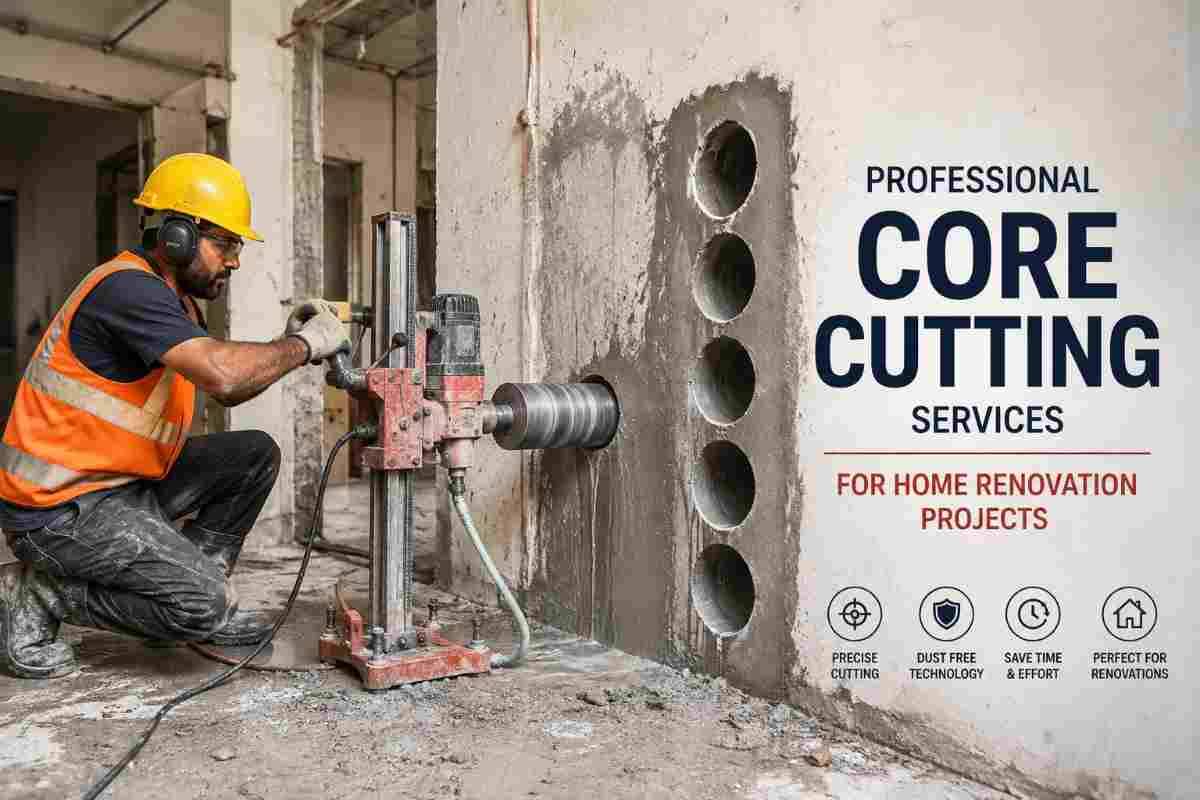
Core cutting, also called diamond core drilling, is a precise method of creating round holes in hard materials such as reinforced concrete (RCC), brick, stone and masonry. Instead of smashing through the material, a hollow cylindrical drill bit with diamond-impregnated segments grinds through it. The bit removes a solid cylinder of material, called the “core,” leaving a smooth-walled hole.
The tool is a core drilling machine, usually mounted on a stand and anchored to the surface, which keeps the bit perfectly aligned. Water is typically fed through the bit to cool it, flush out slurry and keep dust down.
Holes can range from a small diameter for a cable or pipe to very large openings for ducts and ventilation. The finish is clean, the dimensions are accurate, and the surrounding structure is disturbed far less than with conventional breaking methods.
Why Home Renovation Projects Need Core Cutting
Most older homes were not built with today’s utilities in mind. Modern families want split or ducted air conditioning, concealed wiring, better drainage, exhaust systems, water purifiers, solar water heater connections, and sometimes extra bathrooms or staircases. Every one of these upgrades may require passing something through a wall, slab or beam.
Here is why professional core cutting is the preferred solution:
1. Precision
A core drilling machine cuts to an exact diameter at a set angle. When a plumber needs a 100 mm opening for a drain pipe, that is what they get, with no oversized, ragged hole to patch afterwards.
2. Minimal Vibration and Structural Stress
Hammering and chiselling send shockwaves through concrete, which can cause micro-cracks, loosen nearby plaster and tiles, and in the worst case weaken the surrounding structure. Core cutting is a grinding action with far lower vibration, so it is much safer for the rest of your home.
3. Cleaner Working Environment
Renovation is already messy. Wet core cutting controls dust, which matters if you are living in the house during the work, have children or elderly family members, or have expensive furniture and finishes nearby.
4. Speed and Efficiency
A trained crew with the right equipment can cut through thick concrete far faster than manual methods. Less time on this stage means your plumbers, electricians, carpenters and painters can start sooner.
5. Cost Savings in the Long Run
Cheaper, rougher methods often lead to repair costs: patching broken edges, fixing cracked tiles, re-plastering or even structural repairs. Doing it right the first time is usually more economical.
Common Home Renovation Uses of Core Cutting
Core cutting is useful at almost every stage of a renovation. Here are the most common applications:
Air conditioner installation. Split AC units need a hole in the wall for refrigerant pipes, drain lines and cables. Core cutting makes a neat, correctly angled opening so the drain flows properly and the exterior wall looks tidy.
Plumbing and drainage. New bathrooms, kitchen relocations and extra wash areas need openings in floor slabs and walls for water supply and waste lines. Precise holes prevent leaks and make waterproofing easier.
Exhaust and ventilation. Kitchen chimneys, bathroom exhaust fans and ventilation ducts all require clean openings through exterior walls.
Electrical and cable routing. Conduits, cables for home automation, CCTV, internet and EV charging often need to pass through concrete walls or slabs.
Gas and water pipeline work. Piped gas lines and water connections need small, accurate penetrations through walls.
Staircase and floor openings. Adding a staircase, a lift shaft, or a skylight-style opening may involve cutting larger sections of slab, which can be done with wall saws and slab saws alongside core drills.
Drainage and rainwater outlets. Terrace and balcony drainage outlets are often added or relocated during renovations.
Anchor and bolt holes. Fixing heavy items such as railings, handrails, structural steel supports and solar panel frames often needs precisely drilled anchor holes.
How the Core Cutting Process Works
Understanding the process helps you know what to expect and what a good contractor should do.
Step 1: Site Inspection and Planning
A professional team first looks at the location. They check the thickness of the wall or slab, the likely position of reinforcement bars, and the position of hidden services such as water pipes and electrical conduits. They also confirm the required diameter, angle and depth.
Step 2: Marking and Scanning
The exact centre point is marked. Where possible, scanning is done to detect steel bars and embedded utilities so they can be avoided or handled safely. This step is important for protecting your home’s structural integrity.
Step 3: Machine Setup
The drilling rig is anchored to the surface using an anchor bolt or vacuum base so it stays rock-steady during the cut. Stability is the secret to a clean hole.
Step 4: Cutting with Water Cooling
The diamond bit is started and water is supplied. The bit gradually cuts through concrete and any reinforcement it meets, while water cools the bit and carries away slurry.
Step 5: Core Removal and Cleanup
Once the cut is complete, the solid core is removed. The team cleans up slurry and debris, leaving the area tidy. A good crew uses wet vacuums and protective sheets to limit mess.
Step 6: Final Check
The hole is checked for size, alignment and finish, so your plumber, AC technician or electrician can proceed smoothly.
Core Cutting vs. Traditional Breaking: A Quick Comparison
| Aspect | Professional Core Cutting | Manual Chiselling / Hammer Drilling |
|---|---|---|
| Hole accuracy | Exact, round, smooth edges | Uneven, often oversized |
| Vibration | Low | High |
| Risk of cracks | Very low | High |
| Dust | Controlled with water | Heavy dust |
| Speed | Fast on thick concrete | Slow and tiring |
| Finish | Clean, ready for sleeves and pipes | Needs patching and repair |
For nearly any renovation involving concrete, core cutting wins on quality, safety and long-term value.
Safety Considerations Homeowners Should Know
Cutting into your home’s structure is not a place to experiment. A few safety points to keep in mind:
- Never cut through structural members without advice. Beams, columns and certain load-bearing walls may need an engineer’s approval before any opening is made.
- Locate hidden services first. A cut through a live electrical conduit or water pipe is dangerous and expensive.
- Insist on trained operators. Experience helps them judge reinforcement, adjust speed and avoid problems.
- Check for protective practices. Good crews use water control, safe electrical connections, dust sheets and protective equipment.
- Plan for neighbours. In apartments, tell neighbours and building management about the work schedule, especially for floor slabs where the underside affects the flat below.
How to Choose the Right Core Cutting Service Provider
Not every contractor offers the same quality. When you shortlist providers, consider these factors:
Experience and Specialisation
Choose a company that focuses on concrete cutting and drilling rather than treating it as a side task. Specialists understand different materials, thicknesses and site constraints.
Modern, Well-Maintained Equipment
Quality diamond bits and stable rigs make a visible difference to the finish. Ask what range of diameters and depths the company can handle.
Clear, Transparent Pricing
Pricing usually depends on the hole diameter, depth, number of holes, material, height or accessibility of the location, and the site’s distance. Ask for a clear quote that explains what is included, so there are no surprises.
Site Inspection Before Quoting
A provider who is willing to inspect the site, or at least discuss it in detail, is more likely to give an accurate quote and avoid issues during execution.
Safety and Cleanliness Practices
Ask how they control dust and slurry, protect finished surfaces and clean up after the job.
Reliability and Timelines
Renovation involves many trades working in sequence. A dependable provider who arrives when promised keeps the whole project on schedule.
Responsive Communication
Easy-to-reach teams who answer questions clearly are far better to work with than those who disappear after the quote.
Factors That Affect Core Cutting Cost
Homeowners often ask how much core cutting costs. While exact pricing depends on the project, these are the main variables:
- Hole diameter. Larger holes need bigger bits and more time.
- Depth or thickness. A thick slab costs more to cut than a thin wall.
- Material. Reinforced concrete takes longer than brick or block.
- Number of holes. Multiple holes at one site often reduce the per-hole effort.
- Access and height. Cutting at height, in tight spaces or in awkward positions may need extra setup.
- Location and logistics. Travel distance and site conditions can influence the quote.
The best approach is to describe your requirements to a professional and ask for a quote based on those details.
Tips to Prepare for Core Cutting at Your Home
A little preparation makes the work smoother:
- Finalise your layout first. Know exactly where the AC, pipes or ducts will go before cutting begins, since changing your mind later means another hole.
- Clear the area. Move furniture, rugs and valuables away from the work zone.
- Provide power and water access. The team will usually need a power source and a water supply.
- Protect finished surfaces. If you have fresh paint, polished floors or expensive tiles, mention it so extra protection can be arranged.
- Coordinate with other trades. Align the schedule with your plumber, electrician or AC technician so the opening is made at the right time.
- Keep children and pets away. Machinery and wet floors are not safe for them.
Frequently Asked Questions (People Also Ask)
What is core cutting in construction?
Core cutting is a method of drilling precise round holes in concrete, brick and stone using a hollow, diamond-tipped bit. It is widely used in construction and renovation for pipes, ducts, cables and anchor holes.
Is core cutting safe for my home’s structure?
When done by trained professionals with proper planning, yes. Core cutting causes much less vibration than hammering or breaking, so it is far safer for surrounding walls and finishes. For beams, columns or load-bearing elements, always get an engineer’s opinion first.
How long does core cutting take?
A single standard hole can often be completed in a short time, but it depends on the diameter, thickness, reinforcement and access. Your service provider can estimate timing after understanding your project.
Does core cutting create a lot of dust and noise?
Wet core cutting keeps dust low because water cools the bit and traps particles. Some noise is unavoidable, but it is generally more controlled than heavy breaking work.
Can core cutting go through steel reinforcement?
Yes. Diamond bits can cut through reinforcement bars. However, cutting rebar in structural elements should be planned carefully, because it may affect strength.
What is the difference between core cutting and wall cutting?
Core cutting makes round holes, while wall or slab cutting uses saws to create larger straight-edged openings such as doors, windows or staircase openings. Many renovation projects use both.
How much does core cutting cost?
Cost depends on hole size, depth, material, number of holes and site conditions. The most accurate way to know is to request a quote from a professional provider.
Do I need core cutting for AC installation?
It is strongly recommended for concrete or thick masonry walls. A clean core-cut hole ensures the drain pipe has a proper slope, the opening is the right size and the wall stays intact.
Can I do core cutting myself?
It is not advisable. Core cutting needs specialised machines, stable anchoring and experience. Mistakes can damage your structure, hidden services and your safety.
How do I find core cutting services near me?
Look for specialised providers with a clear service range, transparent pricing and responsive support. Providers such as Core Cutting India can discuss your requirements directly and guide you on the best approach.
Why Homeowners Trust Specialist Core Cutting Teams
Renovation is an investment, and the quality of each stage affects the final result. Hiring a specialist for concrete openings means:
- Cleaner, more accurate holes that make life easier for every other trade
- Lower risk of damage to your home’s structure and finishes
- Faster completion and fewer delays
- Fewer repair and patching costs afterward
- Peace of mind that the work is done with care
At Core Cutting India, the focus is on delivering precise, efficient and neat concrete cutting and drilling solutions for homes and other projects. From a single AC hole to multiple openings for plumbing, ducting and electrical work, a specialist approach saves time, money and stress.
Final Thoughts
A successful home renovation depends on getting the small details right, and few details matter more than how openings are made in your concrete structure. Professional core cutting gives you accuracy, safety, cleanliness and speed that traditional breaking methods cannot match.
Before your next renovation begins, plan your openings carefully, check for hidden services, consult an engineer where structural elements are involved, and choose a provider who values precision and communication.
Ready to discuss your project? Visit Core Cutting India or call +91 70096 79903 to talk to the Core Cutting India team about professional core cutting services for your home renovation. A clear conversation about your requirements is the first step to clean, accurate results.