
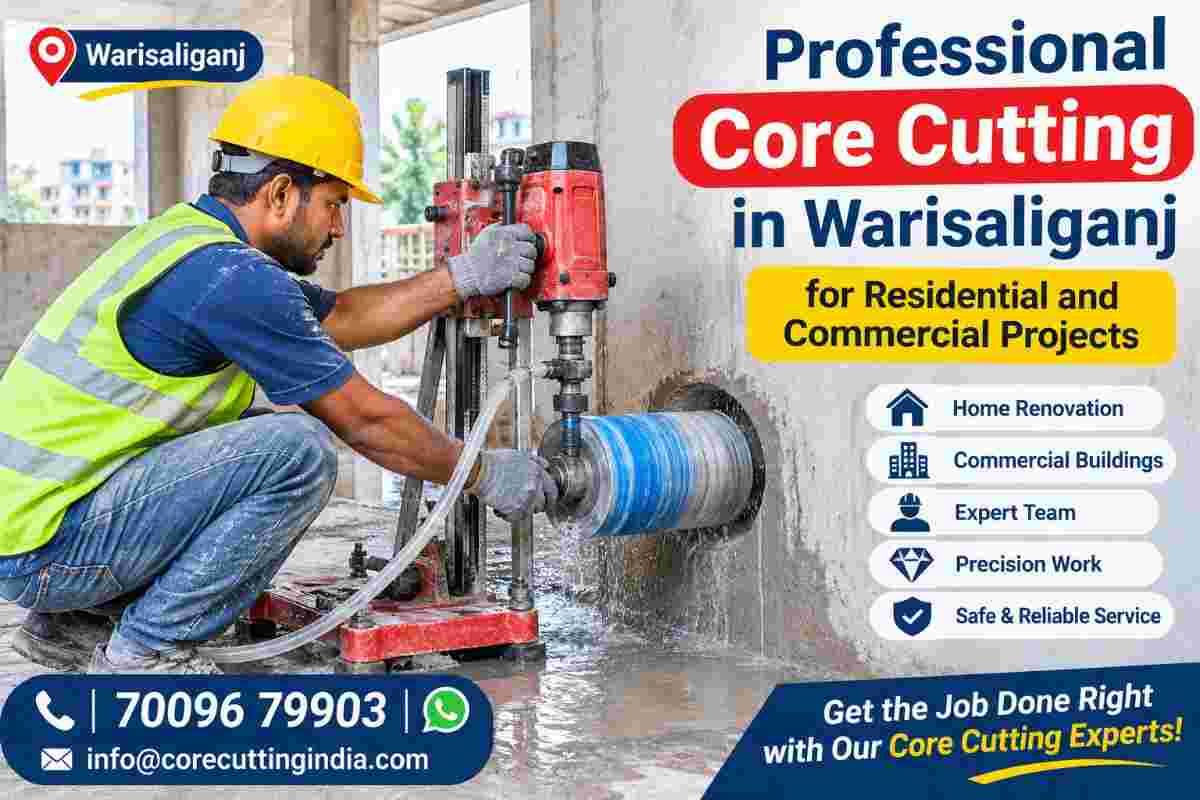
Every construction or renovation project reaches a point where a hole has to be made in solid concrete. It might be for a plumbing line, an AC duct, an electrical conduit, or a drainage pipe. Done badly, that hole can crack a slab, weaken a beam, damage hidden reinforcement, or leave a messy finish that costs more to repair than the drilling itself. Done well, it is clean, accurate, and almost invisible.
That is the difference professional core cutting makes. For property owners, builders, and contractors in Warisaliganj and nearby areas, choosing the right service provider decides whether the job is smooth or stressful. In this guide, we explain what core cutting is, where it is used, why it beats traditional methods, and how Core Cutting India (https://corecuttingindia.com/) delivers precision drilling for residential and commercial projects.
What Is Core Cutting?
Core cutting, also called core drilling or diamond core drilling, is a method of making perfectly round holes in concrete, reinforced cement concrete (RCC), brick, stone, and masonry. Instead of breaking material with impact force, the process uses a hollow cylindrical drill bit with industrial diamond segments on its cutting edge. As the bit rotates at controlled speed, it grinds through the material and leaves behind a solid cylinder, the “core,” which is removed from the hole.
Because the diamond segments cut rather than smash, the result is a smooth-walled hole with a clean edge. The hole matches the bit’s diameter, so it can range from a small 25 mm opening for a cable to a large 500 mm or wider opening for ducts and drainage pipes.
Water is usually used during cutting to cool the bit, control dust, and extend tool life. Dry core cutting is also possible in specific situations, and trained operators know which method fits which job.
Why Traditional Breaking Methods Fall Short
Many people still think of hammers, chisels, and jackhammers when they think of making a hole in a wall or slab. These methods have serious drawbacks:
- Vibration and cracks. Hammering sends shock waves through the structure, which can cause micro-cracks, loosen plaster, and weaken the surrounding concrete.
- Uneven, oversized openings. Manual breaking rarely gives a neat circle. Holes end up ragged and larger than needed, which means extra patching.
- Damage to reinforcement. Impact tools can bend or snap steel bars and disturb the bond between steel and concrete.
- Noise and mess. Chipping creates heavy debris, loud noise, and clouds of dust, which is a real problem in occupied homes, shops, and offices.
- Slow progress. Breaking through thick RCC by hand takes hours, and the finishing work takes even longer.
Core cutting solves each of these problems. The cutting action is smooth and controlled, vibration is minimal, the opening is exact, and the surrounding structure stays intact.
Core Cutting Applications in Residential Projects
Homes in and around Warisaliganj are being built, extended, and renovated at a steady pace. Core cutting fits into many of these projects.
Plumbing and drainage. New bathrooms, kitchens, and water tanks often need pipes to pass through floors, slabs, or walls. Core cutting creates exact openings for soil pipes, waste lines, and water supply lines, so fittings sit snugly without large gaps.
Air conditioning installation. Split AC units need a hole through the wall for the refrigerant pipe, drain pipe, and wiring. A properly cut core hole, usually 50 to 80 mm, is neat, correctly angled for drainage, and does not damage the wall’s finish.
Electrical and conduit work. Running wiring between floors or rooms often means passing through RCC. Small-diameter cores allow concealed conduit routes without chasing or breaking large sections.
Exhaust fans and chimney openings. Kitchens and bathrooms need exhaust outlets, and core cutting makes round, clean openings that look professional from both inside and outside.
Water harvesting and borewell-related work. Rainwater pipes, recharge connections, and similar installations often need holes through foundations, plinth beams, or slabs.
Renovation and extension. When adding a floor, joining two buildings, or reworking an old layout, core cutting lets you create openings in existing structures with minimal disturbance to the rest of the house.
For homeowners, the biggest benefit is peace of mind. Your walls and slabs stay structurally sound, the work is quick, and there is far less mess to clean up.
Core Cutting Applications in Commercial Projects
Commercial buildings are more complex, with heavier loads, more services, and tighter schedules. Core cutting is used constantly in:
- Shopping complexes and showrooms: openings for HVAC ducts, fire-fighting pipes, and sprinkler lines.
- Offices and IT spaces: cable trays, data and power conduits, and ventilation shafts.
- Hospitals and clinics: medical gas lines, drainage, and ventilation, where noise and dust control are essential.
- Hotels, banquet halls, and restaurants: kitchen exhaust, grease-trap drainage, and plumbing risers.
- Schools and institutions: sanitation blocks, laboratory services, and electrical distribution.
- Warehouses and industrial units: machine foundations, anchor bolt holes, and pipe sleeves through thick floors and walls.
- Roads, bridges, and civil works: drain holes, dowel bars, sampling cores for quality testing, and anchor installations.
In commercial settings, speed and accuracy matter most. A business cannot afford long shutdowns or damaged structures, and core cutting delivers a cleaner, faster result than conventional methods.
Core Sampling and Quality Testing
Core cutting is not only for making openings. Engineers and quality inspectors also use it to extract concrete samples from existing structures. These samples are tested in laboratories to check compressive strength, density, and overall quality.
This is valuable when a building’s strength needs verifying before an extension, when old structures are being assessed for safety, or when there is a dispute about concrete quality. A well-extracted, undamaged core gives reliable test data, which depends on the cutting being done carefully and with the right equipment.
Key Benefits of Professional Core Cutting
1. Precision. Diamond core bits cut exactly to size, so pipes and sleeves fit without extra filling or rework.
2. Structural safety. Low vibration means fewer cracks, less stress on the structure, and better protection of the surrounding concrete.
3. Clean finish. Smooth hole walls and sharp edges require minimal touch-up, which saves time and money on finishing work.
4. Speed. Even thick RCC slabs and walls can be cut in a fraction of the time that manual breaking would take.
5. Low noise and dust. Wet cutting controls dust, and the process is much quieter than hammering. That makes it suitable for homes, hospitals, offices, and shops that stay in use during work.
6. Flexibility. Core cutting works on vertical walls, horizontal floors, ceilings, and tight corners, and it handles a wide range of diameters and depths.
7. Safety for reinforcement. With careful planning and scanning, operators can avoid or properly handle rebar, protecting the integrity of the steel.
How a Professional Core Cutting Job Works
Understanding the process helps you know what to expect from a reliable service provider.
Step 1: Site inspection and planning. The team studies the location, the material thickness, the required hole diameter, and the access conditions. They also check for hidden pipes, cables, and structural elements where possible.
Step 2: Marking. The exact position and size of each hole are marked clearly. Accurate marking prevents errors and avoids unnecessary repairs.
Step 3: Machine setup. The core drilling rig is fixed securely using an anchor, vacuum base, or support stand. A stable setup is essential for straight, accurate holes.
Step 4: Cutting with water cooling. The diamond bit is brought to the surface and cutting begins at a controlled speed. Water keeps the bit cool and flushes out slurry.
Step 5: Core removal. Once the bit passes through, the concrete core is extracted. The operator checks that the hole is clean and the dimensions are correct.
Step 6: Cleanup. Slurry and debris are cleaned so the site is left tidy. A good team treats cleanliness as part of the job, not an afterthought.
Choosing the Right Core Cutting Service in Warisaliganj
Not every provider offers the same quality. Before you hire anyone, consider these points:
- Experience. Look for a team that has handled both residential and commercial work and understands different structures and materials.
- Equipment quality. Good diamond bits and well-maintained machines give cleaner holes and fewer mistakes.
- Range of sizes. Your provider should be able to cut small holes for cables as well as large openings for drainage and ducting.
- Safety and cleanliness. A responsible team protects your property, controls dust and water, and follows safe working practices.
- Transparent pricing. Quotes should be clear, usually based on hole diameter, depth, number of holes, and site conditions, with no hidden charges.
- Timely service. Construction schedules are tight, so reliability and prompt response matter.
- Responsive communication. A provider who answers calls, explains the process, and gives honest advice is worth far more than a cheap but careless one.
Why Choose Core Cutting India?
Core Cutting India is built around one idea: giving clients accurate, clean, and dependable concrete cutting without compromising the safety of their structure. Whether you are building a new home, renovating an old one, or managing a large commercial site, the team brings the right equipment and a careful approach to every job.
What clients can expect from Core Cutting India:
- Precision core drilling in RCC, concrete, brick, and masonry
- A wide range of hole diameters to suit plumbing, HVAC, electrical, and drainage needs
- Wall, slab, floor, and ceiling core cutting
- Dust-controlled, low-vibration work suitable for occupied buildings
- Quick response and on-time completion
- Fair, transparent quotations
- Support for residential, commercial, and industrial clients
You can learn more about the full range of services at https://corecuttingindia.com/ or speak directly with the team at +91 70096 79903 for a quick consultation and quote.
Tips for Property Owners Before Core Cutting
A little preparation makes the job faster and safer.
- Decide the exact location early. Check your plumbing, electrical, and HVAC plans so that holes are placed correctly the first time.
- Share drawings if available. Structural drawings help the team avoid beams, columns, and heavy reinforcement.
- Clear the work area. Move furniture, electronics, and valuables away from the cutting zone.
- Plan for water supply and drainage. Wet cutting needs a water source, and slurry must be managed so it does not damage floors or fittings.
- Confirm hole diameter with your contractor. Choose a size that allows the pipe or sleeve to fit properly, with sleeves where required.
- Avoid cutting structural members without approval. If a hole is near a beam, column, or load-bearing element, consult a structural engineer first.
Common Mistakes to Avoid
- Hiring on price alone. The cheapest option often means poor equipment, rough holes, and costly repairs later.
- Skipping the planning stage. Mismarked holes are difficult to fix and can weaken the structure.
- Ignoring hidden services. Cutting blindly can hit electrical cables or water pipes inside walls and slabs.
- Using the wrong hole size. Too small and the pipe won’t fit; too large and you’ll spend time and money on filling.
- Allowing untrained workers to operate heavy machines. Core drilling needs skill, and mistakes can cause damage or injury.
Frequently Asked Questions
What is core cutting used for?
Core cutting is used to create precise round holes in concrete, RCC, brick, and stone for pipes, ducts, cables, drainage, anchor bolts, and sampling.
Is core cutting safe for my building?
Yes, when done by trained professionals. Because it creates low vibration and cuts cleanly, it is much safer for the structure than hammering or chiselling.
How long does a core cutting job take?
A single standard hole through a wall or slab often takes only a short time, depending on diameter, thickness, and reinforcement. Larger or multiple holes naturally take longer.
Can core cutting be done in an occupied home or office?
Yes. Wet cutting reduces dust, and the process is quieter than conventional breaking, which makes it suitable for occupied buildings.
What sizes of holes can be cut?
Core cutting can make holes from very small diameters, such as 25 mm, up to large openings of several hundred millimetres, depending on the equipment.
How much does core cutting cost?
The price depends on hole diameter, depth, number of holes, material, and site access. The best approach is to contact a provider for a quote based on your exact requirements.
Can core cutting cut through reinforcement steel?
Diamond bits can cut through rebar, but it is best to plan hole locations to minimise cutting structural steel. Always consult an engineer when working near critical elements.
Is core cutting better than breaking with a hammer?
In almost every way, yes. It is more accurate, cleaner, quieter, faster, and gentler on the structure.
Final Thoughts
Whether you are installing an air conditioner in your home, laying new drainage in a commercial complex, or testing the strength of an existing structure, professional core cutting is the smartest and safest way to work with concrete. It protects your building, saves time, and delivers the clean, accurate result that modern construction demands.
If you are looking for dependable core cutting in Warisaliganj for residential or commercial projects, Core Cutting India is ready to help. Visit https://corecuttingindia.com/ to explore the services, or call +91 70096 79903 to discuss your requirements and get a quick, clear quotation.
Call now: +91 70096 79903 | Website: https://corecuttingindia.com/