
Delhi’s homes and shops are rarely built exactly the way their owners eventually need them. A family may want a second entrance for a rented-out portion of a builder floor. A shop owner may want a wider shutter opening to move stock in and out. An apartment owner may want to connect two rooms for a larger living space. In every case, the same question comes up: how do you create a new door opening in a solid wall without damaging the building or turning your home into a dust bowl?
The answer is professional door cutting. At Core Cutting India, we specialise in precise, controlled, low-vibration cutting of concrete and brick walls. This guide explains how door cutting works, where it is used in Delhi, how to prepare for it, and how to choose the right service provider.
What Is Professional Door Cutting?
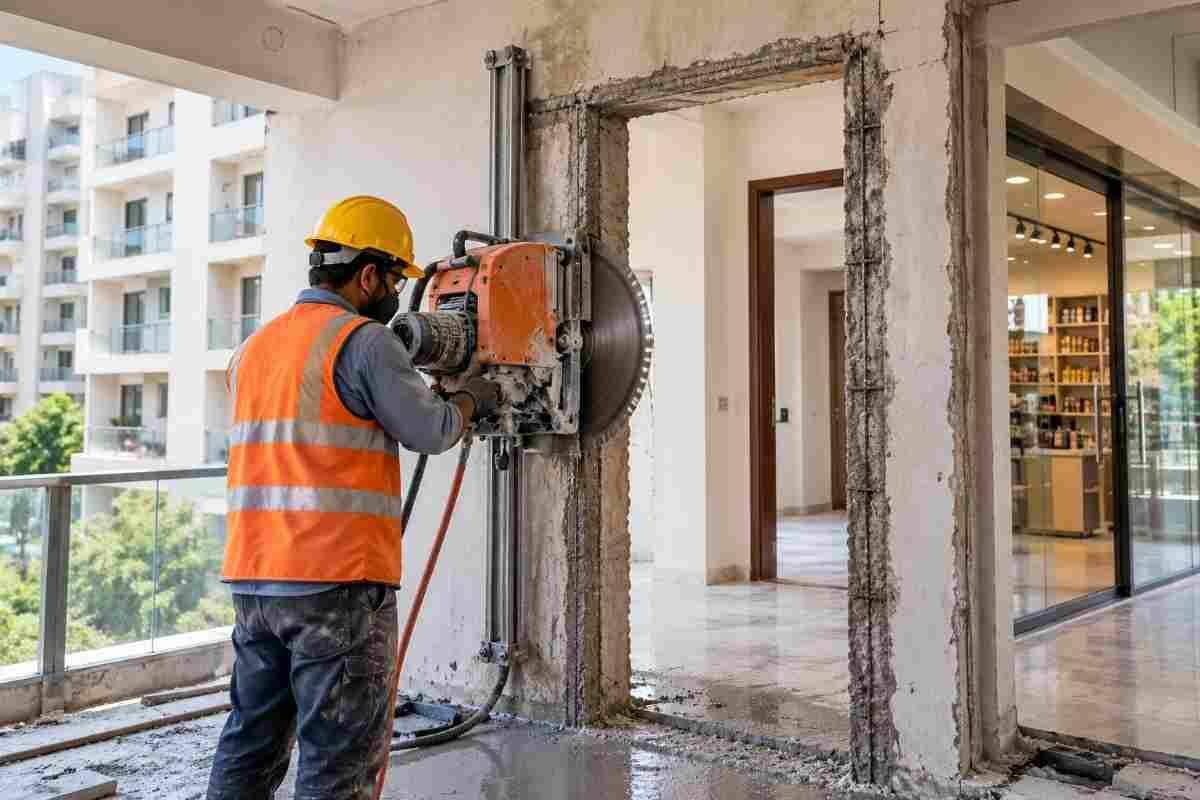
Professional door cutting is the process of creating a new door or passage opening in an existing wall using diamond-tipped cutting tools. Instead of breaking the wall with hammers and chisels, technicians mark the exact opening, then cut along the lines with specialised machines. The section inside the cut is removed in clean blocks or slabs.
The result is an opening with straight, accurate edges that is ready for a door frame, a steel lintel, a shutter or simple plastering. It works on RCC (reinforced cement concrete), brick masonry, block walls and stone.
Because the cut follows a marked line, the surrounding wall, ceiling and flooring stay largely undisturbed. That precision is why the method has become the preferred choice for renovation in dense cities like Delhi.
Why Not Just Break the Wall the Traditional Way?
Many property owners still hire a local mason to break a wall with a hammer and chisel. It looks cheaper at first, but it comes with real problems:
- Uncontrolled damage. Hammering sends shock waves through the wall. Cracks can run into plaster, tiles, ceilings and neighbouring rooms.
- Rough, uneven edges. Hand-broken openings need heavy repair work, which adds cost and time.
- Heavy dust and noise. In a closely packed Delhi colony, this quickly leads to complaints from neighbours and the RWA.
- Risk to structure. Cutting reinforcement bars (rebar) by hammering, or breaking without a plan, can weaken load paths.
- Longer clean-up. Rubble from uncontrolled breaking is large and messy.
Professional cutting avoids most of these issues. The cut is clean, the noise and vibration are far lower, and debris is removed in manageable pieces.
Where Door Cutting Is Used in Delhi
Apartments
In DDA flats and society apartments, door cutting is usually part of an interior reconfiguration. Typical cases include:
- Joining two adjoining rooms or a room and a balcony area
- Creating a wider opening between the drawing room and dining area
- Adding access to a utility or store space
Apartments need extra care. Walls are shared, floors above and below belong to other families, and society rules apply. Low vibration and dust control matter more here than almost anywhere else.
Builder Floors
Builder floors are extremely common across Delhi neighbourhoods. Owners often cut doors to:
- Create a separate entrance for a rented floor or paying-guest portion
- Open a connection to a staircase or terrace
- Merge two units after buying the adjoining floor
- Convert a window into a door for balcony or terrace access
Since builder floors typically use a mix of RCC columns, beams and brick infill walls, it is essential to know whether the wall you want to cut is a simple partition or part of the load-bearing frame.
Shops and Commercial Units
For retailers and small businesses, door cutting directly affects the business. Common requirements include:
- Widening the entrance for better visibility and footfall
- Adding a shutter opening for loading and unloading
- Connecting two shops into one larger showroom
- Cutting an internal opening to a godown or back room
Shop work often has a tight schedule. Every day the shop stays closed means lost sales, so fast, clean work with minimal disruption is a priority.
Methods and Equipment Used
Different walls and conditions call for different tools. A professional team chooses the method based on wall thickness, material and access.
Wall saw cutting. A track-mounted diamond blade saw is fixed to the wall and moves along a guide rail. It cuts straight, deep lines through thick concrete, which makes it ideal for door and shutter openings in RCC.
Wire saw cutting. A diamond-impregnated wire is looped around the section to be removed and pulled through. It is useful where a blade cannot reach, or for very thick or irregular structures.
Core drilling. Round diamond core bits drill holes at the corners of the opening or along the cut line. Corner cores prevent over-cutting and make the edges neater.
Hand-held diamond saws. These suit lighter masonry work and finishing in tight spaces, but are not meant for thick reinforced concrete.
Water is used with most diamond cutting. It cools the blade and binds the dust, and it is a major reason why professional cutting is much cleaner than dry breaking.
The Door Cutting Process, Step by Step
Understanding the process helps you know what to expect and what to ask your contractor.
1. Site inspection. A technician visits to check the wall type, thickness, location and surroundings. They look for electrical conduits, plumbing lines, gas pipes and any structural elements nearby.
2. Structural assessment. For any wall that could be load-bearing, a qualified structural engineer should review the plan. They decide whether the opening is safe and what support, such as a steel or RCC lintel, is needed above it.
3. Marking the opening. The exact size and position are marked on the wall, accounting for the door frame, finishes and clearances.
4. Preparation and protection. Furniture is covered or moved, flooring is protected, and the work area is sealed as much as possible. Water and power points are arranged.
5. Cutting. The team cuts along the marked lines using the chosen method. Corners are cored first where needed for precision.
6. Removal of the cut section. The slab or blocks are carefully lowered and removed. Larger pieces are broken down outside the work area for disposal.
7. Clean-up and finishing. Slurry and debris are cleared. The opening is then ready for the lintel, frame, plaster or shutter work.
For a typical single door in a residential wall, the cutting itself often takes a matter of hours rather than days, though total time depends on thickness, reinforcement and access.
Safety and Structural Considerations
Door cutting is not only a cutting job. It is a structural decision. Before any work begins, keep these points in mind.
Identify load-bearing walls. Walls that carry the weight of floors above, or form part of the building frame, cannot simply be opened. In many cases a properly designed lintel or beam is needed to carry the load across the new gap. Partition walls between rooms are usually less critical, but should still be verified.
Get the right approvals. In Delhi, depending on the building type, you may need permission from the society, RWA, DDA, MCD or the builder before altering walls. Rules vary for DDA flats, group housing societies, builder floors and commercial properties. It is wise to check with your local authority or society and a qualified engineer before starting.
Locate utilities. Hidden electrical wiring, water lines and gas pipes can run inside walls. Scanning or careful inspection before cutting prevents accidents and costly repairs.
Protect neighbours and the building. Low-vibration cutting, controlled working hours and proper debris handling keep relations with neighbours smooth, which matters in Delhi’s close-knit colonies.
Use trained operators. Heavy diamond equipment requires skill. An inexperienced operator can cut off-line, over-cut corners or damage reinforcement.
How to Choose a Door Cutting Company in Delhi
Not every contractor with a cutting machine is a true specialist. When comparing providers, look for:
- Experience with similar jobs. Ask whether they have worked on apartments, builder floors and shops, not just large industrial sites.
- Proper equipment. Wall saws, wire saws and core drills in good condition produce better results than improvised tools.
- A site visit before quoting. Be cautious of anyone who gives a firm price over the phone without seeing the wall.
- Clear scope of work. The quote should state what is included: cutting, debris removal, water and power arrangements and any exclusions.
- Safety practices. Ask about dust control, protection of floors and how they handle reinforcement.
- Transparent communication. A good team explains the plan, the timeline and the risks honestly.
What Affects the Cost of Door Cutting?
Prices vary from job to job, and anyone offering a single flat rate for every wall should be treated carefully. The main factors are:
- Wall thickness and material. Thick RCC with heavy reinforcement takes longer and wears blades faster than a brick partition.
- Size of the opening. A standard door is quicker than a wide shop entrance.
- Floor and access. Upper floors, narrow staircases and limited access increase effort.
- Location constraints. Working inside an occupied apartment or a busy market may need extra protection and careful scheduling.
- Debris removal. Hauling away heavy concrete from upper floors adds to the work.
- Additional work. Lintel installation, plastering and frame fitting are separate from cutting itself.
The best way to get an accurate figure is to request a site inspection and a written quotation.
Common Mistakes to Avoid
- Cutting before checking if the wall is structural. This is the most serious error and can compromise the building.
- Hiring on price alone. The cheapest quote often means hammering, rough edges and extra repair costs later.
- Skipping permissions. Unauthorised alterations can lead to disputes, notices or trouble when selling the property.
- Not planning the finish. Decide on the door type, frame and flooring level before cutting so the opening matches your needs.
- Ignoring neighbours. A quick word with neighbours and the society office about timing avoids conflict.
Why Choose Core Cutting India?
At Core Cutting India, we focus on cutting work that is accurate, clean and carried out with respect for your property. Our approach is built around a few simple principles:
- Precision first. Marked, measured cuts with straight edges that need minimal repair.
- Minimal disruption. Low-vibration methods and dust control suited to occupied homes and working shops.
- Honest guidance. We tell you what is feasible, flag structural concerns early and recommend an engineer where needed.
- Suitable for every property type. Delhi apartments, builder floors, independent houses and commercial shops.
- Clear communication. You know the scope, process and timeline before work begins.
Whether you want a simple internal door, a new entrance or a wide shop opening, our team will assess your wall and recommend the safest and most efficient method.
Frequently Asked Questions
How much does door cutting cost in Delhi?
The cost depends on wall material, thickness, door size, access and any finishing work. A site inspection is the only reliable way to get an accurate quote.
Can you cut a door in a load-bearing wall?
Often yes, but only after a structural engineer approves the plan and a proper lintel or beam is designed to carry the load. It should never be done without that assessment.
Is door cutting noisy or dusty?
Diamond cutting with water is much quieter and cleaner than breaking with hammers. Some noise and slurry are unavoidable, but professional teams manage both.
How long does it take to cut a door opening?
A standard residential door opening can often be cut in a few hours, while thicker walls, wider shop openings and difficult access can take longer.
Do I need permission to cut a door in my apartment or shop?
In many cases, yes. Depending on your property, approval from the society, RWA, builder or relevant authority may be required. Check before starting work.
Can a window be converted into a door?
Usually yes. Extending an existing opening downward is common for balcony or terrace access, again subject to structural checks.
What is the difference between door cutting and core cutting?
Door cutting creates a large rectangular opening, while core cutting drills round holes for pipes, ducts and cables. Both use diamond tools, and cores are often used at the corners of door openings.
Conclusion
A new door opening can transform how a home or shop works. It can add a rental entrance, open up a cramped layout or bring more customers through your shutter. But the wall you are cutting is part of a structure, and the way it is cut determines whether the result is neat and safe or cracked and costly.
Professional door cutting gives Delhi property owners a precise, controlled way to make these changes with minimal damage and disruption. Plan carefully, confirm structural safety, get the necessary permissions and choose a specialist team.
Ready to start? Contact Core Cutting India for a site inspection and a clear, no-nonsense quotation for your apartment, builder floor or shop.