
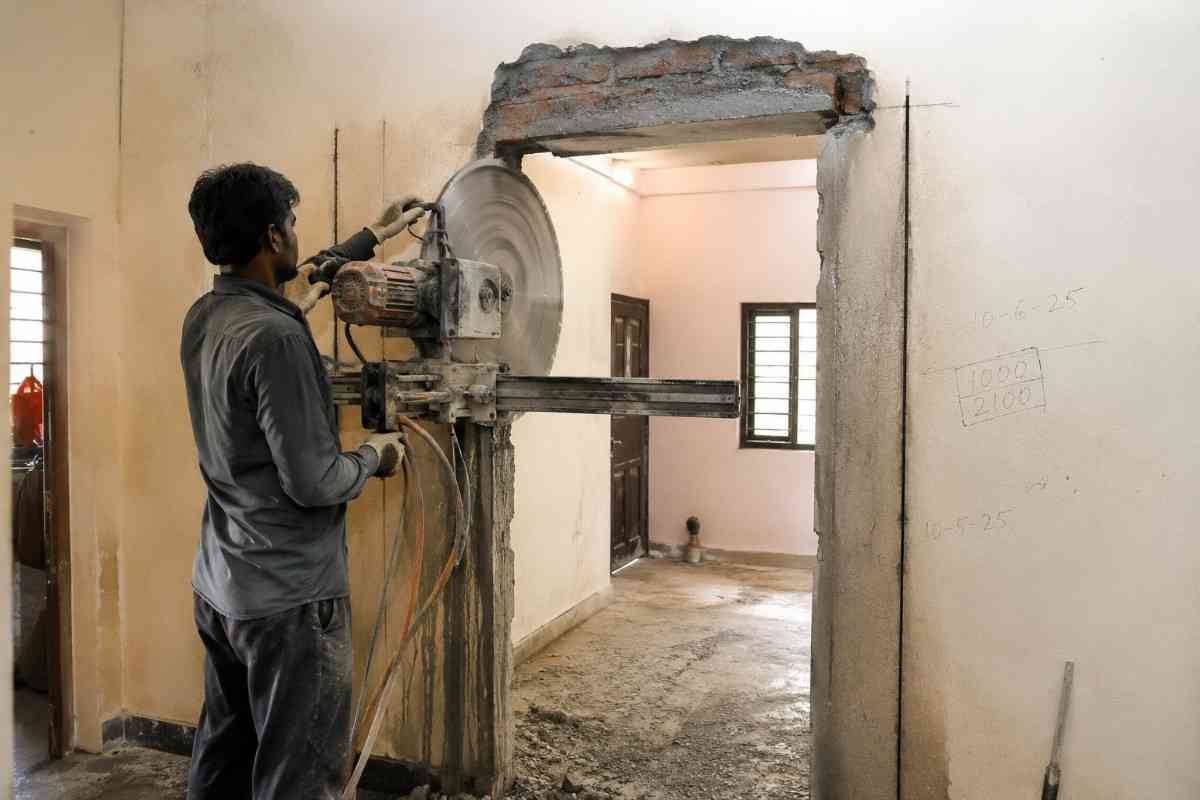
Homes in Barh, Bihar, change with the family. A joint family grows, a shop is added at the front, a rented portion needs its own entrance, or a bedroom needs a second access. Sooner or later, many homeowners ask: can I add a new door in this wall without damaging the house?
Yes, you can, if the work is done by professionals with the right equipment. This guide covers how wall cutting for new door openings works, why traditional methods are risky, what to check before you start, and how to choose a reliable service provider. Our reference is the team at Core Cutting India.
What Is Wall Cutting for a New Door Opening?
Wall cutting is the controlled removal of a section of an existing wall, whether brick, concrete block or reinforced concrete (RCC), to create an opening for a door, archway or passage.
Instead of breaking the wall with hammers and chisels, professionals use diamond-tipped tools that slice through the material cleanly. The result is a straight, neat opening with minimal vibration, noise and dust.
Common equipment includes:
- Wall saw (track-mounted saw): cuts straight lines through thick RCC and brick walls.
- Wire saw: used for very thick or irregular structures.
- Hand-held ring saw or cut-off saw: for smaller or awkward cuts.
- Core cutting machines: for drilling round holes, often used for pipes and ducts alongside door cutting.
Why Barh Homeowners Are Choosing Professional Wall Cutting
Barh is a growing town in the Patna district, with a mix of older brick houses and newer RCC buildings. Many homes were built decades ago, often without provision for the changes families need today. Common reasons for new door openings include:
- Separate entry for a rented portion. A dedicated door gives tenants privacy and gives you better control over your property.
- Shop or office conversion. Many homeowners convert the ground floor front room into a shop, which needs a wide street-facing door.
- Better ventilation and movement. A new door connecting two rooms can improve airflow and daily convenience.
- Joint family needs. A new connection between portions makes a growing family easier to manage.
- Garage or courtyard access. A new opening can give direct access to a parking area or backyard.
Why Traditional Hammer-and-Chisel Methods Are Risky
Many people still hire local labourers to break the wall manually. It looks cheaper at first, but it often leads to expensive problems.
1. Cracks beyond the cutting area. Heavy hammering sends vibrations through the structure. Cracks can appear in nearby walls, ceilings and plaster.
2. Rough, uneven edges. Manual breaking leaves jagged edges that need extra plastering and finishing, which adds to cost and time.
3. Structural damage. In RCC walls, uncontrolled breaking can damage steel reinforcement and weaken the load path, putting the safety of the building at risk.
4. Noise, dust and mess. Manual demolition creates heavy debris and dust, which is hard on families, neighbours and shopkeepers.
5. Longer work time. What a machine can do in hours may take days by hand.
Professional wall cutting avoids most of these problems because the cut is precise, controlled and clean.
Benefits of Professional Wall Cutting
Precision and Clean Finish
Diamond cutting gives sharp, straight edges in the exact size you marked. Door frames fit more easily, and plastering needs far less work.
Minimal Vibration
Because the blade slices rather than smashes, the rest of the structure is disturbed far less. This matters especially in older Barh houses where the masonry may already be ageing.
Less Dust and Noise
Wet cutting methods use water to control dust and cool the blade. The work is quieter and cleaner than manual demolition.
Faster Completion
Many door openings can be completed in a matter of hours rather than days, depending on wall thickness and material.
Safer for Your Family
Trained operators follow safety practices, protecting the people on site and the building itself.
Cost-Effective in the Long Run
You save on repairs, extra plastering and rework. Even when the cutting charge looks higher than labour rates, the total cost is often lower.
The Wall Cutting Process: Step by Step
Here is what a good professional service typically follows.
Step 1: Site Inspection
The team visits the property to check the wall type (brick, block or RCC), its thickness, and what lies on either side. They look for electrical conduits, water pipes and other hidden services in the wall.
Step 2: Structural Assessment
This is the most important step. You must know whether the wall is load-bearing or a simple partition. A load-bearing wall supports the floor or roof above it. Cutting an opening in it without proper support can be dangerous. For such walls, consult a qualified structural engineer, who may specify a lintel or beam above the opening.
Step 3: Marking the Opening
The exact size and position of the door are marked on the wall. Standard internal doors are usually around 3 feet wide and 7 feet tall, while main doors and shop openings may be larger. Mark according to the door frame you have chosen.
Step 4: Safety Setup
The area is cleared, furniture is covered or moved, and water and power connections are arranged. Support props may be installed where needed.
Step 5: Cutting
The wall saw is fixed on a track and the opening is cut along the marked lines. The section is cut in manageable pieces so that it can be removed safely without shocks to the structure.
Step 6: Removal of Cut Sections
The cut pieces are lifted out carefully. Because they are cut cleanly, there is much less rubble than with manual breaking.
Step 7: Finishing
After cutting, the edges are checked for neatness. Your mason or carpenter can then fix the door frame, add a lintel if needed, plaster the edges and complete the finishing.
Load-Bearing vs Non-Load-Bearing Walls: What You Must Know
This is the question every homeowner should ask before any wall cutting.
Non-load-bearing walls (partition walls) only divide space and do not carry the weight of the building. Door openings are generally simpler here.
Load-bearing walls carry loads from slabs, beams or upper floors. Cutting these requires structural planning: a properly designed lintel or beam, and sometimes temporary support during the work.
In many older brick houses, even thick-looking walls may be carrying loads. If you are unsure, get a qualified structural engineer to examine the building before cutting. Skipping this step to save a small amount of money can lead to serious and costly damage.
Factors That Affect Wall Cutting Cost in Barh
Prices vary from site to site. The main factors are:
- Wall material: brick is usually easier to cut than reinforced concrete.
- Wall thickness: a thicker wall means more cutting time.
- Size of the opening: larger openings take longer.
- Reinforcement: heavily reinforced RCC needs more effort and blade wear.
- Accessibility: cutting on upper floors or in tight spaces can be more complex.
- Number of openings: multiple cuts in one visit often work out better per opening.
- Support work: props, lintels or beams add to the overall cost.
The best way to get an accurate figure is to have the site inspected. Reputable companies will quote after seeing the wall instead of giving a random price over the phone.
How to Choose the Right Wall Cutting Service
Not all service providers are equal. Before you hire anyone, check the following.
Modern equipment. Ask whether they use wall saws and diamond tools, not just hammers and breakers.
Experienced operators. Skilled operators make a big difference to cut quality and safety.
Site inspection first. A good company inspects the wall before quoting.
Clear quotation. Ask what is included: cutting, debris removal, support work and so on.
Safety practices. The team should protect your property and take care of dust, water and electrical safety.
Honest advice. A good contractor will tell you when a wall needs an engineer’s opinion rather than pushing ahead.
Local availability. A team that can reach Barh quickly and respond to follow-up queries saves time and stress.
Preparing Your House for Wall Cutting
A little preparation makes the work smoother:
- Clear the area. Remove furniture, curtains, electronics and valuables from both sides of the wall.
- Cover what remains. Use plastic sheets or cloth to protect floors and large items.
- Switch off services. Turn off electricity in the work area and make sure water points are accessible for wet cutting.
- Keep children and pets away. The work zone should be restricted during cutting.
- Inform neighbours. Even though modern cutting is quieter, a short notice is considerate.
- Have your door frame ready. Knowing the exact size in advance helps you mark the opening accurately.
Common Mistakes to Avoid
- Cutting without checking the wall type. This is the most dangerous mistake.
- Choosing the cheapest option blindly. Low prices may mean poor equipment and poor results.
- Ignoring hidden pipes and wiring. Cutting through a live wire or water pipe can cause accidents and damage.
- Marking the door size incorrectly. Always allow for the frame and finishing.
- Skipping the lintel. In many walls, a lintel above the opening is essential for support.
- Rushing the finishing. Proper plastering and frame fixing complete the job and prevent future cracks.
After the Cut: Finishing Your New Door
Once the opening is ready, the finishing stage gives your door its final look.
- Fix the door frame in wood, steel or other material, secured firmly to the cut edges.
- Plaster the sides to match the existing wall.
- Paint the new area so it blends with the room.
- Check alignment to ensure the door opens and closes smoothly.
Since the cut edges are clean and straight, this stage is quicker and neater than after manual breaking.
Beyond Door Openings: Other Cutting Services
The same technology is useful for many other jobs in homes and commercial properties:
- Window openings in existing walls
- Staircase openings in slabs
- Core drilling for pipes, AC ducts and cables
- Slab cutting
- Partial demolition and renovation work
- Commercial and shop modifications
If your renovation plan includes more than one of these, discuss everything in a single site visit.
Frequently Asked Questions (People Also Ask)
1. Can I make a new door in an existing wall?
Yes. A new door can be made in most walls if the structure is assessed first. Non-load-bearing brick or block walls are easier. Load-bearing walls need a lintel or beam and ideally an engineer’s advice.
2. How much does wall cutting cost for a new door opening?
The cost depends on the wall material, thickness, opening size and site conditions. A site visit is the most reliable way to get an accurate quote.
3. How long does it take to cut a door opening in a wall?
A standard door opening in a brick wall can often be completed within a few hours. Thicker RCC walls or multiple openings take longer.
4. Is wall cutting safe for an old house?
Yes, when done with diamond cutting equipment, because it produces far less vibration than hammering. A structural check is still advisable for older buildings.
5. What is the difference between wall cutting and wall breaking?
Wall cutting slices the wall cleanly along marked lines using a saw. Wall breaking uses force to smash the wall, which creates cracks, dust and uneven edges.
6. Do I need permission to make a new door opening?
For simple internal changes in a private house, it is generally a personal decision. For structural alterations, apartment buildings, society properties or commercial premises, check local rules and take approval where needed.
7. Can a load-bearing wall be cut for a door?
It can be, but only with proper structural planning, such as a lintel or beam above the opening and temporary support during the work. Always consult a structural engineer first.
8. Does wall cutting create a lot of dust?
Wet cutting methods greatly reduce dust compared to manual demolition, making the process cleaner for your home.
Why Choose Core Cutting India for Barh?
If you are planning a new door opening in your Barh house, shop or commercial building, Core Cutting India offers professional cutting solutions built around precision, safety and clean results. From brick walls to reinforced concrete, the focus is on making the opening exactly where and how you need it, with minimum disturbance to your property.
You can describe your requirement, ask questions about the process, and arrange a site visit to get a proper assessment and quotation.
📞 Call or WhatsApp: +91 70096 79903
🌐 Website: https://corecuttingindia.com/
Final Thoughts
Adding a new door is one of the simplest ways to make a house more useful, whether it is for a new shop entrance, a separate rental portion or just better movement inside the home. But the way the wall is cut makes all the difference to the strength, appearance and long-term safety of your building.
Professional wall cutting gives you clean edges, minimal vibration, less mess and faster results, and it protects the structure that your family depends on. Before you start, check whether the wall is load-bearing, plan the opening size carefully, and choose a service that inspects first and advises honestly.
If you are in Barh and ready to create a new door opening, reach out to Core Cutting India at +91 70096 79903 or visit https://corecuttingindia.com/ to discuss your project.