
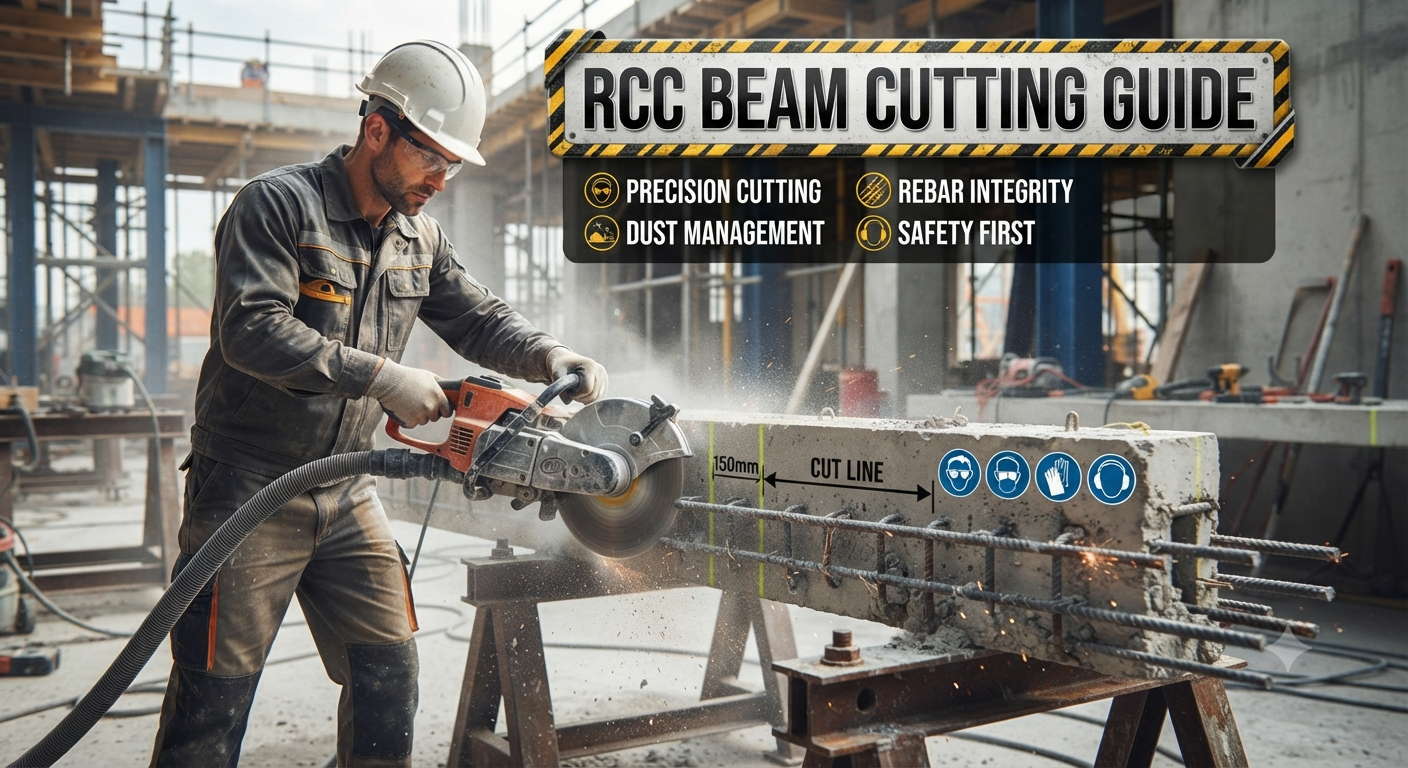
When it comes to structural modifications in construction, few tasks require as much precision and technical oversight as cutting Reinforced Cement Concrete (RCC) beams. Whether you are creating pathways for MEP (Mechanical, Electrical, and Plumbing) services or executing structural alterations, the integrity of the building is paramount.
At [email protected], we prioritize safety and structural stability above all else. This guide provides a comprehensive overview of the methods, risks, and best practices for cutting RCC beams.
The Importance of Structural Integrity
An RCC beam is a critical load-bearing element. Unlike non-structural walls, beams are designed to transfer the weight of slabs and floors to the columns. Any unauthorized or improper cutting can lead to cracks, deflection, or, in extreme cases, partial or total structural failure.
Always consult with a structural engineer before attempting any cuts. A professional assessment ensures that the modification does not compromise the beam’s load-carrying capacity.
Essential Tools for Cutting RCC Beams
Cutting through high-strength concrete and internal steel reinforcement (rebar) requires industrial-grade equipment. Using the wrong tool can lead to blade jamming, tool damage, or operator injury.
-
Diamond Core Drill Machines: Ideal for creating circular openings (core cutting) for pipes and cables.
-
Diamond Wire Saws: The gold standard for cutting deep or irregular sections of heavily reinforced concrete.
-
Wall Saws: Used for precise, straight cuts in walls and beams where a clean finish is required.
-
Handheld Concrete Saws: Best for smaller, surface-level modifications, though they lack the depth capacity of heavy machinery.
Safety Protocols: The Non-Negotiable Rules
Cutting concrete is a high-risk activity involving silica dust, extreme noise, and heavy machinery. Following these protocols is non-negotiable:
1. Personal Protective Equipment (PPE)
-
Respiratory Protection: Use N95 or P100 respirators to prevent the inhalation of silica dust, which is linked to severe respiratory diseases like silicosis.
-
Hearing Protection: Concrete cutting generates noise levels often exceeding 100 dB. Earplugs or earmuffs are mandatory.
-
Eye and Body Protection: Safety goggles, heavy-duty gloves, and steel-toe boots protect against flying debris and sharp concrete fragments.
2. Dust and Noise Control
-
Wet Cutting: Always opt for wet cutting whenever possible. The water suppresses dust at the source and keeps the diamond blade cool, extending its lifespan.
-
Ventilation: If working indoors, ensure robust ventilation to prevent the buildup of toxic fumes (if using fuel-powered saws) and airborne particles.
3. Equipment Inspection
Before starting, check your equipment for:
-
Damaged or missing safety guards.
-
Worn-out diamond blades (which can shatter during operation).
-
Proper electrical grounding or fuel levels.
Step-by-Step Execution Strategy
Professional cutting follows a logical, methodical approach to ensure accuracy and safety.
-
Structural Analysis: Identify the beam’s neutral axis and reinforcement layout. Avoid cutting through main longitudinal steel bars if possible.
-
Clear the Area: Secure the zone with barricades and warning signs to prevent unauthorized access.
-
Marking the Cut: Use a clear, visible guide to mark the dimensions. Double-check measurements against the structural drawings.
-
Gradual Cutting: Never force the blade. Make several passes of 1–2 cm depth to avoid overheating the diamond segments.
-
Support and Shoring: If a large section is being removed, install temporary props or shoring to support the load during the cutting process.
Frequently Asked Questions (PAA)
Q: Is it safe to cut into an RCC beam? A: It can be, but only if conducted by professionals. Improper cutting can severely compromise the beam's load-bearing capacity. A structural engineer must evaluate the beam before any work begins.
Q: How do you prevent structural damage while cutting? A: Aside from structural assessment, use diamond-tipped tools to minimize vibration and impact forces. Avoid aggressive hammering, as it causes uncontrolled micro-fractures in the surrounding concrete.
Q: What is the risk of hitting rebar? A: Hitting rebar can cause the saw to "kick back" or pull the operator toward the blade. High-quality diamond blades are designed to cut through steel, but the process must be slow and steady.
Q: Why is silica dust dangerous? A: Fine concrete dust contains crystalline silica. When inhaled, it lodges deep in the lungs, leading to long-term health issues like silicosis, lung cancer, and COPD.
Why Choose Professional Services?
Cutting an RCC beam is not a DIY task. At [email protected], we provide:
-
Precision Engineering: We use high-frequency and diamond-cutting technology to ensure exact dimensions.
-
Safety Compliance: Our team strictly adheres to all site-safety regulations.
-
Structural Peace of Mind: We understand the nuances of load distribution, ensuring your modifications are both functional and safe.
For inquiries or professional consultation, contact us at [email protected].
Target-Related Searches:
-
RCC core cutting services
-
Structural beam modifications
-
Concrete wall sawing techniques
-
Professional diamond wire sawing
-
Concrete cutting safety standards