
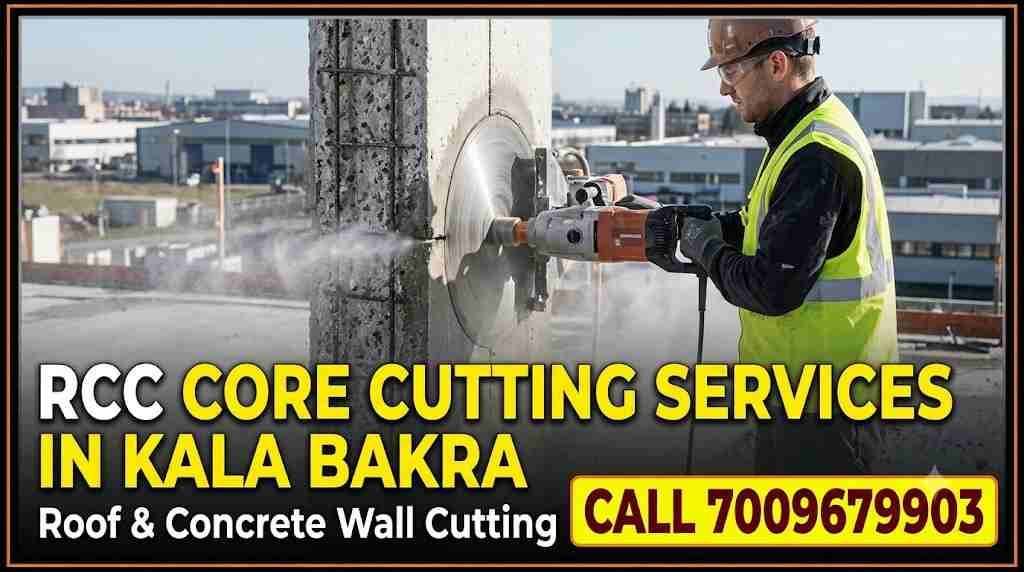
RCC core cutting services in Kala Bakra use diamond core drills and saws to cut clean holes and openings in reinforced concrete roofs and walls. Typical jobs include roof drain and pipe holes, staircase headroom openings, door and window cut-outs, and holes for AC, plumbing and ventilation. Diamond cutting produces precise edges with very little vibration or dust, which protects the rest of your building.
Planning roof or wall work? 📞 Call or WhatsApp 7009679903
A Day on Site: What a Good Cutting Job Actually Looks Like
Most people only see concrete cutting from the outside: a noisy machine, some water, a hole appearing in a wall. Behind that simple picture is a series of small decisions that separate a clean job from a costly one.
So instead of starting with theory, let us walk through a typical day, the kind of job that comes up regularly in villages and towns around Kala Bakra and the wider Jalandhar district.
8:30 a.m. The call. A homeowner has built a first-floor room and now needs a drain pipe through the terrace slab, a new doorway between two rooms, and a hole in the outer wall for an AC. He sends three photos on WhatsApp.
9:30 a.m. The conversation. The team asks a few questions. How thick is the roof slab? Is the doorway wall load-bearing? Where does the water outlet need to go? What AC model is it? The answers shape the method, the equipment and the plan.
11:00 a.m. The arrival. The crew arrives, lays floor protection, sets up water supply and checks the marked positions with the owner.
11:30 a.m. The cutting. A core drill makes the AC hole first, with a small downward slope toward the outside. Then a core bit goes through the roof slab for the drain. Finally a wall saw creates the doorway in planned sections.
2:30 p.m. The cleanup. Slurry is cleared, cut pieces are removed and the area is wiped down.
3:00 p.m. The handover. The owner checks sizes and positions. Everything matches what was marked.
That is what RCC core cutting services in Kala Bakra should feel like: clear communication, careful setup, precise cutting and a tidy finish.
Why Concrete Roofs and Walls Need Special Handling
Reinforced cement concrete, or RCC, is concrete poured around a cage of steel bars. The concrete resists compression, and the steel resists tension. Together they make strong, long-lasting slabs, beams, columns and walls.
That strength is exactly why cutting RCC is a skilled job. The steel must be cut cleanly, the concrete must not crack beyond the line, and the rest of the structure should not be disturbed.
Breaking RCC with hammers sends shock waves through slabs, beams and walls. Diamond cutting grinds through concrete and steel along a controlled line, leaving the surrounding structure calm.
Our main diamond concrete cutting in Jalandhar page explains the full range of methods we use across different building types.
Roof Cutting: Where Precision Protects You From Leaks
Roof slabs are exposed to sun, rain and heat. Any opening in a roof must be cut, sleeved and sealed with care, otherwise water finds its way in.
Common roof cutting jobs include:
- Drain holes and downpipes. Round, clean holes for rainwater outlets.
- Pipe and cable sleeves. For solar heaters, water tanks, AC lines and electrical conduits.
- Staircase and mumty openings. Rectangular openings for access to the terrace or upper floors.
- Ventilation shafts and skylights. For light and airflow.
- Removal of damaged sections. Cut-outs for leak repair or structural patching.
Roof cutting tips:
- Decide the exact location first. Avoid beams and thick reinforcement zones where possible.
- Plan for waterproofing. Sleeves, sealants and membrane repairs should be arranged at the same time.
- Check what lies below. Furniture, wiring and people may be right under the cutting area.
- Protect the interior. Cover floors and furniture and arrange slurry control.
- Confirm structural safety for large openings. An engineer should review them before work begins.
Concrete Wall Cutting: Openings That Fit Right the First Time
Concrete walls are cut for many reasons, including new doors, windows, passages and service openings. A good cut is straight, square and sized exactly as planned.
Typical wall cutting jobs:
- Door and window openings. Cut with wall saws and finished with hand saws.
- Wider shop shutters. Common for roadside shops and showrooms.
- Passages between rooms. For open layouts.
- AC, exhaust and chimney holes. Cut with core drills.
- Pipe and conduit holes. For plumbing, electrical and fibre lines.
Wall cutting tips:
- Identify load-bearing walls. These need structural advice and support planning.
- Mark clear dimensions. Include frames, lintels and finishing allowances.
- Check for hidden services. Wires and pipes may be embedded.
- Plan the lintel. Larger openings often require a lintel or beam above.
- Think about finish. Edges cut with diamond tools are smooth and ready for framing or plastering.
Which Method for Which Cut?
| Task | Typical Method | Why It Works |
|---|---|---|
| Round hole in roof or wall | Core drilling | Clean circle, minimal damage |
| Door or window opening | Wall saw + hand saw | Straight, accurate edges |
| Large slab opening | Slab saw or wall saw | Controlled rectangular cut |
| Thick or awkward section | Wire saw | Reaches difficult positions |
| Small corrections | Hand saw | Fits tight spaces |
For hole-based jobs, visit our core cutting service in Kala Bakra page to see typical applications and how to book.
Myths I Hear About Concrete Cutting (and the Truth)
"A chisel is fine for a small opening." Even small openings send vibration through the structure. Cracks can show up weeks later, far from the original spot.
"Diamond cutting is only for big companies." It is used on homes, shops, farms and small workshops every day. It simply needs the right equipment and trained operators.
"Thicker concrete means harder cutting." Thickness affects time, not feasibility. Diamond tools handle thick RCC routinely.
"If I cut a hole, I can always patch it later." Patching is not the same as original structure. An accurate cut reduces what needs to be fixed.
"A roof hole does not need a sleeve." A sleeve, along with sealing, keeps water out and protects the edge of the slab.
"All contractors are the same." Equipment, planning and cleanliness vary widely. They show up in the final result.
Preparing for Your Cutting Job
A little preparation makes the work faster and cleaner.
- Clear access. Remove furniture, vehicles and stored items from the area and from the opposite side of the cut.
- Arrange water and power. Core and saw machines usually need both.
- Share photos and dimensions. This helps the team bring the right bits and blades.
- Confirm hole sizes and opening dimensions. Check AC, pipe, duct and frame specifications.
- Inform neighbours and family. A short heads-up prevents complaints.
- Plan finishing work. Waterproofing, plastering and frame installation should be lined up.
Safety and Structural Responsibility
Responsible cutting is not just about the machine. It is about respecting the building.
- Never cut beams, columns or load-bearing walls casually. Involve a qualified structural engineer.
- Check what is behind and below. People, wiring, water lines and gas lines can be hidden.
- Support heavy sections. Large cut pieces need controlled lowering or lifting.
- Use wet cutting. It controls dust and protects the cutting tools.
- Follow society or site rules. Timing and noise rules matter in shared settings.
A contractor who raises these points before cutting is showing you the kind of care you want on your roof.
What Determines the Price?
Rates are not the same for every job. The usual factors include:
- Hole diameter or cutting length
- Thickness of the roof or wall
- Density of steel reinforcement
- Method used (core, wall saw, slab saw, wire saw)
- Height, access and working space
- Number of holes or cuts
- Need for scaffolding, props or lifting
- Distance and site conditions
For a quick idea of cost, use our concrete cutting rate calculator. For an exact price, send photos and measurements on WhatsApp.
Common Mistakes That Cost Money
Marking in a hurry. A few extra minutes on layout can prevent a wrong-sized hole.
Skipping the waterproofing plan. Roof holes without proper sleeves and sealing often leak by the next monsoon.
Cutting near beams or columns. It is better to move the hole than to risk structural damage.
Ignoring hidden services. Live wires and pipes inside the wall turn a simple job into an emergency.
Choosing only on price. The lowest quote can hide rushed work, poor equipment or no cleanup.
Not telling the contractor about the whole project. Sharing your plan helps them suggest better positions and methods.
Frequently Asked Questions (FAQs)
What is RCC core cutting?
It is a method of cutting reinforced concrete using diamond-tipped bits, blades and wires. It creates clean holes and openings with low vibration and dust.
Do you provide RCC core cutting services in Kala Bakra?
Yes. Call or WhatsApp 7009679903 with your location and requirement, and the team will guide you on the next steps and timing.
Can you cut holes in a concrete roof for drains and pipes?
Yes. Core drilling is ideal for drain and pipe holes. Proper sleeves and waterproofing should follow to prevent leaks.
Can you cut doors and windows in concrete walls?
Yes. Wall saws and hand saws make clean door and window openings. Structural walls need an engineer's advice before cutting.
Is diamond cutting safe for the building?
When done correctly, yes. It causes far less vibration than breaking, and a planned sequence protects the remaining structure.
How long does cutting take?
Small holes can take minutes. Larger roof or wall openings may take several hours to a day or more, depending on thickness, reinforcement and access.
Is the work messy?
Much less than hammering. Water controls dust, and slurry is collected and cleaned after the job.
Do I need to provide water and electricity?
Usually yes. A power point and some water access help the job run smoothly. Tell the team in advance if either is difficult.
Can you also drill holes for AC, plumbing and exhaust fans?
Yes. Core drilling handles AC pipe holes, plumbing lines, exhaust fans and ducts with neat, accurate openings.
How do I get a quote?
Use the rate calculator for an estimate, or send photos, dimensions and your location to 7009679903 on WhatsApp.
Conclusion: Cut With Care, Build With Confidence
Roofs and walls hold your home, your business and your investment together. When you modify them, the quality of the cut decides how the building looks, performs and lasts.
Professional RCC core cutting gives you accurate openings, cleaner work and far less risk than traditional breaking. Whether you need a drain through the terrace, a doorway in a concrete wall or a hole for the AC, the right team and the right method make the difference.
If you are planning work anywhere in Kala Bakra or nearby areas of Jalandhar district, talk to a specialist before the first cut is marked.
📞 Call or WhatsApp for RCC Core Cutting in Kala Bakra
- 📞 Call now: 7009679903
- 💬 WhatsApp: Send your site photos and requirement
- ✉️ Email: info@corecuttingindia.com
- 🌐 Website: corecuttingindia.com
- 🧮 Estimate your cost: Rate Calculator
- 📍 Kala Bakra service page: Core Cutting Service in Kala Bakra
Message your location, structure type and requirement today to get a clear, no-pressure quote.