
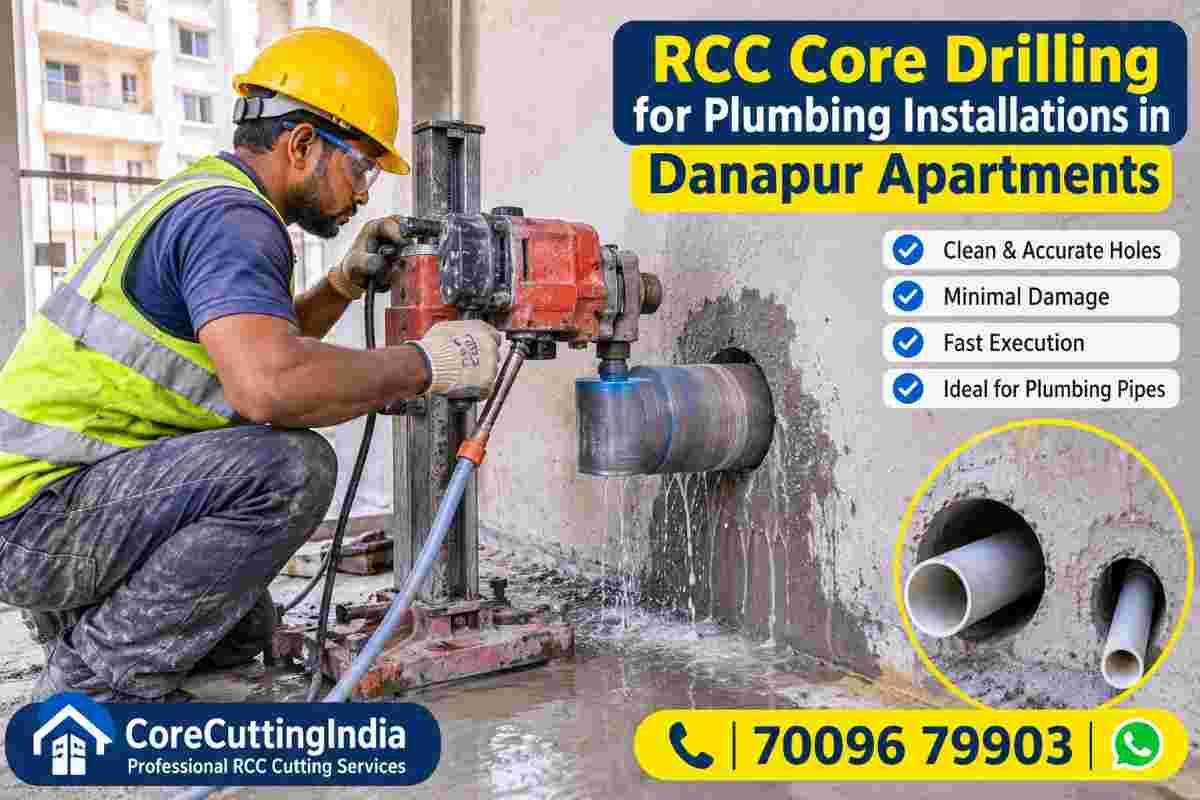
Danapur has grown quickly into one of the most sought-after residential areas on the western side of Patna. New apartment complexes, multi-storey housing societies and redevelopment projects are appearing along the Danapur–Khagaul corridor, and almost every one of them is built with reinforced cement concrete (RCC). Slabs, beams, columns and shear walls give these buildings their strength, but they also create a challenge when plumbers need to run new pipes through them.
Whether you are installing a new drainage stack, adding a bathroom, shifting a kitchen, or retrofitting water supply lines, you will almost certainly need to make clean, accurate openings in hardened concrete. Hammers and chisels are no longer an acceptable answer. They crack slabs, damage reinforcement, create heavy dust and noise, and upset neighbours.
The modern solution is RCC core drilling. In this guide from Core Cutting India (https://corecuttingindia.com/), we explain how core drilling works, why it suits plumbing installations in Danapur apartments, what the process looks like, what affects cost, and how to choose the right contractor.
What Is RCC Core Drilling?
RCC core drilling is a method of cutting perfectly round holes in reinforced concrete using a hollow, diamond-tipped drill bit. The bit is mounted on a motor-driven rig, which is anchored to the floor or wall. As the bit rotates, the diamond segments grind through concrete and, where necessary, steel reinforcement bars. The result is a smooth-walled cylindrical hole, and a solid "core" of concrete that is removed intact.
Most plumbing work uses wet core drilling, where water is fed to the bit during cutting. The water cools the diamond segments, flushes out slurry and suppresses dust. This matters a great deal inside an occupied apartment, where fine concrete dust can settle on furniture, enter air-conditioners and affect residents' health.
Core drilling machines are available in handheld and rig-mounted versions. For apartment plumbing, rig-mounted machines are generally preferred because they hold the bit perfectly perpendicular to the surface, which means the hole is straight and the pipe sits correctly.
Why Danapur Apartments Are Ideal Candidates for Core Drilling
Several features of residential buildings in Danapur make core drilling the practical choice:
1. Occupied, close-knit buildings. Most apartments in Danapur are in societies where neighbours live directly above and below. Traditional breaking creates vibration that travels through the structure. Core drilling is far gentler and much quieter.
2. Dense reinforcement. Modern RCC slabs contain closely spaced steel bars. A diamond core bit cuts through these cleanly without cracking the surrounding concrete, which preserves the slab's integrity.
3. Retrofit and renovation demand. Many older buildings in and around Danapur are being renovated, with owners adding bathrooms, relocating toilets or upgrading drainage. Retrofitting requires accurate holes in existing slabs without damaging finished flooring nearby.
4. Society rules and timing limits. Housing societies often restrict noisy work to certain hours. Core drilling's lower noise and compact setup make it easier to comply.
5. Waterproofing sensitivity. Bathroom and balcony slabs carry waterproofing layers. Clean, smooth holes make it far easier to restore waterproofing and seal around pipes.
Common Plumbing Uses of RCC Core Drilling
Core drilling touches nearly every stage of plumbing in a multi-storey building. Typical applications in Danapur apartments include:
- Soil and waste pipe stacks: Large-diameter holes in slabs for toilet drainage lines running through floors.
- Floor trap and drain openings: Holes for bathroom, kitchen and balcony drains.
- Water supply risers: Openings for vertical supply lines between floors.
- Wall penetrations: Horizontal holes through RCC walls and beams for pipes crossing rooms or reaching shafts.
- Rainwater downpipes: Openings for terrace and balcony rainwater outlets.
- Overhead tank and booster connections: Holes for inlet, outlet and overflow pipes.
- Hot water and solar water heater lines: Penetrations for pipes running up to terrace-mounted systems.
- Fire fighting and sprinkler lines: Sleeve openings for firefighting pipes in larger complexes.
- Sewer connections: Core cuts in foundation walls or basement slabs for connection to drainage lines.
In each case, accuracy is critical. A hole drilled a few centimetres off position can force a plumber to use extra bends, which increases the chance of leaks, blockages and poor flow.
Step-by-Step: How RCC Core Drilling Works for Plumbing
A professional core drilling job follows a clear, controlled process. Here is what you can expect from a reliable service provider.
Step 1: Site Inspection and Marking
The team visits the apartment, studies the plumbing drawings and marks the exact centre points for each hole. They confirm hole diameters with your plumber based on the pipe sizes and any sleeves or fire-stop requirements.
Step 2: Checking for Hidden Services
Before any cutting begins, the area is checked for hidden electrical conduits, existing pipes and heavily concentrated reinforcement. Where needed, the team uses scanning equipment or reviews the building's drawings. Skipping this step is a common cause of damage, so a good contractor never rushes it.
Step 3: Setting Up and Protecting the Area
Floors, furniture and fittings nearby are covered. A water source and a slurry-collection method, such as a wet vacuum, are set up so that water does not spread into the flat below or onto finished surfaces.
Step 4: Anchoring the Rig
The drilling rig is fixed to the floor or wall with an anchor bolt or vacuum base. A stable rig is what produces straight, true holes, and prevents the bit from jamming or wandering.
Step 5: Drilling
The operator lowers the diamond bit slowly and steadily while water flows. The bit cuts through concrete and any rebar in its path. Once through, the core is lifted out and the rig is moved to the next marked point.
Step 6: Cleaning and Finishing
Slurry is cleaned up, the hole edges are checked for smoothness and the area is left tidy. Your plumber can then install the pipe sleeve or pipe and complete grouting and waterproofing.
Common Hole Sizes for Plumbing Work
Hole size depends on the pipe or sleeve being installed. The table below gives typical examples. Always confirm exact requirements with your plumber or the project drawings, since sleeve thickness and fire-stopping methods vary.
|
Application |
Typical Hole Diameter |
|---|---|
|
Water supply pipe |
25 mm – 50 mm |
|
Floor drain or trap |
75 mm – 100 mm |
|
Kitchen and wash basin waste |
50 mm – 75 mm |
|
Toilet soil pipe |
110 mm – 160 mm |
|
Vertical soil stack |
160 mm – 200 mm |
|
Rainwater downpipe |
75 mm – 110 mm |
|
Larger service shafts |
200 mm and above |
Choosing the right size from the start avoids oversized holes that need extra grouting, and undersized holes that mean re-drilling.
Key Benefits of Core Drilling Over Traditional Breaking
If you are weighing core drilling against hammering or chiselling, these advantages are worth considering.
Clean, accurate holes. Diamond bits produce smooth-walled, round openings with tight tolerances. Pipes and sleeves fit snugly.
Minimal vibration. Gentle cutting protects slabs, beams and finished tiles, and avoids hairline cracks that can later cause seepage.
Less dust and noise. Wet drilling keeps dust down, and the quieter operation is easier on neighbours.
Speed. A skilled team can drill many holes in a day, even in thick slabs.
Reinforcement handling. Core drilling cuts through steel bars in a controlled manner without shattering concrete.
Structural safety. When holes are planned carefully, the structure retains its strength. Random breaking, by contrast, can weaken slabs and compromise reinforcement.
Better waterproofing outcomes. A smooth hole makes it easier to seal pipe penetrations and prevent leakage to the flat below, a common source of neighbour disputes in apartment buildings.
Structural and Safety Considerations
Even though core drilling is gentle, cutting into structural elements deserves care. Keep the following in mind:
- Avoid cutting main reinforcement unnecessarily. Locating holes away from beam-column junctions and heavily reinforced zones is best practice.
- Consult a structural engineer for major openings. Large holes, or several holes close together, can affect load paths. If your building is older or the opening is significant, an engineer's opinion is worthwhile.
- Check society and builder permissions. Many apartment associations require approval before structural drilling. It is wise to inform the committee beforehand.
- Protect the flat below. Let the neighbour know about the work, and place a catch tray or sheeting where possible.
- Follow safe electrical practice. Water and electricity are a dangerous mix. Operators should use proper earthing and residual-current protection when running machines with wet drilling.
- Use trained operators. Diamond core machines are powerful tools. Experience matters for both safety and quality.
What Affects the Cost of Core Drilling in Danapur?
Pricing varies from job to job, and a reliable contractor will explain what drives it. The main factors are:
- Hole diameter. Larger bits cut more material and wear faster, so they cost more per hole.
- Depth or slab thickness. Deeper holes take longer and may need extension rods.
- Reinforcement density. More rebar slows cutting and wears the diamond segments.
- Number of holes. Many projects offer better rates per hole when the quantity is higher.
- Access and height. Holes in awkward spots, higher floors without lift access, or tight corners take more effort.
- Wall or slab orientation. Horizontal wall drilling can need different setups than vertical slab drilling.
- Minimum charges. Small jobs may have a minimum visit charge because of mobilisation costs.
The best way to get an accurate figure is to request a site visit and written quotation rather than relying on a general price.
How to Choose the Right Core Drilling Contractor in Danapur
A poor-quality job can mean cracked slabs, mislocated holes, leaks into the flat below, and repeated rework. Ask these questions before you hire:
- Do they use diamond core drilling machines with wet cutting? Avoid anyone who proposes breaking concrete by hand.
- Do they check for hidden services before drilling?
- Can they show previous work in apartments or multi-storey buildings?
- Do they provide a clear quote with hole sizes and quantities?
- Do they manage slurry and clean-up?
- Are their operators trained and equipped with safety gear?
- Will they coordinate with your plumber on exact positions?
A contractor who answers these questions confidently is far more likely to deliver a smooth, damage-free job.
Why Choose Core Cutting India for Your Danapur Plumbing Project?
Core Cutting India (https://corecuttingindia.com/) provides concrete core cutting and drilling solutions designed for residential, commercial and industrial projects. For apartment plumbing work, our approach focuses on what homeowners, builders and plumbers care about most:
- Precision. Rig-mounted diamond drilling for straight, clean holes at the exact points your plumber needs.
- Low dust and low noise. Wet drilling and careful site protection to keep your home and neighbours comfortable.
- Structure-aware practice. Planned positions and care around reinforcement and structural elements.
- Clear communication. Straightforward quotations, sensible timelines and coordination with your plumbing team.
- Tidy finish. Slurry is managed and the work area is left clean.
Whether you need one hole for a new bathroom drain or dozens for a full-building plumbing retrofit, we can help you plan the work and carry it out safely.
To book a site visit or request a quotation, call +91 70096 79903 or visit https://corecuttingindia.com/.
Frequently Asked Questions (People Also Ask)
What is core drilling in RCC?
Core drilling in RCC is the process of cutting a round hole in reinforced concrete using a hollow diamond-tipped bit. It produces a clean opening and a solid cylinder of removed concrete, making it ideal for plumbing, electrical and HVAC penetrations.
Is core cutting safe for apartment buildings?
Yes, when done by trained operators with proper planning. Core drilling creates far less vibration than breaking and does not generally harm the surrounding slab. For large openings or multiple holes in one area, consulting a structural engineer is recommended.
Can core drilling cut through steel reinforcement?
Yes. Diamond core bits can cut through rebar embedded in concrete. However, cutting main structural reinforcement should be avoided where possible, and hole locations should be chosen carefully.
How long does core drilling take?
A single standard hole in a slab can often be drilled in a matter of minutes to under an hour, depending on diameter, thickness and reinforcement. Setup, marking and clean-up add to the total time.
Is wet or dry core drilling better for plumbing work?
Wet drilling is generally preferred for plumbing in apartments because it reduces dust, cools the bit and extends tool life. Dry drilling is used in specific situations but creates more dust.
How much does RCC core drilling cost?
Cost depends on hole diameter, depth, reinforcement, quantity and access. Because every site is different, a site visit and written quotation is the most reliable way to know the price.
Do I need permission from my apartment society?
In most cases, yes. Housing societies typically want to know about any work that involves drilling into slabs or walls. Inform your committee and the neighbour below before work starts.
How do I prevent leaks after drilling a hole for a pipe?
Use correctly sized sleeves or pipes, fill gaps with suitable non-shrink grout, and restore waterproofing around the penetration. A smooth core-drilled hole makes this process much easier.
Can core drilling be done on upper floors?
Yes. Core drilling machines are portable and can be set up on any floor, provided there is access for equipment, water and power.
Conclusion
Plumbing installations in Danapur apartments demand clean, accurate and low-impact openings in reinforced concrete. RCC core drilling delivers exactly that: round, smooth holes with minimal vibration, controlled dust and precise placement. Compared with hand-breaking, it protects your building's structure, shortens the job and makes waterproofing and pipe fitting far easier.
If you are planning a new bathroom, a drainage upgrade or a complete plumbing retrofit, choose a team that uses the right equipment and respects your home and your neighbours. Core Cutting India is ready to help.
Call +91 70096 79903 or visit https://corecuttingindia.com/ to schedule your site inspection today.