
Introduction
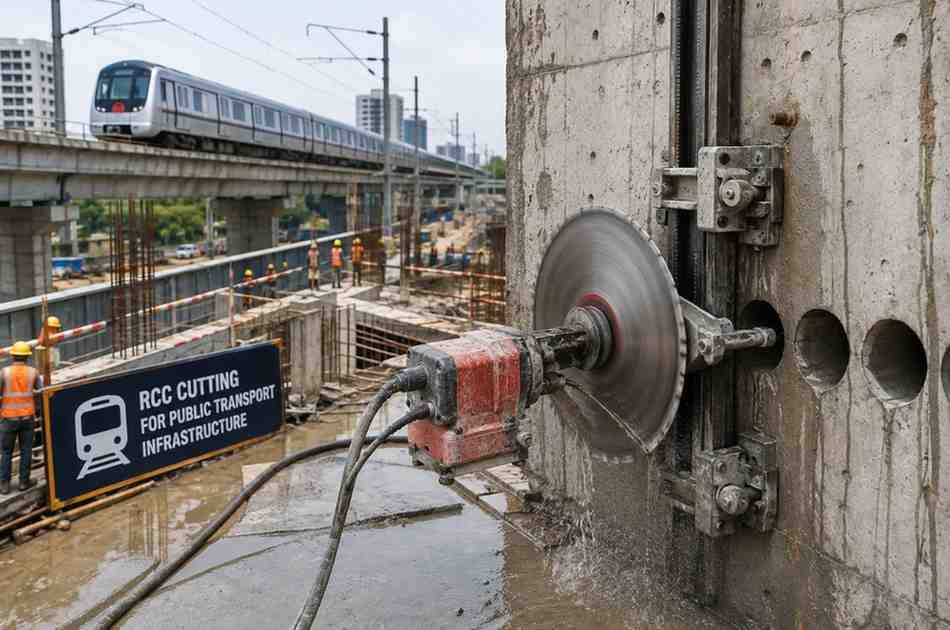
India's public transport infrastructure is expanding at a pace never seen before. Metro corridors are being extended across tier-1 and tier-2 cities, national highways are being widened, flyovers are being retrofitted, and railway networks are undergoing continuous modernization. Behind almost every one of these projects lies a specialized, often unnoticed process that makes construction, renovation, and repair possible without compromising structural safety — RCC cutting.
Reinforced Cement Concrete (RCC) forms the backbone of nearly all modern transport infrastructure — from metro pillars and station platforms to highway dividers, bridge decks, and tunnel linings. Whenever this concrete needs to be modified, removed, widened, or reshaped, traditional demolition methods like hammering or blasting are simply too risky, too slow, or too damaging. This is where controlled, precision RCC cutting becomes indispensable.
At Core Cutting India ([email protected]), we specialize in delivering safe, accurate, and vibration-controlled RCC cutting solutions for exactly these high-stakes environments. In this article, we explore what RCC cutting is, why it matters so much for public transport infrastructure, the techniques and equipment involved, and what project planners should know before hiring a cutting contractor.
What Is RCC Cutting?
RCC cutting refers to the process of cutting through reinforced cement concrete — concrete embedded with steel reinforcement bars (rebar) — using specialized diamond-tipped tools and equipment. Unlike plain concrete, RCC is significantly tougher because of the steel mesh running through it, which means cutting requires machinery designed to slice through both concrete and metal cleanly, without creating cracks, excessive dust, or structural vibration.
RCC cutting is fundamentally different from demolition. Demolition is destructive and often imprecise, using tools like jackhammers, wrecking balls, or controlled blasting. RCC cutting, on the other hand, is a controlled, engineered process. It allows contractors to remove or modify only the exact section of concrete required, leaving the surrounding structure completely undisturbed. This distinction becomes critical when working on live infrastructure — a metro station that is still operational, a highway that cannot be shut down, or a bridge that must remain structurally sound during the cutting process.
Why RCC Cutting Matters for Public Transport Infrastructure
Public transport infrastructure projects — metro rail, elevated corridors, flyovers, railway stations, bus terminals, and underpasses — come with constraints that ordinary construction projects don't face. Three factors make RCC cutting especially critical in this sector:
1. Structures Often Remain Operational During Work
Unlike a new building site, most transport infrastructure upgrades happen on structures that are already in use. Trains keep running, vehicles keep passing beneath flyovers, and commuters keep walking through stations. Cutting techniques must therefore be vibration-controlled and precisely targeted so that ongoing operations are not disrupted and nearby structural elements are not weakened.
2. Zero Tolerance for Structural Damage
A flyover pier, a metro viaduct, or a railway bridge deck is engineered to bear specific loads. Uncontrolled demolition can introduce micro-cracks or stress points that compromise long-term structural integrity — a risk that is simply unacceptable in mass-transit infrastructure where public safety is non-negotiable. Precision RCC cutting ensures that only the intended section is removed, with clean, engineered edges that don't propagate stress into adjoining concrete.
3. Tight Timelines and Urban Constraints
Public transport projects are usually high-visibility and time-bound, often tied to government deadlines, funding cycles, or traffic management plans. Cutting work frequently has to be carried out in narrow night-time work windows, congested urban corridors, or areas close to underground utilities, cables, and pipelines. This demands equipment and crews that can work fast, safely, and with minimal disruption.
Common Applications of RCC Cutting in Transport Projects
RCC cutting plays a role across nearly every stage of public transport infrastructure development. Some of the most common applications include:
- Metro rail construction and expansion: Cutting openings for utility ducts, creating access points in viaducts, modifying station structures, and removing sections of old concrete during corridor extensions.
- Flyover and bridge retrofitting: Widening existing flyovers, repairing damaged expansion joints, cutting deteriorated bridge deck sections for replacement, and creating construction joints.
- Railway infrastructure upgrades: Cutting platform edges for extension, modifying station foundations, and creating openings for signal and cable conduits.
- Road widening and highway projects: Removing old RCC pavement sections, cutting road dividers, and creating precise joints for expansion during highway modernization.
- Underpass and tunnel work: Cutting access shafts, utility openings, and drainage channels in confined, safety-sensitive underground environments.
- Utility integration: Creating openings in existing RCC structures for water lines, drainage, electrical conduits, and telecom cabling that must pass through transport infrastructure.
Techniques and Equipment Used in RCC Cutting
Professional RCC cutting relies on a range of specialized diamond-tool-based techniques, each suited to different structural conditions and project requirements.
Wall Sawing
Wall sawing uses a track-mounted circular diamond blade to make precise, straight vertical or horizontal cuts through RCC walls, slabs, and beams. It's commonly used for creating door and window openings, utility passages, and structural modifications in station buildings and control rooms.
Floor Sawing
Floor saws cut horizontal RCC surfaces such as platforms, road decks, and floor slabs. This method is widely used for removing damaged pavement sections or creating expansion joints in highway and flyover projects.
Core Drilling
Core drilling creates precise circular holes through RCC structures, typically used for utility penetrations, sampling, or anchor bolt installations. It's a low-vibration method ideal for working near sensitive structural elements or live utilities.
Diamond Wire Sawing
For thick, heavily reinforced, or geometrically complex sections — such as large bridge piers or thick viaduct segments — diamond wire sawing is used. A diamond-embedded wire loop cuts through massive sections of RCC with minimal noise and vibration, making it ideal for structurally sensitive or occupied environments.
Hydraulic and Silent Cutting Methods
In noise-sensitive or vibration-sensitive zones — near residential areas, hospitals, or active rail lines — hydraulic and silent cutting techniques are preferred. These methods significantly reduce noise pollution and structural vibration compared to traditional impact-based demolition, making them suitable for night-time urban work.
Safety Considerations in Public Infrastructure Cutting
Given the scale and public exposure of transport infrastructure, safety is the most critical component of any RCC cutting project. Reputable contractors follow a structured safety protocol that includes:
- Structural assessment before cutting: Identifying load-bearing elements, rebar layout, and structural vulnerabilities using scanning tools like ground-penetrating radar (GPR) before any cut is made.
- Utility mapping: Locating embedded electrical cables, water lines, and telecom conduits to avoid accidental damage.
- Dust and slurry control: Using wet-cutting techniques and vacuum extraction systems to manage dust, particularly important near live traffic and pedestrian zones.
- Vibration monitoring: Deploying vibration sensors during cutting near sensitive structures such as railway tracks or aging bridges to ensure vibration stays within safe limits.
- Traffic and public safety management: Coordinating with local authorities for barricading, signage, and scheduling cuts during low-traffic or night-time hours to minimize public disruption.
- Trained crews and certified equipment: Ensuring operators are trained specifically for infrastructure-grade cutting, not just general construction demolition.
Benefits of Professional RCC Cutting Over Traditional Demolition
Choosing precision RCC cutting over conventional demolition offers several advantages that are particularly valuable in public transport projects:
- Minimal structural disturbance: Only the targeted section is removed, preserving the integrity of surrounding concrete and rebar.
- Reduced noise and vibration: Ideal for projects near residential zones, hospitals, or operational rail lines.
- Faster turnaround: Diamond cutting is significantly quicker than manual breaking, helping projects meet tight government deadlines.
- Cleaner work environment: Wet-cutting and dust extraction systems keep sites cleaner and safer for workers and the public.
- Cost efficiency over the project lifecycle: Precision cutting reduces the risk of costly structural repairs caused by uncontrolled demolition damage.
- Better compliance with safety regulations: Controlled methods align more easily with the strict safety norms mandated for public infrastructure projects.
Choosing the Right RCC Cutting Partner for Infrastructure Projects
Public transport projects demand a level of expertise, equipment quality, and safety discipline that general contractors often cannot provide. When evaluating an RCC cutting partner for infrastructure work, project managers should look for:
- Proven experience with public infrastructure projects — metro, rail, highway, or bridge work specifically, not just residential or commercial cutting.
- Advanced equipment — wall saws, wire saws, core drills, and hydraulic cutting systems suited for heavy RCC sections.
- Structural and safety expertise — the ability to assess load-bearing risk and coordinate with structural engineers.
- Compliance and documentation — adherence to relevant safety codes, environmental regulations, and municipal permit requirements.
- Track record of minimal disruption — case studies or references showing successful work in live, operational environments.
About Core Cutting India
Core Cutting India brings specialized expertise in RCC cutting, concrete demolition, and precision structural modification services tailored for demanding infrastructure environments. From metro corridors and flyovers to railway stations and highway projects, our team combines advanced diamond-cutting technology with rigorous safety protocols to deliver clean, accurate, and disruption-free results.
Whether you're a contractor, engineering consultant, or government infrastructure body planning a public transport project, our team can help you plan and execute RCC cutting work that meets both safety and timeline requirements.
📩 Get in touch with our team at [email protected] to discuss your project requirements.
Conclusion
As India's public transport network continues to expand and modernize, the demand for precise, safe, and efficient RCC cutting will only grow. Metro corridors, flyovers, railway platforms, and highways all depend on this specialized process to enable construction, retrofitting, and repair without compromising structural safety or public convenience. Choosing an experienced RCC cutting partner isn't just a construction decision — it's a safety-critical one that directly affects the reliability of the infrastructure millions of commuters depend on every day.
For infrastructure projects that demand precision, safety, and reliability, Core Cutting India is ready to support your next public transport project from planning through execution.
Contact us: [email protected]