
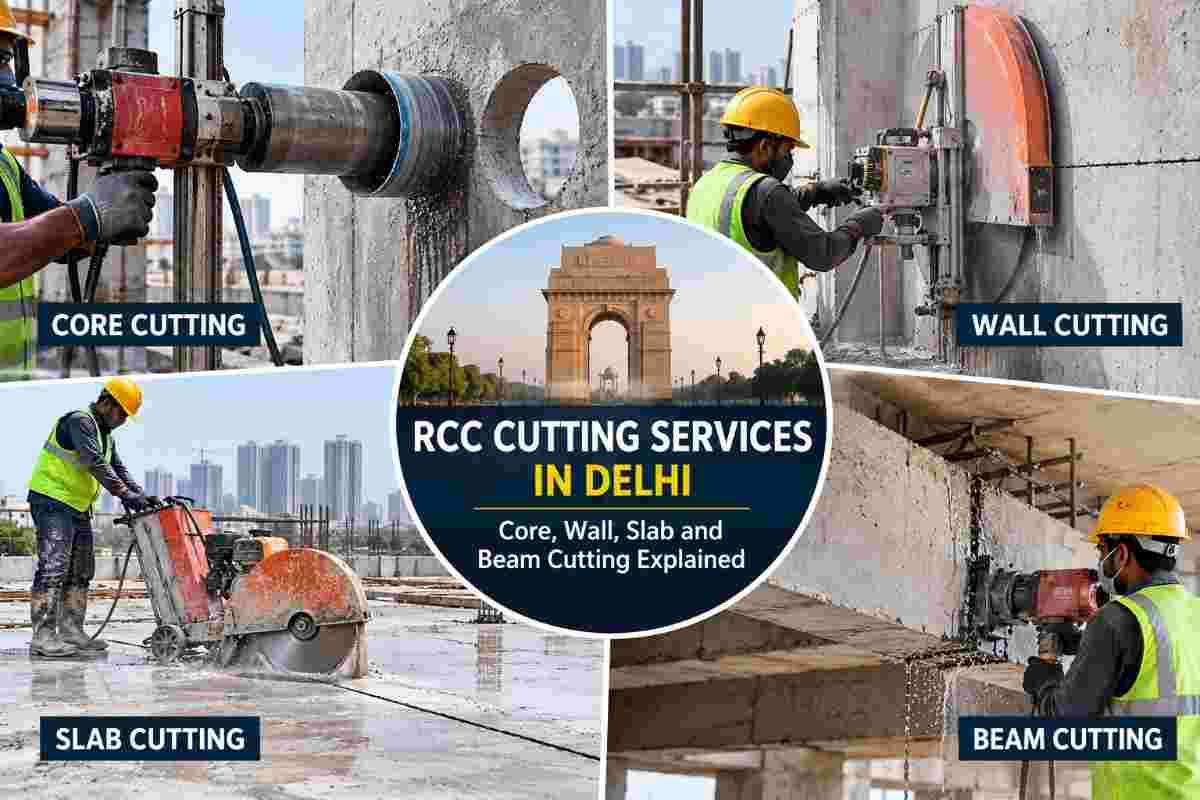
Delhi is a city that never stops building, renovating and reinventing itself. From high-rise apartments in Dwarka to commercial complexes in Nehru Place and metro-linked developments across NCR, reinforced cement concrete (RCC) is the backbone of nearly every structure. But what happens when you need to create a new opening, install a lift shaft, route a pipeline, or remove a section of a slab without damaging the rest of the building?
Breaking concrete with hammers and jackhammers is noisy, messy and risky. This is where professional RCC cutting services in Delhi make the difference. At Core Cutting India, the focus is on precise, low-vibration, dust-controlled cutting that protects your structure while delivering exactly the opening you need.
This guide explains what RCC cutting is, how core, wall, slab and beam cutting work, where each method is used, and how to choose the right contractor in Delhi.
What Is RCC Cutting?
RCC cutting is the process of cutting through reinforced concrete using diamond-tipped tools. Reinforced concrete contains steel rebar embedded in hardened concrete, which makes it extremely strong and extremely hard to cut with ordinary tools. Diamond is the hardest known material, so diamond-segmented blades, wires and drill bits can grind through both concrete and steel cleanly.
Unlike demolition, RCC cutting is a controlled process. The operator decides exactly where the cut goes, how deep it is and what is left intact. The result is smooth, accurate edges with minimal cracking in the surrounding structure.
The main techniques include:
- Core cutting (core drilling): circular holes drilled with hollow diamond bits
- Wall sawing: straight cuts through vertical concrete using track-mounted saws
- Slab sawing (floor sawing): cuts through horizontal slabs and floors
- Wire sawing: a diamond-impregnated wire used for beams, columns and heavy sections
Why RCC Cutting Matters in Delhi
Delhi’s construction landscape has some unique demands. Many buildings are older, and owners are retrofitting them with modern services such as HVAC, fire-fighting lines, lifts and data cabling. Dense neighbourhoods mean noise, dust and vibration must be kept low. Strict timelines on commercial projects leave little room for slow, messy demolition.
Precision cutting addresses all of these problems. It protects load-bearing elements, reduces debris, shortens project timelines and keeps neighbouring occupants far less disturbed. For homeowners, builders, architects and facility managers, it is often the only sensible way to modify an existing concrete structure.
Core Cutting Explained
What Is Core Cutting?
Core cutting, also called core drilling, uses a hollow cylindrical diamond bit mounted on a drilling rig. As the bit rotates, it cuts a clean circular hole and leaves behind a solid cylinder of concrete, known as the core. Holes can range from small diameters for electrical conduits to very large openings for ducts and drainage.
Where Core Cutting Is Used
- Plumbing, drainage and sewage pipe penetrations
- Electrical conduits and cable trays
- HVAC and ventilation ducts
- Fire-fighting and sprinkler pipelines
- Anchor bolt holes and structural testing
- Concrete core samples for quality and strength testing
Wet and Dry Core Drilling
Most Delhi projects use wet core drilling, where water cools the bit and suppresses dust. It is faster, gives a cleaner finish and extends bit life. Dry core drilling is used where water could damage interiors, electronics or sensitive equipment, usually with dust extraction attached.
Benefits of Core Cutting
- Clean, round, accurate holes
- Very little vibration, so no micro-cracks
- Ability to cut through rebar without damaging the slab
- Suitable for both vertical and horizontal drilling
- Works in confined spaces and at height
Wall Cutting Explained
What Is Wall Cutting?
Wall cutting, or wall sawing, is used to cut straight, precise openings in concrete or brick walls. A track or rail is fixed to the wall, and a hydraulic or electric saw with a diamond blade travels along it. The blade can cut to considerable depths, making it effective even for thick RCC walls.
Typical Applications
- Creating doorways, windows and ventilation openings
- Cutting lift or elevator openings
- Removing sections of a wall for structural changes
- Making openings for ducts and large utilities
- Partial demolition during renovation or remodelling
Why Wall Sawing Beats Hammering
When a wall is broken with a jackhammer, vibrations travel through the structure and can crack adjacent plaster, beams and columns. A wall saw makes a clean, straight line exactly where the engineer specified. The removed section can be cut into manageable blocks, which makes handling and disposal far easier, especially on upper floors where debris removal is a challenge.
Planning Considerations
Before wall cutting begins, the team should confirm whether the wall is load-bearing, locate embedded conduits and rebar, and have a structural engineer approve the opening. Proper shoring or temporary supports are installed where needed. A reliable contractor will always insist on this planning stage.
Slab Cutting Explained
What Is Slab Cutting?
Slab cutting, also known as floor sawing, involves cutting horizontal concrete surfaces such as floors, roofs, bridge decks and pavements. A walk-behind floor saw with a diamond blade makes straight cuts, while a core rig or wire saw can handle other cutting profiles.
Where Slab Cutting Is Used
- Creating openings for staircases, lifts and escalators
- Cutting trenches for plumbing and electrical lines
- Making expansion and control joints
- Removing damaged sections of floors for repair
- Cutting industrial floors for machinery installation
- Cutting road and pavement surfaces for utility work
Why Precision Is Critical
Slabs are structural elements that carry loads and distribute them to beams and columns. An uncontrolled cut can weaken the entire floor. Professional slab cutting follows marked layouts, controls blade depth and avoids cutting primary reinforcement unless the engineer has approved it. After cutting, the opening is usually strengthened with additional framing or reinforcement.
Advantages
- Accurate depth control
- Smooth edges that make finishing and re-casting easier
- Reduced noise compared to breaker-based demolition
- Faster completion of large surface cuts
- Minimal disruption to adjoining areas
Beam Cutting Explained
What Is Beam Cutting?
Beam cutting is among the most sensitive types of RCC cutting. Beams are structural members that carry slab loads to columns, so removing or modifying them requires careful engineering. Cutting may be required for partial removal, creating service openings, or demolishing an entire structure in stages.
Methods Used
Large or deep beams are often cut with diamond wire saws, where a flexible diamond-embedded wire loops around the member and is pulled through at high speed. Wire sawing works in tight or awkward positions where a blade saw cannot reach, and it can cut sections of almost unlimited thickness. Smaller beams can be cut with hand saws or ring saws, while core drilling is used to make small service penetrations.
Safety and Engineering Requirements
Beam cutting should never be done without a structural assessment. Temporary supports, props and load transfer measures are typically installed before the first cut. A qualified engineer decides cut locations, sequence and any required strengthening afterward. Skipping this step can lead to serious structural damage or collapse.
Equipment and Techniques Behind Quality RCC Cutting
The quality of the equipment largely determines the quality of the cut. Professional teams use:
- Diamond core bits in different diameters and segment types for concrete, reinforced concrete and masonry
- Hydraulic wall saws for deep, precise vertical cuts
- Walk-behind floor saws for horizontal surfaces
- Diamond wire saws for heavy beams, columns and complex shapes
- Slurry management and dust extraction systems to keep the site clean
- Rebar detectors and GPR scanners to locate steel and embedded services before cutting
Scanning before cutting prevents accidental damage to cables, pipes and rebar, a step that separates professional operators from amateurs.
Benefits of Professional RCC Cutting Over Conventional Demolition
- Precision: exact dimensions and clean edges
- Low vibration: protects the rest of the structure
- Reduced noise: important in hospitals, offices, schools and residential societies
- Less dust and debris: easier cleaning and safer sites
- Speed: faster completion with fewer labour hours
- Safety: controlled cutting reduces the risk of unexpected failure
- Cost efficiency: less rework, repair and finishing work afterward
Common Applications Across Delhi NCR
RCC cutting is used across residential, commercial and infrastructure projects, including:
- Apartment and independent house renovations
- Commercial offices and malls
- Hospitals and educational institutions
- Industrial plants and warehouses
- Metro and road infrastructure
- Basement modifications and parking structures
- Lift shaft installation in existing buildings
- Retrofit projects for utilities and fire safety systems
Safety and Compliance Considerations
Safety should be central to any cutting project. A reputable contractor will:
- Conduct a site inspection before quoting
- Obtain engineer approval for structural cuts
- Use trained, experienced operators
- Provide proper PPE and barricading
- Control water, slurry and dust
- Dispose of debris responsibly
- Follow building society rules and working-hour restrictions
For apartment buildings, always check with the resident welfare association or building management about permissions and permitted working hours before work begins.
How to Choose the Right RCC Cutting Contractor in Delhi
Not all providers offer the same level of skill. Keep these points in mind:
- Experience: look for a track record across different project types
- Equipment: modern diamond tools and scanning technology
- Range of services: core, wall, slab, beam and wire cutting under one roof
- Transparent quotations: clear details on scope, depth, size and charges
- Safety record: trained staff and proper safety practices
- References and reviews: feedback from earlier clients
- After-work cleanliness: proper slurry and debris handling
A specialist such as Core Cutting India can assess your site, recommend the right technique and deliver the work with minimal disruption.
What Affects the Cost of RCC Cutting in Delhi?
Costs are not fixed and depend on several factors:
- Type of cutting: core, wall, slab or wire sawing
- Thickness and depth of the concrete
- Diameter or length of the cut
- Amount of reinforcement in the section
- Accessibility: upper floors, basements and tight spaces take longer
- Project size and number of cuts
- Special requirements: dust-free operation, night work or structural support
The best approach is to request a site visit and a written quote rather than rely on rough per-hole or per-foot estimates, which can be misleading.
Frequently Asked Questions About RCC Cutting
What is RCC cutting and how does it work?
RCC cutting uses diamond-tipped tools to cut reinforced concrete accurately. Blades, bits and wires grind through both concrete and steel reinforcement, creating clean openings without the heavy vibration of traditional demolition.
How long does core cutting take?
A single standard-sized hole can often be drilled in minutes, depending on diameter, depth and reinforcement. Larger or deeper holes take longer, and setup time should also be considered.
Is concrete cutting safe for the building?
Yes, when done properly. Controlled, low-vibration cutting is generally safer than breaking concrete, but structural cuts should always be approved by a qualified engineer.
Can load-bearing walls and beams be cut?
They can, but only after structural analysis and with temporary supports and reinforcement in place. Never cut load-bearing elements without professional engineering advice.
What is the difference between core cutting and wall cutting?
Core cutting produces round holes using a hollow drill bit, while wall cutting produces straight-line cuts and larger rectangular openings using a track-mounted saw.
Is wet or dry cutting better?
Wet cutting is more common because it controls dust, cools the blade and improves speed. Dry cutting is chosen when water could damage interiors or equipment.
Does RCC cutting create a lot of mess?
Far less than conventional demolition. Water-controlled cutting with slurry collection and dust extraction keeps sites relatively clean.
Can RCC cutting be done in occupied buildings?
Yes. Because it is low in vibration and noise compared to breaking, it is widely used in occupied homes, offices and hospitals, though working-hour restrictions may apply.
Final Thoughts
Whether you are installing a lift, adding a doorway, routing utilities or modifying a floor, RCC cutting is the smarter, safer way to alter concrete structures. Core, wall, slab and beam cutting each have their own methods, tools and planning requirements, and choosing the right technique protects both your building and your budget.
If you are planning a project in Delhi NCR, work with a team that combines precision equipment, trained operators and a safety-first approach. Visit Core Cutting India to learn more about their RCC cutting services and request a site assessment for your next project.