
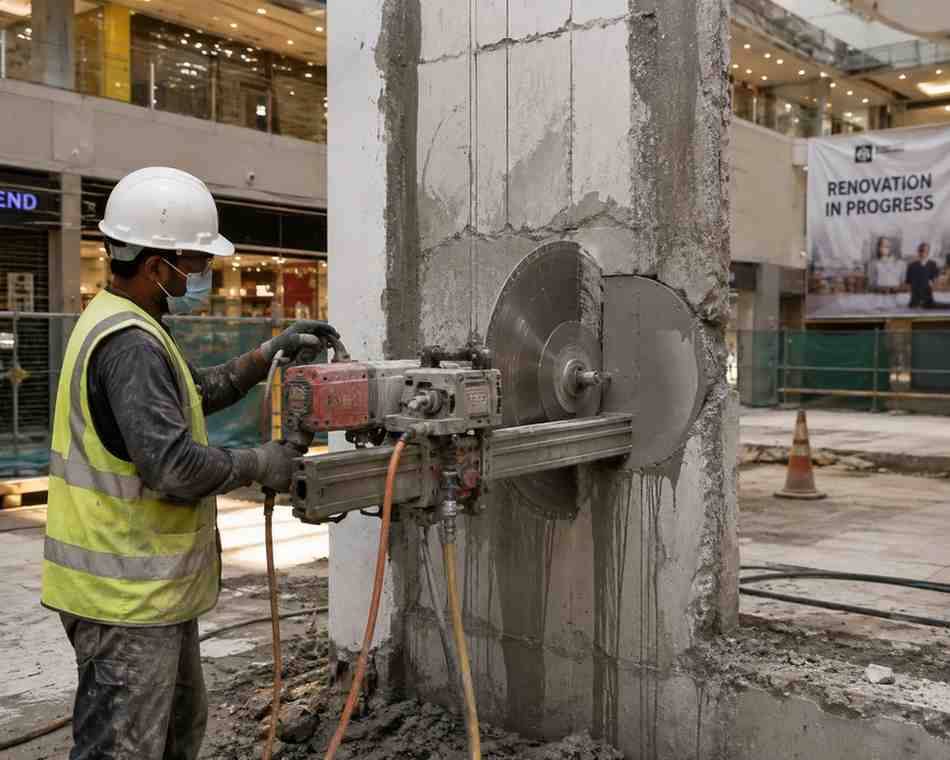
Shopping complexes are living, breathing commercial ecosystems. They house dozens of retail units, food courts, parking structures, and common areas that see thousands of footfalls every single day. When the time comes to renovate such a structure — whether to modernize its layout, add new escalators, expand a retail unit, or install fresh utility lines — one of the most critical and technically demanding tasks is RCC cutting.
Reinforced Cement Concrete (RCC) forms the structural backbone of nearly every shopping complex. Walls, slabs, columns, and beams are all made of RCC, and altering any of them requires precision, expertise, and specialized equipment. Unlike a residential renovation, cutting RCC in a shopping complex comes with added layers of complexity: occupied premises, live electrical systems, fire safety codes, structural load considerations, and the need to keep disruption to a minimum. This is where a professional RCC cutting company like Core Cutting India becomes indispensable.
In this article, we will explore what RCC cutting involves, why it is essential during shopping complex renovations, the techniques used, safety protocols, cost factors, and how to choose the right cutting partner for your project.
What Is RCC Cutting?
RCC cutting is the process of precisely cutting through reinforced cement concrete structures using specialized diamond-tipped tools and machinery. Unlike traditional demolition, which relies on hammering, breaking, and often uncontrolled destruction, RCC cutting is a controlled, engineered process. It allows contractors to remove or modify specific sections of concrete — walls, slabs, columns, beams, or openings — without compromising the structural integrity of the surrounding building.
RCC cutting is widely used for creating new doorways, windows, ventilation shafts, elevator shafts, staircases, plumbing and electrical conduits, and expansion joints. In shopping complexes specifically, RCC cutting is often required when retail spaces are being reconfigured, when new escalators or lifts are installed, or when structural modifications are needed to accommodate modern building codes and tenant requirements.
Why RCC Cutting Is Essential in Shopping Complex Renovations
Shopping complex renovations differ significantly from typical residential or even standalone commercial building work. Here's why RCC cutting plays such a central role:
1. Layout Reconfiguration for New Tenants
Retail tenancy needs change constantly. A large anchor store may be subdivided into multiple smaller units, or several small units may be merged into a flagship store. This almost always requires cutting into RCC walls and slabs to create new openings, remove old partitions, or adjust floor plans without weakening the overall structure.
2. Installation of Modern Amenities
Older shopping complexes were not built with today's technology in mind. Renovation projects frequently involve installing new HVAC ducts, fire sprinkler systems, elevators, escalators, and IT cabling — all of which require precise RCC cutting to create pathways through existing concrete structures.
3. Structural Upgrades and Safety Compliance
Building codes evolve over time. A shopping complex built decades ago may need reinforced fire exits, additional emergency staircases, or seismic retrofitting. RCC cutting allows engineers to modify the structure safely while maintaining compliance with updated safety norms.
4. Expansion and Vertical Additions
Some renovation projects involve expanding the complex horizontally or adding additional floors. This requires cutting into existing RCC columns, beams, and slabs to integrate new structural elements seamlessly.
5. Utility and Service Corridors
Shopping complexes require extensive plumbing, drainage, and electrical infrastructure. RCC cutting creates precise channels and openings for these services without disturbing the rest of the building's structural framework.
Common RCC Cutting Techniques Used in Commercial Renovation
Professional RCC cutting companies use a range of specialized techniques depending on the project requirements, structural considerations, and location within the building. Here are the most common methods:
Diamond Wall Sawing
Diamond wall saws are used to make precise, straight cuts in RCC walls and slabs. This method is highly accurate and produces minimal vibration, making it ideal for occupied shopping complexes where noise and disturbance must be kept to a minimum.
Diamond Core Drilling
Core drilling is used to create circular holes in concrete for pipes, cables, ducts, and conduits. This technique is essential for MEP (mechanical, electrical, plumbing) installations during renovation and is valued for its clean, dust-controlled results.
Floor Sawing
Floor saws are used to cut RCC slabs horizontally, often for creating new staircases, elevator shafts, or expansion joints. This method allows for controlled removal of large concrete sections without unnecessary structural stress.
Wire Sawing
For thicker or heavily reinforced concrete sections, wire sawing uses a diamond-embedded wire to cut through large structural elements such as columns and beams. This technique is particularly useful when dealing with dense reinforcement or when working in tight spaces.
Track-Mounted and Hand-Held Cutting
For smaller, more intricate cuts — such as creating openings for switchboards, small vents, or signage mounts — hand-held and track-mounted diamond cutting tools offer flexibility and precision.
Safety Considerations During RCC Cutting in Occupied Shopping Complexes
One of the biggest challenges in shopping complex renovation is that these structures often remain partially or fully operational during the renovation process. This makes safety planning absolutely critical.
Structural Assessment First: Before any cutting begins, a structural engineer must assess the load-bearing capacity of the elements being cut. Cutting into a load-bearing wall or column without proper analysis can compromise the entire building's stability.
Dust and Noise Control: Modern RCC cutting equipment uses water-cooled diamond blades that significantly reduce dust generation. Noise-dampening techniques and scheduling cuts during off-peak hours help minimize disruption to shoppers and tenants.
Vibration Management: Excessive vibration from cutting equipment can damage adjacent structures, finishes, or sensitive retail displays. Professional teams use vibration-controlled equipment and monitor nearby areas throughout the process.
Fire and Utility Safety: Before cutting near walls or slabs, teams must verify the location of embedded electrical conduits, gas lines, and fire suppression systems to avoid accidental damage.
Temporary Support Structures: In cases where structural elements are being modified, temporary shoring and support systems are installed to maintain stability until permanent reinforcements are in place.
Access and Crowd Management: Cutting zones must be cordoned off with proper signage, barriers, and, where necessary, temporary walls to protect shoppers and staff from dust, debris, and equipment.
Factors That Influence RCC Cutting Costs in Commercial Projects
The cost of RCC cutting during a shopping complex renovation depends on several variables:
- Thickness and reinforcement density of the concrete being cut
- Type of cutting method required (core drilling, wall sawing, wire sawing, etc.)
- Accessibility of the cutting location within the building
- Working hours — night or off-peak cutting may involve additional labor costs
- Structural complexity, including whether temporary support systems are needed
- Volume of work, since larger renovation projects often benefit from economies of scale
- Dust and debris management requirements, especially in occupied retail environments
Because every shopping complex renovation is unique, it's advisable to get a detailed site assessment and quotation from an experienced RCC cutting contractor rather than relying on generic estimates.
Why Choose a Specialized RCC Cutting Contractor
Shopping complex renovations are high-stakes projects. A poorly executed cut can lead to structural damage, costly delays, safety hazards, or even legal liability if the building's integrity is compromised. This is why hiring a specialized, experienced RCC cutting contractor is non-negotiable for commercial renovation work.
An experienced team brings several advantages:
- Engineering expertise to assess structural implications before cutting
- Advanced equipment for precision, minimal vibration, and dust control
- Experience working in occupied commercial spaces with minimal disruption
- Compliance knowledge related to building codes and safety regulations
- Efficient project management to keep renovation timelines on track
At Core Cutting India, we specialize in providing precision RCC cutting services tailored to the unique demands of commercial and retail renovation projects. Our team combines technical expertise with modern diamond cutting technology to deliver safe, efficient, and minimally disruptive results — even in fully operational shopping complexes.
Planning Your Shopping Complex Renovation: A Practical Checklist
If you're planning a renovation that involves RCC cutting, here are a few practical steps to keep the project on track:
- Engage a structural engineer early to assess which elements can be safely modified.
- Get a detailed site survey from your RCC cutting contractor to identify utility lines, reinforcement patterns, and potential obstacles.
- Schedule cutting work during low-footfall hours to minimize disruption to shoppers and tenants.
- Set up dust and noise containment measures to protect nearby retail units.
- Coordinate with fire and safety authorities if structural changes affect emergency exits or fire systems.
- Choose a contractor with proven commercial project experience, not just residential cutting expertise.
Conclusion
RCC cutting is far more than a technical construction step — it is a foundational process that enables shopping complexes to evolve, modernize, and stay competitive in a fast-changing retail landscape. From reconfiguring tenant spaces to installing modern utilities and meeting updated safety codes, precise and professional RCC cutting ensures that renovation projects are executed safely, efficiently, and with minimal disruption to ongoing business operations.
Given the complexity and risk involved, partnering with an experienced RCC cutting company is essential for any shopping complex renovation project. Core Cutting India brings the technical expertise, modern equipment, and commercial project experience needed to handle even the most demanding renovation timelines.
If you're planning a shopping complex renovation and need reliable, precision RCC cutting services, reach out to Core Cutting India at [email protected] to discuss your project requirements and get a detailed site assessment.