
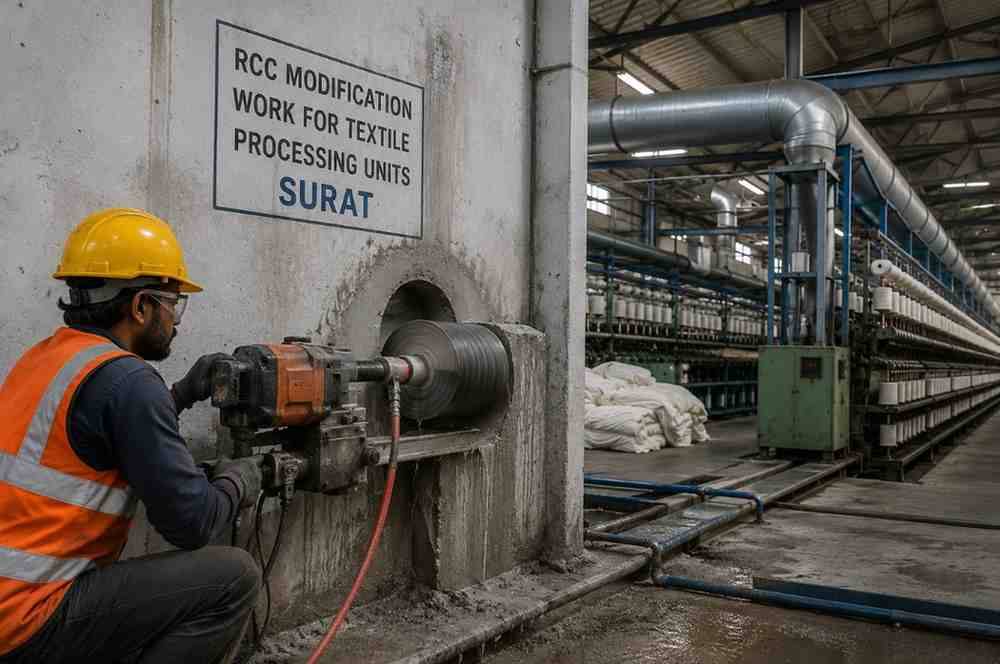
Surat has long been recognized as the textile hub of India, home to thousands of processing units, dyeing houses, printing units, and powerloom factories that operate around the clock. As this industry continues to grow and modernize, the infrastructure supporting it must evolve too. One of the most critical yet often overlooked aspects of this evolution is RCC (Reinforced Cement Concrete) modification work. Whether it's expanding a processing floor, installing new heavy machinery, creating space for ducting and pipelines, or reinforcing weakened structural elements, RCC modification plays a foundational role in keeping Surat's textile units efficient, safe, and future-ready.
At Core Cutting India, we specialize in precision RCC cutting, core drilling, demolition, and structural modification services tailored specifically for the unique demands of textile processing units. In this blog, we'll explore what RCC modification work involves, why it's essential for Surat's textile sector, the techniques used, safety considerations, and how to choose the right contractor for the job.
Understanding RCC Modification Work
RCC modification refers to the process of altering, cutting, reinforcing, or partially demolishing existing reinforced concrete structures to accommodate new requirements. This could mean creating openings in slabs and walls, widening existing gaps, removing outdated structural elements, or strengthening columns and beams that have weakened over time due to load changes, chemical exposure, or age.
For textile processing units specifically, RCC modification often becomes necessary because these facilities are dynamic environments. Machinery gets upgraded, production lines are reconfigured, new effluent treatment systems are installed, and floor layouts change to improve workflow efficiency. Unlike a typical commercial building, a textile unit's structural needs are directly tied to its production process, which means modifications must be planned with both structural integrity and operational continuity in mind.
Why Surat's Textile Units Need RCC Modification
1. Machinery Upgrades and Installation
Textile processing involves heavy machinery such as stenter machines, dyeing jets, calendaring units, and printing tables. When a unit upgrades to newer, larger, or heavier equipment, the existing concrete floor or foundation may not be suitable. RCC modification allows for the creation of custom foundations, load-bearing reinforcements, and precise openings for machine anchoring without compromising the surrounding structure.
2. Pipeline, Ducting, and Utility Installation
Textile processing units rely heavily on steam lines, effluent pipelines, ventilation ducts, and electrical conduits that often need to pass through walls, slabs, or beams. Cutting these openings requires precision to avoid damaging embedded reinforcement bars or compromising the structural load path. This is where professional RCC cutting services become indispensable.
3. Effluent Treatment Plant (ETP) Modifications
Given the environmental regulations governing dyeing and processing units in Surat, many facilities are required to upgrade or expand their ETP infrastructure. This frequently involves RCC modification to existing tanks, channels, and treatment chambers, demanding both cutting and reinforcement expertise.
4. Structural Repair and Strengthening
Over time, exposure to moisture, dyeing chemicals, and constant vibration from machinery can weaken RCC elements. Cracks, spalling, and corrosion of reinforcement bars are common issues. Modification work in such cases includes removing damaged concrete, treating corroded rebar, and applying structural strengthening techniques to restore safety and load-bearing capacity.
5. Space Optimization and Layout Changes
As production scales up, textile units often need to reconfigure their floor plans. This might mean removing non-load-bearing walls, creating new openings for material movement, or connecting adjacent units. RCC modification ensures these changes are made without weakening the overall structure.
Common Techniques Used in RCC Modification Work
Diamond Core Drilling
Core drilling uses diamond-tipped drill bits to create clean, precise circular holes in concrete for pipes, cables, or ventilation. It is a low-vibration, low-noise method, making it ideal for use in active textile facilities where production cannot be disrupted for long periods.
Wall and Slab Sawing
For larger openings, such as doorways, machine bays, or duct passages, diamond wall saws and slab saws are used. This technique offers straight, accurate cuts with minimal dust and vibration compared to traditional breaking methods.
Controlled Demolition
When larger sections of RCC need to be removed, controlled demolition techniques are used to ensure that only the targeted area is affected, protecting adjoining structural elements from stress or damage.
Structural Strengthening
After modification, affected areas are often reinforced using methods such as jacketing, epoxy injection for cracks, or the addition of new rebar and shuttering to restore or enhance load-bearing capacity.
Chemical Anchoring
For new machinery installations or structural additions, chemical anchoring is used to secure new reinforcement or fixtures into the existing concrete, ensuring a strong and durable bond.
Why Precision Matters in Textile Unit Environments
Textile processing units present a unique set of challenges compared to standard commercial or residential RCC work. These facilities often run continuous production cycles, meaning downtime is costly. Additionally, many processing units handle chemicals, dyes, and steam, which can affect both the structure and the safety requirements during modification work.
Precision cutting minimizes vibration and dust, reducing the risk of contaminating sensitive processing areas or disrupting nearby machinery. It also protects existing reinforcement bars from unnecessary damage, preserving the structural integrity of the building. A poorly executed RCC modification can lead to long-term issues such as water seepage, cracking, or even structural failure, all of which can be far more costly than the modification itself.
Safety Considerations in RCC Modification Work
Safety is paramount when performing RCC modification in an active industrial setting. Some key considerations include:
- Structural Assessment Before Cutting: A thorough evaluation of the existing structure, including load paths and reinforcement layout, should be conducted before any cutting begins.
- Dust and Vibration Control: Wet-cutting methods and dust extraction systems help maintain air quality and reduce health risks for workers, which is especially important in units handling textile fibers and chemicals.
- Temporary Support Systems: When removing load-bearing elements, temporary shoring or support must be installed to prevent structural instability during the work.
- Compliance with Local Regulations: All modification work should adhere to Surat Municipal Corporation guidelines and relevant structural safety codes.
- Trained and Experienced Personnel: RCC modification requires skilled operators who understand both the technical and safety aspects of concrete cutting and structural work.
Benefits of Professional RCC Modification Services
Partnering with an experienced RCC modification contractor offers several advantages for textile processing units:
Minimal Downtime: Professional teams plan and execute work efficiently, reducing the impact on daily operations.
Structural Safety: Expert assessment and execution ensure that modifications do not compromise the building's overall integrity.
Cost Efficiency: Precision techniques reduce material wastage and the need for extensive repairs later, saving money in the long run.
Compliance and Documentation: Professional contractors ensure that all work meets local building codes and safety standards, which is essential for regulatory approvals.
Customized Solutions: Every textile unit has unique layout and machinery requirements, and experienced contractors can tailor their approach accordingly.
Choosing the Right RCC Modification Contractor in Surat
When selecting a contractor for RCC modification work, textile unit owners should consider the following factors:
- Experience in Industrial Settings: Look for a contractor with a proven track record in textile or industrial facilities specifically, as these environments have unique operational constraints.
- Modern Equipment: Diamond cutting and core drilling technology significantly reduce vibration, noise, and dust compared to older methods.
- Safety Certifications: Ensure the contractor follows established safety protocols and has trained personnel.
- Portfolio and References: Request examples of past projects, particularly those involving similar modifications in textile or manufacturing units.
- Transparent Pricing: A reliable contractor should provide clear, itemized quotes without hidden costs.
Why Choose Core Cutting India
Core Cutting India has built a strong reputation for delivering precise, safe, and efficient RCC modification services to industrial clients across Surat, including numerous textile processing units. Our team understands the operational pressures faced by textile businesses and works to minimize disruption while maintaining the highest standards of structural safety.
From diamond core drilling for pipeline installations to large-scale slab cutting for machinery upgrades and structural strengthening for aging facilities, we offer end-to-end RCC modification solutions designed specifically for the textile industry's needs. Our approach combines modern cutting technology with experienced engineering oversight, ensuring that every project is completed safely, on schedule, and within budget.
Conclusion
As Surat's textile processing industry continues to grow and modernize, RCC modification work will remain a critical part of maintaining safe, efficient, and adaptable facilities. Whether it's accommodating new machinery, upgrading effluent treatment systems, or strengthening aging structures, precision and expertise are essential to getting the job done right.
If your textile processing unit needs reliable RCC cutting, core drilling, or structural modification services, Core Cutting India is here to help. Reach out to us at [email protected] to discuss your project requirements and get a customized solution designed for your facility's unique needs.