
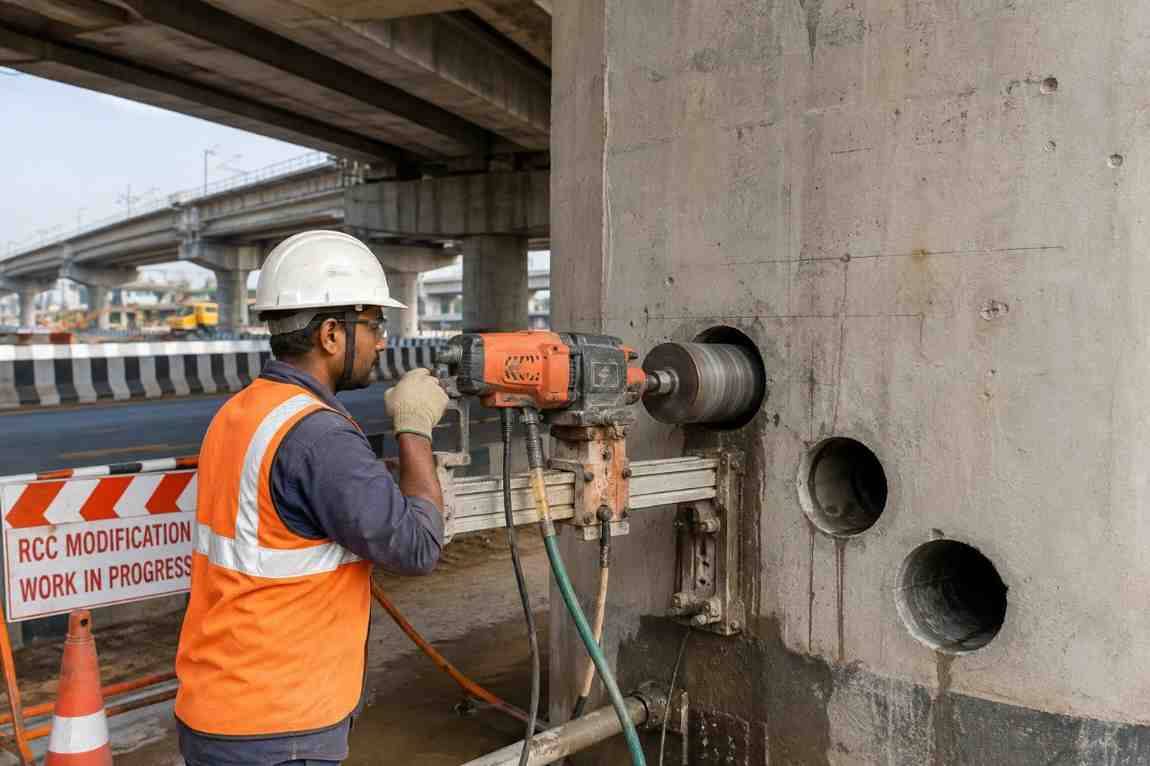
Introduction: The Evolution of Modern Transit Networks
Transportation infrastructure forms the economic backbone of any modern society. From multi-lane highways and elevated expressways to high-speed rail networks, urban metros, and expansive bridge decks, the demand for resilient, high-capacity transit pathways has never been greater. However, civil structures do not exist in a vacuum; urban landscapes shift, traffic volumes multiply, and engineering standards evolve.
To keep pace with these changing demands, asset owners and civil contractors frequently rely on RCC (Reinforced Cement Concrete) modification work. Rather than demolishing existing transit assets—which is economically prohibitive and environmentally destructive—engineers use precise modification techniques to adapt, expand, and retrofit concrete structures. In this comprehensive guide, we explore the intricacies of RCC modification in transportation infrastructure, the methodologies utilized by industry leaders like [email protected], and the engineering practices required to guarantee structural resilience.
Understanding RCC Modification in Infrastructure
RCC modification encompasses a wide range of specialized construction interventions applied to existing reinforced concrete elements. In transportation projects, these elements typically include:
-
Bridge Decks and Abutments: Requiring widening, weight reduction, or expansion joint retrofitting.
-
Tunnel Linings: Involving utility routing, ventilation breakthroughs, and structural reinforcement.
-
Highway Pavements and Retaining Walls: Needing section removal, grade adjustments, and drainage channel insertions.
-
Metro and Railway Viaducts: Demanding precision cutouts for pier caps, trackbed modifications, and utility integration.
Because concrete is exceptionally durable and high-strength, altering it requires specialized mechanical intervention rather than crude demolition. Uncontrolled breaking can cause micro-cracking, compromise the bond between steel rebar and surrounding concrete, and destabilize adjacent structural loads.
Core PAA Questions Addressed in Infrastructure Modification
What is RCC modification work in civil engineering?
RCC modification involves altering, cutting, retrofitting, or strengthening existing reinforced cement concrete elements to meet new design specifications, upgrade load capacities, or incorporate new utility and expansion systems.
Why is precision concrete cutting vital for transportation projects?
Transportation structures operate under continuous dynamic loads. Precision techniques like diamond core cutting and wire sawing ensure that alterations are made without inducing stress fractures or damaging the surrounding structural integrity.
Key Techniques in Modern RCC Modification
Executing modifications on heavily loaded transit corridors requires state-of-the-art tools and meticulous engineering execution. The primary techniques deployed by specialized contractors include:
1. Concrete Core Cutting and Drilling
Core drilling is essential for creating cylindrical openings through thick concrete slabs, piers, and walls. In highway and bridge projects, core cutting allows engineers to install anchor bolts, run drainage pipes, integrate electrical conduits for intelligent transportation systems (ITS), and extract material samples for compressive strength testing.
2. Diamond Wire Sawing
For massive structural elements such as bridge piers, thick retaining walls, or large viaduct sections, diamond wire sawing is the gold standard. A continuous steel cable embedded with industrial diamond beads loops through the concrete and is pulled under high tension while rotating at high speeds. This method enables smooth, vibration-free cuts of virtually unlimited thickness without disturbing the structural equilibrium of the remaining asset.
3. Wall Sawing and Slab Sawing
Track-mounted wall saws and self-propelled floor saws are heavily utilized in highway retrofitting and deck adjustments. They deliver exact linear cuts for removing damaged concrete sections, creating expansion gaps, or leveling uneven transit surfaces.
Structural Retrofitting and Strengthening Strategies
Modifying RCC structures often goes hand-in-hand with retrofitting to handle increased axle loads and higher traffic volumes. Standard strengthening protocols include:
-
Fiber Reinforced Polymer (FRP) Wrapping: Carbon or glass fiber sheets are bonded to concrete surfaces to increase shear and flexural capacity without adding dead weight.
-
Steel Jacketing: Enclosing concrete columns or beams in structural steel profiles to enhance load-bearing limits.
-
Section Enlargement (Shotcrete): Applying high-performance concrete layers to expand cross-sectional dimensions of fatigued structural members.
Benefits of Professional RCC Modification
Partnering with expert execution teams ensures numerous operational and financial advantages for transportation authorities:
-
Cost Efficiency: Saves millions by upgrading existing frameworks rather than undertaking greenfield reconstruction.
-
Minimal Traffic Disruption: Advanced non-percussive cutting techniques allow night-shift modifications and rapid turnaround times, keeping transit corridors open.
-
Enhanced Safety: Controlled cutting eliminates flying debris, structural shockwaves, and uncontrolled cracking.
-
Sustainability: Reduces carbon footprints by recycling existing concrete foundations and minimizing raw material extraction.
Conclusion
As urban centers expand and transportation networks face unprecedented traffic pressures, RCC modification work remains an indispensable tool for civil engineers and infrastructure developers. By combining precision methodologies like diamond core cutting, wire sawing, and advanced structural retrofitting, projects can be completed safely, economically, and to the highest standards of durability.
For professional consultation, technical execution, and specialized concrete modification services tailored to your transit projects, reach out to industry experts at [email protected] to build safer, more adaptable infrastructure for tomorrow.