
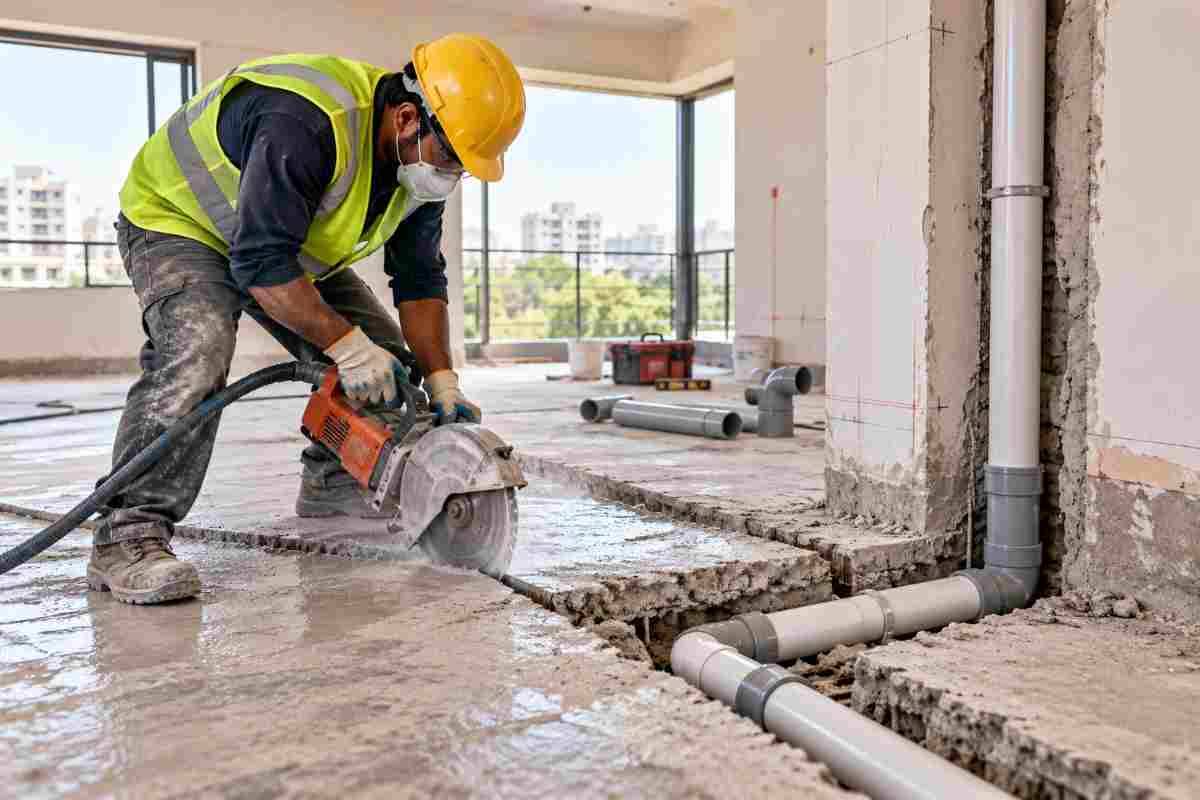
If you own a flat, builder floor, or independent house in Delhi, sooner or later you will run into a plumbing problem that can’t be solved with a wrench. Maybe you are shifting a bathroom, adding an extra toilet, installing a new kitchen drain, or replacing an old, leaking soil pipe that runs through the floor. In many of these cases, the pipe has to pass through a reinforced cement concrete (RCC) slab, and that means cutting through it.
The idea of cutting into your own ceiling or floor can feel alarming, and it should be taken seriously. Done badly, slab cutting can weaken a structure, damage hidden reinforcement, or cause leaks and cracks that show up months later. Done properly with the right equipment and planning, it is a routine, controlled job that leaves the structure safe and the plumbing reliable.
This guide from Core Cutting India explains what RCC slab cutting is, when plumbing projects need it, how the process works, and what Delhi homeowners should check before work begins.
What Is RCC Slab Cutting?
RCC slab cutting is the process of making precise openings or channels in a reinforced concrete floor or roof slab using specialised diamond-tipped tools. Unlike old-fashioned hammering and chiselling, modern cutting is clean, controlled, and far less damaging to the surrounding structure.
An RCC slab is concrete reinforced with steel bars (rebar). Most residential slabs in Delhi are roughly 125 mm to 150 mm thick, though older buildings and special areas can differ. The steel gives the slab its strength, which is exactly why it cannot simply be broken open at will.
There are two main methods used for plumbing work:
Core cutting (core drilling): A hollow cylindrical diamond bit is attached to a drilling machine and used to cut a perfectly round hole through the slab. This is the most common method for pipe penetrations.
Slab sawing (floor sawing): A circular diamond blade cuts straight lines into the floor. This is used when a trench, channel, or larger rectangular opening is needed.
Both methods produce clean edges, minimal vibration, and a result that can be sealed and finished neatly.
Why Do Plumbing Projects Need RCC Slab Cutting?
Pipes have to travel from where water is used to where waste leaves the building. In multi-storey Delhi homes, that often means passing vertically through floors. Common situations include:
- Relocating or adding a bathroom or toilet: A new toilet needs a soil pipe (usually 100 mm or 110 mm) passing through the slab to join the main stack.
- Adding a kitchen or utility drain: A new sink, washing machine point, or RO drain may need a fresh opening.
- Replacing old leaking pipes: Older cast-iron or damaged pipes embedded in slabs sometimes need to be cut out and replaced.
- Installing new water supply or drainage lines: Renovations, extensions, and floor additions often need new vertical routes.
- Adding a floor drain or shower drain: Converting a bathroom layout usually involves new drainage points.
- Building a new shaft or duct: Larger openings may be needed for pipe shafts in extensions or commercial conversions.
In older Delhi neighbourhoods, many buildings were not designed for modern bathroom layouts. As families grow and homes get renovated, plumbing changes through slabs have become very common.
Why You Should Not Use a Hammer and Chisel
Some contractors still try to break slabs manually or with a jackhammer because it looks cheaper. The risks are significant:
Structural damage. Heavy impact creates vibration and micro-cracks that travel well beyond the cut area. These cracks can weaken the slab and neighbouring beams.
Uncontrolled openings. Hand-breaking leaves ragged, oversized holes. These are harder to seal and more likely to leak later.
Rebar damage. Random breaking can cut or expose reinforcement bars without any plan, reducing the slab’s strength.
Disturbance to neighbours. In dense Delhi housing, heavy hammering transmits noise and shock to adjoining flats, often leading to complaints and disputes.
Messy, slow work. Manual breaking creates large amounts of debris and takes much longer to clean up and repair.
Diamond cutting avoids most of these problems, which is why it is the preferred method for professional plumbing and renovation work.
How the RCC Slab Cutting Process Works
Understanding the steps helps you ask the right questions and spot a careless contractor. A well-run job typically follows this sequence.
1. Site inspection and planning
A professional team checks the slab thickness, the location of the opening, and what lies above and below it. They will ask your plumber for exact pipe positions and diameters. Marking the cut precisely avoids costly corrections later.
2. Scanning for rebar, conduits, and hidden services
Before cutting, the area should be checked for steel reinforcement, electrical conduits, and existing pipes. Where possible, positions are adjusted slightly to avoid cutting main reinforcement bars. This step is critical for structural safety.
3. Marking and securing the work area
The cutting points are marked, furniture is covered, and floors below are protected. If you live in an apartment, the neighbour below should be informed since work happens above their ceiling.
4. Cutting with diamond tools
The core drill is anchored firmly to the floor, and water is fed to the bit to cool it and control dust. The diamond segments grind through concrete and steel cleanly. For a standard pipe opening, the cut usually takes a short time compared with manual breaking.
5. Removing the core and cleaning
The cylindrical concrete piece (the core) is lifted out and the slurry is cleaned up. Because water is used, the work area stays largely dust-free.
6. Pipe installation and sealing
Your plumber places the pipe or sleeve through the opening. The gap is then sealed with non-shrink grout or appropriate waterproof material to prevent leakage and maintain fire and sound separation between floors.
7. Waterproofing and finishing
For bathrooms and wet areas, waterproofing around the new opening is essential. Flooring and tiles are then restored.
Typical Pipe Sizes and Core Diameters
Plumbing codes and fittings vary, but homeowners will commonly encounter these sizes:
- 50 mm to 75 mm: Wash basins, kitchen sinks, floor traps, and small drains.
- 100 mm to 110 mm (4 inch): Standard toilet soil pipes and main drainage lines.
- 150 mm and above: Larger stacks, shafts, and commercial drainage.
Ask your plumber to confirm the exact pipe diameter, then allow for a sleeve or slight clearance. A good cutting team will advise on the correct core size so the opening is neither too tight nor too loose.
Structural Safety: The Part Many Homeowners Overlook
A single small pipe hole in a typical residential slab is generally low risk when placed sensibly. However, several holes close together, openings near beams or columns, or large rectangular cut-outs can reduce structural capacity.
Keep these principles in mind:
- Avoid cutting near beams and column junctions. These are the most heavily reinforced and critical zones.
- Do not cluster many openings close together. Spread them out or consult an engineer.
- Be careful with large openings. Anything bigger than a standard pipe hole, such as a shaft or stair opening, should be reviewed by a structural engineer.
- Be extra careful with old buildings. Older construction may have lower-quality concrete, different reinforcement, or hidden deterioration.
- Do not cut post-tensioned slabs without expert advice. These contain highly stressed cables, and cutting them can be dangerous. They are more common in commercial buildings than homes, but they exist.
If you are unsure, a short consultation with a structural engineer is inexpensive compared with the cost of repairing a damaged slab.
Permissions and Rules in Delhi
Rules differ by building type and location, so check the following before starting:
Society or RWA approval. If you live in a flat or cooperative group housing society, most associations require permission before any work that touches the slab, shared stacks, or common areas.
Builder floors and neighbours. In shared builder-floor buildings, work on your slab affects the ceiling of the floor below. Inform the neighbour and agree on timing.
Municipal norms. Minor internal plumbing changes usually do not need a fresh sanction, but structural alterations, new floors, or major layout changes may fall under MCD or relevant authority building rules. If your project involves more than a simple pipe opening, confirm requirements locally.
Heritage and special zones. Certain parts of Delhi, including some older and regulated areas, have additional restrictions.
When in doubt, ask your architect or engineer, or verify with the relevant authority before starting.
How Much Does RCC Slab Cutting Cost in Delhi?
Costs vary widely, so treat any figure you read online as a rough guide and get written quotes. The main factors that influence price are:
- Core diameter: Larger holes cost more.
- Slab thickness: Thicker slabs take longer and wear tools faster.
- Amount of reinforcement: Heavily reinforced slabs are harder to cut.
- Number of cuts: Multiple openings in one visit usually reduce the per-hole cost.
- Access and floor height: Upper floors without easy equipment access can increase effort.
- Working conditions: Water and power availability, working hours, and building restrictions all matter.
- Finishing work: Sealing and waterproofing may or may not be included.
Ask whether the quote covers cutting only or also includes slurry cleanup and debris removal. A suspiciously low price often means corners are being cut, literally or otherwise.
Common Mistakes Delhi Homeowners Make
Hiring on price alone. The cheapest operator may lack proper diamond equipment or experience, leading to cracks and rework.
Not confirming pipe positions first. Cutting in the wrong spot is expensive to fix. Always finalise the plumbing layout before cutting begins.
Skipping waterproofing. An unsealed penetration in a bathroom slab is one of the most common causes of seepage in the flat below.
Ignoring neighbours. Surprise drilling leads to arguments and, in some societies, fines or work stoppages.
Cutting without checking what is inside. Hidden conduits and pipes can be damaged if no one checks before cutting.
Assuming all slabs are the same. Thickness, steel layout, and concrete quality vary, especially between old and new buildings.
How to Choose a Reliable RCC Cutting Contractor
Look for a service provider that:
- Uses modern diamond core drilling and sawing equipment rather than hammering.
- Offers a site visit and a clear written quotation.
- Has experienced operators who understand reinforcement and structural sensitivity.
- Uses water-cooled, low-dust methods suitable for occupied homes.
- Respects building rules, timing restrictions, and neighbours.
- Provides references or examples of similar residential work.
- Works smoothly with your plumber and engineer instead of operating in isolation.
At Core Cutting India, the focus is on precise, low-vibration cutting for homes and commercial properties across Delhi NCR, so your plumbing project can proceed without damaging the building.
Tips for a Smooth Plumbing and Slab Cutting Project
- Finalise your plumbing drawing first. Know exactly where every pipe will go and what diameter it needs.
- Coordinate your plumber and cutting team. Having both on site, or at least aligned, avoids misplaced openings.
- Inform neighbours in advance. Especially the floor below, where ceiling work and possible dripping may occur.
- Protect floors and belongings. Cover furniture and arrange water and power access.
- Plan waterproofing immediately after cutting. Do not leave openings unsealed for long, particularly during monsoon.
- Test for leaks before final tiling. A simple water test can save major repair costs later.
- Keep records. Photograph the cutting positions and keep quotations and invoices for future reference.
Frequently Asked Questions
Can I cut an RCC slab for a plumbing pipe myself?
It is not recommended. Cutting requires specialised equipment, knowledge of reinforcement, and safe handling. Mistakes can cause structural damage, so it is best left to trained professionals.
Is it safe to drill a hole in an RCC slab?
Yes, when done correctly. A single properly placed core hole for a pipe is generally safe. The risk increases with multiple holes, large openings, or cutting near beams and columns, in which case an engineer should be consulted.
How long does RCC core cutting take?
A single standard pipe opening can often be completed in under an hour, depending on slab thickness, rebar density, and access. Larger or multiple openings take longer.
Will slab cutting cause cracks in my ceiling?
Diamond cutting is low-vibration and typically does not cause cracks. Damage is far more likely from hammering or chiselling.
Is core cutting noisy or messy?
It is considerably quieter and cleaner than breaking concrete manually. Water cooling keeps dust down, though some slurry cleanup is required.
Do I need permission from my society or RWA?
In most flats and groups housings, yes. Always check your society rules before starting any work involving the slab or shared stacks.
How do I seal the opening after the pipe is installed?
Gaps around the pipe are filled with non-shrink grout or suitable sealing materials, and waterproofing is applied in wet areas to prevent seepage.
How much does RCC slab cutting cost in Delhi?
Pricing depends on hole diameter, slab thickness, reinforcement, number of cuts, and site access. Request a site-specific written quote rather than relying on generic rates.
Can old buildings in Delhi be core cut safely?
Often yes, but older structures may have weaker concrete or unknown reinforcement. A structural assessment is wise before cutting, especially for multiple or large openings.
Final Thoughts
RCC slab cutting is a normal and necessary part of many plumbing projects in Delhi homes. When it is planned carefully, performed with diamond core drilling or slab sawing, and followed by proper sealing and waterproofing, it protects both your plumbing and your building.
The key takeaways are simple: plan the layout before cutting, avoid hammering, respect structural limits, get approvals where needed, and choose an experienced contractor rather than the cheapest one.
If you are planning a bathroom shift, new drainage line, or pipe replacement involving your slab, speak to the specialists at Core Cutting India for a site-specific assessment and a clear quotation before you begin.