
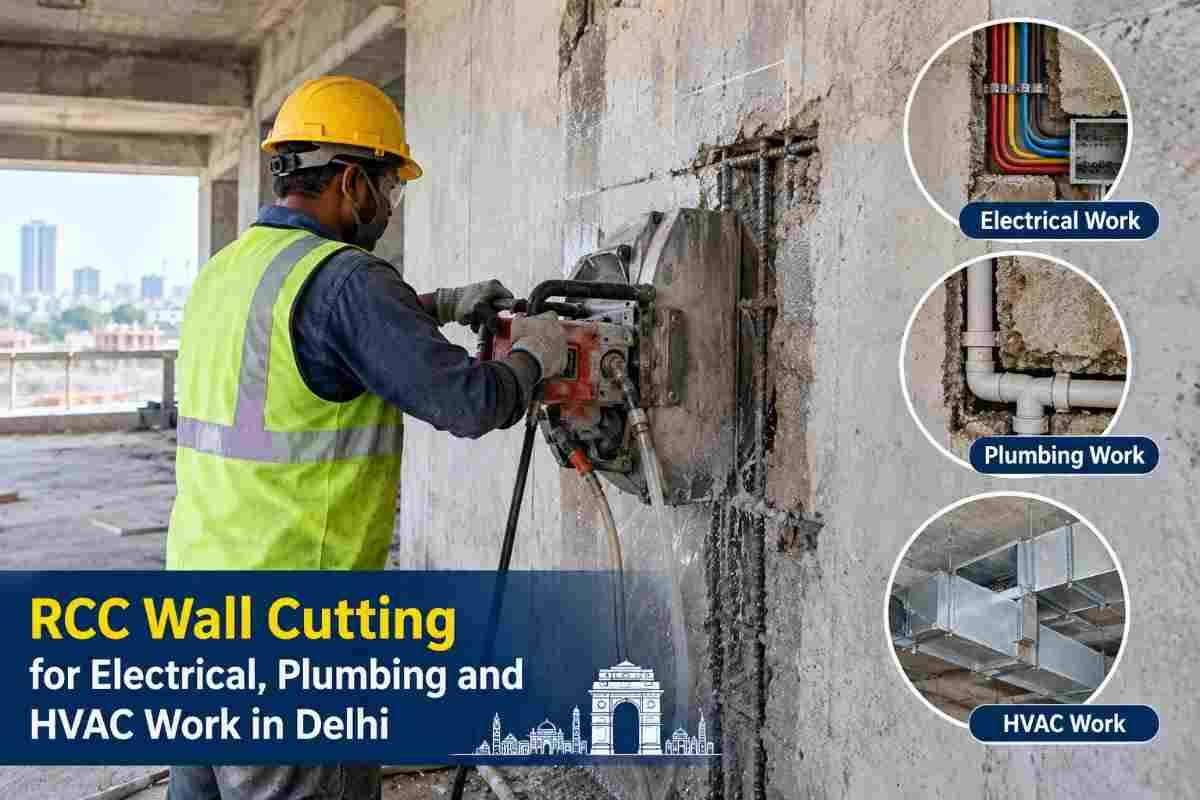
Delhi’s skyline is built on reinforced cement concrete (RCC). Residential towers, offices, hospitals, malls and factories all rely on it for strength and durability. That same strength becomes a challenge when you need to run a cable, pass a drain pipe or install an air-conditioning duct through a wall that is already built.
In many Delhi projects,MEP (mechanical, electrical and plumbing) services are planned after the structure is complete. Renovations, office fit-outs and system upgrades also need new openings in existing concrete. Hammering through RCC with a chisel is slow, noisy and risky for the structure. Professional RCC wall cutting gives you clean, accurate openings with minimal vibration and damage.
This guide explains how RCC wall cutting supports electrical, plumbing and HVAC work, which methods are used, what safety and structural factors matter, and how to choose the right contractor in Delhi.
What Is RCC Wall Cutting?
RCC wall cutting is the process of making openings, slots or channels in a reinforced concrete wall using specialised diamond-tipped equipment. Unlike traditional demolition, it removes only the required section and leaves the surrounding structure intact.
The reinforcement steel inside RCC is what makes the material hard to cut. Ordinary tools struggle with it, which is why diamond tooling is the industry standard. Diamond segments grind through both concrete and steel cleanly and produce smooth edges.
Common outputs of RCC wall cutting include:
- Rectangular or square openings for ducts, doors, windows and shafts
- Circular holes (core drilling) for pipes, conduits and sleeves
- Narrow slots or chases for concealed wiring and pipes
- Full wall removal for layout changes
Why MEP Work Needs RCC Wall Cutting
Ideally, openings for services are planned during construction, with sleeves cast into the concrete. In practice this is rarely complete. Design changes, tenant requirements, equipment upgrades and code compliance often demand new penetrations later.
Typical situations in Delhi include:
- Office fit-outs in Gurugram-adjacent and Delhi commercial towers that need new cable routes and AC ducts
- Home renovations where bathrooms are relocated or kitchens are remodelled
- Hospital and lab upgrades that require medical gas lines, ventilation and electrical backup
- Industrial expansions needing heavy-duty cable trays, exhaust systems and drainage
In every one of these cases, controlled cutting protects the building and keeps the project on schedule.
RCC Wall Cutting for Electrical Work
Electrical systems need pathways through walls for conduits, cable trays, busducts, switchboards and distribution panels. Some of the most common electrical applications are:
1. Conduit and cable penetrations. Small-diameter core holes allow conduits to pass from one room to another. Precise drilling keeps the hole size matched to the conduit, which makes firestopping and sealing easier.
2. Wall chasing. Chasing cuts a shallow, straight groove in the wall surface so wires or conduits can be concealed. A diamond chasing machine with dust extraction produces uniform grooves without cracking the surrounding plaster or concrete.
3. Openings for panels and distribution boards. Recessed switchgear and panel boards need rectangular cut-outs. Wall saws deliver straight edges so the panel fits properly.
4. Cable tray and busduct crossings. Larger rectangular openings let cable trays or busducts pass between floors and rooms.
Key considerations for electrical cutting:
- Scan for existing conduits and live cables before cutting. Cutting into a live line is a serious hazard.
- Keep the opening size as small as practical to preserve wall strength.
- Plan fire-rated sealing around penetrations, as required by fire safety norms.
- Avoid cutting through main reinforcement without engineering approval.
RCC Wall Cutting for Plumbing Work
Plumbing involves water supply lines, drainage, sewage, rainwater pipes and fire-fighting lines. Many of these are large in diameter and need accurate, leak-proof openings.
1. Core drilling for pipe sleeves. Core drilling creates round holes from about 25 mm up to several hundred millimetres. This is the most common method for drain pipes, soil pipes and water lines passing through slabs and walls.
2. Floor and wall openings for bathrooms. When a bathroom is shifted or added, new drain lines and closet connections need openings in the slab or wall. Wet core drilling keeps dust down and limits vibration to neighbouring units, which matters in apartment buildings.
3. Fire-fighting and sprinkler lines. Pipes for fire systems often cross structural walls. Clean holes allow proper sleeves and fire-rated sealing.
4. Rainwater and stormwater connections. Roof and terrace drains frequently need new penetrations during waterproofing or renovation work.
Key considerations for plumbing cutting:
- Maintain the correct slope for drainage lines when positioning the hole.
- Use sleeves and waterproof sealants to prevent leakage between floors.
- Check for embedded pipes or post-tensioned cables before drilling into slabs.
- Choose wet drilling in occupied buildings to reduce dust and noise.
RCC Wall Cutting for HVAC Work
HVAC installations are among the most demanding for concrete cutting because they need large, precisely positioned openings.
1. Duct openings. Rectangular ducts for supply and return air need wall or slab openings that match the duct size plus clearance for insulation and sealing. Wall saw cutting produces clean, square corners that make installation easier.
2. Refrigerant pipe and drain penetrations. Split and VRF/VRV systems need small core holes for refrigerant lines, condensate drains and control cables, often through external walls.
3. Ventilation and exhaust shafts. Kitchens, basements, parking areas and washrooms need exhaust and fresh air openings. These can be large and sometimes require cutting through thick RCC walls.
4. Equipment openings. Chillers, air handling units and cooling towers may need slab or wall openings for placement and service connections.
Key considerations for HVAC cutting:
- Coordinate duct dimensions with the cutting contractor before work begins.
- Plan for insulation, vibration isolation and fire dampers where required.
- Large openings may require temporary support or a structural engineer’s approval.
- Cutting on external walls needs attention to weather sealing and waterproofing.
Methods Used for RCC Wall Cutting
Different jobs call for different techniques. A reliable contractor selects the method based on the size, depth, location and sensitivity of the job.
Core Drilling. A hollow diamond bit is rotated against the concrete to remove a cylindrical core. It is ideal for pipes, conduits and sleeves, and produces smooth, round holes with little vibration.
Wall Saw Cutting. A track-mounted saw with a diamond blade cuts straight, deep lines through thick walls. It suits large rectangular openings for ducts, doors and windows, and can cut walls of considerable thickness.
Wire Saw Cutting. A diamond-impregnated wire loops around or through the element and cuts it. This works for very thick or irregularly shaped concrete where blades cannot reach.
Hand Saw / Ring Saw Cutting. Compact handheld saws work in tight spots and for smaller or flush cuts where larger machines will not fit.
Chasing. Specialised machines cut narrow grooves for concealed services.
Why these beat conventional breaking: Diamond cutting produces minimal vibration, which protects the surrounding structure and neighbouring spaces. The cuts are accurate to the millimetre, dust can be controlled through water or extraction, and the finished edges need little repair.
Structural Safety: Don’t Skip This Step
An RCC wall may be load-bearing, part of a shear wall system or tied to beams and columns. Cutting it without understanding its role can weaken the building.
Before any cutting starts, a responsible process includes:
- Structural assessment. Confirm whether the wall is structural. For load-bearing or shear walls, consult a qualified structural engineer.
- Reinforcement scanning. Ground-penetrating radar or rebar scanners locate steel, conduits and embedded services so cuts avoid critical elements.
- Marking and planning. Mark openings clearly, and plan the cutting sequence and temporary supports if needed.
- Edge reinforcement. Large openings may need lintels or additional reinforcement around the edges.
- Safe debris handling. Cut sections can be heavy. Plan how to lift, lower and remove them without damage or injury.
Skipping these steps can cause cracking, loss of strength or accidents. Professional crews treat them as standard.
Delhi-Specific Considerations
Working in Delhi brings its own conditions that affect how cutting jobs are done.
Dust and air quality. Delhi-NCR has strict attention to construction dust, particularly during high-pollution periods. Wet cutting and dust extraction help meet dust-control expectations and protect occupants. Check current rules from the relevant authorities, as restrictions on construction activity can change.
Noise and working hours. Residential societies, hospitals and offices often have limits on noisy work. Diamond cutting is quieter than breaking, which makes it easier to schedule within permitted windows.
Society and building permissions. Apartment complexes and RWAs usually need prior approval for structural modifications. Commercial landlords may require method statements and insurance details. Get written permission before work begins.
Older buildings. Delhi has many older RCC structures, with variable construction quality and sometimes unclear drawings. Scanning and careful assessment matter even more in these cases.
Access and logistics. Narrow lanes, limited parking and high-rise lifts can complicate equipment movement. Experienced local contractors plan around these realities.
How to Choose an RCC Wall Cutting Contractor in Delhi
The contractor you pick affects the safety, cleanliness and speed of the whole job. Look for:
- Proper equipment. Modern wall saws, core drills, wire saws and dust extraction systems, not improvised tools.
- Experienced operators. Trained technicians who understand reinforcement, structures and MEP coordination.
- Safety practices. Protective gear, barricading, water and slurry management, and clear site rules.
- Scanning capability. The ability to detect rebar and embedded services before cutting.
- Clear scope and quotation. A written estimate that lists the number and size of openings, thickness, method and any extras.
- References and past work. Examples of similar projects in homes, offices, hospitals or industrial sites.
- Coordination skills. Willingness to work with your electrical, plumbing and HVAC teams so openings match their requirements.
Companies such as Core Cutting India (https://corecuttingindia.com/) focus on concrete cutting and drilling services, helping project teams get precise openings for MEP work without unnecessary damage.
Factors That Affect RCC Wall Cutting Cost
Pricing varies from job to job. The main drivers are:
- Wall thickness and reinforcement density. Thicker, heavily reinforced walls take longer and wear tooling faster.
- Size and number of openings. Many small holes and a few large cuts are priced differently.
- Method required. Wall saw, wire saw and core drilling each have different cost structures.
- Location and access. Height, tight spaces and floor level affect setup and labour.
- Site conditions. Dust control, working hours, power and water availability all play a role.
- Debris removal. Hauling out cut sections adds to the scope.
The cheapest quote is not always the best. Poorly executed cutting can lead to structural repairs, waterproofing failures and delays that cost far more later.
Tips for a Smooth RCC Cutting Project
- Coordinate early. Share MEP drawings with the cutting team so sizes and positions are correct the first time.
- Confirm openings on site. Walk through with the electrician, plumber and HVAC technician before marking.
- Protect the surroundings. Cover floors, furniture and equipment, and set up barricades.
- Plan finishing. Decide on sleeves, grouting, sealing, fireproofing and waterproofing in advance.
- Keep records. Note opening locations and sizes for future maintenance and renovation.
Frequently Asked Questions
1. Can RCC walls be cut for electrical, plumbing or HVAC work?
Yes. With diamond cutting equipment, RCC walls can be cut accurately for conduits, pipes and ducts. Structural walls should be checked by a qualified engineer first.
2. What is the best method for cutting an RCC wall?
It depends on the job. Core drilling suits round holes for pipes, wall saws suit large rectangular openings, and wire saws suit very thick or hard-to-reach concrete.
3. Is RCC wall cutting safe for the building?
When done by trained professionals using scanning, planning and proper equipment, it is safe. Problems arise when structural walls are cut without assessment or when reinforcement is damaged.
4. Does RCC cutting create a lot of dust and noise?
Diamond cutting is considerably cleaner and quieter than manual breaking. Wet cutting and dust extraction reduce airborne dust further.
5. Do I need permission to cut an RCC wall in Delhi?
Often yes, especially in apartment societies, commercial buildings or any case involving structural elements. Check with your building management, RWA and, where relevant, local authorities.
6. How long does RCC wall cutting take?
A simple core hole can take minutes, while a large opening in a thick wall may take hours or a day, depending on thickness, reinforcement and access.
7. Can I cut RCC walls myself?
It is not advisable. Specialised equipment, training and safety knowledge are needed, and mistakes can damage the structure or cause injury.
Conclusion
Electrical, plumbing and HVAC systems keep modern buildings comfortable and functional, and in most Delhi projects they need to pass through solid RCC. Professional wall cutting makes that possible without compromising the structure, the schedule or the people living and working nearby.
The formula for success is straightforward. Plan the openings with your MEP teams, confirm the structural role of the wall, scan for reinforcement and embedded services, pick the right cutting method, and hire an experienced contractor with the right equipment. Do these things and you get clean, accurate openings, fewer repairs and a smoother project overall.
If you are planning an RCC wall cutting, core drilling or opening job in Delhi, visit Core Cutting India at https://corecuttingindia.com/ to discuss your requirements with a team that specialises in precise concrete cutting.