
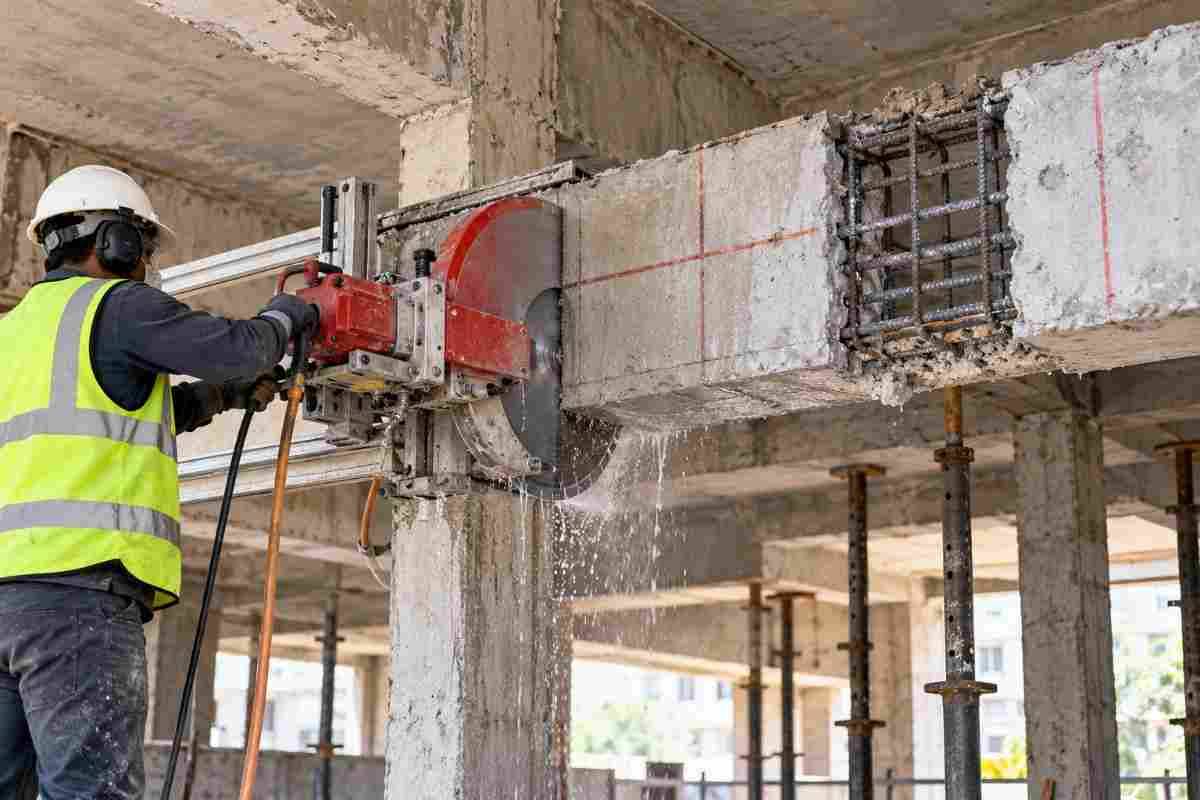
Cutting a reinforced concrete beam is one of the most consequential tasks in renovation, retrofitting and selective demolition. A beam is not just a slab of hardened material. It is a load-carrying element that transfers forces from floors, walls and sometimes machinery into columns and foundations. Cutting it without understanding how it works can lead to sudden cracking, sagging slabs, injured workers or, in the worst cases, partial collapse.
Professional contractors do not treat beam cutting as a brute-force job. They treat it as an engineered sequence of decisions: assess, plan, support, cut, control and verify. This guide walks through how experts approach reinforced concrete beam cutting safely, and why each step matters. It draws on the practices followed by specialist teams such as those at Core Cutting India.
Why Reinforced Concrete Beam Cutting Is Riskier Than It Looks
Reinforced concrete (RCC) combines two materials. Concrete resists compression, while steel reinforcement resists tension. A typical beam contains longitudinal bars, stirrups, and sometimes prestressing tendons. When you cut through it, you interrupt this partnership, and the structure above may immediately redistribute loads in unpredictable ways.
The main hazards include:
- Structural instability: Removing or weakening a beam can overload adjacent members.
- Stored energy: Post-tensioned beams hold enormous tension in their tendons. Cutting a stressed tendon can eject material violently.
- Falling sections: A cut piece can drop, swing or pinch the blade.
- Hidden services: Electrical conduits, water lines and gas pipes are often embedded in or near beams.
- Dust, slurry and noise: Silica dust, wet slurry and high noise levels create health and slip hazards.
- Equipment hazards: Diamond blades, wires and hydraulic systems carry their own risks if misused.
Experts know that most accidents come not from the cutting itself but from poor planning before it starts.
Step 1: Understand the Structure Before Touching It
Review drawings and records
The first task is information gathering. Experts request structural drawings, as-built records, load data and past modification history. These show beam dimensions, reinforcement layout, concrete grade and how the beam connects to columns and slabs.
In older buildings, drawings are often missing or inaccurate. In that case, the team relies on site investigation rather than assumptions.
Involve a structural engineer
No responsible cutting job on a load-bearing beam begins without a qualified structural engineer’s input. The engineer determines:
- Whether the beam can be cut at all
- Where cuts can be made and how large they can be
- What temporary supports are needed
- Whether permanent strengthening (such as steel sections or jacketing) must be added afterward
- The correct cutting sequence
Cutting without this sign-off is the single most common shortcut that leads to failures.
Identify the beam type
Experts distinguish between conventionally reinforced beams and post-tensioned beams. Post-tensioned members require special procedures, often including detensioning by specialists, and must never be cut like ordinary RCC. If there is any doubt, the work stops until the type is confirmed.
Step 2: Survey and Scan the Beam
Even with drawings, professionals verify what is actually inside the concrete.
Ground penetrating radar and rebar scanners
Ground penetrating radar (GPR) and electromagnetic rebar locators map the position, spacing and depth of reinforcement. They also detect embedded conduits, pipes and post-tension ducts. This prevents the dangerous surprise of cutting into a live cable or a pressurised line.
Utility isolation
Once services are identified, they are isolated, locked out and tagged. Electrical supply near the work zone is switched off, and water lines are drained or shut down where possible. Where isolation is not feasible, the cutting method is changed to avoid contact.
Condition assessment
Experts also check for cracks, spalling, corrosion, honeycombing and previous repairs. A deteriorated beam may behave very differently under cutting stress than a sound one, and this affects the choice of method and support.
Step 3: Plan the Cutting Method
Selecting the right technique is central to safe beam cutting. The choice depends on beam size, access, reinforcement density, noise and vibration limits, and the environment.
Wire saw cutting
Diamond wire sawing uses a loop of wire embedded with diamond beads, driven around the element. It is ideal for large or awkward beams because it has almost no size limit and can cut where blades cannot reach. It produces low vibration, which protects the surrounding structure. Experts favour it for thick, heavily reinforced members and congested sites.
Wall saw and track saw cutting
A track-mounted wall saw delivers straight, precise cuts using a large diamond blade. It suits beams with clear access on one or both sides and is valuable when accuracy is critical, such as when creating openings or cutting sections for removal.
Hand saw and ring saw cutting
Handheld ring saws and hand-held power cutters are used for smaller members or tight areas. They are flexible but demand more operator skill and ergonomic care because of weight and kickback risk.
Core drilling as a supporting technique
Core drilling is often used to relieve stress at the corners of a cut, to make pilot holes for wire saw threading, or to create precise small openings. Combined with sawing, it helps control how the section separates.
Why vibration matters
Impact-based methods such as breakers and jackhammers transmit shock through the structure and can create micro-cracking in neighbouring members. Experts prefer low-vibration, diamond-based methods for structural elements, especially in occupied buildings, hospitals, data centres and heritage structures.
Step 4: Provide Temporary Support and Shoring
This is where professional practice most clearly separates itself from risky shortcuts.
Propping before cutting
Before any beam is cut, the load it carries must be taken by temporary supports. Engineers specify the type, spacing and capacity of props, needles or shoring towers. These are installed and checked before the first cut is made, not after.
Load path continuity
Props must bear on solid, adequate foundations. Placing a prop on a thin slab or an unverified surface only moves the problem. Experts confirm that the temporary load path reaches a competent support all the way down.
Monitoring during the work
Where the risk justifies it, teams install deflection gauges or crack monitors on the beam, slab and props. Any movement beyond agreed limits triggers an immediate stop. Experienced crews also watch for audible cracking, new hairline cracks and prop distress as early warnings.
Step 5: Control the Work Zone
Exclusion zones and barricading
The area below and around the cut is cordoned off. No one is allowed under a suspended section, and access is controlled with barricades, signage and a designated supervisor.
Planning the fall and lift
Every piece that will be freed must have a plan: where it goes, how it is supported and how it is removed. Heavy sections are typically secured with slings, lifting lugs, hoists or cranes before the final cut releases them. This prevents the dangerous moment when a cut section suddenly becomes a falling load.
Sequencing the cuts
Experts rarely cut a beam in a single pass. They define a sequence, often cutting into manageable segments from one end, so that each piece stays stable and controllable. The order of cuts is part of the written method statement.
Step 6: Manage Dust, Water and Noise
Wet cutting
Most professional concrete cutting is done wet. Water cools the blade or wire, extends tool life and suppresses airborne silica dust. Respirable crystalline silica is a serious occupational hazard linked to silicosis and other lung diseases, so dust control is not optional.
Slurry management
Wet cutting produces slurry that contains cement fines and is alkaline. Teams use wet vacuums, containment trays and collection systems to prevent slurry from running into drains, onto finished floors or onto electrical equipment. Disposal follows local environmental rules.
Electrical safety near water
Combining water and electricity demands care. Experts use residual current devices (RCDs), properly rated cables and splash-protected connections, and they keep power tools and distribution boards away from slurry.
Noise and vibration control
Diamond cutting is generally quieter and lower in vibration than percussive demolition, but it still produces significant noise. Hearing protection, scheduled working hours and acoustic barriers help protect workers and neighbours.
Step 7: Personal Protective Equipment and Worker Competence
Essential PPE
A professional crew typically wears:
- Hard hats and safety footwear with slip-resistant soles
- Safety glasses or face shields
- Hearing protection
- Respiratory protection suited to silica exposure when needed
- Cut-resistant gloves and close-fitting clothing
- High-visibility garments
- Fall protection when working at height
Training matters as much as equipment
Equipment is only as safe as the person operating it. Experienced operators understand blade behaviour, wire tension, binding, kickback and how to read the sound and feel of a cut. Reputable contractors invest in operator training and in supervisors who can stop work without hesitation.
Working at height
Many beams sit overhead. Scaffolds, mobile elevated platforms and secured working decks must be stable, inspected and rated for the equipment weight. Tools should be tethered where there is any risk of dropping them.
Step 8: Cutting the Reinforcement Safely
Steel bars and stirrups need attention because they behave differently from concrete.
- Bar tension: Reinforcement under load can spring or shift when cut. Supports reduce this risk.
- Sparks and heat: Diamond blades cutting steel generate sparks. Combustible materials must be removed or shielded, and a fire watch kept where necessary.
- Blade selection: Using the correct diamond segment for heavily reinforced concrete prevents glazing, overheating and blade failure.
Experts also avoid forcing the tool. A blade that is jammed or overheated is a sign to stop, check alignment and adjust the method, not to push harder.
Step 9: Documentation and Method Statements
Safe contractors work from documents, not memory. A proper job file generally includes:
- A method statement describing the sequence, tools and supports
- A risk assessment identifying hazards and controls
- Engineer approvals and drawings of temporary works
- Permit-to-work records for hot work, confined spaces or work at height where applicable
- Daily toolbox talks to brief the crew on that day’s tasks and hazards
In India, safe practice for demolition and structural modification is guided by national standards and building codes, including IS 456 for concrete design and IS 4130 for demolition safety, along with applicable site safety regulations. Teams should always confirm current requirements with the engineer of record and local authorities.
Step 10: Verify, Strengthen and Close Out
The job does not end when the last section is lifted away.
Post-cut inspection
The engineer inspects the cut faces, remaining beam sections and surrounding structure for cracks, movement or distress.
Permanent strengthening
If the beam was shortened, penetrated or removed, permanent reinforcement such as steel sections, new beams, carbon fibre wrapping or concrete jacketing is installed before temporary supports come out. Props are removed gradually and only after the engineer approves.
Cleanup and handover
Debris is removed, slurry is disposed of responsibly, services are reinstated safely and records are handed over. A clear closing report protects both the client and the contractor.
Common Mistakes Experts Work to Avoid
- Cutting before shoring is in place. The most dangerous shortcut of all.
- Assuming drawings are accurate. Always verify with scanning.
- Treating post-tensioned beams like ordinary RCC.
- Ignoring the fall path of cut sections.
- Using impact tools on delicate structures.
- Neglecting dust and slurry control.
- Skipping the structural engineer.
- Rushing the schedule at the expense of safety checks.
Frequently Asked Questions
Can you cut a reinforced concrete beam without weakening a building?
Sometimes, but only with engineering input. If the beam carries load, cutting it requires temporary support and usually permanent strengthening. A qualified structural engineer must decide whether and how it can be done.
What is the safest method to cut an RCC beam?
There is no single safest method for every case. Diamond wire sawing and wall sawing are widely preferred for structural beams because they are low-vibration and controllable. The best method depends on beam size, access and site conditions.
Is it safe to cut a post-tensioned beam?
Only under specialist supervision. Post-tensioned tendons store large amounts of energy, and cutting them without proper detensioning can be extremely dangerous.
Why is wet cutting used for concrete?
Water cools the diamond tool, extends its life and suppresses harmful silica dust, protecting both the worker and the environment.
How do contractors detect rebar and services before cutting?
They use GPR and electromagnetic rebar scanners to map reinforcement, conduits and pipes inside the concrete, then isolate any live services.
How long does it take to cut a concrete beam?
It depends on beam size, reinforcement density, access and method. Preparation, shoring and engineering review often take longer than the cut itself.
Who should I hire for reinforced concrete beam cutting?
Choose an experienced specialist who works with structural engineers, provides method statements and risk assessments, uses diamond-based equipment and has trained operators.
Final Thoughts
Safe reinforced concrete beam cutting is the result of disciplined process, not luck or speed. Experts begin with understanding the structure, verify what lies inside the concrete, choose a low-vibration method, support the load before cutting, control dust, water and falling hazards, and close out with inspection and strengthening.
If you are planning to modify, open up or remove a concrete beam, working with an experienced specialist protects your people, your property and your project timeline. To learn more about professional concrete cutting solutions, visit Core Cutting India and speak with a team that treats safety as the foundation of every cut.