
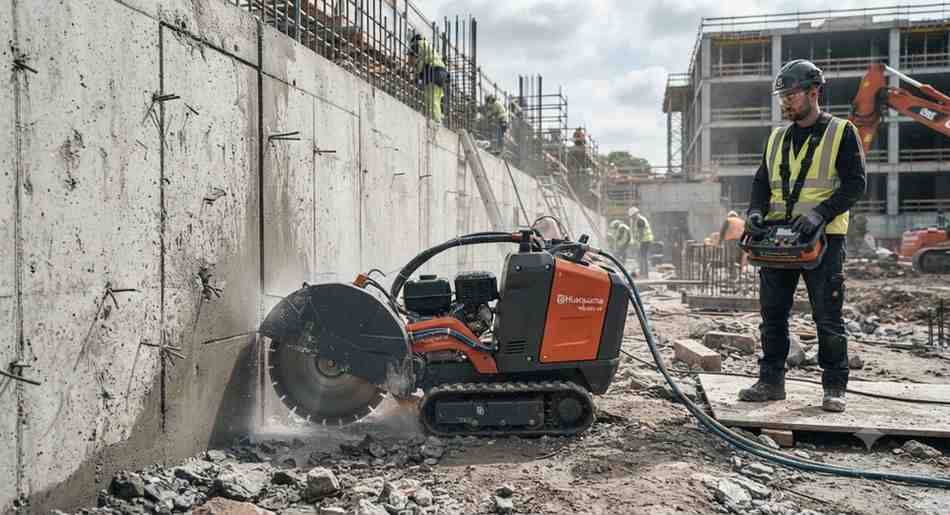
Concrete cutting has come a long way from hand-operated saws and chisels. Today, the construction and demolition industry is undergoing a quiet revolution powered by robotics and remote operation. Remote-controlled concrete cutting equipment is redefining how contractors approach demolition, renovation, and structural modification projects — making them faster, safer, and far more precise than ever before.
At Core Cutting India ([email protected]), we've watched this technology evolve from a niche innovation to an industry standard. In this blog, we'll explore what remote-controlled concrete cutting equipment is, how it works, why it matters, and what the future holds for this rapidly growing segment of the construction world.
What Is Remote-Controlled Concrete Cutting Equipment?
Remote-controlled concrete cutting equipment refers to machinery — such as wall saws, wire saws, core drills, and demolition robots — that can be operated from a safe distance using a handheld controller or console, rather than requiring an operator to stand directly beside the cutting tool. These machines use hydraulic or electric power systems, diamond-tipped blades or wires, and advanced sensors to cut through reinforced concrete, brick, and masonry with high accuracy.
Unlike traditional manual cutting tools, remote-controlled systems separate the operator from the point of contact with the material being cut. This distance is not just a convenience — it's a critical safety feature, especially in high-risk environments like structurally compromised buildings, industrial plants, or areas with heavy dust and debris.
How Does It Work?
Most remote-controlled concrete cutting systems function through a combination of:
- Hydraulic Power Units – These supply the force needed to drive the cutting blade or wire through dense concrete and steel reinforcement.
- Wireless or Tethered Remote Controls – Operators use a joystick-based console to control cutting speed, direction, blade depth, and machine movement.
- Diamond-Tipped Blades or Wires – These cutting elements are engineered to slice through concrete, asphalt, and reinforced steel with minimal vibration and dust.
- Sensors and Feedback Systems – Many advanced machines include pressure sensors and cameras that relay real-time data back to the operator, improving cutting accuracy and preventing equipment damage.
The operator stands at a safe distance — sometimes several meters away — while directing the machine's every movement. This setup is particularly valuable in wall sawing, wire sawing, and floor sawing applications where precision and control are essential.
Types of Remote-Controlled Concrete Cutting Equipment
1. Remote-Controlled Wall Saws
Wall saws are used to make precise vertical and horizontal cuts in concrete walls, often for door openings, window installations, or utility penetrations. Remote operation allows the saw to be mounted on a track system and controlled from a distance, reducing operator exposure to noise, dust, and flying debris.
2. Remote-Controlled Wire Saws
Wire saws use a diamond-embedded cable looped around the structure to be cut. These are ideal for cutting large concrete sections, bridge piers, or heavily reinforced structures. Remote control allows operators to manage wire tension and cutting speed without standing near the moving cable — a major safety advantage.
3. Remote-Controlled Demolition Robots
These compact, tracked machines are equipped with hydraulic breakers, crushers, or cutting attachments. They can climb stairs, navigate tight spaces, and demolish concrete structures in areas unsafe for human workers, such as buildings damaged by fire, earthquakes, or industrial accidents.
4. Remote-Controlled Core Drilling Rigs
Core drills create clean, circular holes in concrete for plumbing, electrical conduits, or structural testing. Remote-controlled versions allow operators to manage drilling depth and speed from a distance, which is especially useful when drilling overhead or in confined spaces.
Why the Construction Industry Is Shifting Toward Remote Control
Enhanced Worker Safety
The single biggest driver behind the adoption of remote-controlled concrete cutting equipment is safety. Concrete cutting and demolition work often takes place in environments with structural instability, poor visibility, or exposure to silica dust. By allowing the operator to control equipment from a distance, the risk of injury from falling debris, machine malfunction, or structural collapse is dramatically reduced.
Greater Precision and Control
Remote systems often include digital displays, laser guides, and programmable cutting paths. This allows for millimeter-level accuracy — something that's difficult to achieve with manual tools, especially on large or complex cutting jobs.
Reduced Noise and Dust Exposure
Since the operator isn't standing right next to the blade, exposure to noise and airborne particulates is significantly reduced. Many machines are also paired with water suppression systems to further minimize dust.
Access to Hazardous or Confined Areas
Remote-controlled demolition robots can access spaces too small, too dangerous, or too structurally unstable for human workers. This makes them invaluable in post-disaster recovery, nuclear facility maintenance, and industrial demolition projects.
Increased Productivity
Modern remote-controlled machines are engineered for continuous operation with fewer breaks, resulting in faster project completion times. This translates to lower labor costs and quicker turnarounds for clients.
Applications of Remote-Controlled Concrete Cutting Equipment
- Bridge and Highway Repair – Cutting and removing damaged sections of concrete bridges and roadways without full closures.
- Building Renovation – Creating openings for doors, windows, elevators, or HVAC systems in existing structures.
- Nuclear and Industrial Facilities – Performing demolition work in radioactive or chemically hazardous environments.
- Post-Disaster Demolition – Safely dismantling structurally compromised buildings after fires, floods, or earthquakes.
- Underwater and Marine Structures – Specialized remote-controlled saws are used for cutting submerged concrete piers and foundations.
- Precision Structural Modifications – Cutting load-bearing walls or floors with exact specifications required by structural engineers.
Key Features to Look for in Remote-Controlled Concrete Cutting Equipment
If you're a contractor or project manager evaluating remote-controlled cutting solutions, here are some features worth prioritizing:
- Wireless Range and Signal Reliability – Ensure the remote control has a strong, interference-resistant signal, especially in industrial environments with heavy machinery.
- Battery Life and Backup Power – For long cutting sessions, reliable battery performance is essential.
- Water Suppression Compatibility – Look for machines that integrate water delivery systems to control dust and cool the blade.
- Load Capacity and Cutting Depth – Match the machine's specifications to the thickness and reinforcement level of the concrete you'll be cutting.
- Ease of Transport – Compact, modular designs make it easier to move equipment between job sites, particularly for urban projects with limited access.
The Role of Skilled Operators
While remote control significantly reduces physical risk, it doesn't eliminate the need for skilled, trained operators. Understanding load-bearing calculations, blade selection, cutting sequences, and machine calibration remains critical to a successful and safe cutting operation. At Core Cutting India, our teams combine years of hands-on experience with the latest remote-controlled technology to deliver cutting solutions that are both safe and structurally sound.
Environmental and Cost Benefits
Beyond safety and precision, remote-controlled concrete cutting equipment also offers environmental advantages. Controlled cutting reduces overcutting and material waste compared to manual methods. Diamond wire and blade technology also produces cleaner cuts, meaning less secondary finishing work is required. From a cost perspective, faster project completion, reduced labor requirements, and fewer safety incidents all contribute to lower overall project expenses — a benefit that compounds over the life of a construction or demolition business.
The Future of Remote-Controlled Cutting Technology
The next frontier for this industry lies in automation and AI-assisted operation. We're already seeing early adoption of:
- GPS and BIM Integration – Allowing machines to follow pre-programmed cutting paths based on Building Information Modeling (BIM) data.
- AI-Powered Obstacle Detection – Sensors that automatically halt operation if unexpected obstacles or structural weaknesses are detected.
- Remote Monitoring via Cloud Platforms – Enabling project managers to track equipment performance and job progress from anywhere in real time.
- Fully Autonomous Demolition Robots – Some manufacturers are piloting semi-autonomous robots capable of executing pre-set demolition sequences with minimal human input.
As these technologies mature, remote-controlled concrete cutting will likely evolve into a hybrid model — part human oversight, part machine autonomy — further improving safety and efficiency across the industry.
Why Choose Core Cutting India
At Core Cutting India, we specialize in advanced concrete cutting solutions, including wall sawing, wire sawing, core drilling, and remote-controlled demolition services. Our commitment to safety, precision, and efficient project delivery has made us a trusted partner for contractors, engineers, and industrial clients across the country.
Whether you need a controlled structural opening in a high-rise building or large-scale demolition in a hazardous industrial setting, our experienced team and modern equipment fleet are equipped to handle projects of any complexity.
For inquiries, consultations, or project quotes, reach out to us at [email protected].
Frequently Asked Questions (People Also Ask)
1. What is remote-controlled concrete cutting equipment used for? It's used for precision cutting and demolition of concrete structures in situations where operator safety, accuracy, or access to confined/hazardous spaces is a priority — such as bridge repair, building renovation, and industrial demolition.
2. How safe is remote-controlled demolition compared to manual methods? Remote-controlled demolition is significantly safer because it removes the operator from direct contact with the cutting equipment and unstable structures, reducing exposure to falling debris, dust, and mechanical hazards.
3. What types of concrete can remote-controlled saws cut through? Modern remote-controlled saws, particularly diamond wire and wall saws, can cut through reinforced concrete, brick, masonry, and even some metal reinforcement bars embedded in structures.
4. How much does remote-controlled concrete cutting cost? Costs vary depending on project size, cutting depth, equipment type, and site conditions. It's best to request a custom quote from a specialized provider like Core Cutting India for accurate pricing.
5. Can remote-controlled equipment be used indoors? Yes, many remote-controlled cutting and demolition machines are compact enough for indoor use, especially for renovation projects requiring wall or floor openings.
6. Do I need special training to operate remote-controlled concrete cutting machines? Yes, operators require specialized training in machine calibration, load-bearing assessment, and safety protocols to ensure precise and safe cutting operations.
Conclusion
Remote-controlled concrete cutting equipment represents a significant leap forward for the construction and demolition industry — combining the safety benefits of distance operation with the precision of modern diamond cutting technology. As automation and AI continue to advance, this equipment will only become more capable, efficient, and indispensable for complex construction, renovation, and demolition projects.
If you're planning a project that requires expert concrete cutting or demolition services, trust the specialists at Core Cutting India. Contact us today at [email protected] to discuss your requirements and get a customized solution built around safety, precision, and performance.