
Introduction
Core drilling is an essential operation in modern construction, civil engineering, and infrastructure modification. Whether creating openings for utility pipes, running electrical conduits, or extracting concrete samples for structural testing, precision cutting is non-negotiable. However, operating heavy-duty diamond core drills involves significant physical, mechanical, and environmental hazards.
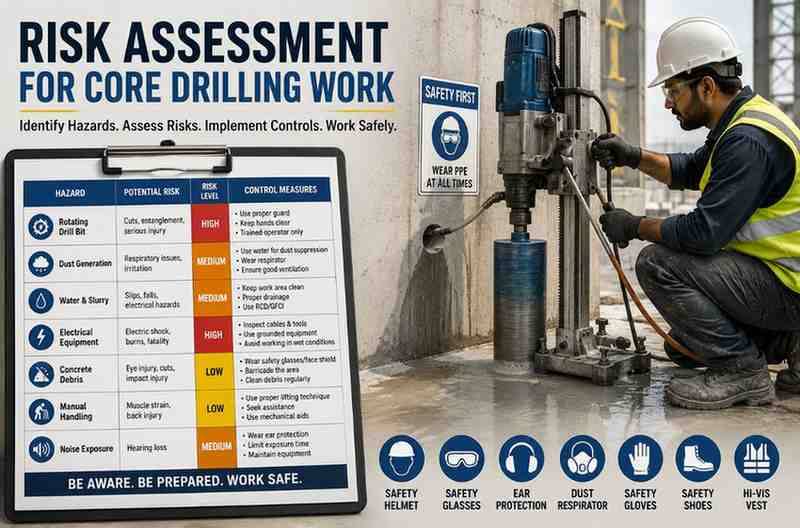
Without a meticulous risk assessment for core drilling work, projects face severe delays, costly equipment damage, regulatory penalties, and, most importantly, catastrophic worker injuries. A comprehensive risk assessment is not merely a bureaucratic paperwork exercise; it is a dynamic, live blueprint for proactive safety management.
This guide explores the step-by-step framework for identifying hazards, evaluating risks, and implementing ironclad control measures for core drilling projects.
Understanding Core Drilling and Its Unique Environment
Core drilling utilizes rotary drill rigs fitted with diamond-impregnated annular drill bits to cut clean, cylindrical holes through reinforced concrete, masonry, asphalt, and natural stone. While the technology is efficient, the combination of high rotational torque, water or dry cooling systems, heavy electrical or hydraulic power sources, and structural alterations creates a high-risk working environment.
The Scope of Core Drilling Operations
-
Floor/Slab Coring: Vertical drilling through horizontal concrete slabs to install plumbing, HVAC ducts, or electrical risers.
-
Wall/Stiffener Coring: Horizontal drilling through vertical concrete walls or retaining structures.
-
Inverted/Ceiling Coring: Overhead drilling operations requiring specialized rigging and stabilization.
The 5-Step Framework for Core Drilling Risk Assessment
To maintain a safe work site, safety officers and project managers must follow an industry-standard five-step risk assessment methodology tailored specifically to core drilling.
[1. Identify Hazards] ---> [2. Assess Risks] ---> [3. Implement Controls] ---> [4. Record Findings] ---> [5. Review & Update]
Step 1: Hazard Identification in Core Drilling
The first and most critical step is identifying every potential source of harm associated with the drilling process. Hazards can be categorized into mechanical, electrical, physical, chemical, and structural risks.
1. Structural and Subsurface Hazards
-
Hitting Embedded Utilities: Striking live electrical conduits, gas lines, high-pressure water pipes, or post-tension cables hidden within concrete structures can lead to electrocution, explosions, flooding, or structural collapse.
-
Structural Compromise: Removing too much core material or cutting through primary load-bearing reinforcement bars (rebar) can weaken the structural integrity of a building or bridge.
2. Mechanical Hazards
-
Bit Binding and Kickback: If the diamond core bit encounters heavy rebar or shifts unexpectedly, the drill can bind, causing sudden, violent rotational kickback that can injure the operator's wrists, arms, or torso.
-
Rotating Parts: Entanglement of loose clothing, hair, or jewelry in the rotating drill spindle or chuck.
-
Flying Debris: Dislodged concrete chunks, metal fragments, or diamond segments breaking off the bit at high velocity.
3. Electrical and Hydraulic Hazards
-
Electrical Shock: Using wet-drilling methods in close proximity to electrical panels, or handling damaged power cords, ungrounded generators, and wet switches.
-
Hydraulic Failures: High-pressure hydraulic lines rupturing on heavy-duty rig setups.
4. Physical and Environmental Hazards
-
Excessive Noise: Continuous high decibel levels generated by heavy motors and diamond bit friction, leading to noise-induced hearing loss.
-
Hand-Arm Vibration Syndrome (HAVS): Prolonged exposure to vibrations from handheld core drills.
-
Silica Dust Exposure: Dry cutting or slurry cleanup of concrete and masonry produces respirable crystalline silica, a known human carcinogen that causes silicosis, lung cancer, and chronic obstructive pulmonary disease (COPD).
-
Slips, Trips, and Falls: Slurry accumulation on floors making walking surfaces extremely slippery, or tripping over water hoses and power cords.
Step 2: Evaluating and Scoring Risks
Once hazards are identified, assess the level of risk by evaluating two factors:
-
Likelihood: How probable is it that the hazard will cause an incident? (Rare, Unlikely, Possible, Likely, Almost Certain)
-
Severity: How severe would the resulting injury or damage be? (Minor, Moderate, Major, Critical, Catastrophic)
Multiplying likelihood by severity yields a risk rating (Low, Medium, High, Extreme), which dictates the urgency and hierarchy of control measures required.
Step 3: Implementing the Hierarchy of Control
Control measures must be applied strictly according to the Hierarchy of Controls, prioritizing elimination and engineering controls over personal protective equipment (PPE).
+---------------------------------------------------+
|  ELIMINATION (Remove the hazard entirely)         |
+---------------------------------------------------+
|  SUBSTITUTION (Replace with safer alternatives)   |
+---------------------------------------------------+
|  ENGINEERING CONTROLS (Isolate workers from risk) |
+---------------------------------------------------+
|  ADMINISTRATIVE CONTROLS (Change how people work) |
+---------------------------------------------------+
|  PPE (Protect workers with gear)                  |
+---------------------------------------------------+
1. Elimination and Substitution
-
Verify structural drawings to confirm whether coring can be avoided entirely by routing services through existing voids or pathways.
-
Substitute dry drilling methods with wet drilling wherever feasible to completely eliminate airborne crystalline silica generation at the source.
2. Engineering Controls
-
Non-Destructive Testing (NDT): Always mandate Ground Penetrating Radar (GPR) scans and X-ray imaging before touching a drill to concrete. This eliminates the risk of striking hidden utilities or post-tension cables.
-
Water Feed Systems: Utilize pressurized water tanks or direct hookups to suppress dust and cool the diamond bit, significantly reducing friction, bit wear, and hazardous dust.
-
Slurry Containment Systems: Use industrial wet-vacuums and mud recovery rings immediately surrounding the drill hole to prevent slippery flooring hazards.
-
GFCI Protection: Ensure all electrical power sources are connected to Ground Fault Circuit Interrupters (GFCIs) to prevent electric shock in wet environments.
-
Mechanical Stand Mounts: Whenever possible, bolt or vacuum-anchor core drills to sturdy rig stands rather than operating handheld, drastically reducing operator fatigue, vibration exposure, and kickback injuries.
3. Administrative Controls
-
Permit-to-Work (PTW) Systems: Issue strict internal permits requiring sign-off from structural engineers and site safety managers before coring commences.
-
Operator Certification: Ensure all drill operators are formally trained, certified, and competent in handling specific rig models and emergency shutdown procedures.
-
Job Safety Analysis (JSA) Briefings: Conduct mandatory toolbox talks before every shift to review site-specific challenges, escape routes, and emergency contacts.
-
Exclusion Zones: Tape off and post clear warning signage around the drilling area—both above and below the work floor—to protect bystanders from falling cores or breakthrough debris.
4. Personal Protective Equipment (PPE)
Even with robust engineering and administrative controls, appropriate PPE is non-negotiable for all core drilling personnel:
-
Head Protection: ANSI/ISEA-approved hard hats.
-
Eye and Face Protection: Impact-resistant safety glasses and full-face shields to guard against flying concrete chips and pressurized water spray.
-
Hearing Protection: Earplugs or earmuffs with a high Noise Reduction Rating (NRR) to combat motor noise.
-
Respiratory Protection: N95 or P100 respirators (or PAPR systems) when performing dry cutting or cleaning dried slurry.
-
Hand Protection: Heavy-duty, vibration-dampening, cut-resistant work gloves (ensuring they are snug-fitting to prevent entanglement hazards).
-
Footwear: Steel-toe, waterproof safety boots with slip-resistant outsoles.
Step 4: Special Considerations for Complex Drilling Scenarios
Certain environments introduce unique risk factors that demand specialized assessment protocols:
Confined Spaces (Basements, Shafts, Tunnels)
-
Risk: Accumulation of exhaust fumes from gas-powered generators, oxygen depletion, and restricted emergency egress.
-
Control: Use electric or pneumatic drills instead of gas engines. Continuously monitor atmospheric conditions and ensure dedicated standby rescue personnel are stationed outside the space.
Overhead and Elevated Slab Coring
-
Risk: The cut core dropping unexpectedly through the floor, or the drill rig tipping over while working at heights on scaffolding or elevated platforms.
-
Control: Install catch platforms or scaffolding nets underneath the work zone. Rig core retention anchors (such as core catchers or threaded rods secured through the center of the core) to prevent heavy concrete cylinders from free-falling.
Step 5: Review, Monitoring, and Continuous Improvement
A risk assessment is a living document. Site conditions change rapidly, and lessons learned from near-misses must be integrated immediately.
-
Regular Audits: Safety supervisors should conduct unannounced daily inspections of drill rigs, water feeds, electrical cords, and PPE compliance.
-
Incident Reporting: If a bit binds violently or a minor utility strike occurs (even without injury), operations must halt immediately. Convene an incident review meeting to update the risk assessment before work resumes.
Conclusion
Core drilling is a high-precision trade that demands equal parts skill and strict safety discipline. Conducting a comprehensive risk assessment for core drilling work safeguards human life, protects expensive capital equipment, and ensures structural integrity for clients across every construction sector. By identifying hazards early, enforcing engineering controls, and maintaining a culture of accountability, teams can achieve flawless execution without compromising safety.
For professional, safe, and certified coring solutions tailored to your project requirements, reach out to industry experts at [email protected] to ensure your next job is completed safely and efficiently from start to finish.