
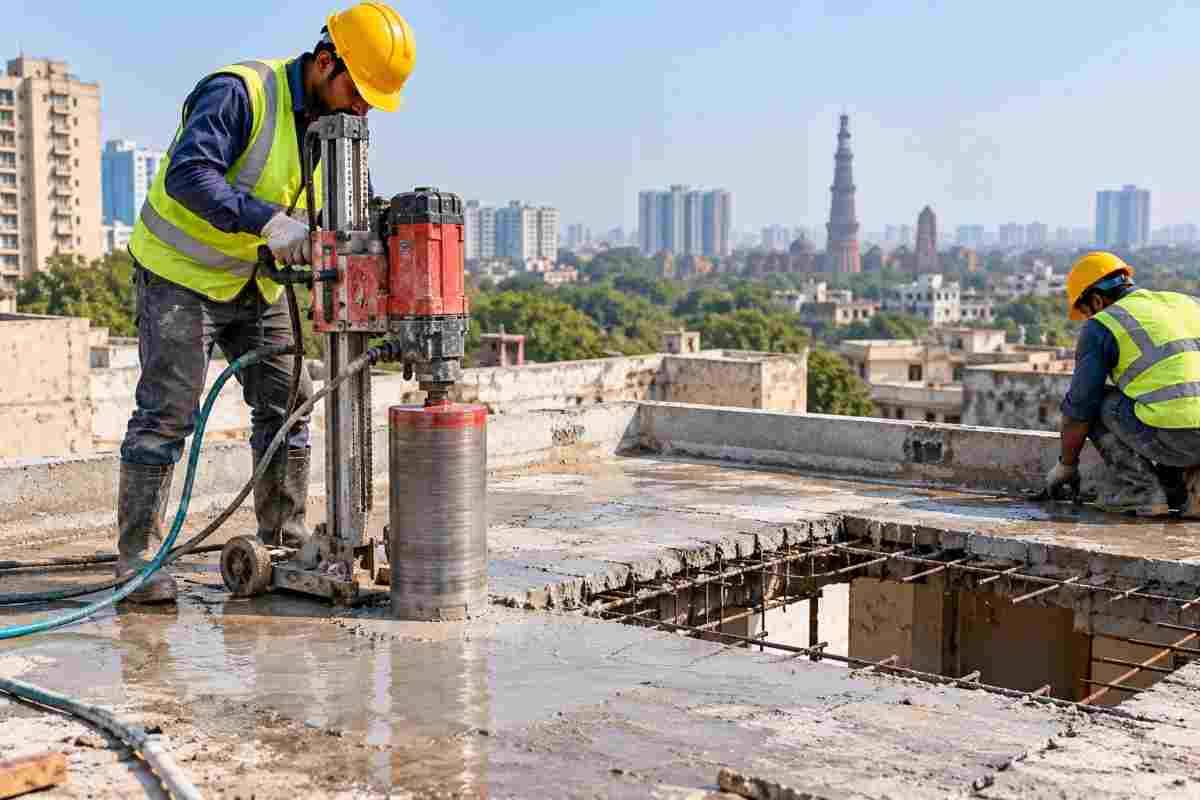
Delhi's skyline is a story of constant change. Homes grow vertically, old buildings are remodeled, and commercial spaces are redesigned to fit new needs. Almost all of this change involves one stubborn material: reinforced cement concrete (RCC). When you need a staircase through a roof, a shaft through a slab, or a skylight for a darker room, you can't just break the concrete with a hammer.
This is where professional roof cutting in Delhi comes in. In this guide from Core Cutting India, we explain what RCC roof cutting is, when it is genuinely required, which methods are used, and how to hire the right team.
What Is RCC Roof Cutting?
RCC roof cutting is the controlled removal of a section of a reinforced concrete slab or roof using specialized diamond-tipped equipment. Unlike demolition, which breaks concrete with impact and creates vibration, debris, and cracks, cutting uses diamond abrasives to slice cleanly through concrete and the steel reinforcement inside it.
The result is a precise opening with smooth edges and minimal damage to the surrounding structure. The rest of the slab, beams, and columns stay intact, which is why cutting is the preferred method for modifying occupied buildings.
Why Roof Cutting Is So Common in Delhi
Several features of Delhi's building landscape make slab cutting more common here than in many other cities:
- Vertical expansion. Plot sizes are limited, so many families add floors instead of buying new land. Connecting a new floor often means cutting an opening for a staircase.
- Aging buildings. Many structures in older colonies need retrofitting, new service routes, or layout changes.
- Dense construction. Buildings sit close together, so noisy and vibration-heavy demolition can damage neighboring properties.
- Commercial renovation. Offices, malls, and showrooms are frequently remodeled, requiring new ducts, lift shafts, and utility openings.
In all these situations, precision matters more than speed, and that is what professional RCC cutting provides.
When Is Professional RCC Cutting Required?
Not every small job needs a specialist, but many do. Here are the most common situations.
1. Creating a Staircase Opening
If you are adding a floor or a terrace room, you need a passage from the lower level to the upper one. Cutting an opening in an existing slab for a staircase is among the most frequent roof cutting jobs in Delhi. The cut must be accurate in size and position, and the surrounding beams must not be compromised.
2. Installing a Lift or Elevator Shaft
Retrofitting a lift into an existing building is increasingly common, especially in multi-story homes and older commercial buildings. This requires cutting large rectangular openings through every floor slab. The openings must align vertically and stay structurally sound, so professional wall saw and slab saw equipment is essential.
3. Adding Skylights and Ventilation Openings
Dark rooms and stuffy top floors often benefit from skylights or ventilation shafts. Cutting a roof opening for natural light and airflow improves living conditions, but the cut must be sealed and waterproofed properly afterward to avoid leaks during the monsoon.
4. Running Plumbing, Drainage, and Electrical Lines
Modern buildings need more pipes, ducts, and cables than older ones were designed for. Passing a drainage line, AC duct, or cable conduit through a slab requires openings of specific sizes. For round holes, core cutting is the standard method. For larger rectangular openings, slab sawing is used.
5. Installing HVAC and Fire-Safety Systems
Commercial buildings need space for air-handling ducts, sprinkler lines, and exhaust systems. These often cross through roofs and slabs, and each opening must be cut cleanly to maintain structural and fire-rating requirements.
6. Partial Demolition and Structural Modification
When you need to remove part of a slab, such as a damaged section or an unused balcony, controlled cutting lets you take out only what is necessary. It avoids the shock and vibration of a breaker, which could weaken adjoining parts of the structure.
7. Renovating or Merging Spaces
Merging two units, creating a double-height living room, or opening up a floor plan can all involve removing slab sections. Professionals can cut these sections into manageable blocks that can be lifted out safely.
8. Cutting Reinforced Roofs in Sensitive Locations
Hospitals, schools, residential societies, data centers, and heritage-adjacent buildings often cannot tolerate noise, dust, and vibration. Diamond cutting, especially with wet cutting techniques, keeps disturbance low.
Why Not Just Use a Hammer or Breaker?
It is tempting to hire local labor with a jackhammer for a quick, cheap job. But traditional breaking carries real risks:
- Micro-cracks. Impact vibration can travel through the slab and into beams and columns, creating hairline cracks that weaken the structure over time.
- Uneven edges. Broken openings are ragged, requiring heavy patching and plastering afterward.
- Damage to reinforcement. Uncontrolled breaking can bend or expose steel bars that should remain intact.
- Noise, dust, and complaints. In Delhi's densely populated neighborhoods, this often leads to disputes with neighbors and society management.
- Safety hazards. Falling debris and unplanned slab collapse can injure workers and occupants.
Professional cutting avoids most of these problems with precision and control.
Common RCC Cutting Methods Used for Roofs
Different jobs call for different tools. A professional team will pick the method based on thickness, location, reinforcement, and access.
Wall Saw Cutting
A track-mounted saw with a large diamond blade cuts straight lines through walls and slabs. It is ideal for large rectangular openings, such as lift shafts and staircase cuts, and can cut deep into thick concrete.
Slab Saw (Flat Saw) Cutting
A flat saw is a walk-behind machine that cuts horizontally across floors and roofs. It is suited to shallow-depth cuts, expansion joints, and long straight lines in slabs.
Core Cutting (Core Drilling)
A hollow diamond-tipped drill bit creates clean round holes through concrete. It is the usual choice for plumbing pipes, electrical conduits, and anchor holes. Core cutting causes very little vibration.
Wire Saw Cutting
A diamond-embedded wire is looped around the concrete and pulled to cut. It handles very thick, large, or awkwardly shaped sections that other saws can't reach. It is often used for heavy structural removal.
Hand Saw (Ring Saw) Cutting
Compact handheld saws allow cutting in tight corners or spaces where heavy machines cannot fit, though they have limited depth capacity.
Is Structural Assessment Needed Before Cutting a Roof?
Yes, and this step should never be skipped. Cutting into a slab changes how loads travel through the building. Before any work starts, a qualified structural engineer should check:
- The slab type, such as one-way, two-way, or ribbed
- The location of beams, columns, and load-bearing walls
- The position and size of the reinforcement
- How much load the slab carries from floors above
- Whether temporary supports (propping) or additional reinforcement around the opening are needed
In many cases, the opening needs new edge beams or reinforcement to compensate for the removed concrete. A reputable cutting company will either coordinate with your engineer or insist on a structural opinion before starting.
Do You Need Permission to Cut a Roof in Delhi?
It depends on the building and the scope of work. Modifications that affect the structure can involve rules from the local municipal body, development authority, or your housing society. Typical considerations include:
- Approval for structural changes or additional floors
- Permission or a no-objection certificate from the RWA or cooperative society
- Compliance with applicable building bye-laws and fire-safety norms
- Consent from neighbors if shared walls or slabs are involved
Rules and enforcement vary by area and building type, so check current requirements with the relevant authority or a licensed architect before you begin. This is general information, not legal advice.
How Professional Roof Cutting Works: Step by Step
A well-run project typically follows this sequence:
- Site inspection. The team visits, measures the slab, and examines access, thickness, and surroundings.
- Structural review. A structural engineer confirms that the opening is safe and recommends supports.
- Marking. The exact cut lines are marked, often with cross-checks against the drawings.
- Scanning. Where needed, a scanner detects embedded rebar, conduits, and pipes so they are not cut accidentally.
- Propping and safety setup. Temporary supports go in, restricted zones are marked, and protective gear is put on.
- Cutting. The chosen saw cuts along the marked lines, using water to cool the blade and suppress dust.
- Removal. The cut section is lifted out in blocks with a crane, chain pulley, or other lifting method.
- Finishing. Edges are cleaned, and any needed reinforcement, plastering, or waterproofing is done.
- Debris disposal. Slurry and concrete waste are cleared from the site.
Benefits of Hiring Professional RCC Cutting Services
- Precision. Clean, accurate openings that match your drawings.
- Structural safety. Minimal vibration and no uncontrolled cracking.
- Less noise and dust. Especially important in residential and commercial areas.
- Speed. Diamond equipment cuts through thick concrete far faster than manual breaking.
- Lower finishing costs. Smooth edges need less repair.
- Reduced risk. Trained operators and proper safety gear cut the chance of accidents.
Factors That Affect RCC Roof Cutting Cost in Delhi
There is no single price, because each job is different. The main factors are:
- Slab thickness. Thicker concrete takes more time and a larger blade.
- Area or length of cut. Larger openings cost more.
- Cutting method. Wire sawing and wall sawing generally cost more than simple core cutting.
- Reinforcement density. Heavily reinforced slabs wear blades faster.
- Location and access. Upper floors, narrow lanes, or restricted access raise labor and equipment costs.
- Debris handling. Removal and disposal of heavy blocks adds to the bill.
- Site conditions. Occupied buildings need extra protection and care.
Always request a written, itemized quote after a site visit. Be wary of unusually low estimates that skip inspection.
How to Choose a Reliable RCC Cutting Company in Delhi
Because a mistake can be expensive and dangerous, choose carefully. Look for:
- Experience. A track record on projects similar to yours.
- Modern equipment. Diamond wall saws, wire saws, core drills, and slab saws in good condition.
- Trained operators. Skilled personnel who understand structural behavior.
- Safety practices. Protective gear, propping, and site discipline.
- Transparent quotes. Clear scope, timeline, and pricing.
- Willingness to coordinate. Good teams work with your architect and structural engineer.
- Client feedback. References and reviews from past customers.
Safety Tips Before and During Roof Cutting
- Clear the area below the cut of people, furniture, and valuables.
- Switch off and mark electrical lines in the working zone.
- Make sure temporary props are installed before cutting begins.
- Keep children and pets away from the site.
- Protect floors and nearby fixtures from slurry and debris.
- Ensure workers wear helmets, gloves, goggles, ear protection, and dust masks.
Common Mistakes to Avoid
- Skipping the structural assessment to save money
- Cutting without scanning for rebar, pipes, or cables
- Making the opening larger than the drawings specify
- Forgetting waterproofing around roof-level openings
- Hiring unqualified labor for a specialist task
- Ignoring society rules and neighbor concerns
Frequently Asked Questions
What is RCC cutting?
RCC cutting is the precise removal of reinforced concrete using diamond-tipped tools such as wall saws, wire saws, and core drills, without the vibration and damage of traditional breaking.
Is it safe to cut a roof slab in an existing building?
It can be, provided a structural engineer reviews the plan, temporary supports are installed, and trained professionals do the cutting.
Can an RCC roof be cut without damaging the rest of the structure?
Yes. Diamond cutting is low-vibration and controlled, which keeps the surrounding concrete intact when done correctly.
What is the difference between core cutting and wall sawing?
Core cutting makes round holes, typically for pipes and conduits. Wall sawing makes long straight cuts and large rectangular openings.
How long does roof cutting take?
It depends on the size of the opening, slab thickness, and access. A small core hole may take minutes, while a lift shaft or large staircase opening can take a day or more.
Does RCC cutting require permission in Delhi?
Structural modifications often involve approvals from local authorities and housing societies. Confirm the requirements for your specific property before starting.
Is dust a problem during cutting?
Wet cutting keeps dust to a minimum, although slurry needs to be managed and cleaned up.
Conclusion
Whether you are adding a staircase to a new floor, installing a lift, letting in daylight, or routing services through a slab, roof cutting in Delhi is a task for specialists. The roof is part of your building's structural system, and cutting it incorrectly can lead to cracks, leaks, or serious safety problems. Professional RCC cutting offers precision, safety, and cleaner results than demolition with a breaker.
If you are planning a project, start with a site inspection and structural assessment, then work with an experienced team that uses modern diamond cutting equipment. To discuss your requirements or request a quote, visit Core Cutting India and get expert support for your RCC roof cutting needs in Delhi.