
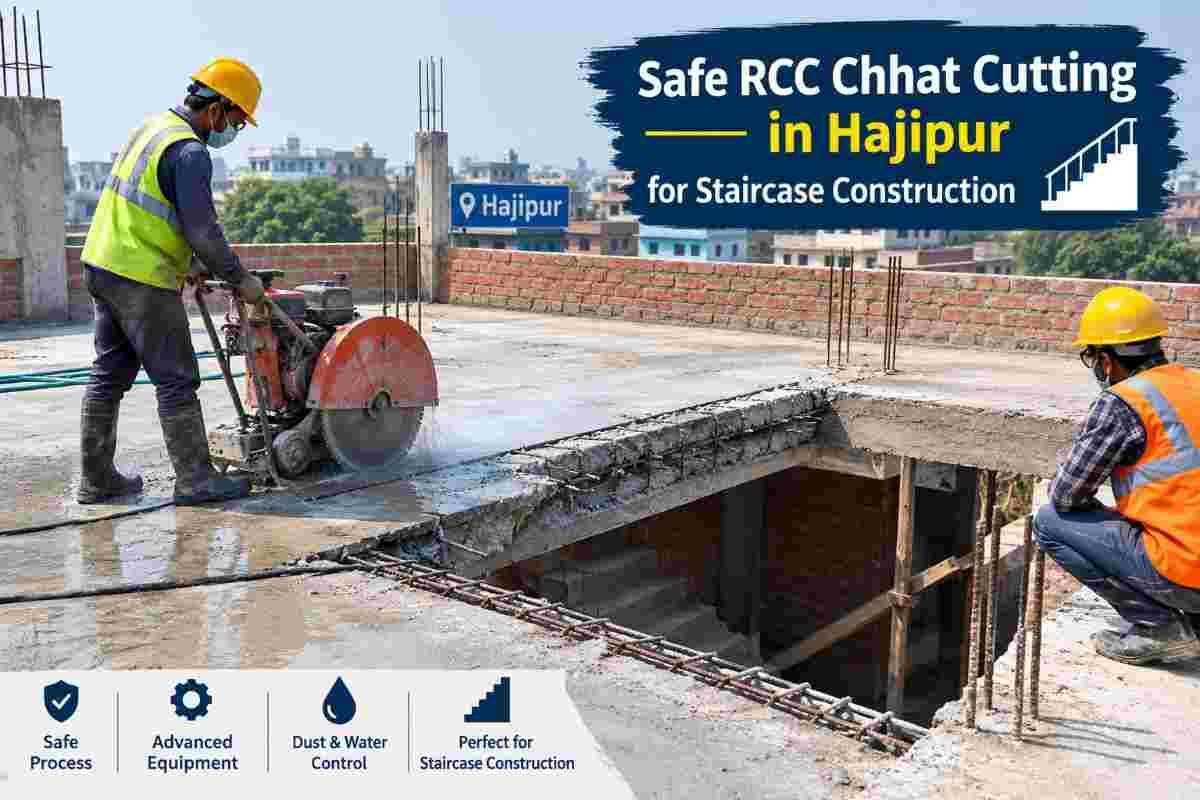
Adding a staircase to an existing house is one of the smartest ways to use your space. Whether you want to reach a new first floor, open up a terrace, or give a rented portion a separate entry, a staircase makes your building more useful. But there is one problem every homeowner in Hajipur runs into: the RCC chhat (reinforced cement concrete slab) is already in the way.
Many people think the only way to make an opening is to break the slab with a hammer and chisel. This old method is noisy, messy, and risky. It sends cracks through the slab, shakes the whole structure, and can weaken beams and columns that you never meant to touch. That is exactly why safe RCC chhat cutting in Hajipur for staircase construction has become the preferred choice for builders, engineers, and homeowners.
In this guide, we explain how professional RCC slab cutting works, why it is safer than breaking, what to check before you start, and how to choose the right team. This article is brought to you by Core Cutting India (https://corecuttingindia.com/), a team that specialises in precise concrete cutting for homes, shops, and commercial buildings.
What Is RCC Chhat Cutting?
RCC chhat cutting is the process of removing a planned section of a reinforced concrete slab using diamond-tipped cutting tools. Instead of smashing the concrete, the machine slices through it along clean, straight lines. The steel reinforcement inside the slab is cut in the same pass.
For a staircase, the cut is made exactly at the size and position marked by your engineer or architect. The result is a neat opening with smooth edges, ready for the staircase, railing, or landing to be built around it.
The tools commonly used include:
- Slab saw (floor saw): A machine that runs on the surface of the slab and cuts straight lines through it.
- Wall saw: Mounted on a rail, it cuts walls and vertical sections, and can also be used for slab edges.
- Wire saw: A diamond-coated wire that loops around the section and is useful for thick or hard-to-reach concrete.
- Core drill: Used to make round holes at corners or for stress relief before the main cut.
- Hand saw (ring saw): Used for tight corners where larger machines cannot reach.
All these tools use water for cooling and dust control, which keeps the site cleaner and the blades working well.
Why Staircase Openings Need Careful Cutting
A slab is not just a ceiling or floor. It is a working part of your building's structure. It carries loads, ties beams together, and spreads weight across the frame. When you remove a portion of it for a staircase, you are changing how that load travels.
If the cutting is done carelessly, you can face problems such as:
- Cracks spreading beyond the opening. Hammer breaking sends shock waves through the slab and nearby beams.
- Damage to adjoining rooms. Tiles, plaster, and walls around the work area may crack or loosen.
- Unsafe edges. Rough, uneven edges make it difficult to fix the staircase properly.
- Structural weakening. Cutting without understanding where beams, columns, and main reinforcement lie can compromise the building.
- Injury risk. Falling debris, flying chips, and unstable slab pieces are serious hazards for workers and the family living below.
Professional cutting removes most of these risks because the process is controlled, planned, and nearly vibration-free.
Benefits of Safe RCC Chhat Cutting in Hajipur
1. Clean and Precise Openings
Diamond cutting follows the exact line marked on the slab. Edges come out straight and smooth, so the staircase fits properly without extra finishing work. This saves time and money during construction.
2. Very Low Vibration
Unlike breakers and jackhammers, diamond cutting machines produce minimal vibration. The rest of your building, including old beams and plaster, stays undisturbed. This is especially important in older homes common in many parts of Hajipur.
3. Less Noise and Dust
Water-cooled cutting keeps dust low, and the noise level is far below that of manual breaking. Families can continue living in the lower floors with much less disturbance.
4. Faster Work
A planned cut takes hours, not days. Once the opening is marked and the machines are set, the slab section is cut into manageable blocks and lifted out safely.
5. Better Structural Safety
Because only the marked area is removed, the surrounding concrete and steel remain intact. Your structural engineer can then add support, such as extra beams or trimmer reinforcement, around the opening with confidence.
6. Less Debris
Sections are cut into blocks and removed in one piece. This leaves far less rubble than breaking and makes cleaning easier.
Step-by-Step: How Safe RCC Slab Cutting for a Staircase Is Done
Understanding the process helps you ask the right questions and know what to expect on site.
Step 1: Site Inspection and Planning
The team visits your property and checks the slab thickness, the position of beams and columns, and the available access for machines and water. They also discuss the staircase design, size of the opening, and the direction of the flight.
If you have a structural drawing, share it. If not, an engineer's opinion is strongly recommended before cutting begins.
Step 2: Structural Approval
Never cut a slab for a staircase without confirming that the location is structurally safe. Cutting near a beam or in a heavily reinforced zone may need a different layout or extra support. A civil or structural engineer should approve the opening size and position.
Step 3: Marking the Cutting Lines
The opening is marked clearly on the slab using chalk or paint. The lines are checked twice, because once cutting starts, there is no going back. Corners are marked for core holes where needed.
Step 4: Temporary Support and Safety Setup
For larger openings, props or temporary supports may be placed below the slab. The area beneath the cut is cleared, and a safe zone is created so nobody stands under the section being removed. Workers wear helmets, gloves, goggles, and ear protection.
Step 5: Core Drilling at Corners
Small round holes are drilled at the corners of the marked area. These help the saw blades finish cleanly without over-cutting and give a safe place to attach lifting or rigging equipment.
Step 6: Slab Cutting
The cutting machine runs along the marked lines. Water flows over the blade to cool it and keep dust down. The cut goes through the full depth of the slab, including the steel bars.
Step 7: Sectioning and Lifting
The cut portion is divided into smaller blocks if it is too heavy to lift in one piece. Each block is secured and lowered or lifted away carefully, usually with a chain pulley or crane arrangement depending on the weight.
Step 8: Cleaning and Handover
The slurry, water, and debris are cleaned up. The opening edges are checked for straightness and finish. Your builder can now continue with the staircase work, such as fixing shuttering, laying reinforcement, and casting the stairs.
Things to Check Before You Cut the Slab
Before you book any RCC cutting service, go through this simple checklist.
- Structural drawings: Do you have the original plan of the building? It shows beam and column positions.
- Slab thickness: Standard residential slabs are often between 4 and 6 inches, but older or heavily loaded slabs can differ. Thickness affects the type of machine used.
- Reinforcement layout: Knowing where the main bars run helps the engineer plan extra support around the opening.
- Staircase design: Decide the size, width, and direction before cutting so the opening is exactly right.
- Access for machines: Check whether the equipment can reach the slab, including power supply and water availability.
- Disposal of waste: Plan where cut blocks and slurry will be taken.
- Neighbours and permissions: If you live in a shared building or tight lane, inform neighbours and check local rules.
Common Mistakes to Avoid
Using a hammer and chisel to save money. It may look cheaper at first, but the repair costs for cracks and damage often exceed the savings.
Skipping the engineer. Even a small opening can change how loads move. A short consultation can prevent costly structural problems later.
Marking the opening too close to a beam. The edge of a beam is a critical zone. Cutting too close can weaken it.
Cutting before the staircase design is final. Changing your mind after the cut is expensive. Fix the staircase size first.
Hiring untrained workers. Concrete cutting needs trained operators who understand blade selection, water flow, and safe lifting. Always ask about experience.
Why Choose Core Cutting India for RCC Chhat Cutting in Hajipur?
When you are modifying the structure of your home, you want a team that treats the job seriously. Core Cutting India focuses on professional, controlled concrete cutting that protects your building while giving you the opening you need.
Here is what you can expect:
- Modern diamond cutting equipment suited to slabs, walls, and openings of different sizes.
- Trained operators who understand how to work safely around beams, columns, and occupied homes.
- Clean, accurate cuts that match your drawing and make staircase construction easier.
- Low-vibration, low-dust methods that reduce disturbance to your property and your family.
- Clear communication about the plan, timeline, and safety measures before work starts.
You can learn more about our services at https://corecuttingindia.com/ or call us directly at +91 70096 79903 to discuss your project.
Other Concrete Cutting Services You May Need
Staircase openings are only one use of this technology. The same methods are used for:
- Door and window openings in RCC walls
- Lift shaft and elevator openings
- Duct, pipe, and AC openings
- Removing damaged slab or wall sections
- Dismantling old structures in a controlled way
- Core drilling for plumbing, electrical, and drainage lines
If your renovation involves more than just a staircase, you can handle everything with one team and a single plan.
How Long Does RCC Slab Cutting Take?
The time depends on the opening size, slab thickness, and site conditions. For a standard staircase opening in a residential slab, cutting often takes a few hours to a day once everything is marked and set up. Planning, inspection, and support setup may add some time before the actual cutting begins.
What Affects the Cost?
Pricing varies from site to site. The main factors are:
- Slab thickness – Thicker slabs take longer and use more blade wear.
- Length of cut – Cost is usually calculated by the running foot or running metre of cutting.
- Reinforcement density – More steel means slower cutting.
- Access and height – Difficult access or upper floors may need extra equipment and labour.
- Lifting and disposal – Heavy blocks need proper handling and removal.
The best way to get an accurate figure is to share your slab details and opening size and ask for a site-based quote. A free inspection helps avoid surprises.
Safety Tips for Homeowners
- Keep children and pets away from the work area at all times.
- Move furniture and valuables out of the rooms below the slab being cut.
- Do not stand under or near the section being lifted.
- Make sure the team uses protective gear and has a clear plan for lifting.
- Avoid loading the slab with heavy material while the opening is being prepared.
- Ask the engineer to confirm when it is safe to proceed with the staircase construction.
After the Cut: Building the Staircase
Once the opening is ready, your mason or contractor can proceed with the staircase. Typical next steps include:
- Casting or fixing support beams around the opening if recommended.
- Preparing the shuttering and reinforcement for the staircase flight and landing.
- Casting the concrete and allowing it to cure properly.
- Finishing with plaster, flooring, railing, and paint.
Because the edges of the opening are straight and clean, alignment becomes easier and the finished staircase looks neat and professional.
Frequently Asked Questions (People Also Ask)
Is it safe to cut an RCC slab for a staircase? Yes, it is safe when done with proper planning, structural approval, and professional equipment. Diamond cutting is controlled and causes minimal vibration compared to breaking.
Can I make a staircase opening in an existing slab? In most cases, yes. The engineer must confirm the location, size, and any additional support needed around the opening.
How do you cut an RCC slab without damaging the building? By using diamond saws and core drills along marked lines, with temporary support where needed, and by removing the cut section in blocks instead of breaking it.
What is the best method to cut a concrete slab? Slab sawing, wall sawing, wire sawing, and core drilling are the most common professional methods. The right choice depends on slab thickness, access, and the shape of the cut.
How much does RCC slab cutting cost? The cost depends on the length and depth of the cut, the steel in the slab, and site access. A site visit gives the most accurate estimate.
How long does it take to cut a slab for stairs? A typical residential opening can often be cut within a day once planning and setup are done.
Do I need permission to cut a slab? If you are in a shared building or a regulated area, check with the society, owner, or local authority. A structural engineer's approval is always recommended.
Final Thoughts
A staircase can transform how you use your property, but the way you create the opening matters just as much as the staircase itself. Choosing safe RCC chhat cutting in Hajipur protects your structure, saves time, reduces mess, and gives you a clean base for construction.
Plan carefully, involve an engineer, and work with a team that uses the right equipment and follows safety practices. That way, your staircase project starts on a strong and secure footing.
If you are planning a staircase opening or any other concrete cutting work, contact Core Cutting India for a clear plan and a professional finish.
Call now: +91 70096 79903
Website: https://corecuttingindia.com/