
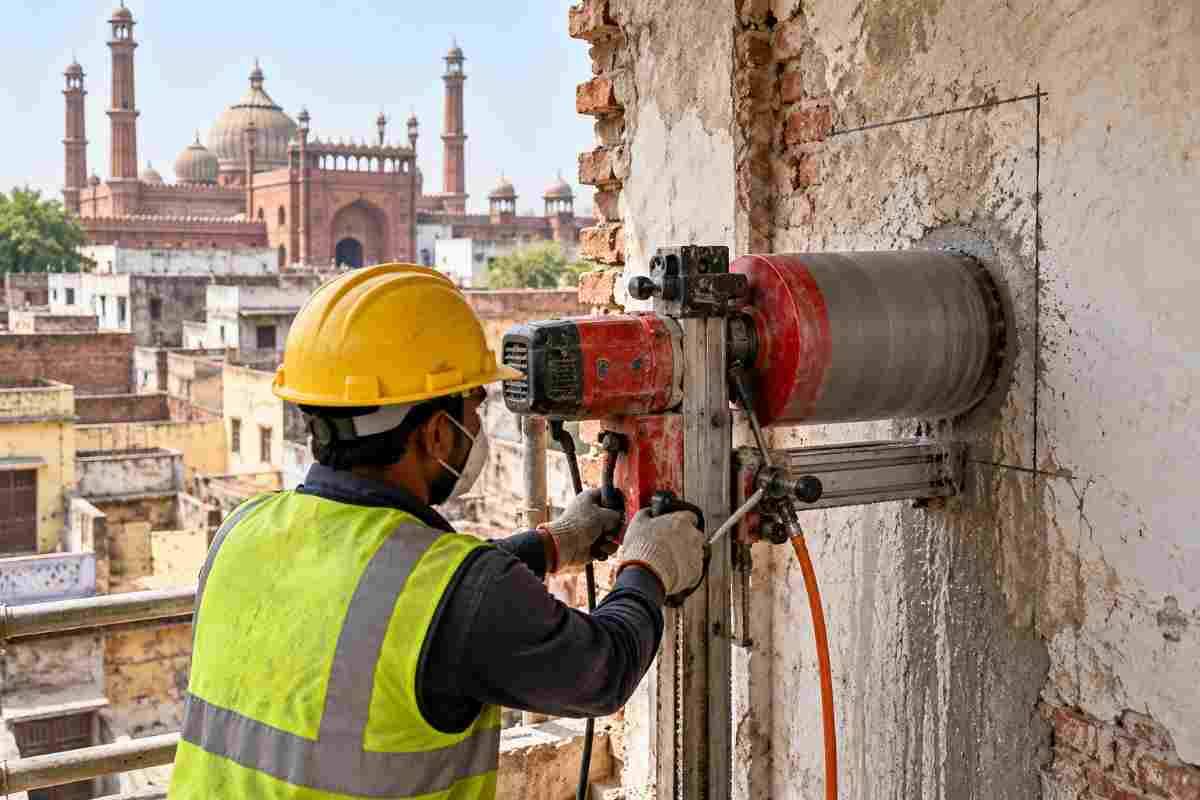
Walk through the lanes of Chandni Chowk, Kucha Pandit, Ballimaran, Daryaganj, or Chawri Bazar, and you are walking through centuries of construction history. Many buildings here have stood for 80, 100 or even 200 years. Families have added floors, shopkeepers have rearranged storefronts, and owners now want to open a new doorway, create a window, widen a passage or install a staircase or lift.
All of this involves cutting into walls, and in Old Delhi that is very different from cutting a wall in a modern apartment block. The wrong method, the wrong contractor or a skipped safety check can damage a building and the structures beside it, and can put lives at risk.
This guide from Core Cutting India covers what property owners, builders and architects should consider before cutting any wall in an Old Delhi building.
Why Old Delhi Buildings Need Special Care
Buildings in the walled city were not built to modern engineering codes. They were built with local materials, traditional techniques and the expectations of their time. Several characteristics make them more sensitive to cutting work.
Load-bearing walls are the norm. Modern buildings use a frame of columns and beams, with walls that mostly divide space. Many old Delhi buildings work the other way: the walls themselves carry the weight of floors and roofs. Removing or weakening a section without proper support can redistribute loads in dangerous ways.
Materials vary and have aged. You may find lakhori bricks, rubble masonry, stone, and lime or mud mortar. Their strength can differ even within one wall. Decades of moisture, seepage, vibration and neglected repairs may have weakened them in ways that are invisible from outside.
Buildings share walls and boundaries. In dense neighbourhoods, a wall you want to cut may be shared with, or only inches from, your neighbour’s property. Vibration or collapse can affect several buildings at once.
Roofs and floors use traditional systems. Jack-arch roofs, timber beams, iron girders and stone slabs are common. Cutting near the point where they rest on a wall can cause sudden failure.
Narrow lanes limit access. Equipment, debris removal and emergency response are all harder in tight lanes, so the cutting method has to be chosen with logistics in mind.
Step 1: Get a Structural Assessment First
The most important step happens before any machine is switched on. Have a qualified structural engineer inspect the building and the specific wall you plan to cut. A good assessment should answer:
- Is the wall load-bearing, partially load-bearing, or a partition?
- What is the condition of the masonry, mortar and plaster?
- Are there existing cracks, bulges, dampness or signs of settlement?
- What loads rest on the wall from above, such as floors, roofs, parapets or water tanks?
- What opening size is feasible, and where should it be positioned?
- What temporary support (propping or shoring) is needed, and for how long?
- Is a lintel, steel frame or reinforced concrete beam needed above the new opening?
Never rely on a guess or on “this is how it’s always been done”. A modest fee for an engineer’s report is small compared with the cost of repairing a failed wall or facing liability for damage to a neighbour.
Step 2: Check Permissions and Regulations
Depending on your location and the type of building, alterations may need approval. Old Delhi includes areas with heritage significance, and some structures are listed or fall in regulated zones. Before starting work, find out:
- Whether your building or area is covered by heritage conservation rules.
- Whether the work needs permission from the Municipal Corporation of Delhi (MCD) or another authority.
- Whether the building is tenanted, shared or in a society, in which case you may need consent from co-owners, tenants or neighbours.
- Whether any rules govern work timings, noise, or debris disposal in your locality.
Rules and procedures change, so confirm current requirements with the relevant authorities or a local architect. Skipping this step can lead to stop-work notices, penalties or disputes that halt a project midway.
Step 3: Choose the Right Cutting Method
Traditional demolition with hammers, chisels and breakers is still sometimes used, but it is a poor fit for old buildings. Hammering sends heavy vibration through the structure, cracks adjacent masonry and creates uncontrolled edges. Modern precision cutting is safer and cleaner.
Wall Saw Cutting
A track-mounted wall saw with a diamond blade makes straight, precise cuts through brick, stone and concrete. It suits door and window openings, and the cuts are clean enough that the finished edge needs minimal repair.
Diamond Wire Saw Cutting
A wire saw uses a diamond-impregnated cable looped around or through the section to be cut. It is useful for thick walls, awkward geometry and places where a large blade cannot fit. It can cut very thick sections with low vibration.
Core Drilling
Diamond core drilling makes round holes of precise diameter. It is ideal for pipes, ducts, cables, ventilation and drainage penetrations, and for drilling relief holes at the corners of larger openings.
Hand-Held Ring Saw and Chain Saw Cutting
For tight spaces and smaller jobs, compact hand-held saws offer flexibility, though precision and depth depend heavily on operator skill.
The right method depends on the wall’s material and thickness, the size of the opening, access, noise limits, and the findings of the structural report. A reputable contractor will explain why they recommend a given method instead of pushing one tool for every job.
Step 4: Control Vibration, Dust and Noise
Old Delhi is crowded, and construction work affects everyone nearby.
Vibration. Diamond cutting generates far less vibration than percussive demolition, which is why it is preferred near old masonry. Where possible, avoid impact tools altogether.
Dust. Wet cutting, where water is fed to the blade, cools the diamond segments and suppresses dust. Dust control protects workers, residents, stored goods and shopfronts. Old lime and brick dust can also irritate lungs, so masks and good ventilation matter.
Slurry and water. Wet cutting produces slurry. It should be collected and disposed of properly so it does not block drains, damage floors or stain neighbouring walls.
Noise. Precision cutting is generally quieter than breakers, but it is not silent. Inform neighbours in advance, respect local timing norms, and schedule noisy stages sensibly.
Step 5: Use Temporary Support and Sequence the Work
Even a perfectly cut opening can fail if the load above has nowhere to go during the work. Temporary support is not optional in load-bearing walls.
- Propping and shoring: Adjustable steel props or timber supports carry the load while the opening is made.
- Needle beams: Beams passed through the wall above the opening can transfer load to temporary supports on either side.
- Sequencing: The opening may need to be cut in stages, with the permanent lintel or frame installed before the full opening is released.
- Monitoring: Crack gauges or simple visual markers help detect movement during the work.
If the contractor cannot explain how the load will be supported, treat that as a serious warning sign.
Step 6: Plan the Permanent Reinforcement
Once the opening is cut, the wall has to carry the load permanently. Depending on the structural design, this may include:
- A reinforced concrete lintel
- A steel channel or I-section frame around the opening
- Strengthening of the masonry at the jambs (sides) of the opening
- Proper bearing lengths so the lintel sits on sound masonry
The finished opening should be tied back into the existing wall properly, not merely cut and left. The finish should also match the surrounding building as closely as practical, which matters for heritage streetscapes.
Step 7: Protect the Surroundings
Before cutting begins, take simple but important precautions:
- Move furniture, stock and valuables away from the wall and the area below it.
- Cover floors and nearby surfaces to protect them from slurry and debris.
- Photograph existing cracks and conditions on both your property and adjoining ones, so there is a record of the situation before work begins.
- Isolate or reroute electrical wiring, plumbing and gas lines running inside the wall. Hidden services are common in old buildings, and wiring may not follow any documented path.
- Keep children, elderly residents and animals away from the work zone.
Scanning the wall for embedded pipes, conduits and metal before cutting prevents dangerous surprises.
Step 8: Hire the Right Contractor
The contractor is the biggest factor in whether the job goes safely. When evaluating options, look for:
Relevant experience. Ask whether they have worked on old, load-bearing or heritage buildings, not just new concrete structures.
Proper equipment. Diamond wall saws, wire saws and core drills in good condition indicate a professional operation.
Trained operators. Skill matters as much as machinery, especially in unpredictable old masonry.
Safety practices. Ask about protective gear, supports, dust control and site supervision.
Transparent quotation. The quote should clearly state the scope, method, size of cuts, and what is or is not included, such as debris removal and support work.
Willingness to coordinate with your engineer. A good contractor works with structural professionals and does not resist oversight.
Beware of very low quotes paired with vague answers. Cheap cutting that ignores supports and sequencing is often the costliest choice in the end.
Common Mistakes to Avoid
- Cutting without a structural check. This is the most dangerous mistake.
- Assuming a wall is a partition. In old buildings, thick walls are usually structural.
- Using breakers for convenience. Heavy impact damages adjoining masonry.
- Making the opening too large or too close to a corner. This weakens the wall disproportionately.
- Ignoring neighbours. Poor communication leads to complaints and disputes.
- Skipping the lintel or reinforcement. An unsupported opening can sag or crack over time.
- Neglecting hidden utilities. Cutting through live wires or pipes causes injury and damage.
- Rushing the schedule. Safe work needs time for propping, cutting in stages and curing of new concrete.
How Long Does Safe Wall Cutting Take?
Time depends on wall thickness, the number of openings, access and the support work needed. A simple door opening can sometimes be cut in a day, but preparation, propping, lintel installation, curing and finishing extend the overall timeline. Allow extra time in congested lanes where material movement is slow, and treat any promise of “instant” results in a load-bearing wall with suspicion.
What Does It Cost?
Cost is influenced by the cutting method, wall material and thickness, the size and number of cuts, difficulty of access, and the amount of temporary support and reinforcement required. Rather than comparing only per-square-foot or per-hole rates, compare what each quotation actually includes. A transparent, itemised estimate is far more reliable than a single low figure.
Frequently Asked Questions
Is it safe to cut walls in old Delhi buildings?
Yes, when it is planned properly. Structural assessment, precision methods like diamond cutting, temporary support and permanent reinforcement make it safe. Without these, the risk rises sharply.
Can I cut a load-bearing wall?
Sometimes, but only after a structural engineer confirms it is feasible and designs the necessary support and lintel. Never cut a load-bearing wall on assumption.
Which method is best for old brick walls?
Diamond wall saw or wire saw cutting is generally preferred because it creates minimal vibration and clean edges. The exact choice depends on thickness, access and the engineer’s recommendations.
Do I need permission before cutting a wall?
It depends on the building, its location and the scale of the work. Check with MCD and any applicable heritage regulations, and obtain consent from co-owners or neighbours where relevant.
Will wall cutting damage neighbouring buildings?
Poorly done work can. Low-vibration cutting, supports, documentation of existing conditions and communication with neighbours greatly reduce the risk.
How do I find hidden pipes and wires before cutting?
Use detectors or scanners, consult existing plans if available, and have the contractor mark and isolate services before cutting begins.
Final Thoughts
Old Delhi’s buildings are living history, and they deserve respect as much as they deserve modernisation. Safe wall cutting here means getting an engineer’s assessment, confirming permissions, choosing low-vibration diamond methods, supporting the structure during work, and reinforcing the opening properly afterwards.
If you are planning a door, window, passage or service opening in an older property, speak to specialists who understand both the technology and the sensitivities of the walled city. Core Cutting India offers professional cutting services built around precision, safety and care for the structure you are working on. Visit corecuttingindia.com to discuss your project and get guidance on the right approach.