
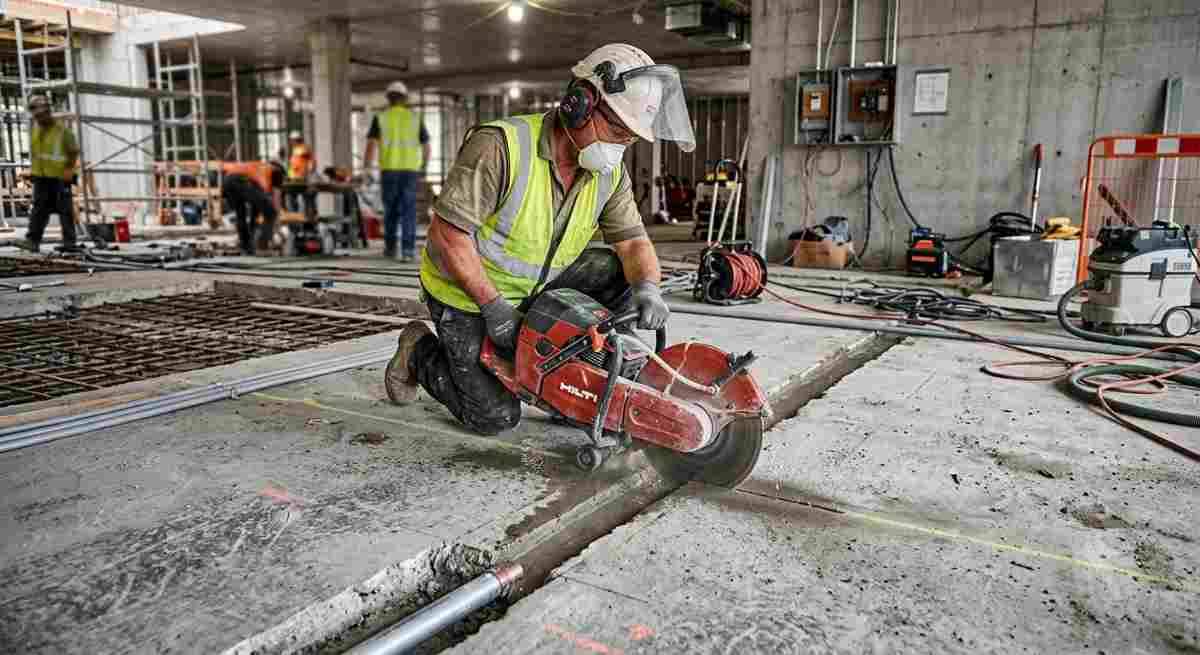
In modern residential, commercial, and industrial construction, the integration of electrical systems is a critical phase that demands absolute precision, safety, and structural integrity. Whether you are constructing a high-rise office complex, a sprawling industrial manufacturing plant, or a modern residential apartment, running electrical conduits, power cables, communication lines, and data networks seamlessly through concrete structures is a daily engineering challenge.
One of the most effective, reliable, and widely adopted methods for routing these hidden pathways is slab cutting. By utilizing advanced diamond blade saws and core drilling equipment, professional concrete cutting contractors can create precise channels, trenches, and openings in concrete slabs without compromising the load-bearing capacity of the building.
At Core Cutting India, we specialize in delivering high-precision concrete cutting and core drilling solutions tailored to the rigorous demands of modern MEP (Mechanical, Electrical, and Plumbing) installations. In this comprehensive guide, we will explore the nuances of slab cutting for electrical conduit and cable installation, the methodologies involved, safety measures, structural considerations, and why partnering with professionals like us at +91 70096 79903 ensures your project succeeds on time and within budget.
https://corecuttingindia.com/rate-calculator/
What is Slab Cutting and Why is it Essential for Electrical Installations?
Slab cutting refers to the controlled sawing, cutting, or drilling of reinforced concrete floor or roof slabs. Unlike traditional brute-force demolition methods that rely on jackhammers and create uncontrolled fractures, modern slab cutting uses specialized diamond-toothed blades and wire saws to make clean, straight, and exact cuts.
The Role of Slab Cutting in Electrical Engineering
When designing electrical layouts for modern buildings, surface-mounted wiring (conduits running along walls and ceilings) is often avoided due to aesthetic concerns, vulnerability to physical damage, and compliance with modern architectural standards. Concealed wiring—where conduits are embedded directly within walls or concrete slabs—is the preferred standard.
However, laying conduits inside concrete requires planning before the pour (sleeving) or cutting into cured concrete after construction. When retrofitting electrical systems, adding new circuits, or rerouting heavy-duty cables in existing structures, slab cutting becomes indispensable. It allows electricians to embed conduits securely into floors, ceilings, and foundations, ensuring protection against wear and tear while maintaining a sleek, hazard-free interior.
Target-Related Searches & People Also Ask (PAA)
To ensure this guide addresses the exact queries professionals and property owners search for, let us review the primary search intent categories surrounding this topic:
Target-Related Searches
-
Concrete floor cutting for electrical conduits
-
Floor channelling for wiring and cables
-
Diamond blade concrete slab cutting services
-
MEP core cutting and slab chasing
-
Professional concrete sawing contractors in India
-
Heavy cable routing through concrete slabs
People Also Ask (PAA)
-
Can you cut concrete slabs for electrical conduits without damaging structural integrity?
-
Yes, provided the cutting is performed by experienced professionals who analyze structural blueprints, avoid primary rebar placement where possible, and adhere to structural depth limits.
-
-
What is the difference between wall sawing and slab cutting for cables?
-
Slab cutting primarily targets horizontal surfaces (floors, roofs, and foundations) for routing under-floor conduits, whereas wall sawing deals with vertical surfaces for wall switches, panels, and vertical risers.
-
-
How deep can a concrete slab be cut for electrical wiring?
-
The cutting depth depends on the overall thickness of the slab and structural specifications. Typically, conduits require a depth of 1 to 3 inches, but structural engineers must approve cuts to ensure load-bearing rebar is not critically compromised.
-
-
Why use diamond blades for concrete slab cutting?
-
Diamond blades offer unmatched precision, minimal vibration, reduced noise, and the ability to slice through high-strength aggregate and steel reinforcement smoothly.
-
Types of Slab Cutting Techniques for Electrical Work
Different projects demand different mechanical approaches. At Core Cutting India, we utilize a diverse fleet of specialized equipment to handle various job site conditions.
1. Flat Sawing (Slab Sawing)
Flat sawing utilizes a walk-behind machine powered by gasoline, diesel, or electricity, fitted with a diamond blade. It is primarily used on horizontal concrete flatwork such as floors, pavements, and bridge decks. For electrical installations, flat sawing is ideal for creating parallel cuts in warehouse floors or office slabs to lay long runs of conduits across vast open spaces. Once the cuts are made, a lightweight breaker or chipping hammer removes the concrete strip, creating a clean trench.
2. Wall Sawing and Track Sawing
While technically vertical, track systems can sometimes be adapted for angled or low-level slab and beam work. Wall sawing uses a circular blade mounted on a track bolted to the surface, allowing precise cuts through thick concrete walls and elevated floor edges where walk-behind saws cannot reach.
3. Core Drilling
For vertical cable risers passing from one floor to another, core drilling is the go-to method. Instead of making a linear cut, a hollow cylindrical diamond drill bit creates circular penetrations of varying diameters (from 1 inch to over 24 inches). This is crucial for pulling heavy-duty electrical bundles through multi-story buildings.
4. Wire Sawing
When dealing with massive concrete slabs, thick foundation blocks, or heavily reinforced industrial structures where standard blades cannot reach, diamond wire sawing is employed. A continuous cable embedded with diamond beads is looped through the concrete and pulled at high speeds, slicing through massive sections effortlessly.
Step-by-Step Process of Slab Cutting for Cable Installation
Executing a slab cutting project for electrical conduits requires a systematic, step-by-step workflow to guarantee safety, precision, and compliance with engineering standards.
Step 1: Site Inspection and Blueprints Review
Before a single blade touches the concrete, technicians must review structural architectural drawings. Understanding the layout of existing electrical lines, plumbing pipes, post-tension cables, and structural rebar is paramount. Non-destructive testing (NDT) methods like Ground Penetrating Radar (GPR) or X-ray imaging are often deployed to scan the slab and map out hidden hazards.
Step 2: Layout Marking and Alignment
Using chalk lines, laser levels, and spray paint, the exact paths for the electrical conduits are marked on the concrete surface. Electricians and cutting operators collaborate to ensure the trenches align with distribution boards, junction boxes, and equipment drop points.
Step 3: Safety Preparations and Dust/Water Management
Concrete cutting generates significant dust (silica dust, which is hazardous to health) and slurry. Professional contractors utilize wet cutting techniques where a continuous stream of water is fed to the blade to suppress dust and cool the diamond segments. Slurry containment systems are set up to vacuum wastewater, keeping the job site clean and compliant with environmental regulations.
Step 4: Executing the Cuts
The operator guides the slab saw along the marked lines, making steady passes until the desired depth is achieved. For shallow conduit embedding, two parallel cuts are made, followed by the removal of the center concrete strip to form a uniform trench.
Step 5: Trench Cleaning and Conduit Placement
Once the concrete channel is cleared and debris is vacuumed away, electrical PVC or metal conduits are laid into the trench. Spacers and anchoring clips ensure the conduits remain fixed in place.
Step 6: Backfilling and Surface Restoration
After the electrical wiring is pulled through the conduits and inspected, the trench is backfilled with high-strength non-shrink grout, epoxy mortar, or self-leveling concrete. The surface is then finished smooth, ready for final flooring (tiles, epoxy coating, carpet, or wood).
Structural Considerations and Safety Protocols
Cutting into concrete slabs is not a task for amateurs. Concrete is a composite material engineered to withstand immense compressive and tensile loads. Improper cutting can weaken the building's structural integrity.
Protecting Post-Tension Cables
Many modern concrete slabs utilize post-tensioned (PT) steel cables rather than standard rebar to provide greater strength over longer spans. Cutting into a live PT cable can result in catastrophic structural failure and severe worker injury. Specialized scanning is mandatory to locate PT cables before any slab cutting begins.
Managing Vibration and Noise
In occupied buildings, hospitals, or commercial spaces, minimizing disruption is vital. Modern electric slab saws and hydraulic cutting tools reduce vibration, preventing micro-fractures in surrounding concrete and minimizing noise pollution.
Personal Protective Equipment (PPE)
Operators must wear comprehensive PPE, including hearing protection, eye shields, high-visibility vests, steel-toe boots, and NIOSH-approved respirators to guard against silica dust inhalation.
Why Choose Core Cutting India?
When your project demands absolute precision, safety, and efficiency, you need a trusted industry leader. Core Cutting India stands as a premier provider of concrete cutting, core drilling, slab sawing, and MEP channelling services across the country.
What Sets Us Apart?
-
State-of-the-Art Machinery: We invest in cutting-edge diamond blade technology, hydraulic saws, and high-speed core drills to handle projects of any scale.
-
Experienced Technicians: Our team comprises certified operators and engineers trained in structural safety and advanced cutting techniques.
-
Turnkey Solutions: From initial GPR scanning and precise slab cutting to debris cleanup and trench restoration, we manage the entire process seamlessly.
-
Pan-India Reach & Prompt Service: Whether you need emergency core drilling or scheduled commercial slab cutting, our team is just a phone call away at +91 70096 79903.
Frequently Asked Questions (FAQs)
1. How long does a typical slab cutting job take for electrical installation?
The timeline depends on the linear footage, concrete thickness, and reinforcement density. A standard office floor channelling project can often be completed within a single day, while large industrial installations may take multiple days.
2. Does slab cutting create a lot of mess?
While concrete cutting inherently produces water slurry and debris, professional contractors like Core Cutting India use industrial wet-vac systems and slurry containment barriers to keep the job site spotless.
3. Can electrical conduits be laid in existing concrete floors?
Yes! Slab cutting is specifically designed for retrofitting existing concrete floors, allowing you to add new power outlets, lighting circuits, or data networks without rebuilding floors from scratch.
4. How can I get a quote for my project?
Getting started is simple. You can visit our official website at https://corecuttingindia.com/ or call us directly at +91 70096 79903 to discuss your project requirements with our technical experts.
Conclusion
Slab cutting is the backbone of efficient, concealed, and safe electrical conduit and cable installation in modern construction. By combining advanced engineering principles with high-precision diamond cutting tools, contractors can route complex electrical networks without compromising structural safety.
For professional, reliable, and cost-effective concrete cutting services, trust the experts at Core Cutting India. Reach out to us today at +91 70096 79903 and let us help you build a safer, more connected foundation for your next project.