
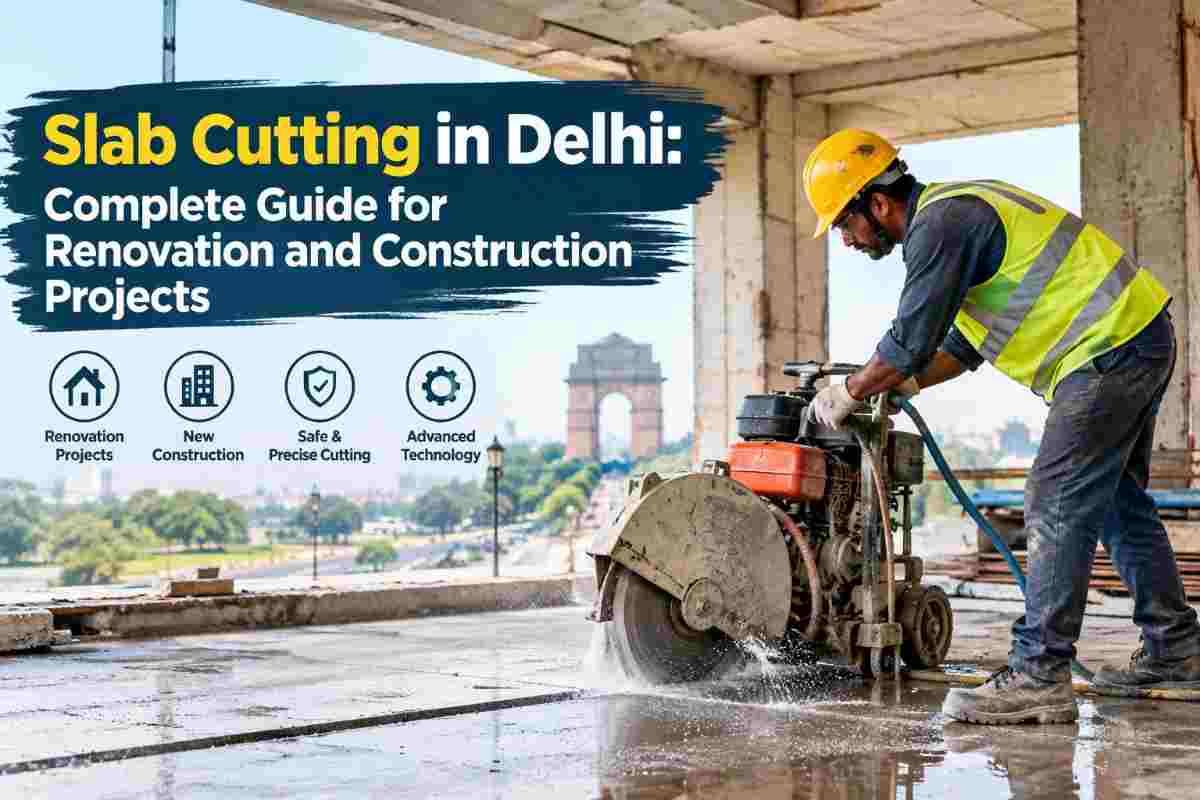
Delhi is a city that constantly rebuilds itself. Old homes in South Delhi are being redesigned, commercial buildings in Nehru Place and Connaught Place are being upgraded, and new projects keep rising across the NCR. Many of these jobs share one challenge: reinforced concrete slabs that must be modified without damaging the rest of the structure.
Whether you want a new staircase, a lift shaft, a plumbing duct or a larger opening for a renovation, you will need professional slab cutting. This guide covers what slab cutting is, the methods used, the cost factors, safety requirements and how to choose the right contractor in Delhi.
What Is Slab Cutting?
Slab cutting is the controlled removal or opening of sections in a concrete slab, such as a floor, roof or deck, using diamond-tipped cutting tools. Instead of breaking concrete with a heavy hammer or jackhammer, which causes cracks and vibration, diamond cutting slices through concrete and steel reinforcement cleanly.
The result is a straight, accurate cut with minimal damage to the surrounding structure. This matters in occupied buildings, heritage structures and multi-storey projects where a single wrong move can compromise structural integrity.
Companies like Core Cutting India specialise in this kind of precision work, using modern diamond equipment designed for RCC (reinforced cement concrete) structures.
Why Slab Cutting Is So Common in Delhi
Several local factors make slab cutting especially relevant in the capital:
- Aging buildings: Many Delhi homes and offices were built decades ago and now need layout changes, new staircases or added lift access.
- Vertical expansion: With limited land, owners often add floors or restructure interiors, which requires openings in existing slabs.
- Commercial fit-outs: Offices, showrooms, hospitals and malls regularly need new service openings for HVAC ducts, cabling and plumbing.
- Infrastructure projects: Metro stations, flyovers and underground utilities involve cutting thick concrete sections with precision.
- Pollution and noise concerns: Delhi's air quality rules and residential noise sensitivity make low-dust, low-vibration methods far more practical than demolition.
Common Applications of Slab Cutting
1. Staircase Openings
Adding an internal staircase to connect two floors is one of the most frequent jobs. A precise opening ensures the staircase fits the design and the slab keeps its strength around the cut.
2. Lift Shaft Openings
Retrofitting a lift into an existing building is increasingly popular, especially in older multi-storey homes. Cutting the shaft openings accurately across floors is essential for alignment.
3. Plumbing, Drainage and Electrical Openings
New bathrooms, kitchens and utility lines often need small to medium openings in the slab. Core drilling and slab sawing handle these cleanly.
4. HVAC and Duct Openings
Commercial buildings need openings for ducts, chillers and ventilation systems. Slab cutting allows accurate sizing without disturbing neighbouring areas.
5. Slab Removal and Demolition in Sections
When part of a floor or roof must be removed, cutting it into manageable blocks is far safer and quieter than breaking it down.
6. Expansion Joints and Trenches
Cutting joints or trenches in industrial floors, parking areas and driveways helps control cracking and allows pipe installation.
Slab Cutting Methods Explained
Choosing the right method depends on slab thickness, location, reinforcement density and access.
Floor Saw (Slab Saw) Cutting
A floor saw is a walk-behind machine with a large diamond blade that cuts horizontally across the slab surface. It suits flat, accessible surfaces such as floors, driveways and industrial slabs. It gives straight, even cuts up to a considerable depth and works quickly on large areas.
Wall Saw Cutting
A wall saw is mounted on a track and can cut vertically, horizontally or at an angle. It is useful when you need a deep cut in a thick slab or a cut that must be exact in position. Because it is track-guided, it delivers high accuracy even in difficult spots.
Wire Saw Cutting
A wire saw uses a diamond-impregnated wire looped around the concrete element and pulled through it. It can cut very thick or oddly shaped sections, and it works where a large blade cannot reach, such as massive slabs, bridge elements and heavy structural members.
Core Cutting (Core Drilling)
Core cutting uses a hollow diamond bit to drill circular holes. It is ideal for pipes, cables, drains and small service penetrations. Core drilling often works alongside slab sawing on larger projects.
Hand Saw / Ring Saw Cutting
Hand-held ring saws handle cuts in tight corners and finishing work where bigger machines cannot go.
Benefits of Diamond Slab Cutting Over Traditional Breaking
| Factor | Diamond Cutting | Jackhammer / Breaking |
|---|---|---|
| Accuracy | Very high, clean edges | Rough, uneven edges |
| Vibration | Minimal | High, risks cracks |
| Noise | Comparatively low | Very loud |
| Dust | Controlled with water cooling | Heavy dust |
| Structural safety | Surrounding slab stays intact | Risk of micro-cracking |
| Speed | Fast and predictable | Slow and messy |
| Cleanup | Simple | Extensive |
In a city where neighbours, RWAs and authorities are sensitive to disturbance, these advantages are a big reason people choose diamond cutting.
Step-by-Step: How a Professional Slab Cutting Job Works
Step 1: Site Inspection and Planning
Experts visit the site to check slab thickness, access, existing services and the building's condition. They also confirm the exact dimensions of the required opening.
Step 2: Structural Assessment
A qualified structural engineer should confirm that the slab can safely take the cut. Cutting through beams, columns or primary reinforcement without proper design can be dangerous.
Step 3: Scanning for Reinforcement and Utilities
Before cutting, the team checks for rebar, electrical conduits, water lines and post-tensioning cables. Ground Penetrating Radar (GPR) or similar scanning tools help avoid hitting hidden elements.
Step 4: Marking and Setup
The cutting lines are marked precisely. Machines are set up, and water supply, slurry control and safety barriers are arranged.
Step 5: Support and Propping
For larger openings or removal of sections, temporary props or shoring support the slab so loads are safely redistributed during the cut.
Step 6: Cutting
The diamond blade or wire cuts along the marked lines. Water cools the blade and suppresses dust.
Step 7: Removal and Cleanup
Cut sections are lifted or lowered carefully, slurry is collected, and the work area is cleaned. The edges are then ready for finishing, framing or reinforcement as required.
Safety Considerations You Should Never Skip
Slab cutting is skilled work, and cutting corners can lead to serious accidents or structural damage. Keep these points in mind:
- Get engineering approval. Never cut a load-bearing slab without a structural engineer's sign-off.
- Check reinforcement and hidden services. Cutting into live electrical lines or water pipes is dangerous and expensive.
- Provide proper support. Props and shoring prevent sudden sagging or collapse.
- Use trained operators. Experienced technicians understand blade behaviour, slurry handling and safe lifting.
- Wear protective equipment. Helmets, eye protection, ear protection, gloves and masks are essential.
- Control water and slurry. Contain it so it doesn't damage lower floors, electrical systems or neighbouring units.
Permissions and Regulations to Consider in Delhi
Rules vary by project and location, so always verify current requirements with the relevant authorities. In general, consider the following:
- Building approvals: Structural changes may need approval from local bodies such as the MCD, NDMC, DDA or the relevant cantonment or housing authority.
- Society/RWA permission: Apartments and gated communities often require a no-objection certificate and have rules about working hours.
- Noise and working hours: Many residential areas restrict noisy work to specific times.
- Pollution control norms: Delhi-NCR has dust-control and construction restrictions that can tighten during high-pollution periods. Wet cutting methods help keep your project compliant and responsible.
- Heritage zones: Buildings in heritage areas may have extra restrictions on structural alterations.
Your cutting contractor and structural consultant should guide you on what's required before work begins.
Factors That Affect Slab Cutting Cost in Delhi
There is no single flat rate, because every job differs. The main cost drivers are:
- Slab thickness and depth of cut: Thicker slabs need more time and more blade wear.
- Reinforcement density: Heavy rebar slows cutting and increases blade consumption.
- Total cutting length or area: Larger openings cost more.
- Method required: Wire saws and wall saws typically cost more than simple floor saw work.
- Site accessibility: Upper floors, tight spaces and difficult access need extra equipment and labour.
- Support and shoring needs: Safety measures add to the scope.
- Debris removal and disposal: Handling and transporting cut sections affects the total.
- Urgency and timelines: Tight schedules or night work may change pricing.
The best way to get an accurate figure is to request a site visit and a written quotation, rather than relying on generic per-foot numbers that can be misleading.
How to Choose the Right Slab Cutting Contractor in Delhi
Not all contractors offer the same quality. Look for these markers:
- Proven experience: Ask about similar projects, whether residential, commercial or industrial.
- Modern equipment: Diamond floor saws, wall saws, wire saws and core drilling rigs show capability.
- Trained technicians: Skilled operators reduce risk and rework.
- Clear quotation: The quote should state scope, method, inclusions and exclusions.
- Safety practices: Good contractors discuss propping, scanning and protective measures without being asked.
- Dust and slurry control: This reflects professionalism and respect for your property and neighbours.
- Reputation and transparency: Check reviews, ask for references and make sure there are no surprise charges.
A specialised provider such as Core Cutting India focuses on concrete cutting rather than treating it as a side service, which often means better equipment, expertise and results.
Common Mistakes to Avoid
- Skipping the structural check. This is the most dangerous mistake. Always involve an engineer.
- Choosing the cheapest bidder blindly. Very low quotes may mean poor equipment, untrained staff or hidden costs.
- Ignoring hidden utilities. Scan before you cut.
- Not planning debris removal. Heavy concrete pieces need a safe lowering and disposal plan.
- Overlooking permissions. Society or authority objections can halt a project midway.
- Poor communication with neighbours. A short advance notice avoids disputes.
Tips for a Smooth Slab Cutting Project
- Finalise your design and dimensions before work begins, because changes mid-project are costly.
- Clear the work area of furniture, valuables and fragile items.
- Make sure water and power are available for the equipment.
- Protect adjacent floors and finishes with covers and barriers.
- Coordinate timing with other trades such as plumbers, electricians and civil contractors.
- Plan finishing work, such as edge reinforcement, framing or waterproofing, right after cutting.
Slab Cutting vs. Demolition: Which Is Better for Renovation?
If your goal is to modify a building while keeping it standing, cutting is almost always the smarter choice. Demolition breaks concrete in a rough, uncontrolled way, which can weaken adjoining areas and create heavy noise and dust. Slab cutting preserves the surrounding structure, saves time on repairs and is better suited to occupied buildings. Demolition makes sense only when the entire element must be destroyed and replaced.
Frequently Asked Questions (People Also Ask)
What is slab cutting in construction?
Slab cutting is the process of cutting openings or sections in concrete slabs using diamond blades or wire saws. It is used for staircases, lift shafts, ducts, drains and partial slab removal.
How much does concrete slab cutting cost in Delhi?
Cost depends on slab thickness, reinforcement, cutting length, method, access and support requirements. A site inspection and written quote give the most accurate estimate.
Can you cut a concrete slab without damaging the structure?
Yes, when the work is planned by a structural engineer and done by trained professionals using diamond cutting equipment with proper propping. This is much safer than breaking concrete.
Is it safe to cut an RCC slab?
It is safe when done correctly. This means getting structural approval, scanning for rebar and utilities, using temporary supports and employing skilled operators.
What is the difference between core cutting and slab cutting?
Core cutting makes round holes, typically for pipes and cables. Slab cutting makes larger rectangular or custom-shaped openings and straight cuts, such as for staircases and lift shafts.
How long does slab cutting take?
Small openings can take a few hours, while larger or more complex projects may take days. Slab thickness, reinforcement and site access determine the timeline.
Do I need permission to cut a slab in my house in Delhi?
Often yes, especially if the cut affects structural elements or you live in a society or regulated area. Check with your local authority, RWA and structural engineer first.
Is slab cutting noisy or dusty?
Diamond cutting is far quieter and cleaner than breaking concrete. Wet cutting keeps dust under control, though some noise is unavoidable.
What equipment is used for slab cutting?
Common equipment includes floor saws, wall saws, wire saws, core drilling machines and hand-held ring saws, all using diamond-tipped tools.
Can slabs be cut in occupied buildings?
Yes. Low vibration, controlled dust and precise cutting make diamond methods well suited to homes, offices, hospitals and other occupied buildings.
Final Thoughts
Slab cutting is a powerful tool for renovation and construction in Delhi, letting you add staircases, install lifts, run utilities and reshape spaces without demolishing the building. The key to success is careful planning, structural approval, the right cutting method and an experienced contractor who prioritises safety and precision.
If you are planning a project in Delhi or the wider NCR, working with a specialist is the best way to protect your structure, budget and timeline. To discuss your requirements or request a site assessment, visit Core Cutting India and speak with a team that handles concrete cutting every day.