
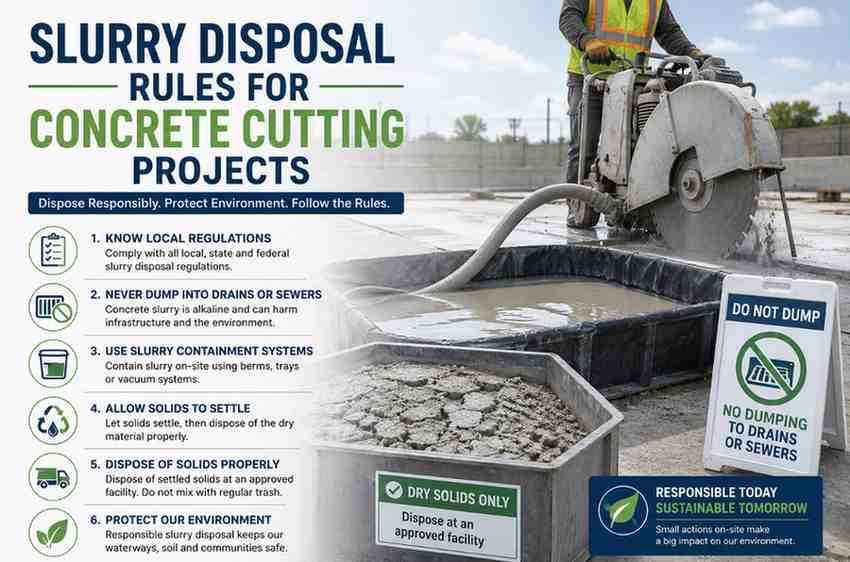
Introduction to Concrete Cutting Slurry and Its Environmental Impact
When undertaking major construction, core cutting, or structural remodeling projects, concrete cutting is an indispensable process. Whether utilizing diamond wire saws, wall saws, or handheld core drills, water is heavily applied to suppress hazardous dust, cool down expensive blades, and clear away debris. However, this mechanical necessity births a complex byproduct: concrete slurry.
Concrete slurry is a semi-liquid mixture consisting of suspended fine concrete particles, stone dust, water, and various chemical additives. While it keeps job sites compliant with air quality standards by eliminating airborne silica dust, the liquid waste itself poses a monumental environmental hazard. Untreated slurry is heavily caustic, boasting an alkaline pH level typically ranging between 11 and 12.
If allowed to run unchecked into storm drains, soil, or local water bodies, this high alkalinity, combined with total suspended solids (TSS), can choke aquatic life, burn vegetation, and permanently alter soil chemistry. Regulatory bodies globally and locally have heavily tightened environmental laws regarding how contractors manage, contain, and discard this byproduct.
For industry professionals, understanding and strictly following slurry disposal rules is no longer optional—it is a mandatory legal and ethical obligation. At [email protected], we champion sustainable engineering and adhere strictly to advanced environmental compliance frameworks to ensure every project balances structural precision with ecological safety.
Understanding the Anatomy of Concrete Slurry
Before diving into regulatory frameworks, it is vital to understand what makes concrete slurry so tightly regulated. When water mixes with Portland cement during cutting operations, a chemical reaction and suspension occur, creating a potent cocktail of:
-
Free Lime and Metal Hydroxides: These elements drive the pH level sky-high, making the fluid corrosive to touch and destructive to natural ecosystems.
-
Silica Dust Micro-Particles: Crystalline silica is suspended densely within the liquid. If the slurry dries out on surfaces, it turns back into breathable dust, posing severe occupational health hazards like silicosis.
-
Aggregates and Additives: Traces of fine sand, crushed stone, and performance-enhancing chemical admixtures used in specialized concrete mixes.
Because of these components, environmental protection agencies strictly prohibit treating concrete wastewater like ordinary site runoff.
Regulatory Frameworks: Governing Laws and Compliance
Construction and Demolition (C&D) waste management has undergone rigorous legislative evolution. Modern regulatory guidelines dictate strict accountability for waste generators, project developers, and specialized cutting contractors.
1. The Core Principles of Waste Management Rules
Modern environmental compliance relies heavily on core legal doctrines:
-
The Polluter Pays Principle: Under updated environmental frameworks, any entity that generates hazardous or construction-related liquid and solid waste is financially and legally responsible for its safe mitigation and disposal.
-
Extended Producer Responsibility (EPR): Developers and prime contractors must ensure that waste streams—including concrete debris and associated sludge—are tracked, accounted for, and processed through authorized channels.
2. Prohibition of Unregulated Dumping
Under standard pollution control mandates, it is strictly illegal to:
-
Wash concrete cutting slurry directly down municipal storm sewers, sanitary sewers, or open roadside drains.
-
Allow slurry to pool uncontained on unpaved soil where it can leach heavy minerals and chemicals into local groundwater tables.
-
Allow wet slurry to dry uncontrolled in open air where wind can disperse hazardous crystalline silica dust back into the atmosphere.
Best Practices for On-Site Concrete Slurry Management
Complying with environmental laws requires a proactive, systematic approach on the job site. Contractors partnering with [email protected] implement strict operational protocols to handle slurry efficiently from creation to final disposal.
| Stage | Action Item | Compliance Benefit |
| Source Capture | Use specialized vacuum attachments and wet-vac systems directly at the cutting blade interface. | Prevents runoff from spreading across the slab or floor. |
| Containment | Deploy physical berms, dams, or slurry tubs around the work zone. | Isolates high-pH wastewater from drains and unpaved ground. |
| Solidification | Mix eco-friendly polymer solidifiers or hardening agents into the collected liquid slurry. | Transforms hazardous liquid waste into stable, non-flowable solid cakes. |
| Hauling & Disposal | Transport solidified waste or contained liquid via watertight tankers to designated C&D recycling facilities. | Ensures total traceability and alignment with regional pollution control boards. |
Advanced Treatment Technologies for Concrete Wastewater
As environmental oversight grows stricter, basic containment is sometimes insufficient for large-scale infrastructure projects. Advanced technological solutions are increasingly integrated into modern concrete cutting operations:
1. Mobile Slurry Dewatering Units
For projects generating thousands of liters of concrete wastewater, mobile filter presses and mechanical separation units are deployed on-site. These systems separate the mixture into clean, recyclable water and dry filter cakes. The filtered water can often be routed right back into the core cutting saws, creating a closed-loop system that drastically cuts down water consumption.
2. Chemical Neutralization
Because concrete slurry is intensely alkaline, lowering its pH balance is necessary before any localized handling. Utilizing carbon dioxide $\text{CO}_2$ dosing systems or approved neutralizing buffers brings the pH down to neutral levels (around 6 to 8), significantly mitigating its hazardous classification and environmental threat.
Responsibilities of Contractors and Project Owners
Compliance is a shared responsibility across the entire chain of command on a construction site.
-
Project Owners & Bulk Generators: Must vet their sub-contractors to ensure they possess proper environmental clearance, modern dust and slurry extraction equipment, and a documented waste management plan.
-
Cutting Contractors: Are legally required to train their operators on wet-cutting compliance, maintain functional vacuum recovery rigs, and keep records of where slurry waste is ultimately dumped or processed.
-
Site Supervisors: Must routinely inspect washout areas, check containment berms, and verify that no accidental leaks compromise nearby storm drains or open trenches.
Failing to meet these criteria invites heavy environmental compensation fines, stop-work orders, and severe legal liabilities under regional pollution control acts.
Conclusion: Sustainable Cutting for a Greener Future
Concrete cutting is foundational to modern infrastructure, but it should never come at the expense of our environment. Navigating slurry disposal rules requires diligence, specialized equipment, and an unwavering commitment to green building standards.
By treating concrete slurry as a hazardous, manageable resource rather than a disposable nuisance, the construction industry can drastically shrink its ecological footprint. For professional, compliant, and environmentally conscious cutting solutions, reach out to us at [email protected]. Let us help you build the future safely, cleanly, and responsibly.
Target-Related Searches
-
Concrete slurry disposal regulations
-
C&D waste management guidelines for cutting
-
Eco-friendly concrete cutting practices
-
How to dispose of core cutting wastewater
-
Concrete slurry treatment methods
People Also Ask (PAA) Questions
-
Q: Can concrete slurry go down the drain?
-
A: No. Concrete slurry is highly alkaline and contains suspended solids that can block drainage systems and severely harm aquatic life. It must be contained and treated.
-
-
Q: What is the pH of concrete slurry?
-
A: Concrete slurry is caustic, typically exhibiting a high pH level between 11 and 12 due to unreacted cement, lime, and chemical additives.
-
-
Q: How do you solidify concrete slurry on a job site?
-
A: Contractors typically use specialized dry polymer solidifying agents mixed directly into the collected liquid waste, turning it into a stable solid that is easier to haul away to authorized landfills.
-
-
Q: What are the rules for C&D waste regarding liquid slurry?
-
A: Construction and Demolition waste regulations mandate proper containment, zero roadside or drain dumping, and tracking through authorized processing channels under the "Polluter Pays" framework.
-