
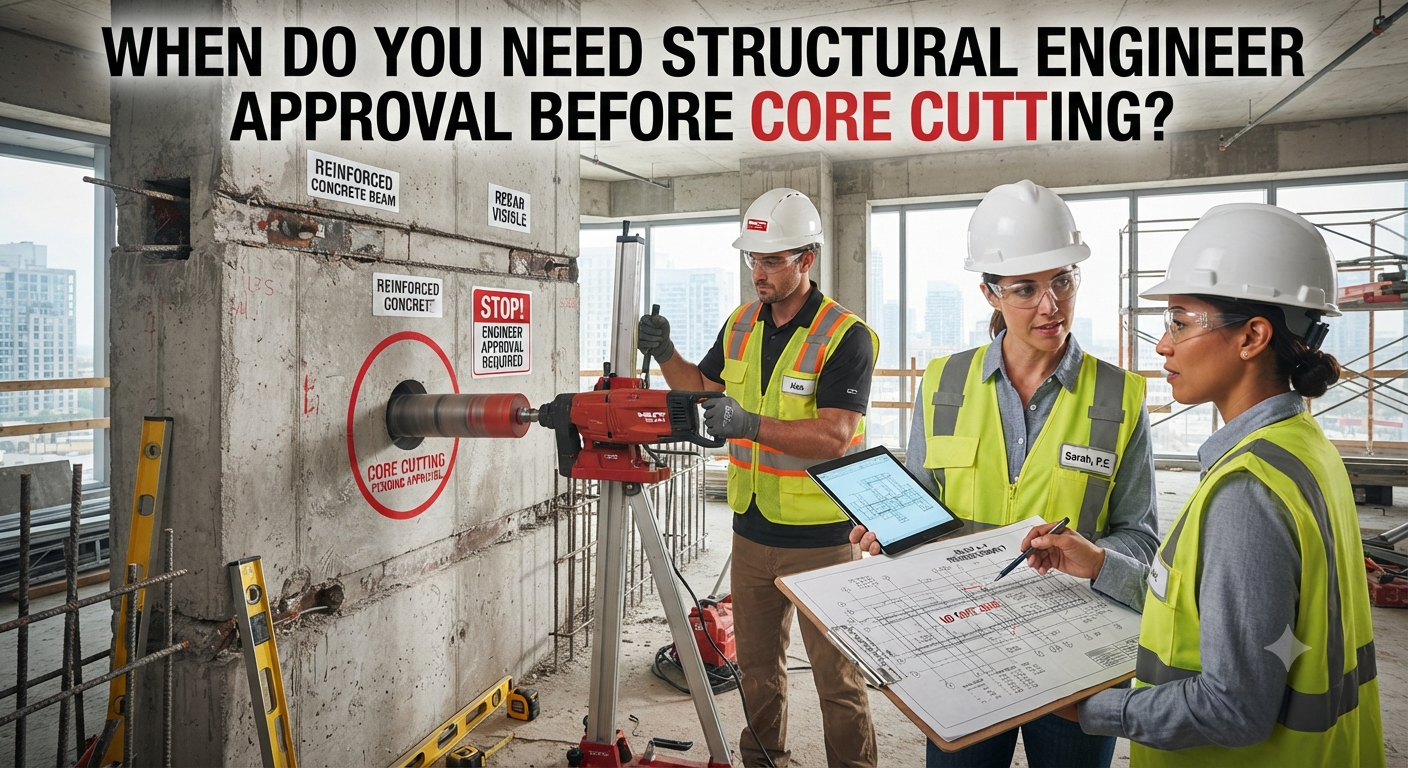
In the fast-paced world of construction and renovation, "core cutting"—the process of drilling precise circular holes through concrete, walls, or slabs—is an essential service. Whether you are installing new HVAC ducts, plumbing lines, or electrical conduits, core cutting provides a clean, vibration-free solution.
However, the precision of these tools often masks the underlying complexity of the structures they penetrate. A common question arises: Is it really necessary to get a structural engineer’s approval before every core cut?
At [email protected], we prioritize safety and structural longevity above all else. In this guide, we break down when you need professional oversight and why bypassing this step could jeopardize the entire project.
What is Core Cutting and Why Does It Matter?
Core cutting (or core drilling) uses diamond-tipped bits to penetrate reinforced concrete, asphalt, or masonry. Unlike traditional demolition, which creates excessive vibrations and damage, core cutting is designed to be non-invasive and highly accurate.
However, "non-invasive" does not mean "harmless." Every structural element—be it a beam, column, or load-bearing wall—is engineered to distribute weight in a specific way. Removing even a small core of concrete can potentially:
-
Sever internal reinforcing steel (rebar).
-
Damage post-tension cables, which keep slabs under constant stress.
-
Compromise the load-bearing capacity of a structural member.
When Is Structural Engineer Approval Mandatory?
You cannot treat every wall the same. While small, non-structural aesthetic drilling might seem simple, the following scenarios demand an expert consultation:
1. Modifications to Load-Bearing Elements
If you are drilling into columns, beams, shear walls, or load-bearing slabs, you are directly affecting the building's skeletal integrity. A structural engineer must assess whether the remaining material can still support the intended load after the hole is made.
2. Post-Tensioned Slabs
Post-tensioned concrete contains high-strength steel cables under extreme tension. Accidentally cutting one of these cables can result in immediate, catastrophic structural failure or long-term instability. Structural plans must be reviewed to map cable locations before any coring begins.
3. High-Density Reinforcement Areas
If an area contains a dense grid of rebar, removing even a portion of it can significantly reduce the structural capacity of the concrete member. An engineer can determine if the modification requires supplemental reinforcement, such as steel plating or carbon fiber wrapping.
4. Renovation and Older Structures
Older buildings may have experienced "creep," environmental weathering, or internal corrosion. An engineer can evaluate the current health of the structure to ensure that the added stress of a new hole won't trigger cracking or spalling.
The Risks of Bypassing Professional Approval
Attempting to core cut without structural verification is a gamble with high stakes.
-
Structural Failure: Compromising a key load-bearing point can lead to sagging, cracking, or, in extreme cases, partial collapse.
-
Utility Damage: Concrete often hides live electrical conduits, gas lines, and water pipes. Striking these not only costs a fortune in repairs but creates life-threatening hazards like electrocution or gas leaks.
-
Legal and Insurance Repercussions: If a project causes structural damage, you may find that insurance policies are voided because the work was conducted without proper engineering oversight or building consent.
Best Practices for Safe Core Cutting
To ensure your project remains safe and compliant, follow these industry-standard best practices:
-
Scanning Before Drilling: Always use Ground Penetrating Radar (GPR) or electromagnetic scanning to map internal rebar, conduits, and post-tension cables.
-
Consultation: If in doubt, involve a structural engineer. They can interpret the original building plans and determine the "safe zones" for drilling.
-
Wet Cutting: Use professional water-cooled diamond equipment to keep dust levels low and prevent blade overheating, which can cause micro-cracks in the surrounding concrete.
-
Professional Execution: Hire certified specialists who understand how to interpret scans and handle high-powered drilling equipment safely.
People Also Ask (PAA)
Q: Can I drill into a concrete column?
A: Never drill into a column without professional approval. Columns are critical load-bearing members; damaging the rebar inside can lead to significant structural failure.
Q: How do I know if a wall is load-bearing?
A: Consult your building’s original architectural and structural drawings. If these are unavailable, a structural engineer can perform an inspection to identify the load-path of the building.
Q: What is the benefit of core cutting over hammer drilling?
A: Core cutting uses diamond bits to provide a smooth, precise hole without the high-vibration impact of hammers, which helps maintain the integrity of the surrounding concrete.
Q: What happens if I accidentally hit rebar while coring?
A: While professional diamond bits can cut through rebar, it is dangerous if you haven't accounted for it in your structural plan. It can weaken the slab and lead to future corrosion if the hole isn't properly sealed.
Conclusion
Core cutting is an indispensable tool in modern construction, but it is not a "one-size-fits-all" task. Your building’s safety depends on the decisions made before the drill ever touches the concrete. By securing structural engineer approval when needed and relying on professional expertise, you protect both the people inside the building and your long-term investment.
For expert advice and professional core cutting services, reach out to our team at [email protected]. We ensure that your structural modifications are safe, precise, and compliant with all engineering standards.
Target-related searches: Core cutting services, concrete drilling safety, structural integrity analysis, GPR scanning for concrete, load-bearing wall modification, reinforced concrete cutting experts.