
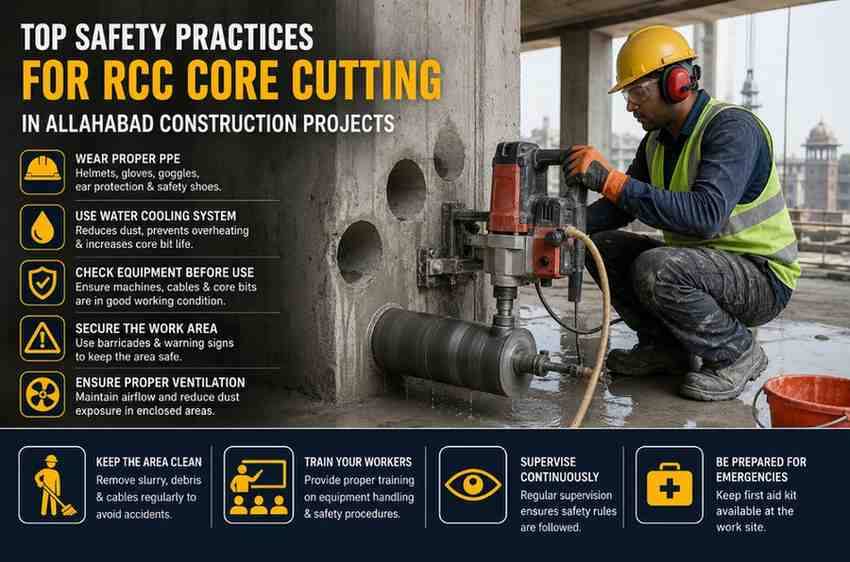
Modern construction projects in Allahabad (Prayagraj) depend heavily on RCC core cutting for installing pipelines, electrical conduits, HVAC systems, plumbing lines, elevators, and structural modifications. Although RCC core cutting is an efficient and precise process, it involves several risks that can affect workers, nearby structures, and project timelines if safety measures are ignored.
Whether it is a commercial building, residential tower, hospital, shopping mall, or industrial site, following proper safety practices is essential. Professional contractors prioritize worker safety, equipment inspection, dust control, and risk management before beginning any cutting operation.
For safe and professional RCC core cutting services, contact [email protected].
Understanding RCC Core Cutting
RCC core cutting is a process used to create precise openings in reinforced concrete structures using diamond-tipped drilling and cutting equipment. The process is commonly used for:
- Plumbing installations
- Electrical wiring
- HVAC systems
- Fire-fighting pipelines
- Lift shaft modifications
- Structural repairs
- Ventilation systems
- Utility installations
Since reinforced concrete contains steel reinforcement bars, specialized equipment and safety measures are necessary.
Why Safety Matters in RCC Core Cutting Projects
Ignoring safety procedures can lead to:
- Structural damage
- Worker injuries
- Electrical accidents
- Equipment failure
- Falling debris
- Dust-related diseases
- Project delays
- Legal penalties
Proper planning and implementation of safety measures reduce these risks significantly.
Common Risks in RCC Core Cutting Projects
Before discussing safety practices, it is important to understand the risks involved.
1. Structural Damage
Improper cutting can weaken columns, beams, or slabs.
2. Electrical Hazards
Hidden electrical wires can cause electric shocks.
3. Dust Pollution
Concrete dust may contain silica particles that affect lungs.
4. Noise Pollution
Heavy machinery generates high noise levels.
5. Falling Materials
Concrete debris may injure workers.
6. Equipment Accidents
Incorrect machine operation can result in serious injuries.
Safety Practice 1: Conduct a Detailed Site Inspection
Every RCC cutting project should begin with a complete site survey.
The inspection should include:
- Structural drawings
- Utility maps
- Beam locations
- Reinforcement positions
- Water pipelines
- Electrical cables
- Gas lines
A professional inspection minimizes unexpected accidents.
Safety Practice 2: Use Concrete Scanning Technology
Modern concrete scanners help identify:
- Reinforcement bars
- Electrical wiring
- Water pipes
- Hidden conduits
- Structural elements
Concrete scanning prevents accidental damage during drilling operations.
Benefits include:
- Improved safety
- Better accuracy
- Reduced repair costs
- Faster project completion
Safety Practice 3: Wear Proper Personal Protective Equipment (PPE)
PPE is mandatory for all workers.
Essential equipment includes:
- Safety helmets
- Gloves
- Steel-toe shoes
- Eye protection
- Ear protection
- Reflective jackets
- Respiratory masks
- Face shields
Workers should inspect PPE before every shift.
Safety Practice 4: Use Certified Diamond Core Cutting Machines
Professional-grade diamond tools ensure:
- Precise cutting
- Low vibration
- Reduced accidents
- Faster completion
- Better durability
Old or damaged equipment increases the chances of accidents.
Machine inspections should cover:
- Motor condition
- Blade quality
- Cooling systems
- Power cables
- Emergency switches
Safety Practice 5: Ensure Electrical Safety
Electrical accidents are among the biggest risks in RCC core cutting projects.
Follow these precautions:
- Inspect cables regularly.
- Use insulated wires.
- Install proper grounding.
- Keep connections dry.
- Use waterproof switches.
- Turn off nearby power lines when possible.
Electrical safety becomes even more important during wet drilling.
Safety Practice 6: Follow Wet Core Drilling Procedures
Wet core drilling helps reduce dust and heat generation.
Safety measures include:
- Controlled water flow
- Waterproof electrical systems
- Anti-slip flooring
- Proper drainage
- Ground-fault protection
Workers should never allow water accumulation near electrical equipment.
Safety Practice 7: Control Dust and Silica Exposure
Concrete dust contains silica, which can cause serious health issues.
Dust control methods:
- Wet drilling systems
- Vacuum extraction machines
- Dust collectors
- Respiratory masks
- Ventilation systems
Benefits of dust control:
- Better air quality
- Improved worker health
- Cleaner work environment
- Compliance with regulations
Safety Practice 8: Secure the Work Area
Before beginning core cutting:
- Install barricades.
- Display warning signs.
- Restrict public access.
- Create safety zones.
- Mark danger areas.
Proper site management reduces accidents significantly.
Safety Practice 9: Train Workers Properly
Only trained operators should handle core cutting machines.
Training should include:
- Machine operation
- Emergency procedures
- Safety guidelines
- Hazard identification
- Equipment maintenance
- First aid procedures
Regular safety training improves overall site performance.
Safety Practice 10: Inspect Equipment Daily
Daily inspections should cover:
- Drill bits
- Blades
- Motors
- Electrical cables
- Water systems
- Safety switches
Immediate repairs help avoid major accidents.
Safety Practice 11: Prevent Structural Weakening
Improper drilling may weaken structural elements.
Engineers should verify:
- Load-bearing walls
- Beam positions
- Column locations
- Slab thickness
- Reinforcement details
Never begin cutting without approval from structural experts.
Safety Practice 12: Use Proper Lifting Techniques
Large core drilling equipment is heavy.
Safe handling practices include:
- Team lifting
- Cranes
- Trolleys
- Lifting belts
- Mechanical assistance
Incorrect lifting may cause serious injuries.
Safety Practice 13: Manage Noise Exposure
Concrete cutting equipment generates significant noise.
Noise protection measures:
- Ear plugs
- Ear muffs
- Noise barriers
- Limited exposure time
- Equipment maintenance
Protecting hearing is essential for worker safety.
Safety Practice 14: Maintain Proper Communication
Construction sites require continuous communication.
Recommended practices:
- Hand signals
- Walkie-talkies
- Safety briefings
- Supervisor instructions
- Emergency communication plans
Good communication reduces mistakes.
Safety Practice 15: Prepare an Emergency Response Plan
Every site should have emergency procedures for:
- Electrical shocks
- Injuries
- Fire incidents
- Equipment failure
- Structural collapse
Emergency kits should include:
- First-aid supplies
- Fire extinguishers
- Emergency contact numbers
- Stretchers
Quick response can save lives.
Safety Practice 16: Follow Local Regulations
Construction projects in Allahabad must comply with safety regulations.
Contractors should ensure:
- Site permits
- Safety approvals
- Worker insurance
- Equipment certification
- Compliance documentation
Legal compliance protects both workers and project owners.
Safety Checklist for RCC Core Cutting Projects
Before starting work, confirm the following:
✓ Site inspection completed
✓ Structural approval obtained
✓ Utilities identified
✓ PPE available
✓ Equipment inspected
✓ Safety barricades installed
✓ Emergency plan prepared
✓ Electrical systems checked
✓ Dust-control measures active
✓ Workers trained
Benefits of Hiring Professional RCC Core Cutting Experts
Professional contractors provide:
- Advanced machinery
- Experienced operators
- Safety compliance
- Accurate cutting
- Faster project completion
- Minimal structural damage
- Cost-effective solutions
Choosing experts ensures smooth project execution.
Applications of RCC Core Cutting in Allahabad
RCC core cutting is widely used in:
- Residential buildings
- Commercial complexes
- Hospitals
- Schools
- Industrial facilities
- Hotels
- Shopping malls
- Metro projects
- Government infrastructure
Safety remains essential in every application.
Future of Safe RCC Core Cutting Technology
Modern innovations are improving safety standards through:
- AI-based scanning
- Smart sensors
- Dust-free systems
- Automated drilling
- Robotic cutting machines
- Real-time monitoring
These technologies will make construction projects safer and more efficient.
Conclusion
RCC core cutting plays an essential role in modern construction projects in Allahabad. However, safety should always remain the top priority. Proper planning, trained operators, advanced equipment, dust management, electrical precautions, and emergency preparedness ensure safe and successful project completion.
Whether you are modifying a residential building or working on a large commercial project, following these safety practices can prevent accidents and protect both workers and structures.
For safe and professional RCC core cutting services, contact: [email protected].