
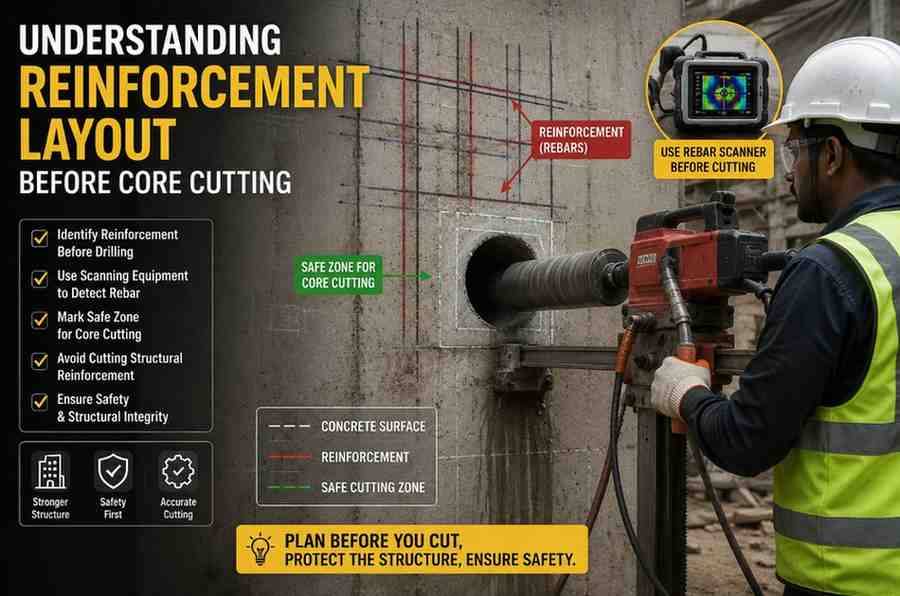
Concrete has been the backbone of modern construction for over a century, and hidden inside every slab, beam, column, and wall is a network of steel reinforcement that gives concrete its strength. When a contractor, plumber, electrician, or HVAC technician needs to create an opening in a concrete structure — whether for a pipe, a duct, a cable route, or a structural modification — the process is known as core cutting or core drilling. It sounds simple: mark a spot, drill a hole, move on. But beneath that simplicity lies one of the most overlooked yet critical steps in the entire process — understanding the reinforcement layout before core cutting begins.
At Core Cutting India, we have seen firsthand how skipping this step can turn a routine job into a costly, dangerous mistake. In this guide, we will walk through what reinforcement layout means, why it matters so much, the methods used to detect it, and the best practices every project should follow before a single core bit touches concrete.
What Is Reinforcement Layout?
Reinforcement layout refers to the arrangement, spacing, size, and depth of steel bars (rebar), mesh, or post-tensioned cables embedded within a concrete element. This layout is designed by structural engineers to ensure the concrete can handle tensile stresses, bending forces, and loads that plain concrete alone cannot withstand.
In a typical reinforced cement concrete (RCC) slab, you might find:
- Main reinforcement bars running in one direction to resist bending
- Distribution bars running perpendicular to the main bars
- Stirrups in beams and columns to resist shear forces
- Post-tensioned or pre-stressed cables in certain slabs and bridges
- Electrical conduits and utility lines that may already be embedded
Every one of these elements plays a specific structural role. When core cutting is planned without knowledge of where these elements sit, the risk of damage increases dramatically.
Why Reinforcement Layout Matters Before Core Cutting
1. Structural Integrity Protection
The single biggest reason to understand reinforcement layout before cutting is to protect the structural integrity of the building. Cutting through a main reinforcement bar in a load-bearing beam or column can significantly weaken that element's capacity to carry loads. Over time, or immediately under stress, this can lead to cracking, deflection, or in severe cases, structural failure.
2. Avoiding Damage to Post-Tensioned Cables
In many modern commercial buildings, post-tensioned (PT) slabs are common. These slabs contain high-tension steel cables under enormous stress. Accidentally cutting a PT cable is far more dangerous than cutting a regular rebar — the sudden release of tension can cause a violent snap-back, posing serious injury risk to workers and severe structural consequences to the building.
3. Preventing Utility Damage
Reinforcement layout scanning often reveals more than just steel. Electrical conduits, plumbing lines, and even fiber optic cables can run through concrete slabs. Cutting into an active electrical line can cause electrocution hazards, fires, or costly service disruptions.
4. Cost and Time Efficiency
Every accidental hit on rebar means a blunted or broken diamond core bit, wasted time repositioning the drill, and potential repair costs. Projects that skip proper scanning frequently face schedule delays and budget overruns that could have been avoided with a small upfront investment in scanning.
5. Compliance and Liability
Many regions and project specifications now require documented proof of rebar scanning before any core cutting work on structural elements. Skipping this step can expose contractors to liability issues, insurance complications, and non-compliance penalties, especially on commercial and infrastructure projects.
Common Techniques Used to Understand Reinforcement Layout
Before any core cutting service begins work, professional teams use a combination of non-destructive testing (NDT) methods to map out what lies beneath the concrete surface.
Ground Penetrating Radar (GPR) Scanning
GPR is the most widely used and reliable method for reinforcement detection today. It sends electromagnetic pulses into the concrete and reads the reflected signals to create a real-time image of what lies beneath — rebar, conduits, post-tensioned cables, voids, and even the concrete's condition.
Advantages of GPR scanning:
- Can detect reinforcement layout at depths of over 300mm depending on concrete density
- Provides real-time visual feedback on-site
- Non-destructive and safe for use on live structures
- Effective for identifying PT cables, which other methods may miss
Rebar Locators (Electromagnetic Covermeters)
Rebar locators work by detecting the magnetic field disruption caused by embedded steel. They are simpler and more affordable than GPR units but are generally limited to shallower depths and cannot reliably detect non-metallic utilities or provide detailed imaging.
Best suited for:
- Quick spot checks
- Shallow reinforcement detection in residential slabs
- Confirming rebar spacing before finalizing cutting points
Structural Drawings Review
Where available, reviewing the original structural drawings and reinforcement detailing plans gives valuable insight into expected bar sizes, spacing, and layout patterns. However, drawings alone should never be solely relied upon, as actual site conditions often differ from design documents due to construction tolerances, modifications, or as-built changes over the years.
Combining Methods for Accuracy
The most reliable approach — and the one Core Cutting India recommends and practices — is combining GPR scanning with physical verification and, where drawings exist, cross-referencing them with actual scan results. This layered approach minimizes the chance of surprises once cutting begins.
Step-by-Step Process: How Professionals Approach Core Cutting Layout Planning
- Site Assessment and Drawing Review The process begins by reviewing available structural drawings, if any, to understand the general reinforcement pattern of the slab, wall, or beam in question.
- GPR or Rebar Locator Scanning The exact area of the proposed core cut is scanned using GPR equipment. The technician marks the concrete surface to indicate the position, direction, and approximate depth of detected reinforcement.
- Marking Safe Cutting Zones Based on scan results, the team identifies a safe zone within the intended cutting area where no reinforcement or utility lines are present, or where relocation of the cut point is feasible without affecting design intent.
- Consultation with Structural Engineer (If Required) For load-bearing elements, especially beams, columns, or shear walls, it is best practice to consult a structural engineer before finalizing the cutting location, particularly if reinforcement cannot be avoided entirely.
- Core Cutting Execution Only after the above steps are completed does the actual diamond core drilling begin, using the appropriate core bit size and cooling method (wet or dry cutting) depending on the material and location.
- Post-Cut Inspection After cutting, the core hole is inspected to confirm it matches expectations and that no unintended reinforcement was compromised.
Risks of Skipping Reinforcement Layout Assessment
Ignoring this critical planning phase can lead to a range of problems:
- Structural weakening from severed main reinforcement bars
- Snap-back injuries from cutting into stressed post-tensioned cables
- Electrical hazards from hitting live conduits
- Water damage from puncturing hidden plumbing lines
- Rework costs from having to patch, relocate, or reinforce a poorly placed core hole
- Project delays due to safety stoppages or corrective engineering reviews
- Legal and insurance complications if structural damage occurs post-cutting
Best Practices for Contractors and Property Owners
For anyone planning core cutting work, whether for a small residential renovation or a large commercial fit-out, here are practical recommendations:
- Always hire a professional core cutting service that includes reinforcement scanning as part of their process, not as an optional add-on.
- Request scan reports and markups before cutting begins, especially on structural elements.
- Never rely solely on old drawings; site conditions can differ from design intent.
- For post-tensioned structures, always insist on GPR scanning, as electromagnetic locators may not reliably detect PT cables.
- Plan cutting locations with some flexibility, allowing minor repositioning if reinforcement is found in the exact intended spot.
- Keep documentation of scan results for future reference, warranty claims, or compliance audits.
Why Choose Core Cutting India
At Core Cutting India, reinforcement layout assessment is not treated as an afterthought — it is a mandatory step built into every project we undertake. Our teams are equipped with modern GPR scanning technology and experienced technicians who understand both the technical and structural implications of core cutting work.
Whether you need core cutting for plumbing installations, electrical conduit routing, HVAC ductwork, structural modifications, or utility upgrades, our process always begins with a clear understanding of what lies beneath the surface. This approach protects your structure, your budget, and the safety of everyone on site.
Conclusion
Core cutting may look like a straightforward mechanical task, but the safest, most efficient, and most professional approach always begins long before the drill touches concrete. Understanding reinforcement layout is the foundation of responsible core cutting practice — protecting structural integrity, avoiding dangerous accidents, preventing utility damage, and saving both time and money in the long run.
If you have an upcoming project that requires precise, safe, and professionally scanned core cutting services, reach out to Core Cutting India at [email protected]. Our team is ready to help you plan and execute your project with the safety and precision it deserves.
Core Cutting India | [email protected]