
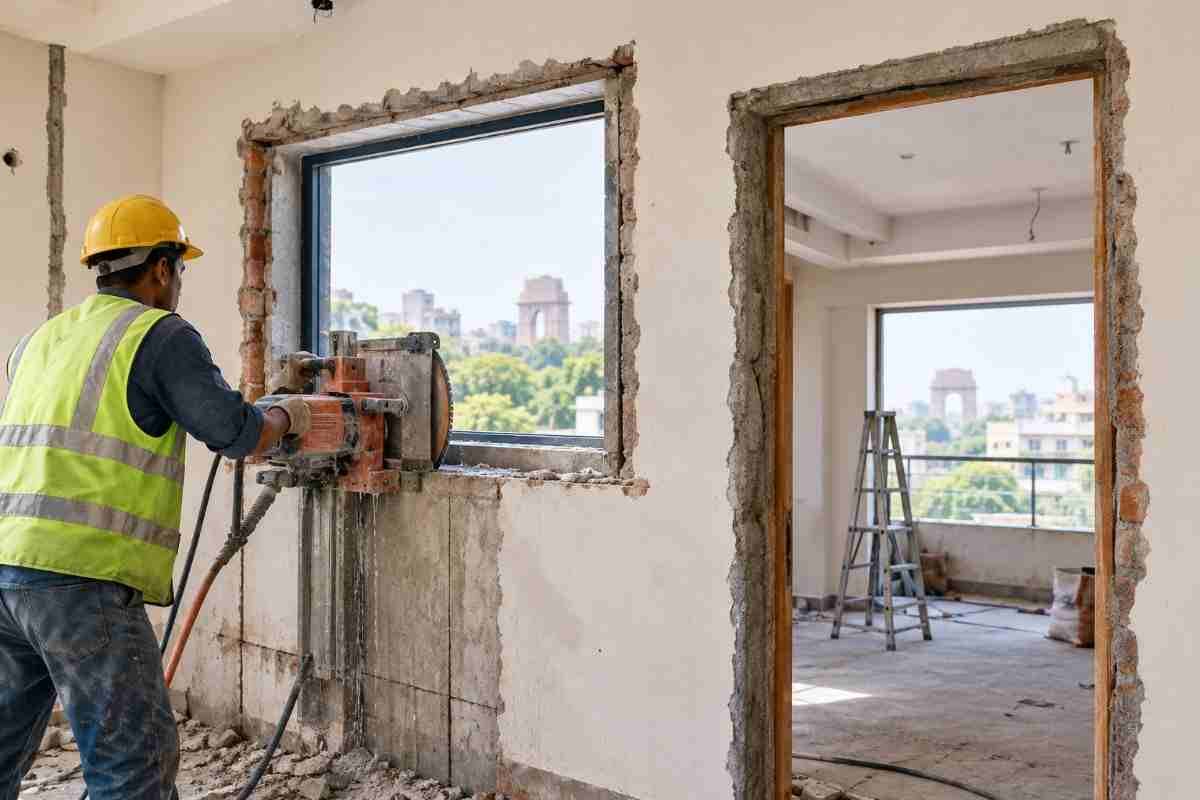
Delhi homes are constantly changing. A family grows, a floor is added, a rented portion gets its own entrance, or a dark room finally gets the window it always needed. Whatever the reason, many renovations eventually come down to one question: can we open up this wall safely?
The answer is almost always yes, provided the cutting is planned and done with the right method. Hammering at a wall with a chisel is how cracks, damaged ceilings and angry neighbours happen. Modern wall cutting gives you a clean opening that is accurate to the millimetre, with far less dust, noise and vibration.
This guide covers what wall cutting is, why it suits Delhi homes, which methods are used, what permissions you should think about, how much it costs, and how to choose a contractor. For professional support, you can explore the services at Core Cutting India.
What Is Wall Cutting?
Wall cutting is the process of making a precise opening in an existing wall using specialised machinery rather than manual demolition. The opening can be a new doorway, a window, a ventilation gap, a service duct, a lift or staircase opening, or a wider passage between two rooms.
The machines are diamond-tipped: diamond segments grind through brick, concrete and reinforced steel with a smooth, controlled cut. Because the cut line is marked in advance and the blade follows it, the edges come out straight and the surrounding structure stays largely undisturbed.
Why Delhi Homeowners Choose Wall Cutting During Renovation
1. Dense Construction and Shared Walls
Much of Delhi is built close together: row houses, builder floors, society apartments and old colony homes where walls are shared or just inches from the neighbour’s. Hammer-and-chisel demolition sends strong vibrations through these structures and can crack plaster, tiles and even adjoining walls. Diamond cutting is far gentler.
2. A Mix of Old and New Construction
Delhi has everything from old lakhori brick houses in the walled city to modern RCC frame buildings in Dwarka, Rohini and Greater Kailash. Each wall type behaves differently. Professional cutting lets the operator adapt the method to the material instead of forcing one approach on everything.
3. Extra Floors and Separate Entrances
Many families add a floor or convert part of a house for rental or relatives. That often means new doors for a private entry or new windows for light and airflow. Wall cutting makes these changes possible without rebuilding entire sections.
4. Better Light and Ventilation
Delhi summers are harsh and winters are smoggy, so cross-ventilation and natural light matter. A well-placed new window can improve comfort noticeably, and a clean cut means the frame fits properly, which helps with sealing and insulation later.
5. Cleaner Renovation Sites
Renovation in an occupied home is stressful. Wet cutting methods reduce airborne dust, which matters in a city where air quality is already a daily concern.
Common Wall Cutting Methods Used in Home Renovation
Not every opening needs the same technique. The right choice depends on wall thickness, material, location, and how much noise and dust you can tolerate.
Wall Saw Cutting
A wall saw is mounted on a rail fixed to the wall, with a large diamond blade that cuts straight lines through concrete and brick. It is ideal for door openings and large window openings because it produces sharp, straight edges and can cut deep through thick walls. It is the preferred method for RCC walls.
Wire Saw Cutting
A diamond wire loops around the section to be removed and cuts as it moves. Wire sawing suits very thick walls, awkward locations, or places where a large blade cannot fit. It is more specialised and typically used in heavier structural work.
Hand Saw / Ring Saw Cutting
A handheld ring saw can cut smaller openings and finish corners that a wall saw cannot reach. It is useful for compact spaces and tight corners.
Core Drilling
Core drilling uses a hollow diamond bit to cut circular holes. It is used for pipes, AC ducts, exhaust fans and cable lines. In window and door projects it is often combined with other methods to relieve corners or make starter holes.
Traditional Chiselling (Not Recommended for Structural Walls)
Chiselling and breaker machines are cheaper upfront but noisy, imprecise and hard on the surrounding structure. For anything beyond a small non-structural brick opening, most renovators now avoid them.
Understanding Your Wall Before You Cut
This is the most important step. Never cut a wall until you know what type it is.
Load-Bearing vs Non-Load-Bearing Walls
A load-bearing wall carries weight from the floors or roof above. A non-load-bearing (partition) wall only divides space. Cutting a load-bearing wall without proper support can weaken the structure and, in the worst case, lead to serious damage.
In older Delhi houses, many walls are load-bearing because the building has no RCC frame. In modern frame structures, the beams and columns carry the load, and infill brick walls are often non-structural, but this should always be confirmed by someone qualified.
Consult a Structural Engineer
Before cutting any wall that might be structural, get a structural engineer’s opinion. They can tell you:
- Whether the wall is load-bearing
- Whether the opening size you want is safe
- What lintel or beam is needed above a new door or window
- Whether temporary support (props or shoring) is required during cutting
Skipping this step to save a small fee can lead to expensive repairs later.
Know What Is Inside the Wall
Walls often hide electrical conduits, water pipes, gas lines and reinforcement bars. A professional team scans or inspects the area first, marks safe zones, and plans the cut so services are not damaged.
Permissions and Rules to Think About in Delhi
Rules vary by property type and area, so always check the current requirements for your specific building. In general, consider the following:
- Society or RWA approval: Apartment societies and many colonies require permission before structural changes. Check your society bylaws first.
- Builder floor and DDA flats: Alterations that affect the structure or the building’s external appearance may need approval or may be restricted. Confirm with the relevant authority or your property documents.
- Municipal rules: Structural alterations may need sanction from the local civic body. Requirements depend on the type and extent of work.
- Neighbours: Even where permission isn’t legally required, informing neighbours about noise and timing avoids disputes.
Because regulations change and differ from property to property, verify them with the relevant authority or a qualified professional before starting.
Step-by-Step: How Professional Wall Cutting Works
Here is what a well-run project looks like from start to finish.
1. Site inspection. The team visits, checks wall thickness and material, access for machines, water and power availability, and the working space.
2. Structural clearance. Where needed, a structural engineer confirms that the opening is safe and specifies the lintel or reinforcement.
3. Marking. The exact outline of the door or window is marked on the wall, usually with a level and laser line so edges are perfectly straight.
4. Protection. Floors, furniture and nearby surfaces are covered. Water supply and a slurry collection setup are arranged for wet cutting.
5. Cutting. The wall saw or chosen equipment follows the marked line. The section is cut free in pieces that can be safely lifted out.
6. Removal of debris. Cut sections are removed, and slurry and debris are cleared.
7. Finishing. Edges are checked and cleaned. Your carpenter, mason or fabricator then installs the frame, lintel, plaster and finish.
Wall Cutting for New Doors: Key Considerations
- Standard sizes: Plan door widths and heights according to the frame you intend to install. Interior doors are commonly narrower than main doors, but check with your carpenter.
- Lintel above the door: A new door opening usually needs a lintel to carry the load above it. This is a structural detail, so follow your engineer’s guidance.
- Floor level: Make sure the new opening aligns with the floor level on both sides to avoid steps or gaps.
- Swing direction and clearance: Think about which way the door opens and whether furniture, switches or other doors will interfere.
- Privacy and layout: A new door changes how people move through the house. Mark it out with tape on the floor before finalising.
Wall Cutting for New Windows: Key Considerations
- Sill height: Decide sill height based on privacy, furniture placement and safety, especially in homes with children.
- Orientation: A window on a sunny side brings light but also heat. Consider shading and glass type.
- Frame and sealing: Aluminium, UPVC and wooden frames each need slightly different opening tolerances. Share frame specifications with your cutting team beforehand.
- Lintel and support: Like doors, window openings need proper support above.
- Exterior look: In societies and colonies, external changes may be restricted, so check before changing the facade.
How Much Does Wall Cutting Cost in Delhi?
There is no single price, because cost depends on several factors:
- Wall material: Brick is generally easier than RCC. Heavily reinforced concrete takes longer and costs more.
- Wall thickness: Thicker walls mean more cutting depth and time.
- Size and number of openings: Larger or multiple openings change the total cost.
- Method used: Wall saw, wire saw and hand saw differ in equipment and labour.
- Access and location: Upper floors, narrow lanes or difficult access can raise the cost.
- Support and finishing work: Temporary shoring, lintel casting and plaster are separate from the cutting itself.
Rather than trusting a random per-square-foot figure, get a written quote after a site visit. A good contractor will explain what is included and what is not.
Benefits of Professional Wall Cutting Over Manual Demolition
| Factor | Professional Wall Cutting | Manual Breaking |
|---|---|---|
| Accuracy | Straight, clean edges | Uneven, rough edges |
| Vibration | Minimal | High, can crack nearby walls |
| Noise | Lower | Very loud |
| Dust | Controlled with water | Heavy dust |
| Structural risk | Lower with planning | Higher |
| Finishing effort | Less plaster and rework | More patching |
| Speed on tough walls | Faster on RCC | Slow and tiring |
Although professional cutting may look more expensive at first, savings on rework, repairs and cleanup often balance the cost.
Safety Practices You Should Expect
A reliable team follows basic safety standards:
- Inspecting the wall and surroundings before cutting
- Using proper personal protective equipment such as helmets, eye protection, gloves and hearing protection
- Supporting the cut section so it does not fall unexpectedly
- Keeping electrical equipment safely away from water
- Restricting access to the work area
- Clearing debris promptly to prevent trips and injuries
If a contractor seems casual about safety, that is a warning sign.
Common Mistakes to Avoid
- Cutting before checking the wall type. Always confirm whether it is load-bearing.
- Choosing only on price. The cheapest quote often leaves out supports, cleanup or finishing.
- Ignoring hidden pipes and wires. Get the wall inspected first.
- Skipping permissions. Society or authority objections can force you to undo work.
- Poor planning of size and position. Tape-mark the layout and live with it for a day before cutting.
- Forgetting finishing work. Budget for lintels, frames, plaster and paint.
- Not informing neighbours. A short heads-up prevents complaints.
How to Choose the Right Wall Cutting Contractor in Delhi
When comparing providers, look for:
- Experience with both brick and RCC walls in residential settings
- Modern equipment such as wall saws, wire saws and core drilling machines
- Clear, written quotations that list scope, method and exclusions
- Safety practices and trained operators
- Dust and slurry control suited to occupied homes
- Willingness to coordinate with your engineer, architect and carpenter
- References or past work you can check
Teams like Core Cutting India focus on precision cutting and drilling for residential and commercial projects, so you can discuss your requirements and get guidance on the right method for your wall.
Tips for a Smoother Wall Cutting Experience
- Plan early. Decide door and window positions before other renovation work begins, so you don’t cut finished surfaces twice.
- Clear the area. Move furniture, electronics and valuables away from the wall.
- Arrange water and power. Wet cutting needs a water source and a stable electricity supply.
- Protect floors. Cover flooring, especially marble and wooden finishes.
- Coordinate trades. Have the carpenter, fabricator and mason ready so the opening is not left exposed for long.
- Check weather and timing. Avoid cutting external walls when heavy rain is expected, and consider timing around society working-hour rules.
Frequently Asked Questions
Can I cut a new door in any wall of my house?
Not always. Non-load-bearing partition walls are generally easier to open, but load-bearing walls need structural assessment and proper support. Always have a structural engineer confirm before cutting.
Is wall cutting better than breaking the wall with a hammer?
For most renovation work, yes. Wall cutting gives cleaner edges, less vibration and better control, which reduces damage to the rest of the structure. Manual breaking is rough and unpredictable on anything but small, non-structural brick openings.
Does wall cutting create a lot of dust and noise?
Wet cutting greatly reduces dust, and diamond cutting is usually quieter than heavy breaker work. You should still expect some noise and a water-slurry mess, which a good team will manage and clean.
How long does it take to cut a door or window opening?
It depends on the wall material, thickness and size. Many standard residential openings can be cut within a day, though RCC walls, upper-floor locations or additional support work can take longer. Your contractor can give a realistic estimate after inspection.
Do I need permission to cut a wall in a Delhi flat?
Often you do, especially if the wall is structural or the change affects the exterior. Check your society rules, property documents and any local authority requirements before starting.
Can an old brick house in Delhi have new windows cut into the walls?
Yes, but older load-bearing brick walls need careful assessment and usually a properly designed lintel. Professional guidance is essential in older properties.
What happens to the wall after cutting?
After the opening is cut, a lintel is installed or checked where required, the frame is fixed, and the edges are plastered and painted. Wall cutting is the first step, and finishing completes the job.
Final Thoughts
Adding or enlarging doors and windows can transform how a Delhi home looks, feels and functions. More light, better airflow, smoother movement between rooms and a private entrance can all come from one well-planned opening. What separates a successful project from a stressful one is preparation: understand your wall, get structural advice, check permissions, and choose a team that uses the right method and takes safety seriously.
If you are planning a renovation and want precise, low-damage openings in your walls, speak with the professionals at Core Cutting India to discuss your project and find the right cutting solution for your home.