
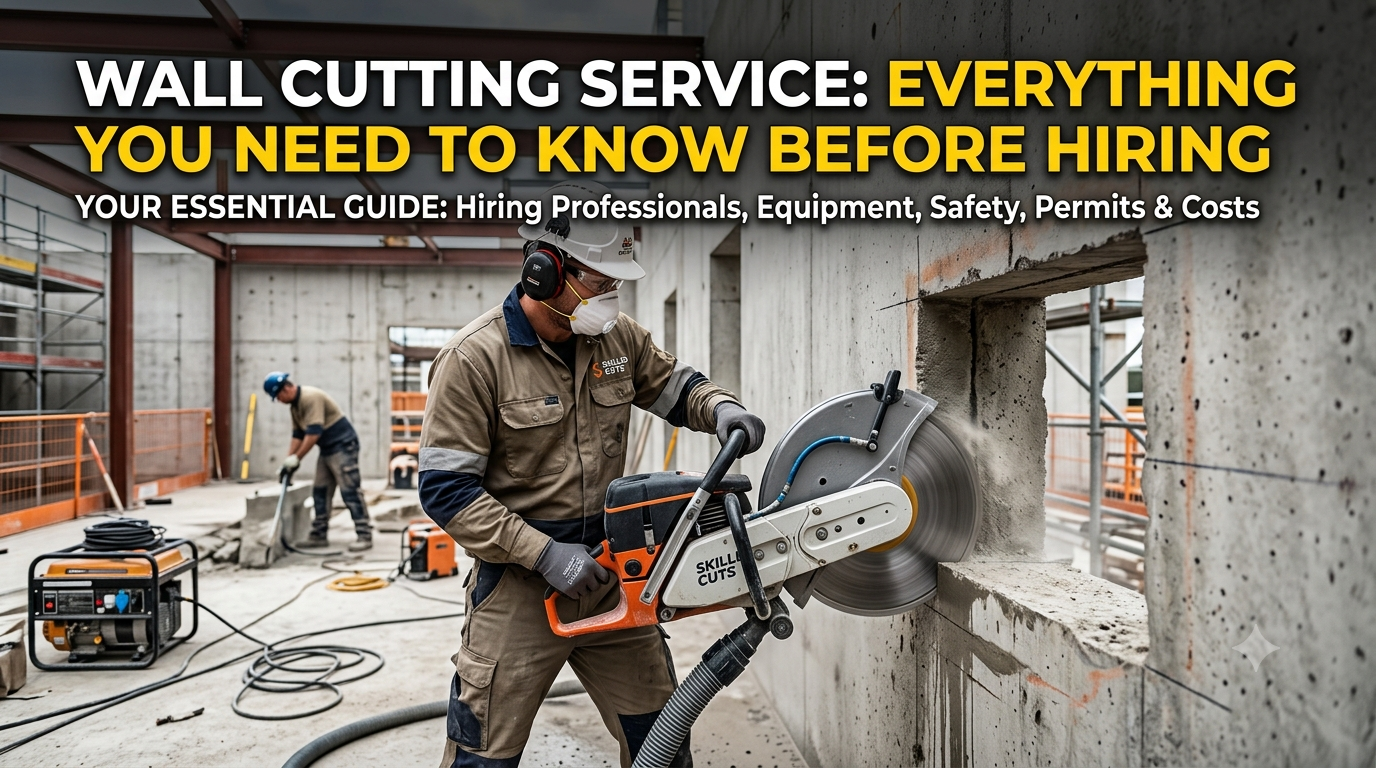
If you have ever needed to create a new doorway, install a window, run electrical conduits through a concrete wall, or demolish a section of a structure without disturbing the rest of the building, you have probably come across the term "wall cutting service." It sounds like a simple job on paper — cut through a wall — but in reality, it is a specialised construction activity that requires the right equipment, trained technicians, and a clear understanding of structural safety.
In India, where residential renovations, commercial fit-outs, and infrastructure upgrades are booming across cities like Delhi, Mumbai, Bangalore, Pune, Hyderabad, and Chennai, wall cutting has become an essential service for architects, contractors, and homeowners alike. This guide, brought to you by Core Cutting India ([email protected]), walks you through everything you need to know before hiring a wall cutting contractor — from the technology used to costs, safety, and how to choose the right team for your project.
What Is Wall Cutting Service?
Wall cutting is a precision construction technique used to cut through brick, concrete, or reinforced cement concrete (RCC) walls using specialised diamond-tipped machinery. Unlike traditional demolition, which involves hammers, chisels, or breaker machines that create excessive noise, dust, and structural vibration, wall cutting uses diamond blades or wire saws to produce clean, straight, and accurate cuts.
This service is widely used for:
- Creating new door or window openings in existing walls
- Removing sections of a wall for renovation or interior redesign
- Cutting openings for HVAC ducts, pipelines, or electrical conduits
- Demolishing partition walls in offices and apartments
- Structural modifications in old buildings during retrofitting
- Creating access points for lift shafts, staircases, or expansion joints
For example, a homeowner in Gurugram converting a two-bedroom flat into an open-plan living space would need a contractor to cut through a non-load-bearing partition wall cleanly, without damaging the flooring or adjoining walls. Similarly, a commercial property in Bandra Kurla Complex, Mumbai, undergoing an office fit-out might require wall cutting to install new server room doors or fire exit openings — all while the rest of the building remains operational.
Wall Cutting vs Core Cutting: What's the Difference?
People often use "wall cutting" and "core cutting" interchangeably, but they are not the same.
Wall cutting refers to making straight-line cuts through vertical wall surfaces — typically to remove sections, create openings, or demolish partitions. It is usually performed using a wall saw or a hand-held diamond cutter mounted on a track for precision.
Core cutting, on the other hand, involves drilling circular holes through walls, floors, or slabs using a core drilling machine. This is commonly used for passing pipes, cables, exhaust ducts, or plumbing lines through concrete structures. For instance, when a builder in Noida needs to run a drainage pipe from a bathroom on the fourth floor down to the ground floor, core cutting through each RCC slab is the method used.
Both services often go hand in hand on a single project, which is why many companies — including Core Cutting India — offer both wall cutting and core cutting under one roof.
Common Techniques Used in Wall Cutting
Understanding the techniques helps you evaluate whether a contractor is using the right approach for your project.
1. Diamond Wall Sawing
This is the most widely used method for cutting straight lines in concrete or brick walls. A diamond-segmented blade, mounted on a track-guided saw, moves along the wall to produce a clean, dust-controlled cut. It's ideal for creating door and window openings in RCC walls.
2. Hand-Held Diamond Cutting
For smaller or less accessible areas, technicians use hand-held diamond cutters. This method offers flexibility but is generally used for thinner walls or shorter cutting lengths, such as cutting a small vent opening in a kitchen wall.
3. Wire Saw Cutting
For thick structural walls, columns, or unusually shaped sections, wire saw cutting is used. A diamond-embedded wire loops around the structure and cuts through it gradually. This technique is common in bridge modifications and heavy industrial structures.
4. Wet Cutting vs Dry Cutting
Wet cutting uses water to cool the blade and suppress dust — ideal for indoor residential or commercial spaces where air quality matters. Dry cutting is faster but generates more dust and is usually reserved for outdoor or open-site work.
Why Professional Wall Cutting Matters
Many people assume any local mason or labour contractor can "break a wall" with a hammer and chisel. While that may work for minor cosmetic changes, it is a risky approach for structural walls. Here's why hiring a professional wall cutting service matters:
Precision: Diamond cutting tools produce straight, accurate cuts with minimal deviation — essential when you need a door frame or window frame to fit perfectly.
Structural Safety: Professionals assess whether a wall is load-bearing before cutting. Cutting into a load-bearing wall without proper support (like temporary shoring or lintel beams) can compromise the structural integrity of the entire building — a serious concern in multi-storey apartment complexes common in cities like Pune and Chennai.
Reduced Dust and Noise: Modern wall cutting machines use water suppression systems that minimise dust, making the process safer for indoor environments and less disruptive to neighbours — an important factor in densely populated Indian housing societies.
Faster Turnaround: Diamond cutting is significantly faster than manual breaking, which reduces overall project time and labour costs.
Minimal Collateral Damage: Unlike hammering, which often causes cracks to spread beyond the intended cutting area, precision cutting keeps the surrounding structure intact.
Factors That Affect Wall Cutting Cost in India
Wall cutting costs vary depending on several factors. While exact pricing depends on your location and project scope, here are the key variables that influence cost:
- Wall thickness and material – Cutting through a 4-inch brick partition is cheaper than cutting a 9-inch RCC load-bearing wall.
- Type of cutting required – Straight wall sawing, core drilling, or wire sawing each have different equipment and labour costs.
- Location and accessibility – A ground-floor shop in Ahmedabad is easier to access than a 12th-floor apartment in a high-rise in Mumbai, which may need special equipment transport.
- Reinforcement in the wall – Heavily reinforced RCC walls with steel bars require more cutting time and blade wear, increasing costs.
- Dust and noise control requirements – Projects requiring wet-cutting with water suppression systems (common in occupied residential buildings) may cost more than dry-cutting on an open construction site.
- Structural support needs – If temporary propping or shoring is required to maintain safety during and after cutting, this adds to the overall cost.
It is always advisable to get a site inspection and written quotation from a professional contractor rather than relying on a rough phone estimate.
Where Is Wall Cutting Service Commonly Used in India?
- Residential renovations: Combining two rooms, adding a new window for ventilation, or creating an opening for a modular kitchen chimney duct.
- Commercial fit-outs: Retail stores in malls across Bangalore and Hyderabad often need wall cutting to create new entrances or signage cutouts.
- Industrial facilities: Factories in Pune and Chennai use wall cutting to install ventilation systems, exhaust outlets, or machinery access points.
- Infrastructure projects: Metro rail projects in Delhi NCR and Mumbai frequently require precision concrete cutting for utility relocation and structural modifications.
- Heritage and retrofitting projects: Older buildings undergoing seismic retrofitting need careful, non-destructive cutting techniques to preserve structural elements while making necessary modifications.
Safety Considerations Before You Hire
Before hiring any wall cutting contractor, keep these safety points in mind:
Ask for a structural assessment. Especially in older buildings or apartments, always confirm whether the wall is load-bearing. A qualified contractor should either have a structural engineer's input or refuse to proceed without one if there's ambiguity.
Check for proper safety gear and protocols. Technicians should use protective eyewear, dust masks, and hearing protection, and the site should be cordoned off from residents or staff during the cutting process.
Verify machine maintenance. Poorly maintained diamond blades can overheat, crack, or cause uneven cuts, which increases both safety risk and rework costs.
Confirm dust and debris management. Especially for residential jobs, ask whether the contractor uses wet-cutting methods or dust extraction systems to keep the site clean.
Get everything in writing. A clear scope of work, cost breakdown, and timeline protects both parties and avoids disputes later.
How to Choose the Right Wall Cutting Contractor
With so many players in the market, here's a simple checklist to evaluate a wall cutting company before hiring:
- Experience and portfolio – Ask for examples of past residential, commercial, or industrial projects similar to yours.
- Equipment quality – Companies using modern diamond wall saws and core drilling machines tend to deliver cleaner, faster results than those relying on outdated tools.
- Trained technicians – Wall cutting is a skilled job; ensure the crew is trained in both operation and safety protocols.
- Transparent pricing – A reliable contractor will provide a detailed quotation after a site visit rather than a vague estimate over the phone.
- Insurance and liability coverage – This protects you in case of accidental damage to the property during the cutting process.
- Turnaround time – Ask for a realistic timeline, especially for commercial projects where downtime translates to lost revenue.
At Core Cutting India, we combine modern diamond cutting technology with experienced technicians to deliver safe, precise, and efficient wall cutting and core cutting services across residential, commercial, and industrial projects. Whether it's a small residential renovation or a large-scale commercial fit-out, our team ensures minimal disruption, controlled dust and noise, and structurally sound results.
Frequently Asked Questions (People Also Ask)
1. What is wall cutting service used for? Wall cutting service is used to create openings for doors, windows, ducts, and pipelines, or to remove sections of a wall during renovation, demolition, or structural modification, using precision diamond cutting equipment instead of manual breaking.
2. How much does wall cutting cost in India? Costs vary based on wall thickness, material, reinforcement, accessibility, and the cutting method used. It is best to request a site visit and written quotation from a professional contractor for an accurate estimate.
3. Is wall cutting safe for load-bearing walls? Cutting into a load-bearing wall requires careful structural assessment and, in many cases, temporary support or reinforcement to prevent compromising the building's stability. Always consult a structural engineer before cutting load-bearing walls.
4. What is the difference between core cutting and wall cutting? Core cutting involves drilling circular holes through walls, floors, or slabs, typically for pipes and cables. Wall cutting involves making straight-line cuts to remove wall sections or create openings for doors and windows.
5. How long does a wall cutting job take? Timelines depend on wall thickness, reinforcement, and project scope. A small residential opening may take a few hours, while larger commercial or industrial cutting projects can take one to several days.
6. Can wall cutting be done without creating dust or noise? Modern wet-cutting techniques significantly reduce dust by using water to cool the blade and suppress particles. While some noise is unavoidable, professional equipment and scheduling can minimise disruption, especially in residential buildings.
Final Thoughts
Wall cutting is no longer a rough, hammer-and-chisel job left to chance — it's a precise, technology-driven service that protects your property's structural integrity while giving you the flexibility to renovate, expand, or modify your space. Whether you're a homeowner in Delhi planning a kitchen remodel, a retail business in Bangalore setting up a new store, or a builder in Mumbai handling a large-scale project, hiring the right wall cutting contractor makes all the difference between a clean, safe result and a costly, disruptive mistake.
If you're planning a wall cutting or core cutting project anywhere in India, reach out to Core Cutting India at [email protected] for a professional site assessment and a transparent quotation. Our experienced team is equipped to handle everything from small residential openings to large commercial and industrial cutting projects — safely, efficiently, and with minimal disruption to your property.