
Introduction
Anyone who has ever managed a construction or renovation project in India has, at some point, run into the question: do we need wall cutting or core cutting here? On the surface, both sound like the same thing — cutting into concrete or masonry. But in practice, they are two very different techniques, used for very different purposes, priced very differently, and executed with completely different machinery.
Whether you're a builder in Mumbai adding a new doorway to an old RCC wall, a plumbing contractor in Bangalore who needs a clean hole for a pipe, or a homeowner in Delhi trying to install a split AC unit, understanding the distinction between wall cutting and core cutting can save you time, money, and structural headaches. This guide breaks down both methods in detail, with Indian examples, typical costs, and guidance on choosing the right one for your project. As a specialist concrete cutting company, Core Cutting India regularly fields questions from clients who use these terms interchangeably — so let's clear up the confusion once and for all.
What Is Wall Cutting?
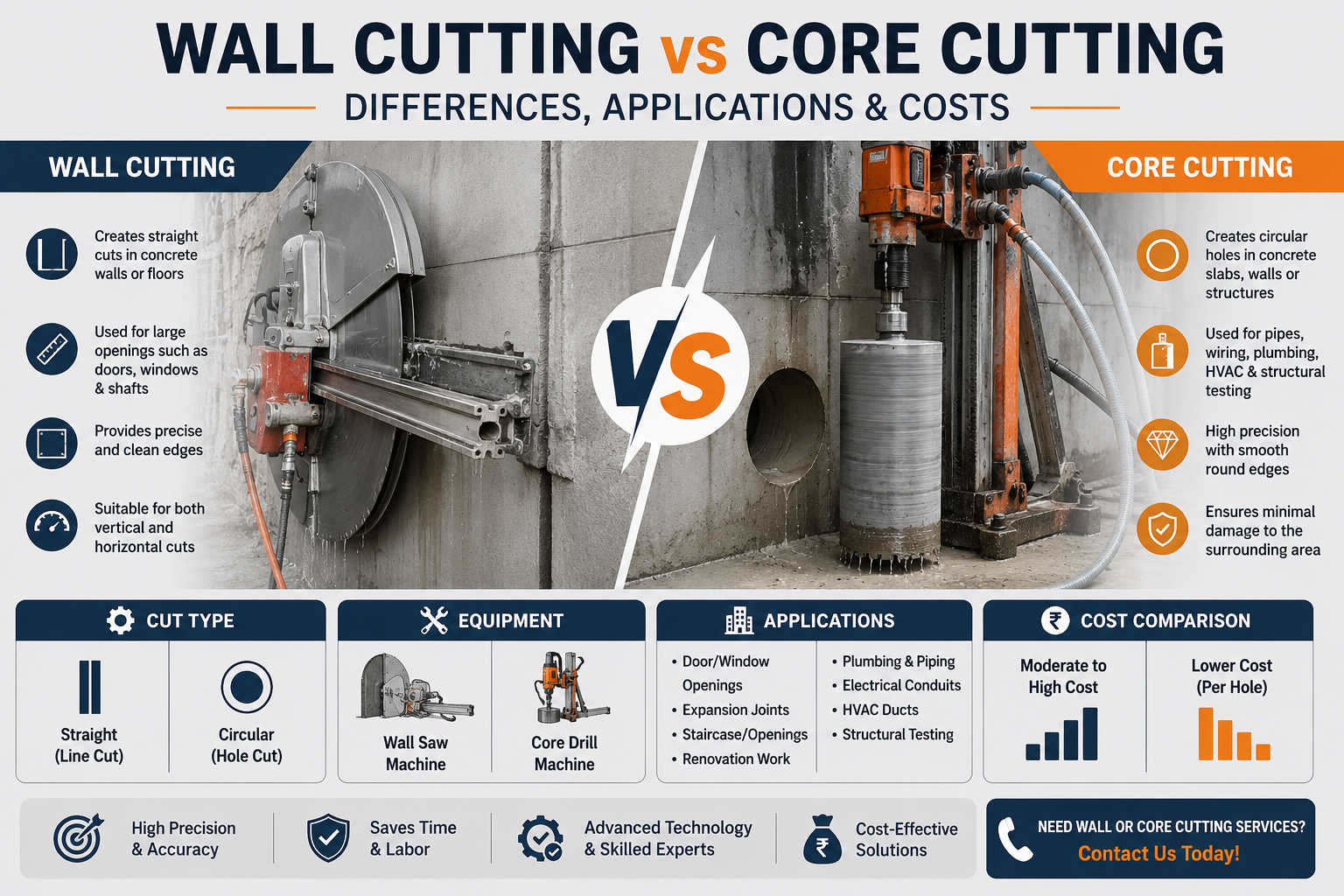
Wall cutting, often called wall sawing, is the process of making straight, precise cuts through concrete, brick, or RCC (reinforced cement concrete) walls and slabs using a diamond-bladed saw. The equipment used is typically a track-mounted wall saw or a hand-held diamond cutter, depending on the thickness and location of the wall.
Wall cutting is used when you need to create openings such as:
- New doorways or widened door openings in existing walls
- Window openings in RCC or brick walls
- Straight-line demolition cuts for partial wall removal
- Expansion joints in slabs and pavements
- Creating openings for staircases or lift shafts
For example, a residential builder in Pune converting a single door into a double door for a shop-front renovation would use wall cutting to get a clean, straight-edged opening without damaging the surrounding structure. Similarly, in commercial retrofit projects across Gurgaon and Noida, wall cutting is commonly used to merge two adjacent office units by cutting a large opening in a shared RCC wall.
The key advantage of wall cutting is precision along straight lines — the diamond blade produces a smooth, dust-controlled (when done with water-cooled equipment), vibration-free cut that doesn't stress the surrounding concrete the way traditional hammering or chiseling would.
What Is Core Cutting?
Core cutting, also known as core drilling, is the process of cutting circular holes through concrete, brick, or stone using a hollow diamond-tipped drill bit (core bit) attached to a core drilling machine. Unlike wall cutting, which produces straight lines, core cutting produces round holes of varying diameters — anywhere from 6mm for small utility holes up to 600mm or more for large service ducts.
Core cutting is the go-to method for:
- Plumbing pipe openings through RCC slabs and walls
- Electrical conduit and cable routing holes
- HVAC and AC pipe/duct openings (a very common request across Indian apartments)
- Drainage and sewage line penetrations
- Fire safety and sprinkler system installations
- Soil testing and structural sampling (extracting concrete cores for lab testing)
A very familiar Indian example: when a homeowner installs a split AC unit in Chennai or Hyderabad, the technician needs a clean, round hole through the exterior RCC wall for the copper piping and drainage — this is done using a handheld core cutting machine, typically a 50mm to 65mm diameter hole. Similarly, in high-rise residential towers in Mumbai and Bangalore, MEP (mechanical, electrical, plumbing) contractors rely heavily on core cutting to route plumbing risers and electrical shafts through multiple floor slabs.
Core cutting is prized for being clean, precise, and non-destructive to the surrounding structure — it doesn't create the cracks or micro-fractures that hammer drilling can cause, which is especially important in RCC structures where structural integrity must be preserved.
Key Differences Between Wall Cutting and Core Cutting
| Parameter | Wall Cutting | Core Cutting |
|---|---|---|
| Cut shape | Straight lines | Circular holes |
| Common use | Doors, windows, wall openings, demolition | Pipes, cables, ducts, drainage |
| Equipment | Diamond wall saw / hand-held cutter | Core drilling rig with diamond core bit |
| Typical size | Several feet in length | 6mm to 600mm+ diameter |
| Precision required | Straight-edge accuracy | Circular bore accuracy |
| Vibration/noise | Low with proper equipment | Very low, minimal vibration |
| Common Indian applications | Shop-front renovation, wall demolition, staircase openings | AC installation, plumbing, electrical conduits |
While both techniques use diamond-tipped tools and both are far superior to traditional hammer-and-chisel methods in terms of structural safety, the choice between them comes down entirely to what shape of opening your project needs.
Applications in Indian Construction Projects
Residential Projects
In Indian homes and apartments, core cutting is overwhelmingly used for AC pipe holes, water supply line penetrations, and bathroom drainage. Wall cutting, on the other hand, comes into play during renovations — for instance, converting a balcony into a room, which requires cutting an opening for a new window or sliding door.
Commercial and Retail Fit-Outs
Retail chains expanding into malls across Delhi NCR, Bangalore, and Mumbai frequently need wall cutting services to merge units, create new shop entrances, or cut openings for shutters and glass frontages. Core cutting is simultaneously used for routing electrical and data cabling through shared walls and slabs.
Industrial and Infrastructure Projects
In factories and warehouses, core cutting is essential for installing heavy machinery foundations, drainage systems, and utility risers through thick RCC floors. Wall cutting is used for creating large openings for conveyor systems, ventilation shafts, and structural modifications during factory upgrades.
Government and Infrastructure Works
Metro rail projects in cities like Delhi, Mumbai, and Bangalore use both techniques extensively — core cutting for cable and utility routing through station structures, and wall cutting for creating access points and structural modifications during station upgrades.
Cost Comparison: Wall Cutting vs Core Cutting in India
Costs for both services vary significantly based on city, wall thickness, reinforcement density, accessibility, and whether it's a residential or commercial job. That said, here are typical Indian market ranges as a general reference:
Wall Cutting Costs (approximate):
- Brick wall cutting: ₹80–₹150 per running foot (depending on thickness)
- RCC wall cutting: ₹200–₹450 per running foot (depending on thickness and reinforcement)
- Door/window opening (standard size): ₹3,000–₹8,000 per opening
- Large commercial openings: Priced on a per-project basis after site survey
Core Cutting Costs (approximate):
- Small diameter holes (25mm–75mm, e.g., AC pipe, plumbing): ₹300–₹800 per hole
- Medium diameter holes (100mm–200mm): ₹800–₹2,000 per hole
- Large diameter holes (250mm+, e.g., ducts, risers): ₹2,500–₹6,000+ per hole, depending on slab thickness
Factors That Affect Pricing
- Wall/slab thickness – Thicker RCC sections require more machine time and diamond wear, increasing cost.
- Reinforcement density – Heavily reinforced walls with closely spaced rebar take longer to cut through.
- Location and accessibility – Upper floors without lift access, tight spaces, or remote sites add to labor and equipment transport costs.
- Number of cuts/holes – Bulk work (e.g., multiple floors of a residential tower) typically comes at a lower per-unit rate.
- Dust and water management – Dustless or wet-cutting methods, often required in occupied buildings or hospitals, may carry a slight premium but are worth it for cleanliness and safety.
- Urgency – Same-day or emergency service requests in metro cities can carry additional charges.
It's worth noting that professional core and wall cutting, despite the visible cost, is almost always more economical in the long run than traditional breaking methods — it avoids collateral damage to the structure, reduces repair costs, and minimizes downtime, especially in occupied residential or commercial buildings.
Which Method Should You Choose?
The decision is largely dictated by the shape and purpose of the opening:
- Choose wall cutting if you need a doorway, window, wall removal, or any straight-edged structural opening.
- Choose core cutting if you need a hole for a pipe, cable, duct, or drainage line, or if you're extracting a concrete sample for structural testing.
In many real-world Indian projects — particularly high-rise residential and commercial builds — both techniques are used together. For instance, a builder renovating a commercial complex in Gurgaon might use wall cutting to create new shop entrances while simultaneously using core cutting to route new plumbing and electrical lines through the same walls and slabs.
Safety Considerations
Both wall cutting and core cutting involve cutting into structural elements, so it's critical to work with experienced contractors who understand load-bearing considerations. Cutting into a load-bearing wall or column without proper structural assessment can compromise the building's integrity. A qualified concrete cutting contractor will typically:
- Assess whether the wall or slab is load-bearing before cutting
- Use water-cooled diamond blades and bits to minimize dust and heat damage
- Follow proper safety protocols, especially in occupied buildings
- Provide structural reinforcement recommendations (like lintels) where needed after large wall openings
Conclusion
Wall cutting and core cutting may both fall under the broader umbrella of "concrete cutting," but they serve distinctly different purposes. Wall cutting is your solution for straight-line openings — doors, windows, and structural modifications — while core cutting is the precise, clean method for circular penetrations needed by plumbers, electricians, and HVAC technicians. Knowing which one your project needs — and understanding the cost factors involved — helps you plan better, budget accurately, and avoid unnecessary structural risk.
If you're planning a renovation, new installation, or infrastructure project anywhere in India and need professional, safe, and precise concrete cutting services, Core Cutting India offers both wall cutting and core cutting solutions tailored to residential, commercial, and industrial projects. Get in touch for a site assessment and accurate quote at [email protected].
Website: Core Cutting India | Email: [email protected]