
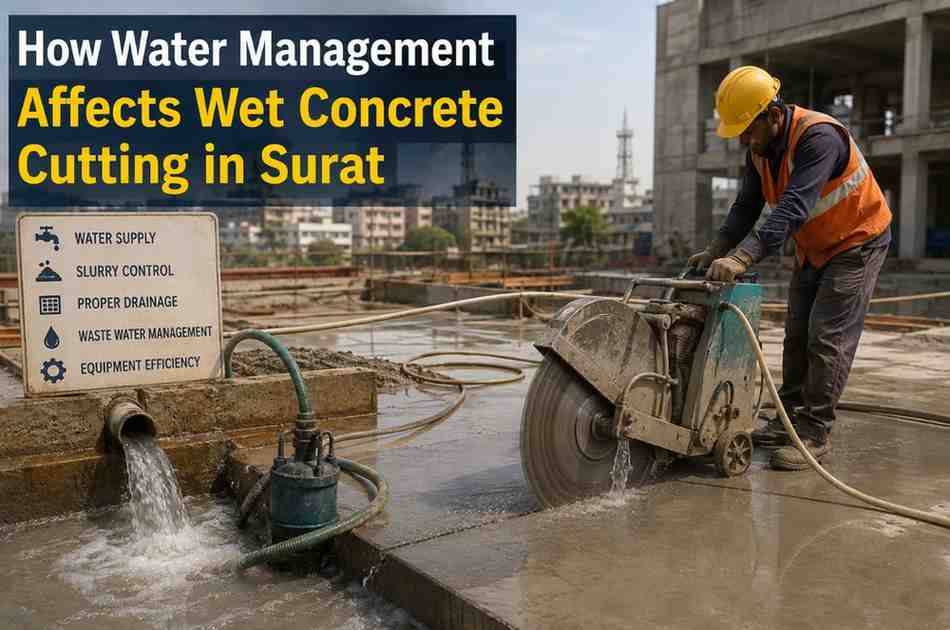
Surat, one of Gujarat's fastest-growing industrial and commercial hubs, is witnessing a construction boom across residential, commercial, and infrastructure sectors. From high-rise buildings in Vesu and Adajan to industrial units in Pandesara and Sachin GIDC, concrete cutting has become an essential part of modern construction and renovation work. Whether it's cutting concrete slabs, walls, floors, or roads, the process demands precision, safety, and efficiency.
One factor that often goes unnoticed but plays a critical role in the success of concrete cutting projects is water management. At Core Cutting India ([email protected]), we have seen firsthand how proper water handling can make the difference between a smooth, professional cutting job and a project riddled with delays, equipment damage, and safety hazards. In this blog, we explore how water management directly affects wet concrete cutting in Surat and why it deserves more attention from contractors, builders, and property owners alike.
Understanding Wet Concrete Cutting
Wet concrete cutting is a technique where water is continuously supplied to the cutting blade during the cutting process. Unlike dry cutting, which relies solely on the blade's mechanical action, wet cutting uses water to cool the diamond blade, reduce friction, and suppress dust generated during the cut.
This method is widely preferred for cutting through reinforced concrete, thick slabs, walls, and roads because it offers cleaner cuts, extends blade life, and significantly reduces airborne dust — a major concern in densely populated cities like Surat where construction sites are often located close to residential areas, markets, and textile units.
Why Water Plays Such a Critical Role
Water isn't just a supporting element in concrete cutting; it is central to the entire process. Here's why:
1. Blade Cooling and Longevity
Diamond blades used in concrete cutting generate intense heat due to friction against hard aggregate and reinforced steel. Without adequate water flow, blades can overheat, warp, or lose their diamond segments prematurely. In Surat's hot and humid climate, especially during summer months when temperatures regularly cross 38–40°C, the risk of blade overheating increases substantially. Proper water management ensures a steady, sufficient flow that keeps blade temperatures within safe operating limits, extending tool life and reducing replacement costs for contractors.
2. Dust Suppression and Air Quality
Dry cutting concrete releases fine silica dust into the air, which poses serious respiratory health risks to workers and nearby residents. Surat's rapid urbanization means many cutting jobs happen near schools, hospitals, and commercial complexes. Water acts as a natural dust suppressant, binding fine particles and preventing them from becoming airborne. Effective water management — meaning the right pressure, flow rate, and coverage — ensures dust suppression works as intended, protecting both workers' health and the surrounding community's air quality.
3. Precision and Clean Cuts
Water lubricates the cutting interface, allowing the blade to move smoothly through concrete without binding or chattering. This results in cleaner, more accurate cuts with smoother edges — an important factor for structural work, tile installation, or pipe laying where precision matters. Poor water flow can cause uneven cuts, blade drift, and rework, which ultimately increases project costs and timelines.
4. Equipment Protection
Concrete cutting machinery, including hydraulic saws and wall saws, relies on consistent water flow not just for the blade but also for cooling internal components. Inconsistent or inadequate water supply can lead to overheating of motors and hydraulic systems, resulting in costly equipment breakdowns and project delays.
Challenges of Water Management in Surat's Construction Environment
While the benefits of wet cutting are clear, managing water effectively on Surat's construction sites comes with its own set of challenges.
Water Scarcity and Seasonal Variability
Gujarat, including Surat, experiences seasonal water stress, particularly during the pre-monsoon months of March to May. Construction sites competing for limited water resources must plan carefully to ensure sufficient water is available for cutting operations without straining local supply, especially in areas where municipal water access is limited or metered strictly.
Wastewater and Slurry Disposal
Wet concrete cutting produces slurry — a mixture of water, cement particles, and concrete dust. If not managed properly, this slurry can clog drainage systems, contaminate local water bodies, or violate environmental norms set by the Surat Municipal Corporation (SMC) and Gujarat Pollution Control Board (GPCB). Responsible contractors must implement slurry containment and disposal systems to prevent runoff from affecting nearby roads, drains, or the Tapi River basin.
Site Logistics in Dense Urban Areas
Surat's mix of narrow lanes in older parts of the city and high-density commercial zones like Ring Road and Ghod Dod Road creates logistical challenges for water supply and slurry management. Tankers, storage tanks, and pumping equipment must be positioned carefully to avoid disrupting traffic or neighboring businesses while maintaining consistent water flow to cutting equipment.
Monsoon Considerations
During Surat's monsoon season, excess rainwater can complicate slurry containment and site drainage, requiring additional pumps and barriers to prevent uncontrolled runoff. Conversely, monsoon humidity can also affect curing times for any patch work following concrete cutting, requiring coordination between water management and construction scheduling.
Best Practices for Effective Water Management in Wet Concrete Cutting
At Core Cutting India, we follow a structured approach to water management that ensures efficiency, safety, and environmental compliance on every project across Surat.
1. Pre-Project Water Audits
Before starting any cutting job, we assess the water requirements based on the scope of work — whether it's floor sawing, wall sawing, core drilling, or road cutting. This helps us plan water storage, supply lines, and backup arrangements in advance, particularly important during Surat's dry months.
2. Controlled Water Flow Systems
Using calibrated water flow attachments on cutting equipment ensures the right amount of water reaches the blade — not too little (risking overheating) and not too much (leading to excess slurry and waste). This balance is key to both performance and sustainability.
3. Slurry Containment and Recycling
We use containment barriers, vacuum slurry collectors, and settling tanks to capture cutting slurry before it can enter drains or open ground. In many cases, settled water can be filtered and reused for subsequent cutting passes, reducing overall water consumption — an increasingly important practice as Surat's industrial and construction sectors face growing scrutiny over water usage.
4. Compliance with Local Regulations
Our teams stay updated on Surat Municipal Corporation guidelines and Gujarat Pollution Control Board norms regarding wastewater discharge and dust control at construction sites. This ensures every project we undertake meets legal and environmental standards, protecting both our clients and the community.
5. Trained Personnel
Water management isn't just about equipment — it requires skilled operators who understand how to adjust water flow based on concrete density, blade type, and cutting speed. Our trained technicians monitor water supply continuously throughout each job to maintain optimal cutting conditions.
The Cost and Efficiency Angle
Proper water management doesn't just improve cutting quality — it directly impacts project costs and timelines. Consider the following:
- Reduced blade replacement costs: Well-cooled blades last significantly longer, reducing the frequency of costly replacements.
- Fewer equipment breakdowns: Consistent water supply prevents overheating-related failures, minimizing downtime.
- Lower rework rates: Clean, precise cuts reduce the need for corrective work, saving both time and material costs.
- Compliance savings: Avoiding fines or project delays due to environmental violations protects overall project budgets.
For contractors and property owners in Surat, partnering with a concrete cutting service that prioritizes water management translates into tangible savings and smoother project execution.
Why Choose Core Cutting India for Wet Concrete Cutting in Surat
At Core Cutting India, we understand that water management is not an afterthought — it's a core part of delivering high-quality, safe, and environmentally responsible concrete cutting services. Our experience across Surat's diverse construction landscape, from residential renovations to large-scale industrial projects, has taught us that attention to detail in water handling leads to better outcomes for every stakeholder involved.
We offer a full range of concrete cutting services including wall cutting, floor sawing, core drilling, road cutting, and demolition support, all backed by rigorous water and slurry management protocols. Our team is equipped to handle projects of any scale while ensuring minimal disruption to surrounding areas and full compliance with local environmental guidelines.
Conclusion
Water management is far more than a technical detail in wet concrete cutting — it's a factor that influences safety, precision, cost, and environmental impact. In a city like Surat, where rapid construction activity intersects with water scarcity concerns and dense urban living, getting water management right is essential for any successful cutting project.
Whether you're a builder, contractor, or property owner planning a concrete cutting job in Surat, partnering with an experienced team that understands these nuances can save you time, money, and potential regulatory headaches. Core Cutting India brings the expertise, equipment, and commitment to responsible water management needed to deliver clean, precise, and compliant concrete cutting services across Surat.
For more information or to discuss your next project, reach out to us at [email protected].
Frequently Asked Questions
Why is water used in concrete cutting? Water cools the diamond blade, reduces friction, suppresses dust, and helps achieve cleaner, more precise cuts while protecting equipment from overheating.
What is the difference between wet cutting and dry cutting concrete? Wet cutting uses a continuous water supply to cool the blade and control dust, while dry cutting relies on the blade alone, often generating more heat and airborne dust.
How much water is required for wet concrete cutting? Water requirements vary based on blade size, concrete thickness, and cutting speed, but a steady, calibrated flow is essential throughout the cutting process to maintain performance.
Is wet concrete cutting better than dry cutting? For most applications, especially thick or reinforced concrete, wet cutting is preferred due to better dust control, blade longevity, and cut quality, though dry cutting may suit smaller, quick jobs where water access is limited.
How does water management help control dust during construction? Proper water flow binds dust particles at the source, preventing them from becoming airborne and protecting worker health and nearby air quality.
Can wastewater from concrete cutting be reused? Yes, with proper settling and filtration systems, slurry water can often be treated and reused for subsequent cutting passes, reducing overall water consumption on site.