
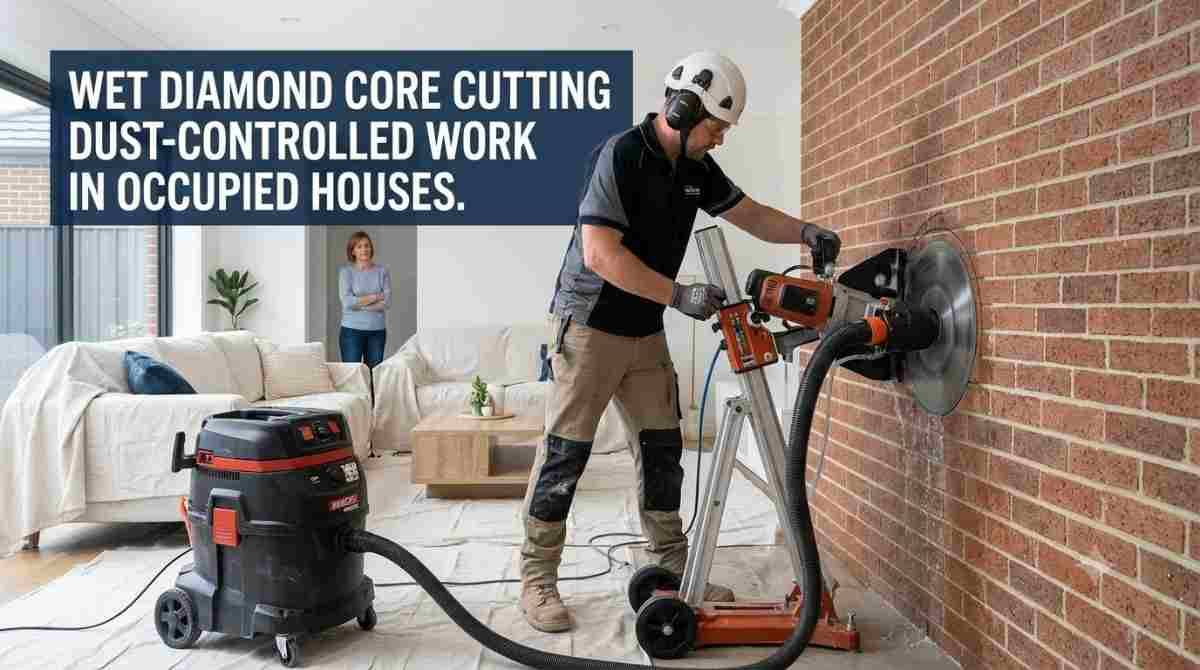
Undertaking home renovations, structural modifications, or utility installations often brings an exciting vision of a modern, customized living space. Whether you are adding a new split air conditioning unit, upgrading plumbing lines, installing modern exhaust systems, or creating new architectural openings, structural alterations are frequently required. However, for homeowners living in occupied houses, apartments, or multi-family residential complexes, these upgrades come with a massive deterrent: the dreaded construction mess.
Traditional methods of drilling and cutting through hard masonry, reinforced concrete, stone, and brickwork are notoriously destructive. They generate thick, billowing clouds of fine silica dust that infiltrate every corner of the home, settling on furniture, electronics, and HVAC ductwork. Beyond the sheer nuisance of deep-cleaning fine dust for weeks, this particulate matter poses serious health risks, particularly crystalline silica dust, which can cause severe respiratory issues.
Fortunately, modern construction technology has evolved. Today, professional contractors utilize advanced techniques that prioritize cleanliness, safety, and structural integrity. At the forefront of this innovation is wet diamond core cutting. When executed by skilled professionals from Core Cutting India, wet diamond core cutting offers a revolutionary, dust-controlled solution specifically engineered for sensitive environments like occupied houses.
In this comprehensive guide, we will explore the science behind wet diamond core cutting, why it is the ultimate choice for inhabited homes, how dust and water are meticulously managed, and why partnering with experts at +91 70096 79903 guarantees a seamless, stress-free renovation experience.
https://corecuttingindia.com/rate-calculator/
Understanding Wet Diamond Core Cutting: The Science and Mechanism
To appreciate why wet diamond core cutting is so effective, it helps to understand what the process entails and how it differs from conventional drilling methods.
What is Diamond Core Cutting?
Core cutting is a specialized drilling technique designed to create clean, circular holes through hard construction materials such as reinforced concrete, brick, asphalt, cinder block, and stone. Instead of hammering or shattering the material—which causes micro-fractures, structural weakness, and jagged edges—core cutting uses a rotary core drill bit.
The drill bit consists of a hollow steel tube (the barrel) affixed with diamond-impregnated segments at the cutting edge. Diamonds are the hardest known natural material on Earth, making them uniquely capable of abrading and grinding away dense concrete aggregates and steel rebar with surgical precision.
The Significance of "Wet" Cutting
In dry cutting applications, friction generates immense heat at the cutting interface. This heat can rapidly dull or burn out expensive diamond segments, warp the steel barrel, and release billowing plumes of hazardous airborne dust.
Wet diamond core cutting introduces a continuous, controlled stream of water directly to the cutting face through the core barrel. This water serves three vital functions:
-
Thermal Regulation: Water cools the diamond segments and the drill bit, drastically extending their lifespan and maintaining optimal cutting efficiency.
-
Lubrication: It lubricates the contact point, reducing friction and allowing the diamonds to slice smoothly through high-strength concrete and embedded rebar.
-
Dust Suppression (The Ultimate Benefit): Most importantly, water instantly binds to microscopic dust particles the moment they are generated, transforming airborne dust into a heavy, manageable slurry that flows away from the cut rather than floating into the air.
Why Occupied Houses Demand Dust-Controlled Solutions
Remodeling an empty house undergoing a gut renovation is one thing; cutting through concrete in a home filled with furniture, family heirlooms, electronics, and daily life is an entirely different challenge. Here is why dust control is non-negotiable in occupied settings:
1. Health and Safety Concerns
The primary hazard associated with concrete cutting is crystalline silica dust. When concrete, mortar, brick, or stone is cut, crushed, or drilled, it releases breathable crystalline silica particles. Inhaling these microscopic particles can lead to severe health conditions, including silicosis, chronic obstructive pulmonary disease (COPD), and lung cancer. In an occupied house—especially one with children, elderly family members, or individuals with asthma—protecting indoor air quality is paramount. Wet cutting eliminates up to $95\%$ or more of airborne silica dust at the source.
2. Protection of Property and Electronics
Fine concrete dust behaves almost like a gas; it floats through the air and settles into the tiniest crevices. Standard plastic sheeting often fails to contain dry-cutting dust, which can ruin sensitive electronics (like computers, televisions, and smart home systems), stain upholstery, scratch polished hardwood floors, and coat kitchen cabinetry. Dust-controlled wet cutting prevents collateral damage, saving homeowners thousands of rupees in deep cleaning and equipment replacement costs.
3. Minimal Disruption to Daily Routine
Homeowners living through renovations want to maintain a semblance of normalcy. Loud, dusty construction zones force families to move out temporarily. By utilizing precise, low-dust techniques, professional teams from Core Cutting India can complete core drilling tasks efficiently while allowing residents to remain comfortably in their homes.
Key Applications of Wet Core Drilling in Residential Spaces
Wet diamond core cutting is incredibly versatile. In residential architecture, it is deployed across various structural elements and utility installations:
-
Air Conditioning (AC) Installation: Split AC units require refrigerant lines, drainage pipes, and electrical cables to pass through exterior concrete or brick walls. Wet core cutting creates pristine, perfectly sized circular holes without cracking the surrounding facade.
-
Plumbing and Drainage Penetrations: Upgrading bathrooms or kitchens often requires routing new PVC water supply pipes or larger drainage lines through concrete slabs and foundation walls.
-
Electrical and Conduit Routing: Modern homes demand heavy-duty electrical upgrades, home automation wiring, and solar inverter cabling that must pass through thick structural columns or beam walls.
-
Exhaust and Chimney Vents: Installing kitchen chimney ducts, bathroom extractor fans, or dryer vents requires core drilling through exterior masonry.
-
Structural Sampling and Testing: Occasionally, structural core samples are extracted to test the compressive strength of aging concrete foundations during home inspection or renovation feasibility assessments.
How Professionals Manage Water Slurry Indoors
A common concern among homeowners when considering wet cutting indoors is water management. If water is being pumped into the drill site, won't it flood the room, ruin wooden floors, or seep through ceilings?
Professional contractors employ sophisticated water control and slurry collection systems to ensure interiors remain completely dry and protected. The process involves several strategic steps:
1. Slurry Capture Rings and Containment Shrouds
Specialized vacuum-assisted slurry rings or rubber collection shrouds are mounted directly around the drilling area on walls or floors. These collection devices are connected to industrial wet/dry vacuum systems that instantly suction up water and concrete slurry the moment it leaves the cutting interface.
2. Waterproof Barriers and Redirectors
Before drilling begins on vertical walls or horizontal slabs, technicians set up localized waterproof dams, plastic catch basins, and absorbent mats. This ensures that any incidental splash water is safely channeled away from finished surfaces, carpets, and baseboards.
3. Controlled Water Flow Rates
Experienced operators do not blast water at maximum pressure. They calibrate the water feed to the exact minimum volume required to suppress dust and cool the bit—typically just a steady, gentle trickle. This balance ensures maximum dust suppression with minimal liquid volume, making cleanup swift and spotless.
The Step-by-Step Process of Wet Diamond Core Cutting
When you hire a specialized contractor like Core Cutting India, you can expect a methodical, highly professional procedure designed for precision and cleanliness.
Step 1: Site Inspection and Utility Scanning
Before any machinery is touched, experts assess the structural element (wall, floor, or ceiling). Crucially, non-destructive testing or rebar/utility scanners are used to detect hidden electrical wiring, water pipes, or gas lines embedded within the concrete. This prevents accidental utility strikes and structural compromise.
Step 2: Marking and Rig Anchoring
The exact center of the required hole is marked with laser precision. For high-accuracy drilling, a heavy-duty drill rig is securely anchored to the surface using a vacuum base or anchor bolt. This ensures zero wobble, preventing the diamond bit from wandering and ensuring an immaculate, perfectly round aperture.
Step 3: Setting Up Water and Dust Control Systems
The water supply line (connected to a portable pressurized tank or direct tap) and the industrial wet vacuum slurry recovery system are attached and tested. Plastic sheeting and catchment zones are established around the immediate work area.
Step 4: Precision Drilling
The operator starts the motor, engages the water feed, and slowly feeds the diamond core barrel into the concrete. The diamonds grind through concrete aggregates and steel rebar smoothly. Because of the water lubrication, there is virtually no friction smoke or airborne dust.
Step 5: Core Extraction and Cleanup
Once the bit breaks through the other side, the core sample (slug) is removed from the barrel. The surrounding area is thoroughly vacuumed and wiped down, leaving behind a pristine hole and an immaculate room ready for the next phase of your renovation.
Why Choose Core Cutting India?
Choosing the right contractor can make the difference between a seamless home upgrade and a structural nightmare. Here is why Core Cutting India is the trusted leader in residential concrete cutting:
-
State-of-the-Art Equipment: We utilize cutting-edge hydraulic and electric core drilling rigs equipped with premium diamond bits that deliver flawless results across all grades of reinforced concrete.
-
Experienced Technicians: Our operators are certified professionals trained in structural safety, advanced dust suppression, and clean indoor execution. We respect your home as if it were our own.
-
End-to-End Cleanliness: We guarantee zero-dust disruption and meticulous post-drilling cleanup, ensuring your living space remains immaculate.
-
Transparent Pricing & Timely Execution: We offer competitive pricing with no hidden charges and complete projects strictly on schedule.
-
Direct Contact: Ready to start your home renovation? Call us directly at +91 70096 79903 for instant consultations and booking.
Frequently Asked Questions (PAA Section Expanded)
1. How do you cut concrete indoors without making dust?
The industry standard for dust-free indoor concrete cutting is wet diamond core cutting. By introducing a continuous stream of water directly to the cutting face, microscopic dust particles are instantly trapped and turned into a heavy slurry, which is then captured using industrial wet vacuums.
2. Is core cutting safe for occupied residential buildings?
Yes, absolutely. When performed by experienced professionals using proper structural scanning (to avoid rebar and utilities) and controlled wet-drilling techniques, core cutting is completely safe for inhabited houses, apartments, and commercial offices.
3. Will water ruin my flooring during indoor core drilling?
No. Professional contractors use specialized vacuum-assisted slurry collection rings, waterproof containment barriers, and precise water flow management to ensure that water and concrete slurry are contained and suctioned away immediately, protecting your floors and interiors.
4. How long does a standard core drilling job take?
Most residential core cutting tasks—such as drilling holes for AC vents or plumbing pipes—take less than an hour per hole, depending on the thickness and hardness of the concrete (e.g., standard reinforced RCC walls).
Conclusion
Renovating an occupied house no longer means enduring weeks of suffocating dust, structural anxiety, and frustrating cleanups. With advanced wet diamond core cutting, homeowners can achieve precise structural modifications quickly, safely, and cleanly.
Whether you need core holes for air conditioning, plumbing, electrical conduits, or ventilation, trusting certified specialists ensures your home remains protected, clean, and structurally sound. Experience the difference of professional, dust-controlled engineering today.
Get in Touch with Us:
-
Website: Visit Core Cutting India to learn more about our comprehensive concrete cutting, wall sawing, and core drilling services.
-
Phone: Speak directly with our experts at +91 70096 79903 to schedule your service or request a quote.