
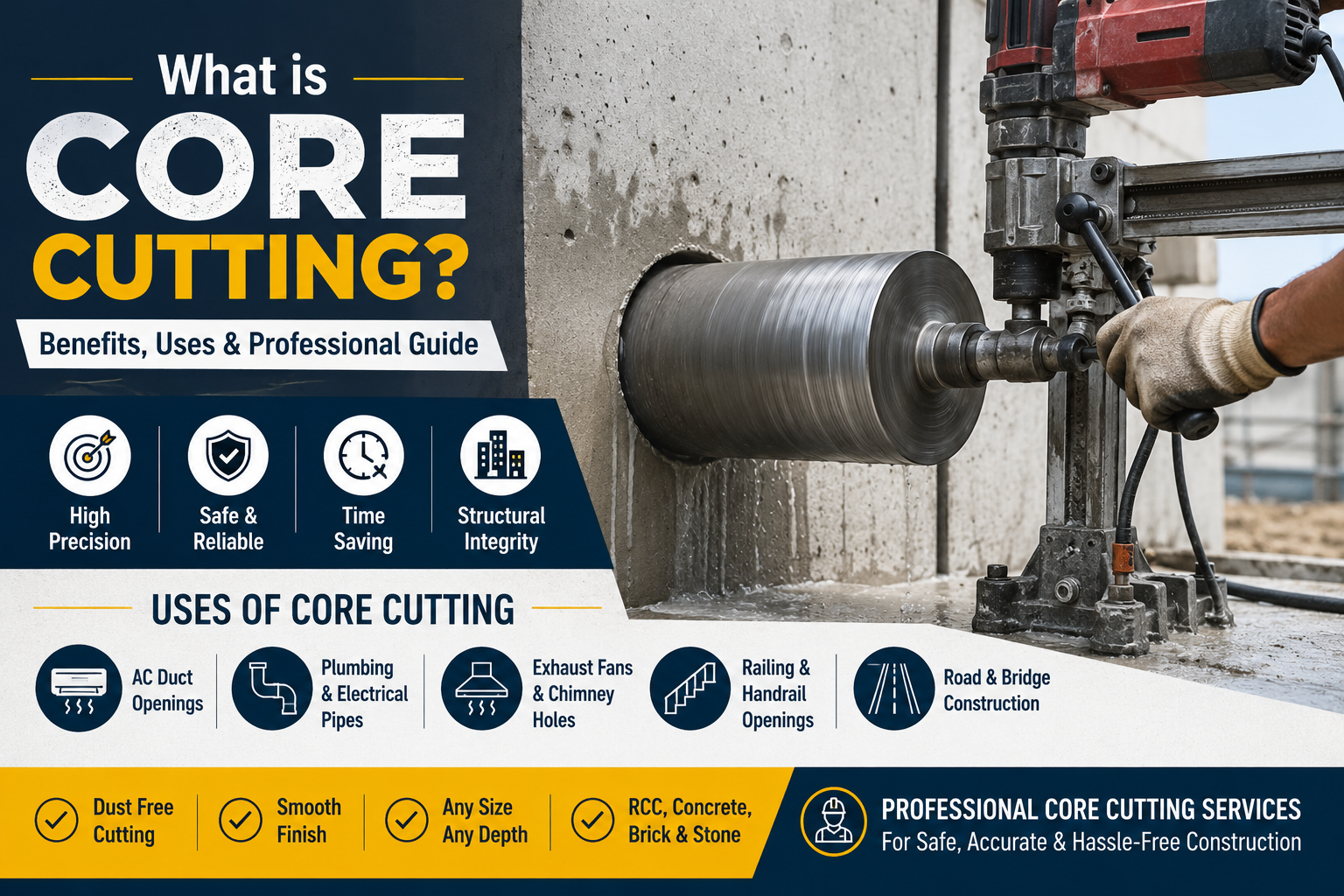
When you walk into any modern Indian home, office, or commercial building, you rarely think about how the plumbing pipes, electrical conduits, or AC ducts pass so neatly through solid concrete walls and slabs. The answer lies in a precise construction technique called core cutting. Whether you are a builder in Mumbai, a plumbing contractor in Bengaluru, or a homeowner in Delhi planning a bathroom renovation, understanding core cutting can save you time, money, and structural headaches. In this guide by Core Cutting India ([email protected]), we break down everything you need to know about core cutting — what it is, how it works, its benefits, and why hiring professionals matters.
TARGET-RELATED SEARCHES: core cutting meaning, core cutting price per hole, core cutting machine price, core cutting contractors near me, diamond core drilling machine, core cutting for plumbing, core cutting for electrical conduit, RCC core cutting rate, core cutting vs wall chasing, concrete core sampling
What is Core Cutting?
Core cutting, also known as core drilling, is a specialized construction process used to create precise circular or square holes in concrete, RCC (Reinforced Cement Concrete), brick, or stone surfaces. Unlike traditional hammer drilling or chiseling, core cutting uses diamond-tipped cutting tools to bore clean, accurate holes without causing cracks, vibrations, or structural damage to the surrounding area.
The technique is widely used across residential, commercial, and industrial projects in India for installing pipelines, electrical wiring, HVAC ducts, drainage systems, and even for taking concrete samples to test structural strength. Think of a large housing society in Pune that needs to retrofit new water pipelines through existing concrete slabs — core cutting makes this possible without demolishing entire walls or floors.
How Does Core Cutting Work?
Core cutting is performed using a core cutting machine, which is fitted with a hollow cylindrical diamond bit. This bit rotates at high speed while being cooled with water (in wet cutting) to reduce friction and dust. The process typically follows these steps:
- Site Assessment – Engineers inspect the wall, slab, or floor to identify the exact location, avoiding embedded rebar or utility lines wherever possible.
- Marking – The precise diameter and position of the hole is marked using measuring tools.
- Machine Setup – The core cutting machine is anchored securely to prevent movement during operation.
- Drilling – The diamond core bit rotates and cuts through the material, extracting a solid cylindrical core (hence the name "core cutting").
- Cleanup – Water and debris are cleared, and the extracted core is removed, leaving a clean, smooth-edged hole.
This method is far more controlled than manual breaking, which often leaves jagged edges, cracks, or hairline fractures in the concrete — especially risky in load-bearing walls common in Indian apartment buildings.
Types of Core Cutting
1. Wet Core Cutting
This is the most common method used in Indian construction. Water is used to cool the diamond bit and settle dust, making it ideal for indoor projects like flats in Gurugram or offices in Hyderabad where dust control is essential.
2. Dry Core Cutting
Used mainly for smaller diameter holes or outdoor projects where water usage is impractical, such as on construction sites in water-scarce regions of Rajasthan.
3. Horizontal and Vertical Core Cutting
Depending on the structure — whether cutting through a vertical wall or a horizontal slab/floor — machines are adjusted accordingly for accuracy.
Common Uses of Core Cutting in India
Core cutting has become indispensable in Indian construction and renovation projects. Some of the most common applications include:
- Plumbing Installations – Creating holes for water supply pipes and drainage lines in bathrooms and kitchens, a frequent requirement in metro city apartments like those in Chennai and Bengaluru.
- Electrical Conduit Passages – Running electrical wiring through walls and slabs without damaging structural integrity.
- HVAC and AC Ducting – Installing split AC pipelines through walls, extremely common given India's growing air-conditioning demand in cities like Ahmedabad and Jaipur.
- Fire Fighting Systems – Passing sprinkler and fire hydrant pipelines through multiple floors of high-rise buildings.
- Structural Testing – Extracting concrete core samples to test compressive strength, a mandatory quality check in large infrastructure projects such as metro rail construction in Delhi and Mumbai.
- Elevator and Lift Shaft Modifications – Cutting precise openings for lift installations in older buildings being retrofitted with elevators.
- Telecom and Cable Networks – Creating pathways for fiber-optic and networking cables in commercial complexes.
- Renovation Projects – Homeowners renovating kitchens or bathrooms often require core cutting to reroute plumbing without breaking entire walls.
Benefits of Core Cutting
1. Precision and Accuracy
Core cutting delivers exact hole diameters and depths, which is critical when installing pipes or cables that must fit perfectly. This precision reduces material wastage and rework costs.
2. Minimal Structural Damage
Since the diamond bit cuts cleanly rather than breaking or hammering, surrounding concrete remains structurally sound — a major advantage in RCC-heavy Indian construction where structural integrity is non-negotiable.
3. Reduced Noise and Vibration
Compared to jackhammers or manual breaking, core cutting machines produce significantly less noise and vibration, making them suitable for occupied buildings, hospitals, and residential societies where disturbance must be minimized.
4. Faster Project Completion
Professional core cutting is quick and efficient, often completing a hole in minutes rather than hours, helping contractors meet tight project deadlines common in commercial builds.
5. Dust Control
Wet core cutting significantly reduces dust generation, an important consideration for indoor projects in sealed apartment complexes and offices.
6. Cost-Effective in the Long Run
While hiring professional core cutting services involves an upfront cost, it prevents expensive repairs caused by cracked walls or damaged rebar that can occur with amateur drilling methods.
7. Versatility Across Materials
Core cutting works effectively on concrete, brick, stone, and even asphalt, making it adaptable for diverse project needs — from residential flats to industrial warehouses.
Core Cutting Machines and Tools
Professional core cutting relies on specialized equipment, including:
- Diamond Core Drill Bits – Available in various diameters (from small conduit-sized holes to large duct openings).
- Core Cutting Machines – Handheld or stand-mounted machines with adjustable speed settings.
- Anchoring and Vacuum Systems – To stabilize the machine and prevent slippage during operation.
- Water Supply Attachments – For wet cutting applications.
- Rebar Scanners – Used before cutting to detect embedded steel reinforcement and avoid structural compromise.
Companies like Core Cutting India invest in modern, well-maintained machinery to ensure every cut is safe, clean, and precise.
Why Hire Professional Core Cutting Contractors?
While core cutting may appear straightforward, it requires technical expertise, especially when working on RCC structures common throughout Indian residential and commercial buildings. Here's why professional service matters:
- Structural Safety – Professionals use rebar detection tools to avoid cutting through load-bearing steel reinforcement, which could weaken the building.
- Compliance with Building Codes – Experienced contractors understand local municipal regulations regarding structural modifications.
- Right Equipment for the Job – Different projects need different core diameters and machine types; professionals select the correct tools.
- Insurance and Liability – Reputable core cutting companies carry liability coverage, protecting property owners from potential damage costs.
- Efficient Debris Management – Professionals handle water, dust, and concrete debris responsibly, keeping the site clean.
For any construction or renovation project across India, engaging a trusted service provider like Core Cutting India ensures the job is done safely and efficiently, without compromising the building's structure.
Core Cutting vs. Wall Chasing: What's the Difference?
Many people confuse core cutting with wall chasing, but they serve different purposes:
- Core Cutting creates circular holes for pipes, cables, or ducts to pass through walls or slabs.
- Wall Chasing involves cutting narrow grooves or channels into walls, typically for embedding electrical wiring or conduit horizontally or vertically along the surface.
Both techniques are often used together in a single project — for instance, wall chasing to route conduit along a wall, and core cutting to pass that conduit through to another room or floor.
Cost Factors for Core Cutting in India
The cost of core cutting varies based on several factors:
- Hole Diameter – Larger diameter holes cost more due to increased material and time requirements.
- Material Type – Cutting through RCC with heavy reinforcement costs more than plain concrete or brick.
- Depth of Cut – Thicker walls or slabs require more cutting time.
- Location Accessibility – Ground floor work is generally cheaper than cutting in high-rise buildings or tight spaces.
- Number of Holes – Bulk orders for multiple holes (common in large residential projects) often come with discounted rates.
Pricing typically varies city to city and project to project, so it's advisable to request a detailed quote from a professional contractor based on your specific requirements.
Safety Considerations During Core Cutting
Given that core cutting involves cutting into structural elements, safety cannot be overlooked:
- Always conduct a pre-cutting survey to identify rebar and utility lines using scanning equipment.
- Ensure proper anchoring of the core cutting machine to prevent accidents.
- Use personal protective equipment (PPE) such as safety goggles, gloves, and ear protection.
- Manage water and debris properly to avoid slips or electrical hazards near cutting zones.
- Never attempt core cutting on load-bearing walls or columns without structural engineer approval.
Conclusion
Core cutting is an essential, precision-driven technique that has transformed how Indian construction projects handle plumbing, electrical, HVAC, and structural testing needs. From bustling metro cities to growing tier-2 towns, the demand for clean, safe, and efficient hole-cutting in concrete continues to rise alongside India's construction boom. Choosing experienced professionals ensures the job is completed with precision, minimal disruption, and full structural safety.
If you're planning a construction, renovation, or infrastructure project and need reliable core cutting services, reach out to Core Cutting India at [email protected]. Our team combines modern equipment with skilled expertise to deliver clean, accurate, and safe core cutting solutions across residential, commercial, and industrial projects.
For professional core cutting services, contact Core Cutting India at [email protected].