
Every building that stands tall today began as a set of decisions made long before the first brick was laid. Somewhere between the architect's vision and the final coat of paint, it is the site engineer who quietly carries the weight of making sure the structure is safe, sound, and built to last. Yet, in most projects, the site engineer's voice is the one least heard by the person who matters most — the building owner.
At Core Cutting India, our teams have spent years working alongside site engineers on core cutting, concrete drilling, and structural modification projects across residential, commercial, and industrial buildings. Over time, we've heard the same frustrations, the same warnings, and the same wishes repeated by engineers on almost every site. This blog brings those unspoken thoughts into the open — because a building owner who understands what their engineer is really thinking builds smarter, safer, and with far fewer regrets.
1. Structural Decisions Are Not "Just Paperwork"
One of the most common complaints among site engineers is how often building owners treat structural drawings, load calculations, and approvals as bureaucratic formalities rather than the backbone of the entire project. When an owner rushes an engineer to "just sign off" so construction can move faster, they are gambling with the safety of everyone who will ever step inside that building.
Every column size, every reinforcement detail, and every slab thickness is calculated based on the loads the structure will bear over decades. Skipping proper documentation or ignoring an engineer's recommendation to save a few days or a few thousand rupees almost always costs far more later — sometimes in money, sometimes in safety.
What owners should do instead: Treat structural approvals as non-negotiable milestones, not checkboxes. Give your engineer the time they need to verify calculations properly.
2. Cutting Corners on Materials Always Shows Up Later
Site engineers often watch, helplessly, as owners try to substitute specified materials with cheaper alternatives to trim the budget. A lower-grade cement, thinner rebar, or diluted concrete mix might look identical on the surface, but the difference becomes painfully visible years later — through cracks, seepage, or worse, structural failure.
Engineers are trained to specify materials based on load-bearing requirements, environmental exposure, and the building's intended lifespan. When those specifications are diluted without their knowledge, the engineer's calculations become meaningless, even though their name may still be attached to the project.
What owners should do instead: If budget is a real constraint, ask your engineer for legitimate cost-saving alternatives instead of silently downgrading materials. There is almost always a safer way to save money than compromising structural integrity.
3. Renovations and Wall Removals Need Engineering Approval — Always
This is perhaps the single most repeated wish among site engineers: please stop breaking walls without asking us first. Building owners frequently assume that if a wall isn't load-bearing in appearance, it's safe to remove. In reality, distinguishing between a load-bearing wall and a partition wall requires structural knowledge, not guesswork.
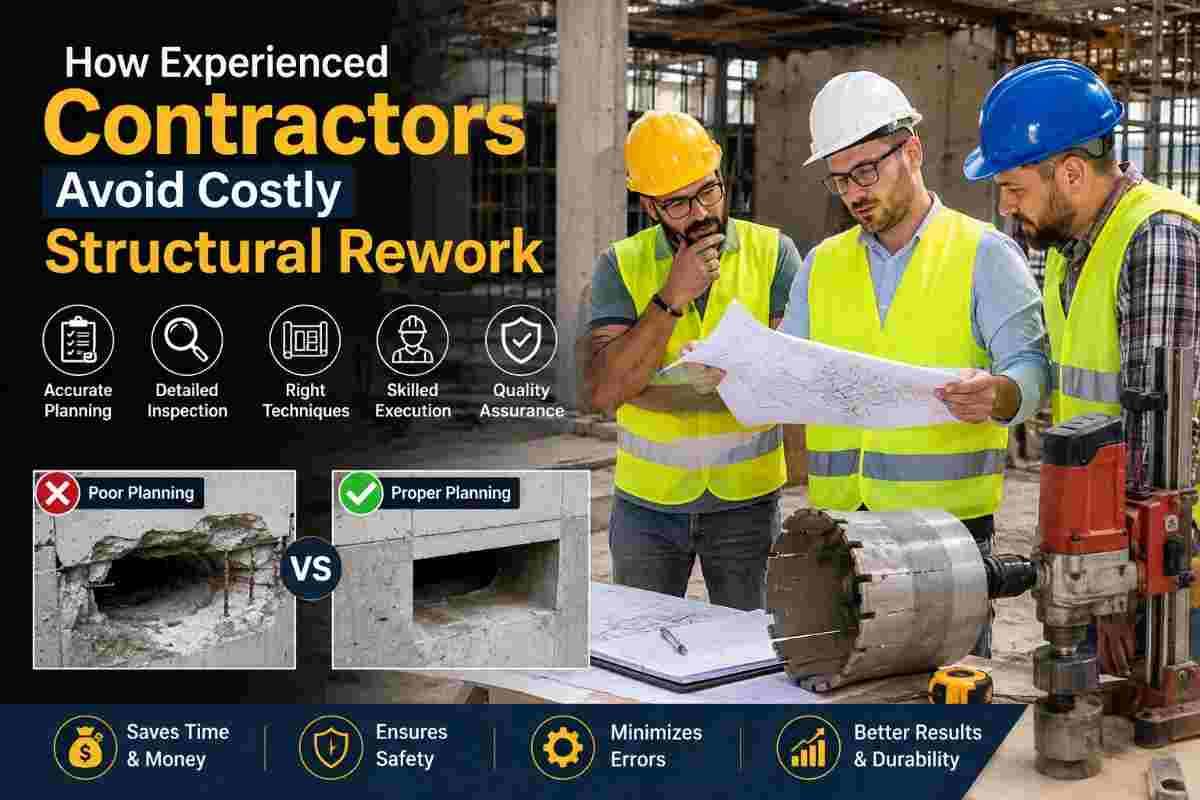
This is where professional services like core cutting and concrete drilling become essential rather than optional. At Core Cutting India, we regularly get emergency calls from owners who cut into a wall or slab for a doorway, window, or duct — only to discover cracks spreading across adjoining rooms or floors above. A structurally assessed, precisely executed core-cutting job avoids exactly this kind of damage, because it accounts for reinforcement patterns, load paths, and vibration control before any cutting begins.
What owners should do instead: Before any wall, slab, or beam modification — no matter how small it seems — consult a structural engineer and use professional core cutting services that follow approved cutting plans rather than manual demolition guesswork.
4. Timelines Set Without Engineering Input Are Fantasy Timelines
Owners often set project deadlines based on financial planning, tenant move-in dates, or personal milestones — without consulting the engineer on whether those timelines are structurally realistic. Concrete needs time to cure. Foundations need time to settle. Rushing these processes to meet an arbitrary date is one of the fastest ways to compromise a building's long-term durability.
Site engineers frequently find themselves caught between an owner's urgency and the physical reality of construction science. Concrete that hasn't cured properly may appear solid on the surface while remaining structurally weak underneath — a problem that often isn't discovered until it's too late.
What owners should do instead: Build your project timeline around your engineer's technical schedule, not the other way around. A few extra weeks of proper curing and inspection is a small price for decades of safety.
5. Site Visits Matter More Than Owners Realize
Many building owners visit a site only occasionally, relying entirely on contractor updates and photographs. Site engineers, however, notice details that photos simply cannot capture — subtle unevenness in a slab, a slightly off reinforcement spacing, or a contractor cutting corners on curing schedules.
When owners are absent or disengaged, it becomes easier for shortcuts to slip through unnoticed, even with an honest engineer on site, simply because oversight works best when it comes from multiple directions.
What owners should do instead: Make regular site visits a habit, even if you don't fully understand every technical detail. Ask your engineer direct questions during these visits — most engineers welcome an engaged owner far more than an absent one.
6. Not All "Structural Work" Should Be DIY or Handled by Local Labor
There's a common but risky belief among owners that any mason or local contractor can handle structural tasks like wall removal, slab openings, or reinforcement exposure. Site engineers see the aftermath of this decision constantly — cracked beams, exposed and rusted rebar, uneven load distribution, and in worst cases, partial structural failures.
Specialized tasks such as concrete core cutting, diamond drilling, and controlled demolition require trained technicians using calibrated equipment — not manual hammering or improvised tools. Precision here isn't a luxury; it's what prevents unnecessary stress on the surrounding structure.
What owners should do instead: For any structural cutting, drilling, or modification work, hire specialized professionals. Services like those offered at Core Cutting India use precision-engineered core cutting and drilling techniques designed specifically to protect the structural integrity of the surrounding building while achieving the exact modification needed.
7. Maintenance Isn't Optional — It's an Extension of Construction
Once a building is complete, many owners consider the engineer's job finished. But site engineers know that a building's safety story doesn't end at handover — it continues through years of maintenance, periodic inspection, and timely repair.
Water seepage, minor cracks, or delayed repairs to expansion joints might seem cosmetic at first, but they often signal deeper structural stress. Engineers wish owners understood that regular structural health checks are as important as the original construction quality.
What owners should do instead: Schedule periodic structural inspections, especially for buildings older than ten years or those in high-moisture or high-seismic zones. Address small cracks and seepage issues immediately rather than waiting for them to worsen.
8. Cost-Cutting on Safety Measures Is a False Economy
On many sites, safety equipment, scaffolding standards, and protective gear are the first things to be trimmed when budgets tighten. Site engineers are often left negotiating between an owner's cost concerns and the non-negotiable safety of the workforce.
This mindset extends to structural safety too — skipping soil testing, ignoring seismic zone requirements, or avoiding a proper geotechnical survey to save on upfront costs. These are investments that protect both lives and long-term asset value, not expenses to be minimized.
What owners should do instead: View safety measures and technical surveys as insurance for your investment, not as optional add-ons. The cost of prevention is always smaller than the cost of failure.
9. Communication Should Flow Both Ways
Perhaps the most heartfelt wish among site engineers is simply this: listen to us, and talk to us. Engineers often feel like they are expected to execute instructions silently rather than being consulted as technical partners in the project. When owners dismiss engineering concerns in favor of contractor opinions or personal preferences, it creates friction that ultimately affects the building's quality.
A good building owner-engineer relationship isn't about the owner understanding every technical formula — it's about mutual respect and open dialogue. Engineers want to explain their reasoning, and owners who take the time to listen usually end up with better-built, longer-lasting structures.
What owners should do instead: Build a relationship of trust with your site engineer. Ask questions, request explanations in simple terms, and treat their recommendations as expert guidance rather than obstacles to your plans.
Bringing It All Together
Behind every safe, well-built structure is a site engineer who fought quiet battles — against rushed timelines, budget shortcuts, and uninformed decisions — to protect the integrity of the building. Owners who take the time to understand and respect this process don't just get a safer building; they get a partner who is genuinely invested in the project's success.
Whether you're planning a renovation, need a precise wall or slab opening, or require expert structural modification, working with specialists matters. At Core Cutting India, our precision core cutting and concrete drilling services are designed to work in harmony with your structural engineer's plans — ensuring every cut, opening, and modification is executed safely, accurately, and without compromising the building's integrity.
The next time your site engineer raises a concern, pause and listen. It might just be the most valuable advice you receive on your entire project.
Frequently Asked Questions
What is core cutting in construction? Core cutting is a precision technique used to create openings in concrete walls, floors, or slabs using diamond-tipped drilling and cutting equipment, allowing for clean, accurate cuts without damaging surrounding structural elements.
Why is core cutting important for building safety? Because it minimizes vibration and stress on the surrounding structure compared to manual demolition, core cutting helps preserve structural integrity while creating necessary openings for pipes, ducts, doors, or utilities.
How often should a building undergo structural inspection? Most engineers recommend a structural health inspection every 5 years for newer buildings and annually for structures older than 10-15 years, or immediately after any visible cracking or seepage appears.
Can a building owner cut concrete walls without engineering approval? No. Even walls that don't look load-bearing can be part of the structural system. A structural engineer should review any wall, slab, or beam modification before cutting begins.
What should a building owner check before starting construction? Owners should verify structural drawings, soil test reports, material specifications, contractor credentials, and ensure all approvals are in place before construction begins.
How do site engineers ensure structural safety? Through careful adherence to structural drawings, quality checks on materials, monitoring of curing schedules, regular site inspections, and coordination with specialized contractors for tasks like core cutting and drilling.