
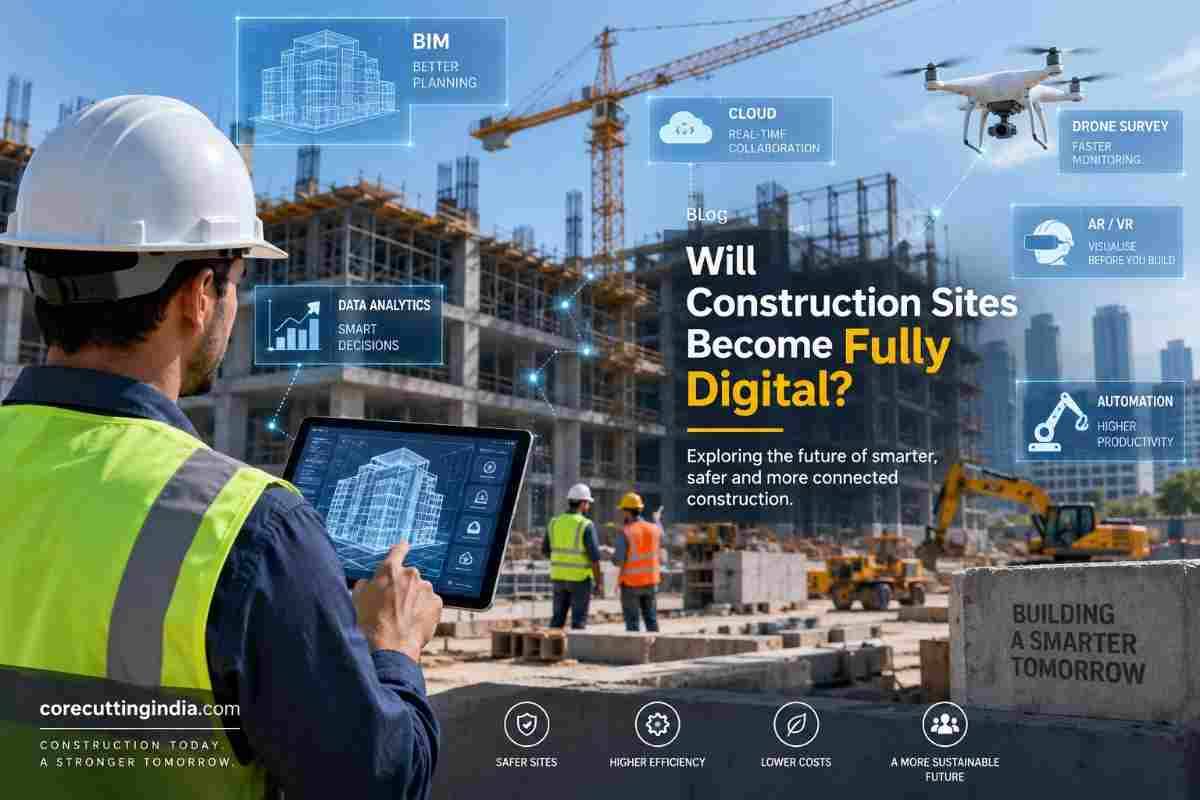
The global construction industry has long been characterized by mud, heavy machinery, blueprints rolled up under foremen's arms, and manual coordination. It is an industry built on physical strength and raw materials. However, a seismic shift is underway. With surging urbanization, complex architectural designs, and tight deadlines, traditional methods are increasingly falling short. This prompts a critical question: Will construction sites become fully digital?
While a 100% paperless, fully autonomous jobsite may still be years away from complete standardization, the industry is accelerating toward deep digitalization at an unprecedented pace. From advanced planning tools to high-precision execution on the ground, modern job sites look fundamentally different than they did a decade ago.
The Anatomy of a Digital Construction Site
A digital construction site is not merely a place where workers carry tablets instead of paper blueprints. It is a fully integrated ecosystem where software, hardware, data analytics, and physical machinery converge. In this environment, every phase of a project—from conception and structural engineering to precise concrete intervention and final handover—is tracked, analyzed, and optimized digitally.
At the core of this transformation are several pioneering technologies:
-
Building Information Modeling (BIM): BIM acts as the digital brain of a construction project. It creates a multi-dimensional, data-rich virtual model of a building before ground is broken. Every stakeholder, from the structural architect to specialized execution teams, collaborates on this single source of truth.
-
Internet of Things (IoT) and Smart Sensors: IoT devices embedded in building materials, heavy machinery, and safety gear provide real-time metrics. For instance, sensors can monitor the curing temperature and structural integrity of concrete, ensuring quality control long before a structure is finalized.
-
Artificial Intelligence (AI) and Machine Learning: AI algorithms crunch massive datasets to predict budget overruns, optimize material procurement, and flag potential safety hazards before accidents occur.
-
Drones and Autonomous Robotics: Drones perform aerial mapping and daily progress tracking, while specialized automated equipment handles hazardous or repetitive labor-intensive duties with pinpoint accuracy.
Precision Execution: Where Digital Meets Physical
Even the most advanced digital blueprints must eventually interact with physical reality. Modern construction relies heavily on specialized sub-tasks that demand absolute accuracy, proving that digitalization extends right down to granular site operations.
Take structural alterations, modifications, and retrofitting, for example. Modern civil engineering often requires complex interventions on existing reinforced concrete structures. Utilizing specialized techniques such as automated diamond wire sawing and high-precision core cutting ensures that structural integrity remains uncompromised while routing new plumbing, electrical lines, or HVAC systems. When paired with digital layout mapping tools—which project CAD drawings directly onto physical concrete floors—execution errors drop close to zero. Specialized service providers leverage these tech-driven methodologies to bridge the gap between digital design and rugged physical execution.
Key Drivers Accelerating Digitalization
The shift toward fully digital construction sites is not driven by mere novelty; it is a economic and operational necessity.
1. Uncompromising Demand for Efficiency
Project delays and budget overruns have historically plagued construction. Digital tools provide predictive scheduling and real-time tracking, allowing project managers to spot bottlenecks before they derail the timeline.
2. Enhanced Jobsite Safety
Construction remains one of the most hazardous industries. Digital interventions—such as wearable IoT devices that monitor worker fatigue, geofenced hazard zones, and AI-powered cameras ensuring compliance with Personal Protective Equipment (PPE)—drastically reduce workplace injuries.
3. Sustainability and Waste Reduction
Material waste accounts for a massive portion of construction's carbon footprint. Digital simulation tools, automated prefabrication, and precise material tracking minimize excess ordering, aligning the industry with global green building standards.
Barriers to Becoming Fully Digital
Despite clear advantages, several hurdles prevent construction sites from achieving total digitalization overnight.
-
High Initial Investment Costs: Implementing enterprise-grade BIM software, IoT sensor networks, and robotic machinery requires substantial capital expenditure, making smaller contractors hesitant.
-
Industry Culture and Skill Gaps: Construction is traditionally a risk-averse, relationship-driven sector. Resistance to change among legacy workforces and a shortage of personnel trained to operate advanced software hinder rapid adoption.
-
Fragmented Supply Chains: Because construction projects involve dozens of distinct subcontractors, getting every tier of the supply chain to adopt compatible digital formats is an ongoing logistical challenge.
What Lies Ahead?
Will construction sites become fully digital? The answer is a conditional yes. While complete autonomy across every single manual task may take decades, the core processes of planning, monitoring, and managing construction are already permanently digital.
As technologies like digital twins, 5D BIM, and AI-driven automation mature, the line between the virtual model and the physical jobsite will continue to blur. Contractors and engineers who embrace this digital wave today will lead the market tomorrow, building safer, faster, and smarter structures for the future.
For professional insights into modern civil engineering techniques, precise structural modifications, and advanced execution support, explore specialized services at Core Cutting India.